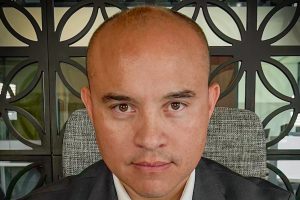
Victor Matos, Senior Commercial Director at Johnson & Johnson MedTech in Mexico, shares insights about his first days as a Managing Director, highlighting the importance of connecting the company’s objectives with Mexico's diverse healthcare system. He emphasises J&J’s significant local footprint, with major commercial and manufacturing operations including a key facility for Medical Devices in Ciudad Juárez. Matos discusses challenges in promoting technology amidst budget constraints, stressing the need for value-driven solutions and comprehensive surgeon training, and notes a positive shift toward value-based healthcare in Mexico with increased receptivity to service-based models to enhance technology access.
What were your priorities in the first 100 days in your new role?
Since I was already part of the organization, transitioning into my new role felt seamless. I had managed the surgery business for Johnson & Johnson MedTech in Mexico, our largest division, and worked closely with former Regional VP Andres Gravenhorst, so I was already aligned with our business priorities to reach more patients in the country.
First, I focused on getting to know the team on a deeper level—understanding their motivations and drives beyond business goals in order to align a common vision as “one team”. Second, I deepened my knowledge of business units where I had less experience, particularly cardiology (arrhythmia treatment) and orthopaedics, both of which are complex and varied in their operations. Lastly, I stepped back to assess the business from a broader perspective, aligning our priorities with Mexico’s healthcare system, which encompasses both public and significant private sectors, along with industry associations and medical societies.
Although I’ve worked in Mexican healthcare for over 20 years, a senior leadership role brings a different viewpoint compared to sales or marketing positions. These were my main areas of focus: team connection, business comprehension, and strategic alignment with the healthcare system.
Could you give us a brief introduction to J&J’s MedTech footprint in Mexico? How is the company investing in the country and contributing to securing the national supply chain?
I would say we are very privileged in Mexico because we have both sides of the story. On the one hand, we have the commercial organization, where I work. We are on the customer-facing side, interacting with surgeons, nurses, and hospitals, making sure our technologies are being used in the right way to improve patient outcomes.
On the other hand, we also have a major manufacturing presence in Mexico. One of J&J MedTech’s most important manufacturing sites is located in Ciudad Juárez. We have more than 15,000 employees there and where one out of every five medical devices distributed globally by J&J is Made in Mexico. That is quite significant, and it really shows the potential and scale of our operations here.
In terms of our footprint in sales, we have people across the 15 most important cities in the country, representing J&J MedTech. We are present in the main hospitals in the country, working alongside healthcare professionals to improve surgical outcomes. That is a key part of our commercial contribution to the country impacting with our technologies more than 1 million 720 thousand patients in Mexico, that is, 3 patients every minute.
Then, there is the investment side. Our commitment to Mexico is around 50 years of commercial presence in the country and the Juárez Campus, established in 1970, has been growing over the years. Today it has become a site with four production plants.
By supporting and investing in this prioritized sector, J&J is playing a critical role in strengthening the country’s industrial capacity and supply chain. These two aspects—the commercial presence and manufacturing investments—are the most important ways in which we contribute to Mexico’s economy and healthcare system.
Given Mexico’s large population and the budget constraints within the healthcare system, how challenging is it for you and your company to demonstrate that your technology is the best option for physicians and institutions in this environment?
Mexico’s healthcare system is unique, comprising various institutions and decision-makers, including public, private, and payer organizations, each with distinct processes. This diversity poses challenges but also opportunities to collaborate with different entities, all focused on enhancing treatment access for Mexicans.
Our approach highlights not just our cutting-edge technology—developed by exceptional R&D teams at sites like our Juárez campus—but how it integrates into comprehensive patient care. For example, in surgery, the value lies not only in the device but in how it contributes to an overall treatment plan involving clinical care and medications.
Education is equally vital. We are committed to training surgeons to ensure effective use of our devices, enhancing their skills for better surgical outcomes. Our dedicated professional education team offers a range of programs, from basic to expert levels, addressing the clinical and economic value of our technology and its broader impact on patient care.
Innovation plays a key role in these efforts, alongside regional training initiatives like the Johnson & Johnson Institute in Brazil and the U.S. We also conduct hospital-based programs to provide real-world training. Our educational journey begins with medical residents and continues as they progress, offering support at every career stage to refine their surgical expertise.
Proof of our purpose to innovate is the “Innovation Room” where in a year, more than 1,300 training sessions were given for doctors, surgeons, residents and nurses in the specialties of general surgery, gynecology, bariatrics, coloproctology, orthopaedics and electrophysiology.
Do you think we are seeing a shift towards a true value-based procurement process in Mexico?
Progress is being made, though I would like it to be faster. The adoption of value-based healthcare has gained momentum, especially over the past five years. While the pandemic slowed things down, we have seen a noticeable acceleration since then.
The key to further progress is aligning the incentives of all stakeholders—public and private payers, hospitals, and government institutions. At J&J, we believe that demonstrating the impact of our technologies, particularly how they improve surgical outcomes at reasonable costs, will help increase access to better treatments.
In the past 18 months, discussions with payers, hospitals, and government entities have revealed a shift in focus from just price to the broader impact on patient outcomes. We are making significant strides, with dedicated teams working to highlight the full treatment journey, not just the products themselves. I am optimistic that this shift will continue to accelerate, and we are committed to collaborating with healthcare system players to drive it forward.
Are concepts like subscription models for expensive machinery well received here in Mexico? How do you think this could improve access to healthcare technologies?
I wouldn’t necessarily say that the subscription model is widely adopted in Mexico yet. However, what I have observed is that services are much more well-received. If you compare Mexico to other healthcare systems in the region, there is a greater acceptance of service-based models. Hospitals and payers here are more inclined to adopt the idea of bundled services, or “one-stop-shop” solutions that combine different technologies and services into a comprehensive offering. This approach makes it easier for institutions to access a wider range of solutions without having to deal with each component separately, and it is generally well-received in the healthcare system.
Some of your colleagues in other firms have mentioned that Mexico and Latin America present a great opportunity to develop AI-based solutions, especially for surgical robots or predictive technologies. What is your take on that? Where do you think the region stands in this space?
I definitely think the region offers a unique opportunity for testing and piloting new technologies, including AI. The differences in healthcare systems across the region provide a valuable environment for learning and innovation. Latin America, including Mexico, has the potential to be a testbed for new technologies, which can then be scaled and applied to other markets worldwide.
At J&J, we like to think of the region as an opportunity to “test and learn”. For example, we have launched digital solutions over the past year that are helping surgeons improve their practices. One of these solutions provides real-time feedback on surgical performance—it offers data on how long surgeries take, highlights critical parts of the procedure, and gives personalized suggestions on technique. This is not a performance review of the surgeon, but rather a self-assessment tool. It allows surgeons to reflect on their own work, which is highly valuable. The feedback is confidential and personalized for each surgeon. This is just one example of how we are piloting technologies in Latin America, testing them in real-world scenarios, and using the insights to enhance our global offerings.
Can you share with us some of the key medical education initiatives you have here in Mexico?
We have a dedicated professional education team organized in a matrix format, designed to offer a comprehensive, personalized education journey for healthcare professionals at different career stages. Our programs range from basic to expert levels, with a focus on both experience level and specialty.
In cardiology, particularly electrophysiology for arrhythmia treatment, we guide physicians through a journey from residency to expert level. We provide similar pathways in orthopedics, including trauma procedures, joint replacements, and arthroscopy.
Our surgical education covers specialties such as cardiothoracic, gynecology, colorectal, and general surgery, with a focus on oncology, where surgery often complements treatments like chemotherapy or radiotherapy.
This matrix combines proficiency level (basic to expert) with specialty (cardiology, orthopedics, oncology, etc.), ensuring healthcare professionals receive targeted, advanced training to improve their skills in treating a range of conditions.
Looking ahead, how does Johnson & Johnson MedTech plan to improve healthcare access and equality in Mexico? What are your key ambitions and goals for the future?
Our primary focus is ensuring that more patients have access to the treatments and technologies that can improve their outcomes. The goal is to increase the number of people we reach. For instance, we treat over 1.7 million patients annually, but this number is still far from enough when you look at the unmet needs.
To provide some context, less than 1% of patients with arrhythmias are currently being treated. Even if we aim for double-digit growth, the primary challenge remains ensuring that our technologies reach a wider patient base. Addressing this involves several key areas.
Raising awareness is essential. Many patients, as well as healthcare professionals, are often unaware of the available treatment options for conditions such as arrhythmias.
Ensuring that hospitals, particularly those in smaller or underserved regions, are equipped with the necessary tools to perform these procedures is critical. Access to the right equipment can make a substantial difference in treatment availability and patient outcomes.
Training healthcare professionals is another crucial aspect. Surgeons and doctors must be well-trained in the most advanced surgical techniques and technologies.
Finally, demonstrating the impact of these treatments is key. We must show the tangible benefits they bring to patient outcomes, while maintaining a focus on cost-effectiveness through a value-based healthcare model.
If we are able to collaborate effectively with the right decision-makers—whether they are within hospitals, insurance companies, or government bodies—we believe we can significantly expand access to these life-saving technologies and improve the quality of care for more patients in Mexico.
How do you reach people in more remote areas, such as small towns or villages in places like Chiapas? The focus tends to be on major cities like Mexico City, Monterrey, or Guadalajara.
The concentration of healthcare facilities is naturally tied to where the population is concentrated. However, what we have seen over the past decade is a trend toward decentralization. Private hospital groups, in particular, are expanding beyond the major cities. They are investing in regions like Bajío, Yucatán, the Pacific, and areas in the North like Nuevo León.
These regions are now seeing more private hospital groups setting up branches, often with two or even three major players in each region. Plus, there is the presence of public institutions in many of these areas.
To serve our customers all over the country, at J&J MedTech, we are not just focused on the major cities. We have representatives in over 15 to 20 cities and a network of commercial partners (distributors) to serve our customers across the country to actively engage with local players. This decentralization is key, as it allows us to build stronger connections and ensure that we are not just focused on the central areas, but also reaching the communities that need us most.
So, while it is challenging, there has been significant growth and investment outside of the main urban centres, and we are working hard to support that expansion by connecting with healthcare professionals and institutions at the local level.
With the new government in place, what are your top advocacy priorities on behalf of J&J MedTech?
Recently, my meetings have highlighted two main priorities. First, collaboration is key. Healthcare challenges require the alignment of all stakeholders—J&J, government, hospitals, payers, and others—working together to address the country’s healthcare needs.
Second, we focus on aligning our efforts with the government’s priorities. While we don’t claim to have all the answers, we have solid solutions for key healthcare challenges they are tackling, such as access to care, quality surgeries, and training surgeons in the latest techniques. Our approach isn’t just about promoting specific products, but about working holistically to improve patient care, combining technology, training, and care to drive better clinical outcomes and support value-based healthcare. This is where we see the greatest opportunity.
Having dedicated 13+ years to Johnson & Johnson, what do you think has driven your deep commitment to this company?
Three key factors come to mind: First, the alignment of values. My personal values align perfectly with J&J’s, which has always been essential to me. The company’s Credo isn’t just words; it is reflected in its actions.
Second, the dynamism of the company. J&J is always focused on patients and physicians, ensuring that every decision we make impacts both positively. This constant focus on progress keeps things exciting and offers continuous opportunities to learn and grow.
Third, the culture. The people at J&J bring a special energy—collaboration, alignment, and partnership. While decision-making in our matrix environment requires consensus, it fosters a strong sense of camaraderie. Working with such talented, respectful colleagues makes all the difference.
These three factors—values, dynamism, and culture—have kept me committed to J&J throughout my career.