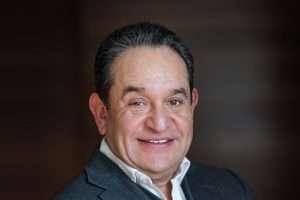
Carlos Abelleyra leads Medix, a 70-year-old Mexican pharmaceutical company undergoing a major strategic transformation. Since 2024, he has diversified the firm beyond its historical obesity focus, establishing divisions in vitamins, gastrointestinal products, and women's health. With a landmark Biocon licensing deal for GLP-1 therapies and plans to launch 30 new products over three years, Medix aims to double revenue by 2026 and become a patient-focused leader in Mexico's obesity treatment market.
To begin, could you summarise Medix’s core mission and strategic priorities within the Mexican market?
Medix is a 70-year-old Mexican pharmaceutical company that historically focused on obesity treatments. Since 2024, we have undertaken a strategic transformation to broaden and diversify the business, guided by a clear purpose: connecting with patients’ health; so they can have a better connect with their lives, and positively impact the population’s health through a comprehensive pharmaceutical portfolio. While maintaining our presence in obesity, we have established four distinct divisions: vitamins, gastrointestinal products, women’s health, and, within the vitamins segment, a consumer division. This includes products such as melatonin and vitamin D, where we currently hold clear market leadership. This diversification reflects our commitment to offering an integral portfolio of pharmaceutical solutions that responds to prevalent health conditions and improves patient’s quality of life.
The company’s primary historical challenge was a lack of new product launches, which we are addressing through a combination of licensing agreements and internal research, always grounded in science and evidence-based medicine. Our commitment to scientific research allows us to provide effective, safe, and high-quality treatments that genuinely improve patients’ lives. Over the next three years, we plan to launch approximately 30 new products across these divisions, aiming for a balanced portfolio with each division contributing around 25 percent of revenue.
A key component of this strategy is our 2024 licensing agreement with Biocon, which positions Medix to introduce – pending final COFEPRIS approval- the first generic versions of GLP-1 therapies for obesity, including second-generation (liraglutide). Overall, our objective is to double Medix’s sales by 2026, and we are currently on track to achieve this milestone, effectively doubling the revenue recorded in 2023.
Overall, our objective is to double Medix’s sales by 2026, and we are currently on track to achieve this milestone, effectively doubling the revenue recorded in 2023.
Will the anticipated growth be primarily organic, or do strategic partnerships and acquisitions form a critical part of your approach?
According to October IQVIA figures, we represent the second-largest growth company in Mexico by double-digit percentage. Whilst the market is declining 0.2 percent in units, we are growing approximately 17 percent in both value and volume. That represents the organic growth we are achieving.
Beyond that, all the licensing arrangements with GLP-1 therapies account for substantial investment. We are launching a new version of gastrointestinal products, primarily focused on liver health. The other key product is our leading H. pylori eradication therapy – the market leader by considerable margin with 85 percent market share. it is essential for us to develop the next-generation version to maintain our leadership position.
With global players entering the obesity market aggressively, particularly in GLP-1 therapies, what differentiates Medix from these multinational competitors?
Given our longstanding heritage in obesity treatments, Medix is well-positioned to reclaim market leadership, despite the setback experienced in 2023 following the loss of a key product.
Our strategic licensing agreement with Biocon enables us to re-establish this leadership, underpinned by two key differentiators. First, our deep experience and legacy in the obesity space. Second, Biocon’s reputation as a producer of the highest-quality generic products in Europe, with operations across the UK, France, Germany, Italy, and other countries.
Biocon’s product quality closely approximates the originator, including injection devices identical to the original pens. Leveraging our expertise and the Medix team’s patient-centric mindset, we differentiate not only on price, but on value-added services that support adherence, education, and long-term outcomes. This reflects our belief that true impact in healthcare comes from connecting medication, education, and patient accompaniment. While GLP-1 therapies will require physician prescriptions, our objective extends beyond mere provision of medication. We are developing value-added services such as needle-free pens, educational support, and integrated patient databases. Participation in these databases ensures patients receive guidance on administration, dietary support, and other services designed to enhance adherence, outcomes, and the overall patient experience.
Given the current cost of advanced therapies for Mexican patients, how is Medix structuring its portfolio and pipeline to ensure access while maintaining commercial viability?
We must acknowledge that a significant segment of the Mexican population—estimated at 15 to 20 million people—accesses medicines through out-of-pocket expenditure. This patient group represents the primary market for many international pharmaceutical companies, and it is within this context that Medix designs its portfolio and pipeline strategy.
Our primary objective is to serve the 15 to 20 million patients in the out-of-pocket market, ensuring access to effective and high-quality treatments through a locally grounded business model that understands Mexico’s healthcare realities and adapts solutions to patients’ needs. We are, of course, evaluating entry into the public sector once government systems stabilise, with the aim of participating meaningfully there as well. Crucially, our strategy against originator products is anchored in delivering value-added services. From a pricing perspective, while this patient population demonstrates significant purchasing power, we are committed to maintaining accessible pricing to ensure broader access to GLP-1 therapies.
How critical are new markets to Medix’s growth strategy? Is the focus solely on Mexico, or is broader regional expansion a priority?
Our first priority is to establish Medix as a fully integrated presence across Central America, extending our commitment to improving quality of life through innovative, safe, and accessible solutions across the region. At present, our operations in the region function almost as an extension of Mexico. By 2026, the objective is to create a distinct Central American entity with its own strategic identity. One of the key lessons from the past is that our previous focus only on obesity products was too narrow and, in my view, a strategic misstep.
The new approach is to deploy the full portfolio we manage in Mexico across the Central American markets, including all licensing arrangements currently under negotiation. Central America is being incorporated naturally into these agreements. Once we build the scale we consider meaningful and demonstrate strong traction across these portfolios, the next step will be to identify additional Latin American markets for expansion.
How should pharmaceutical companies engage with governmental and legislative stakeholders to secure funding and support for critical public health interventions?
I recall, many years ago, leading the introduction of a paediatric pneumococcal vaccine in Mexico at a time when Julio Frenk was serving as Minister of Health. The initiative confronted a significant barrier: the national budget for vaccines was insufficient to support a programme of this scale. To address the issue, we engaged directly with the Chamber of Deputies.
Together with Córdova Villalobos, we presented a comprehensive and evidence-based briefing on the burden of pneumococcal disease – its clinical progression, associated complications, and the tragic number of infant deaths occurring each year. The clarity of the data and the urgency of the need resonated strongly. As a result, the deputies approved and allocated a dedicated budget that enabled the Ministry of Health to implement the vaccination programme.
That represents the approach we require – engaging with everyone. David Kershenobich cannot proceed alone declaring he needs more money. We must demonstrate to people, provide them understanding of what constitutes the critical element of the equation. It is not about selling medicines. As I explained, if I have 20 million people who can afford medicines regardless of cost, they must recognise that 100 million people are awaiting assistance. That represents the critical component of the question.
I was recently discussing the issue of Helicobacter pylori with colleagues, noting that its prevalence in Mexico is estimated at around 75 percent. I often remark – half in jest – that one could almost design a public poster showing how everyday dietary habits can worsen the clinical consequences of the infection. Yet despite the scale of the problem, there is little coordinated effort at the governmental level to raise public awareness of H. pylori. With three-quarters of the population affected, the burden on gastrointestinal health is substantial, and the need for broader education and prevention initiatives is unmistakable.
One lesson remains clear, regulatory bodies play a critical role in ensuring safety, quality, and access, while also enabling the sustainable development of the national pharmaceutical industry. When alignment exists between prevention strategies, regulatory frameworks, and healthcare delivery, systems are better equipped to respond to population health needs in a balanced and responsible way.
Ensuring comprehensive access to healthcare is a shared responsibility that requires coordination across multiple stakeholders, government included. From our perspective, continued progress depends on aligning distribution capabilities with a broader, long-term public health vision that addresses patient needs in a sustainable way.
The solution to health challenges extends far beyond medicines or hospitals – true impact lies in prevention, education, and coordinated public health strategies. At Medix, we firmly believe that raising awareness and promoting responsible health behaviors is as critical as providing treatment itself. Government authorities must adopt a systemic perspective, recognising how education, lifestyle, and early intervention collectively shape population health outcomes.
From our perspective, prevention must remain a central pillar of public health policy. Strengthening education, early diagnosis, and evidence-based decision-making allows healthcare systems to move from reactive responses to long-term solutions. This approach benefits patients, supports healthcare professionals, and contributes to a more resilient and sustainable health system overall.
This centres on education and prevention – understanding what transpires. However, someone must go there and say, “This should function as a team that comprehends the principal issues and the benefits that an align government can give, not exclusively health.” For us, health is important because we operate here, but the siloed approach they maintain is not appropriate.
What steps are required for Mexico to achieve greater integration with North American supply chains, particularly regarding manufacturing facilities and API production?
I believe we require, as Mexico, a genuine upgrading of our management practices. If we desire to become an integrated geographic area, we must change regulatory hurdles and attempt to manage as Canada and the US manage. Second, regarding factory management and manufacturing facilities, we must advance significantly. I believe we must invest substantially. If we desire to compete with them, to integrate with them, we require substantially superior manufacturing facilities.
Many years ago, someone informed me that new regulations were destroying the API industry – and they accomplished that. My perspective is that the API industry requires enormous investment. Only a few companies produce APIs here in Mexico – very few. We require substantial investment to compete against India. If you visit India, you can identify countless suppliers for any specific molecule. For APIs, we import from India, from the US, and from various sources. You cannot obtain the appropriate quality of APIs as well as the appropriate volume of APIs to compete effectively. Api marketplace is quite challenging since many years ago this industry was not a priority for the country, and the current government must have to make efforts to change that to benefit the country.
Equally important is fostering collaboration between industry, regulators, and academic institutions to ensure that regulatory frameworks support innovation, safety, and sustainability. When these elements are aligned, countries are better positioned to build resilient supply chains that contribute not only to competitiveness, but also to healthcare security and patient access across the region.
Does Medix maintain its own manufacturing facilities, and how are these being scaled to support expansion and new product launches?
We maintain one facility with two manufacturing areas. We are attempting to increase capacity based naturally on this strategy of doubling the business. Current capacity suffices to fulfil requirements through 2026, I believe. However, eventually we must upgrade the facility. For Medix, scaling manufacturing is not only about growth, it is about ensuring quality, reliability, and access, so patients can consistently obtain effective treatments when they need them. We are already incorporating investment into the forecast budget and strategic plan to upgrade the facility because we wish to participate in Plan México. We are submitting – if I recall correctly – the following week to the Ministry of Economy our Plan México proposal for investment. Hopefully, in a few weeks, by next year, there will be positive news.
As Medix diversifies across therapeutic areas, how are you implementing integrated chronic care models that extend beyond the provision of medication?
Our transformation begins with a comprehensive approach to the obesity portfolio, anchored by the launch of GLP-1 therapies. This includes a range of patient-focused initiatives, designed to provide value-added services beyond the medication itself. We see chronic care as an integrated model: evidence-based treatment, education, and ongoing accompaniment, promoting responsible use and supporting adherence and long-term outcomes. In parallel, we are leveraging our leadership in the vitamin D market, having recently transitioned from prescription to over-the-counter status. Our next focus is on raising awareness around vitamin D management: many patients remain unaware that insufficient sun exposure leads to deficiency, and that even with sun exposure, the use of protective measures can prevent adequate vitamin D synthesis, necessitating supplementation. Through these efforts, we aim to combine therapeutic innovation with patient education, reinforcing our commitment to holistic care.
How is Medix leveraging digital health and marketing tools to enhance patient engagement and education?
We are working extensively in digital marketing – precisely to offer additional services to patients as an integrated value proposition beyond medicines exclusively. As I mentioned, through digital platforms, the concept is creating pages where we engage influencers – not discussing medicines, but discussing the underlying problem to create awareness. This is consistent with our purpose of connecting with patients’ health so they can better connect with their lives, and with our commitment to act with excellence by providing clear, responsible, and useful information. Helicobacter represents the same behavioural pattern as obesity. We do not exercise sufficient caution. We consume food on every street corner, and people do not consider the consequences. That explains the Helicobacter prevalence.
Additionally, people frequent establishments serving greasy food. Everything is connected in this regard. Obesity means liver problems. If you have diabetes, you have liver problems. Everything is interconnected.
What would you like to convey to our readers about the Latin American pharmaceutical market?
In my view, regional pharmaceutical companies are poised for substantially greater growth than in previous years. Multinationals have increasingly focused on rare diseases, oncology, and other highly specialised areas – Takeda, for example, completed this strategic transformation three to four years ago. This shift leaves a significant opportunity in what we might call “standard” therapeutic areas, such as obesity, where regional and local companies can establish leadership.
The demographic trends in Latin America further underscore this opportunity. The ageing population is expanding rapidly, making chronic diseases an increasingly critical component of the healthcare landscape. Companies must anticipate and prepare for the evolving therapeutic needs of these new patient populations.
I recall, from my experience managing infant formulas at Wyeth, that new-borns numbered approximately 2.1 to 2.2 million annually. Last year, that figure declined to 1.6 million – a clear signal of an ageing population and declining birth rates. These demographic shifts present profound challenges and opportunities for the healthcare sector in the years ahead.
What is your perspective on the evolving Latin American pharmaceutical landscape, particularly regarding opportunities for regional versus multinational players?
From my perspective, the most effective approach to Latin American markets is forming strategic alliances with local partners. Healthcare solutions cannot be replicated mechanically across countries; they must be built with a deep understanding of local cultures, regulations, and patient needs. At Medix, this local sensitivity is central to how we operate and how we build long-term partnerships. Entering Central America, for instance, requires a nuanced understanding of local practices. While Latin America is often discussed as a single region, the differences between countries are substantial – cultural, regulatory, and educational standards vary significantly from Europe or Asia.
Rather than investing millions to establish a wholly owned presence, alliances with established local players often yield superior results. In Argentina, for example, I learned that non-local companies face immense challenges in becoming market leaders. Even today, local firms dominate, and multinational companies are rarely at the forefront. The situation is similar in Brazil, where local leadership prevails.
Mexico, by contrast, presents a slightly different landscape. While multinationals like Merck, Bayer, Boehringer Ingelheim, and Takeda maintain meaningful presence, local players such as Pisa and others remain highly influential. Outside of Argentina and Brazil, multinationals retain strong market participation, but as global companies increasingly narrow their portfolios, opportunities will continue to expand for well-positioned regional or local enterprises.
What guidance would you offer international executives considering entry into the Mexican and broader Latin American markets?
For multinational companies, Mexico represents a relatively small portion of global revenue, with the US and Europe dominating. That said, for those seeking to explore opportunities here, forming strategic alliances remains the most effective approach. At Medix, our model combines local decision-making, scientific rigor, and a strong commitment to patients—allowing us to become a strategic partner for multinational companies. The private market continues to expand, and maintaining a presence through partnerships is critical for success.
This is my first experience leading a local company, and it offers a strikingly different environment compared with multinationals. The company, historically family-owned, is now independently managed, with decisions emerging from a collaborative executive team rather than a single individual. My role is integrative, guiding the strategy while leveraging the team’s strengths.
This structure illustrates the value of an external perspective. Multinationals aiming to establish alliances must identify and collaborate with partners of this profile to succeed in Mexico; partnering with a family-owned business requires a fundamentally different approach. What I find particularly rewarding is the direct line between action and results here. Unlike in a multinational, where global directives originate thousands of miles away, initiatives implemented locally produce tangible outcomes immediately, making the work both dynamic and fulfilling.
Looking ahead, what are the immediate and medium-term priorities for Medix in Mexico, Central America, and beyond?
From my perspective, we have significant growth potential – undeniably so. With the 30 new molecules we plan to launch, progress is already well advanced, with 80 percent of licensing agreements executed and the portfolio nearly in place.
The next phase focuses on internal growth to secure leadership in Mexico and Central America, with international expansion to follow. Our Executive Committee has established a clear principle: in any therapeutic area we enter, if we are not positioned to lead, we choose not to participate. This disciplined approach guides the careful selection of molecules we pursue. As with GLP-1 therapies – publicly known to be part of our portfolio – our objective is clear: to become market leaders, not only in commercial terms, but in our ability to positively influence population health through an integral, science-based, and patient-centered portfolio.
In Helicobacter pylori, we are already market leaders, though our molecule is dated. Our strategy is to renew it with a next-generation formulation. Similarly, with Vitamin D, having transitioned from prescription to over-the-counter, we plan to launch high-dosage prescription versions. The aim is to maintain a comprehensive vitamin portfolio and secure leadership – if we cannot lead, we do not participate. This is the guiding vision.