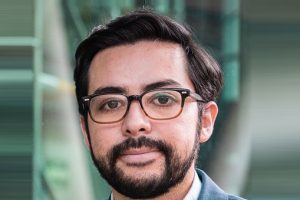
Diego Ocampo, Vice President of Technology at Neolpharma and President of the Mexican Foundation for Health Innovation (INCIDE), represents a new generation of pharmaceutical leadership combining global perspective with regional expertise. Having pursued graduate studies in medicinal chemistry at Tokyo University following his undergraduate work at UNAM, Ocampo has spent recent years modernising his family's pharmaceutical enterprise whilst championing Mexico's emerging innovation ecosystem, positioning the nation as a credible alternative within increasingly fragmented global supply chains.
Your international education, particularly your time at Tokyo University, is rather distinctive. How has that cross-cultural experience informed your approach to leading innovation at Neolpharma?
My international exposure commenced during my undergraduate chemistry studies at UNAM, where I had the opportunity to study abroad for a semester at Berkeley in California. I resided at International House, a residential community that brings together individuals from across the globe. That experience proved genuinely enlightening – not merely in terms of linguistic diversity, but in encountering fundamentally different perspectives on problem-solving and approaching life’s challenges.
Following my degree, I joined Neolpharma, our family enterprise, but harboured uncertainty about whether to pursue an academic trajectory or commit fully to the business dimension. I elected to undertake a master’s degree in medicinal chemistry and was fortunate to receive a scholarship from the Japanese government, gaining admission to Tokyo University.
Japan proved extraordinarily formative. It represents a society that seamlessly integrates tradition with innovation, operating according to its own distinctive frameworks and mentality. This manifests in everyday contexts – whether navigating subway systems or conducting laboratory experiments – where one observes the profound importance placed on methodological rigour and procedural adherence. Japanese innovation culture is characterised by perpetual optimisation: there exists a constant mind-set of improvement, of enhancing usability for end users. This cultural emphasis on considering others’ needs and potential challenges, combined with an unwavering commitment to excellence, has significantly influenced my daily responsibilities at Neolpharma. My role substantially involves implementing organisational change – modernising our enterprise, challenging established paradigms, and adapting to emergent technologies and the evolving challenges confronting our industry annually.
Neolpharma has evolved into one of Mexico’s leading innovation-driven pharmaceutical groups. How would you characterise the company’s innovation philosophy, and how does your leadership guide this vision?
Innovation in emerging markets presents formidable challenges. It demands exceptionally long investment horizons, substantial technical expertise, profound regulatory clarity, and sophisticated market access understanding. The complexity of pursuing innovation within such contexts cannot be understated.
Our philosophy – or rather, our strategic approach to innovation – acknowledges a fundamental reality: at some juncture, one must transition from pure generic production towards incremental innovation and differentiated product development. We recognised early that this represents an endeavour not easily accomplished in isolation. Consequently, we have embraced an open innovation model, consistently engaging with the academic sector, regulatory authorities, and increasingly with other laboratories and healthcare sector enterprises. Our guiding principle is straightforward: if we aspire to advance further, we must progress collaboratively.
Our innovation focus centres primarily on fixed-dose combinations, galenic form modifications, and dosage optimisation – incremental innovations that deliver meaningful clinical and compliance benefits whilst remaining commercially viable within our operational context.
With Neolpharma’s recent 50 million USD investment in Morelos supporting Mexico’s pharmaceutical sovereignty strategy, how does the company see its role in advancing this policy, while ensuring locally produced medicines meet global quality standards?
To provide appropriate context: fifteen years ago, we celebrated our anniversary at NeolSyM, our API facility. We acquired a site from an international company. This facility in Ecatepec ( Mexico State) operational since the 1960s, specialised in intermediate production for hormone products derived from plant extracts.
During the late 1980s, regulatory changes regarding taxation and foreign product importation, combined with advances making chemical organic synthesis more cost-effective than plant extraction pathways, decimated Mexico’s API industry. The sector contracted from over 200 chemical plants to approximately twenty facilities today.
Fifteen years ago, my father and Efren Ocampo recognised the strategic opportunity for vertical integration. They understood API’s critical importance – not merely from a cost perspective for finished dosage forms, but fundamentally for supply chain security, volume control, and production continuity. This led to our investment in Atlacomulco. Over fifteen years, we transformed that facility from intermediate production to a comprehensive finished API site. We have secured approximately fifteen Drug Master Files approved by COFEPRIS, which we sell domestically. Most production serves our internal requirements, following our vertical integration philosophy, though we have also developed third-party client relationships.
Having reached peak capacity at Atlacomulco and contemplating expansion, this acquisition opportunity in Cuernavaca presented itself. The site was fully constructed with established production lines, offering substantially superior economics and timelines compared with greenfield development. Whilst this investment predated discussions around pandemic-related market disruptions, API shortages, and USMCA near-shoring initiatives, it aligns naturally with those strategic imperatives.
Mexico possesses distinct competitive advantages for API production: a strong tradition, exceptional human capital with thousands of chemical engineering graduates annually, and a workforce inclined towards manufacturing sector employment – contrasting with developed nations where service sector preferences dominate. We believe Mexico can produce APIs at competitive prices. Given current discussions surrounding supply chain security and economic nationalism, we are positioned to contribute meaningfully by offering products with substantial regional content for domestic consumption and export throughout Latin America and North America.
The competitive dynamics seem daunting given China and India’s dominance. How can Mexico realistically compete in API manufacturing?
I attended a presentation by the US Pharmacopoeia addressing key starting materials and the US dependency on foreign sources. The statistics are sobering: approximately 74 percent of American key starting materials are sourced from either China or India. The discussion centred on alignment amongst friendly nations to secure supply chains – a strategic imperative that transcends purely economic considerations.
The fundamental question emerged repeatedly: when does cheap become too cheap? One must consider that availability of medical raw materials, ensuring supply chain continuity and preventing finished product shortages, possesses inherent value that cannot be excised from procurement decision-making.
Mexico’s competitive position has strengthened considerably. Labour costs relative to China have actually become more favourable – Chinese labour costs have escalated more rapidly than Mexico’s. Mexico maintains competitive energy pricing, with substantial opportunity for further optimisation through green energy integration. Trade agreements confer tariff advantages – particularly salient in the current environment. Geographically, Mexican production can reach either US coast in timeframes substantially shorter than Shanghai-to-Los Angeles shipping routes.
What specific technological innovations will the Cuernavaca facility pioneer?
Beyond vertical integration objectives, this facility possesses substantial infrastructure for high-potency API production – a critical niche capability. The previous owners invested extensively in OEB-5 compound capabilities (Occupational Exposure Band Five), representing extremely stringent occupational exposure limits. This technological capability positions us uniquely within the Americas; I am confident that high-potency compound supply remains inadequate throughout this hemisphere. Establishing this capability on this side of the world addresses a genuine market gap.
Given Neolpharma’s focus on CNS and mental health, does the company plan to expand into oncology, rare diseases, or advanced biologics to meet evolving market demand?
Central nervous system therapeutics remain our core identity. This commitment stems from the company’s evolution within specific medical and patient communities. We perceive our societal role – perhaps our purpose – as delivering high-quality, affordable therapies to patients suffering from psychiatric or neurological conditions. This transcends market rates; we recognise our social responsibility. The pandemic underscored this dramatically – anxiety and depression cases surged, and we understood our production output’s population-level importance. CNS will remain our foundation.
However, we recognise that CNS conditions rarely exist in isolation. Patients frequently present with comorbidities, creating therapeutic challenges requiring comprehensive approaches. We are structuring a framework enabling optimal therapeutic solutions for patients whose primary condition is CNS-related but who live with multiple concurrent health issues. We are developing a balanced portfolio capable of addressing this patient complexity.
Additionally, for many years we have served as a principal supplier for public sector tenders. That market does not distinguish by therapeutic area – government procurement spans all categories. We must offer comprehensive portfolio breadth to participate effectively in that substantial market segment.
How would you characterise public procurement under President Claudia Sheinbaum’s administration?
There exists genuine intent to deliver optimal healthcare access to the broadest possible population, which has necessitated redesigning previous acquisition models. This extends beyond pharmaceutical purchasing mechanisms to encompass distribution networks and healthcare provider access points. Recently, President Sheinbaum proposed unifying public health provision systems – currently highly segmented. This represents a formidable challenge, but such transformations inevitably present difficulties. Our responsibility as industry participants is understanding requirements clearly so we can respond effectively and supply this enormous market – effectively the entire nation. Whether one characterises this as complicated or difficult becomes somewhat semantic; all change proves challenging, and we must adapt to this ambitious public health project.
Mexico’s innovation ecosystem faces persistent challenges in translating research into market-ready solutions. As Neolpharma’s VP of Innovation and President of INCIDE foundation, what incentives do you see as most essential to bridge this gap?
This proves difficult to reduce to a single factor. Innovation discourse in Mexico frequently focuses narrowly on clinical trials, but genuine innovation spans a far more extensive continuum – from early-stage concepts at Technology Readiness Levels one or two through to commercial realisation.
Among the foremost challenges: Mexico’s innovation ecosystem remains fundamentally uncoordinated. Actors operate in isolation. Part of INCIDE’s purpose involves convening these disparate players around health innovation specifically – whether medical devices, veterinary health, human therapeutics, novel molecules, or innovative services within the healthcare domain.
First, we must orchestrate ecosystem coordination. Second, unlike nations where university spin-offs are commonplace – the US, for instance – Mexico lacks this culture. There must be incentives or more accommodating regulatory frameworks within universities and research institutions enabling researchers to commercialise their concepts beyond academic confines.
Third, early-stage innovations require substantial infrastructure and expertise for preclinical testing. Clinical stage development demands regulatory clarity. COFEPRIS has recently issued Mexican versions of ICH efficacy guidelines addressing preclinical safety and efficacy protocols. The discovery-phase sector requires training to incorporate these standards, and we need specialists capable of offering these as services to industry. National laboratories possess sophisticated equipment and technical expertise, but universities often cannot provide these capabilities as commercial services. Industry requires quality systems, regulatory compliance, and proper certification.
Transitioning early-stage innovation into Good Manufacturing Practice, Good Clinical Practice, and Good Laboratory Practice environments demands legal clarity – particularly regarding intellectual property arrangements with universities and technology transfer agreements. Other nations have standardised frameworks because such agreements are routine. Mexico finds these negotiations challenging because they remain uncommon. This legal ambiguity presents substantial barriers.
Once past these stages, industry can contribute by providing financial structure, regulatory navigation, and technical production expertise. Bench-scale laboratory work differs profoundly from validated, scalable commercial production across diverse market channels.
As an emerging economy, not every Mexican company seeks innovation involvement given the investment requirements. What would prove extraordinarily valuable would be clearly defined regulatory pathways with active regulatory authority accompaniment – collaborative development ensuring compliance with expectations. This would provide substantial certainty regarding capital requirements and timelines, ensuring we progress directly rather than circuitously, avoiding unnecessary detours or setbacks requiring regression to earlier developmental stages.
You have mentioned clinical trial capabilities. How does Mexico position itself for clinical research?
Mexico possesses considerable clinical research potential. Excellent Contract Research Organisations operate domestically – both local firms and international operations. Public institutions harbour substantial capability. This stage requires primarily financial capital. Clinical research is expensive. Willing investors exist, but capital availability cannot compare with the US market, where numerous venture funds, angel investors, and specialised healthcare funds actively seek innovation opportunities because they recognise future returns.
To my knowledge, Mexico lacks healthcare-focused specialised investment funds. INCIDE is attempting to establish one collaboratively with industry partners, but this remains early-stage. Clinical development requires extensive regulatory approvals for study conduct and results validation to advance through subsequent phases. Critically, the regulatory authority currently depends on an external expert committee – the Comité de Moléculas Nuevas. Ideally, this expertise should reside internally within the regulatory body – scientists expert in medical aspects, production, and regulatory frameworks conducting routine reviews rather than convening external committees for each project.
The innovation pathway you describe requires an end purchaser. How does government procurement factor into innovation viability?
In Mexico’s private market, the government represents the largest purchaser. This constitutes a critical public policy dimension for innovation. Undersecretary Clark has stated that this administration recognises government purchasing power’s potential to foster innovation through strategic procurement.
This proves transformational. If the entire pathway – from concept through preclinical and clinical development – culminates in a committed government purchaser, the project becomes financially viable. This represents perhaps the single most impactful innovation catalyst available.
Innovation requires substantial funding throughout early stages, but if projects demonstrating safety, proven efficacy, validated quality, and alignment with national epidemiological priorities have a guaranteed end purchaser, this makes the entire process feasible. This would be my foremost priority on any innovation wish list.
That seems challenging given reported funding cuts to research programmes and international scholarship initiatives.
The distinction is crucial: this is not early-stage project funding but rather end-stage market creation. If a project proves safe, demonstrates efficacy, validates quality through comprehensive testing and clinical phases, and addresses national epidemiological priorities, having that end purchaser as the ultimate objective makes the entire process viable and attractive to private investors.
Unlike other chambers and associations focusing on production operations, INCIDE concentrates specifically on innovation. We address the reality that Mexico competes globally for innovation. How can we attract or develop innovation domestically when available incentives represent a fraction of what Ireland, South Korea, or Puerto Rico offers? Puerto Rico’s innovation investment incentives, for instance, are remarkable.
INCIDE seeks to bring this discussion forward: this is the framework required for investment. We need regulatory certainty, financial support, identified end purchasers, and developed training capabilities within academic communities and national health institutes. Articulating these requirements proves essential.
Many government officials understand and appreciate innovation’s importance. Current focus centres heavily on foreign direct investment, particularly international clinical trials. There exists a perception that facilitating international clinical trial influx equals innovation. However, as I have emphasised, clinical trials represent merely one segment of this extensive pathway. This should not be zero-sum – we require both discussions simultaneously.
Most current focus addresses bringing international clinical trials to Mexico. We are beginning discussions regarding innovation’s other dimensions. Receptive individuals exist within government and private sectors who comprehend these issues, but we are only commencing this dialogue. I hope momentum accelerates, enabling more substantive discussions regarding these critical matters.
We have discussed APIs extensively but not biotechnology. Could you provide a brief perspective on Mexico’s biotech landscape?
This represents a complex topic, but the pandemic made Mexico’s weak biotechnology sector’s risks abundantly evident. Mexico secured excellent vaccine coverage through authorities’ exceptional work procuring supplies from the US, Europe, China, Cuba – globally. However, regarding domestic capability, we participated in vaccine candidate development projects with two universities, which revealed substantial infrastructure and expertise gaps requiring development.
Post-pandemic discussions have addressed establishing a local biotech industry. Several companies are now investing in this domain. We believe space exists for both biosimilars and innovation. Biotechnology extends beyond novel medicines to encompass process enzymes, green chemistry applications, food industry solutions, and energy applications.
Movement is beginning. Cuba offers excellent examples, as do Brazil and Argentina. Given Mexico’s scale and pharmaceutical sector relevance, the absence of substantial local biomanufacturing capability proves genuinely perplexing and represents a critical strategic vulnerability requiring urgent attention.
What personally motivates your innovation advocacy within Mexico’s pharmaceutical industry?
I perceive tremendous potential – from factory workers to academic scientists. I also recognise the need for solutions developed with Mexican realities, contexts, and circumstances in mind rather than products designed for foreign markets and situations. We can develop solutions more proximate to our national reality.
What would you like our readers to understand about Neolpharma?
Neolpharma is an expanding enterprise open to partnerships. We are constructing a more robust supply chain and distribution network whilst maintaining patient-centricity. We understand that Latin America must unite. As a region, we possess enormous potential. Working collaboratively, we can compete with regions long dominating this sector. Substantial untapped potential exists throughout Latin America. Neolpharma stands as an excellent Mexican partner for developing collaborative strategies enabling us to progress further together.
Latin Americans naturally congregate. We recognise our differences but understand something fundamental without articulation, creating inherent trust and mutual comprehension. Whether Chilean, Argentine, Mexican, or Colombian, we understand context. This proves invaluable.
Certain cultures lack this flexibility in understanding others and demonstrating empathy. Sometimes they insist upon their methodologies without discussion, creating cultural friction. As Latin Americans, we demonstrate exceptional flexibility, resourcefulness, and rapid adaptability. We maintain positive mind-sets, willingly confronting challenges and developing solutions for everyday problems. These cultural strengths remain insufficiently leveraged for regional collaboration.