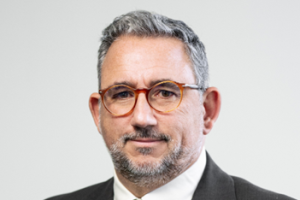
Fernando Zarate, Vice President of Bausch Health’s Latin American operations, outlines the company’s strategic positioning across the region. With 35 years in the industry and nearly two decades at Bausch Health, he today oversees one of the top 15 companies in the LatAm market. Zarate sets out a vision to enter the top ten within three years, driven by cardiometabolic expansion, strong brand-building capabilities, and operational flexibility suited to Latin America’s dynamic regulatory and commercial landscape.
Bausch Health reported USD 2.68 billion in third-quarter 2025 revenue with continued organic growth internationally. How is Latin America contributing to this trajectory, and which markets are delivering the strongest performance?
In Latin America, Bausch Health maintains a substantial commercial presence from Mexico through Peru, with Mexico contributing roughly 68 to 70% of our regional revenue and Colombia emerging as our second-largest market at 20 to 25%. Our footprint spans direct operations across Central America, the Dominican Republic, and Puerto Rico – managed within our Latin American structure despite its US affiliation, as we promote US-sourced products through our regional infrastructure.
Bausch Health operates comprehensively across many markets. A key pillar of our growth strategy is geographical expansion over the next three to four years. We are negotiating partnerships in Chile and Paraguay, leveraging our established manufacturing and operational hubs in Mexico and Colombia to introduce our existing portfolio into these additional markets.
Which therapeutic areas are driving demand in your region, and how is your portfolio adjusting?
Whilst we maintain significant positions in dermatology, gastroenterology, neurology, and consumer health, I would add a fifth pillar specific to Latin America: vitamins. We have achieved market leadership in the vitamin B complex segment through our flagship brand, which we manufacture in Mexico and export throughout Central America, the Caribbean, and Colombia.
We recently launched an entirely new therapeutic area with a dedicated business unit focused on cardiometabolic conditions. This represents our principal growth driver in the region, catalysed by GLP-1 products and anti-obesity therapeutics. Cardiometabolic conditions constitute one of the largest therapeutic categories because they encompass numerous interconnected clinical areas.
Where are you seeing the sharpest growth in branded generics and OTC, and what sets your offer apart from strong local manufacturers?
Branded generics represent the leading pharmaceutical segment across Latin America. This dominance reflects the emergence of exceptionally capable local and regional manufacturers operating at elevated quality standards. The landscape has transformed dramatically from perhaps 15 to 20 years ago, when quality concerns were more prevalent. These companies have achieved remarkable improvements.
Consequently, I consistently benchmark our brands against these branded generic competitors rather than solely against innovator products, because innovation manifests in diverse forms. Within the pharmaceutical industry, innovation is frequently conflated exclusively with novel molecular entities. From my perspective, that represents an unnecessarily narrow definition. We innovate through unique formulations, distinctive presentations, novel combinations, and differentiated delivery systems.
Our competitive strength is particularly evident in branded generics. In Mexico and Central America, we hold at least one top-three brand position across all our therapeutic categories. Colombia presents a somewhat different competitive dynamic, but our brand strength remains substantial.
Regulators are tightening controls while creating expedited access pathways. How are you balancing affordability pressures with the need to preserve access to innovation?
Commercial flexibility represents a fundamental competitive advantage for our organisation. We can launch differentiated products through diverse channels suited to local market dynamics.
For instance, throughout Mexico and Central America, private-label pharmacy products and pure generics are experiencing rapid growth. We maintain the flexibility to manufacture for key pharmacy chains on selected molecules. Our local manufacturing capabilities provide substantial cost advantages, enabling aggressive pricing strategies when commercially appropriate.
However – and this distinction is critical – we are fundamentally brand builders. That represents Bausch Health’s core identity in Latin America. Our commercial field force constitutes our primary strategic asset. We have cultivated an exceptionally robust commercial organisation focused on developing and building enduring brands.
The evidence validates this approach. We maintain market leadership across multiple therapeutic categories with brands that have sustained growth for 25 to 30 years, and we continue expanding annually. Whilst each year presents intensifying challenges, we innovate continuously to maintain momentum.
Consider one of our long-standing vitamin formulations, which marked its 50th anniversary this year. Despite successive waves of generic competition, the franchise remains exceptionally strong, with notable generational loyalty – many consumers recall their parents using it before adopting it themselves.
A similar pattern is evident with our paediatric formulation for infant colic, which carries exclusive approval for use from two months of age. The trust we have built among paediatricians is deep and enduring. Many colleagues recount that this product was used during their own infancy, reinforcing a multi-generational connection. These examples are replicated across our markets, where we continue to maintain remarkably resilient franchises. This enduring strength is a core part of our differentiation and organisational identity.
Strong local clinical evidence and real-world data generation are increasingly decisive in product launch success. What capabilities has Bausch Health developed to support the uptake of its emerging cardiometabolic portfolio in the region?
We possess comprehensive clinical research capabilities, and last year we carried out our first study on one of our long-standing vitamin formulations in the context of diabetes. Given that patients with this condition frequently experience significant B-complex vitamin depletion, the findings align closely with – and reinforce – the relevance of our growing cardiometabolic portfolio.
Building on this foundation, we are now developing a series of clinical projects to support the new products within our cardiometabolic business. Regulatory expectations across the region continue to rise, with authorities strengthening requirements and coordinating more closely across markets. This progression ultimately benefits patients and enhances the overall sophistication of Latin America’s healthcare systems.
To meet these evolving standards, we operate two fully equipped manufacturing sites – one in Mexico and one in Colombia – both capable of producing our portfolio and conducting clinical trials to the level required by today’s regulatory environment.
Given the scale of metabolic syndrome in Mexico, how is your cardiometabolic strategy supporting earlier detection and enabling physicians to manage this rapidly expanding at-risk population?
This represents a critical strategic focus. Mexico currently has more than 30 to 35 million individuals affected by these conditions. As the second-most obese nation globally, we face a genuine public health crisis. We are collaborating closely with governmental authorities, but our primary focus centres on physician engagement across all relevant medical societies.
We are delivering exceptionally high-quality products whilst implementing direct-to-patient programmes – particularly important given that we are addressing chronic diseases. We are providing superior products at an optimal cost-benefit balance, which I would characterise as Bausch Health’s fundamental DNA. If one were to encapsulate Bausch Health’s value proposition, it would be delivering the best cost-benefit balance across all our products, whilst maintaining global quality standards.
We launched this business unit five months ago, and our strategic objective is to expand to more than ten products within the next three years. This represents an area of sustained investment, incorporating products manufactured in Colombia alongside plans to expand our pipeline through local development initiatives.
What is your current balance between public and private sector revenue, and how is this evolving?
Approximately 70% of our revenue derives from private channels, with 30% originating from the public sector. We maintain comprehensive participation across all channels within both segments – traditional retail, similarity products, private labels, and all public sector dependencies, including IMSS, ISSSTE, SEDENA, and the Navy. This omnichannel participation represents another distinctive characteristic of our organisation.
As your operations diversify into consumer health, dermatology, and speciality care, which leadership capabilities and talent profiles are most critical for your Latin American organisation?
Our commercial organisation represents our fundamental strength and primary differentiator. Our relationships with patients, physicians, direct customers, and stakeholders reflect the professionalism we bring to every interaction, reinforced by our high-quality product portfolio.
We have invested substantially over the past decade in evolving from centralised, country-specific independent operations toward a more integrated global organisational model. This transformation encompasses skills and capabilities development across all functional areas and employee levels. With support from our global teams, we have achieved substantial improvements in talent quality.
Our current cardiometabolic business unit exemplifies this progress. We attracted exceptional talent – numerous professionals sought to join our organisation. We have assembled a tremendous team, which we are planning to expand further as our pipeline grows.
What insights can you offer our global readership regarding trends in Latin America and the industry’s directional trajectory?
Latin America can be defined in two words: resilience and dynamism. It is an exceptionally volatile region, as illustrated by markets such as Argentina, yet companies that demonstrate patience and maintain a medium- to long-term strategic vision consistently find success. This is precisely why regional companies thrive; they operate with an innate understanding of local dynamics. Although we operate across many countries, we see ourselves as a regional organisation, guided by long-term horizons while retaining the agility to adapt quickly with differentiated products. This flexibility allows us to respond rapidly to shifting market conditions and to tailor product launches to each country’s specific needs, free from prescriptive global directives.
This volatility also shapes the way we engage with global leadership. Government transitions can bring sweeping environmental changes, creating challenges for organisations unfamiliar with the region’s complexities. We are fortunate that our CEO has spent many years in Latin America and understands the culture and the distinct pressures each market presents. That depth of regional knowledge provides a significant strategic advantage and ensures alignment between local realities and global expectations.
What guidance would you offer executives considering entry into complex markets such as Mexico and Brazil?
Patience represents the paramount requirement. Consider brand development as an example. Establishing a strong brand position in any market requires approximately four to five years on average, demanding sustained investment. The initial two to three years prove particularly challenging for market share acquisition, despite pressure for accelerated growth.
I have witnessed numerous examples throughout my 35 years in the pharmaceutical industry across Mexico and other countries. The pattern remains consistent – patience is essential. Sustained investment eventually yields positioned brands that generate enduring success.
Our portfolio demonstrates this principle. We maintain brands exceeding 30 years of market presence that continue expanding annually in brand strength, revenue, and prescriptions. We invest considerably in engaging physicians at early career stages, implementing specific programmes with medical residents. Whilst their parents may possess deep familiarity with our products, these emerging practitioners require fresh engagement.
Looking three years forward, what single achievement or key performance indicator would signal that your tenure as Vice President has been unequivocally successful?
My primary objective is sustained brand expansion throughout the region, with our flagship goal being market leadership in cardiometabolic therapeutics through our dedicated business unit. Fundamentally, success means expanded presence across all remaining regional countries.
As an organisation, we currently rank within the top 15 pharmaceutical companies in Latin America. Our corporate objective is to achieve top ten positioning within three years. For our patients, we are committed to sustaining the loyalty they demonstrate today, maintaining our position amongst the top ten companies by prescription volume. Our decades of market presence and positioning across each market constitute our greatest institutional strength.