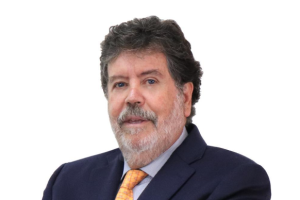
Ricardo Amtmann, President of Sanfer Group, discusses the company's evolution from a licensing-dependent operation into Latin America's most vertically integrated pharmaceutical enterprise. With nearly 14,000 employees across the region, Sanfer has transformed through strategic acquisitions, manufacturing investments, and a principled approach to market expansion. Amtmann articulates his vision for Mexico's emerging role as a pharmaceutical supply hub for North America, whilst emphasising the human capital, quality control, and partnership principles that have sustained eight decades of operations.
What factors drove Sanfer to shift from a licensing-dependent model to vertical integration, and how has this strategic transformation shaped the company’s development across Latin America?
The move toward vertical integration was driven by a pivotal moment in our history, following a transformative crisis in our business model. After 42 years of maintaining a substantial manufacturing and licensing contract with SmithKline Beecham, they elected to reclaim their entire product portfolio upon merging with Glaxo. This represented a profound shock, as approximately 75 to 80 per cent of our revenue derived from licensing agreements and manufacturing contracts with international pharmaceutical companies, with only 20 to 25 per cent originating from Sanfer-owned products.
Throughout our history, Sanfer has scrupulously respected patents and trademarks, building our business substantially through licensing arrangements. The Glaxo decision created an existential threat – corporate failure became a genuine possibility. We confronted two exceptionally challenging years during which we fundamentally transformed the organisation.
We ultimately negotiated with GlaxoSmithKline to license four or five products – though notably not their premium portfolio items like amoxicillin, which was Mexico’s most prescribed product at that time. The agreement included provisions allowing us to acquire these products outright, which we executed over the subsequent two to three years. This crisis became our inflection point, catalysing Sanfer’s evolution into a progressively less licensing-dependent enterprise. Whilst we maintain licensing relationships with French, Italian, and Japanese pharmaceutical companies – and this channel remains strategically important – we fundamentally redirected our trajectory toward ownership and vertical integration.
How do you balance organic growth with acquisitions, and what factors determine when to prioritise one over the other?
Following 2005, we executed a modest acquisition from Asta Medica AG, which initiated our education in acquiring non-core products from multinational corporations – naturally excluding patented compounds. We developed considerable expertise in redeveloping these acquired products and achieved substantial success. Subsequently, we acquired the GlaxoSmithKline Beecham portfolio, establishing a pattern of strategic product acquisitions from diverse pharmaceutical companies with consistently successful outcomes.
As we expanded through product acquisitions approximately two decades ago, we identified opportunities for geographic expansion beyond Mexico. Latin American market entry presented challenges – we possessed limited acquisition expertise outside Mexico. Through banking relationships, we identified Laboratorios Bussié in Colombia, a mid-sized company commanding strong physician loyalty. We acquired 100 percent ownership following extensive negotiations with the founding family.
A critical strategic decision shaped our approach: we had observed numerous multinational pharmaceutical companies entering foreign markets, particularly Mexico, and consistently witnessed fundamental mistakes in their market integration. The adage “when in Rome, do as the Romans” encapsulates our philosophy. Rather than imposing our systems immediately, we deliberately respected Bussié’s established business practices, organisational culture, and management processes. We retained Marta Bustillo, a family member, as general manager. This has become our standard acquisition methodology throughout Latin America – we invest considerable time understanding local business practices, policies, and culture before implementing changes. This patient, respectful approach requires additional time but provides substantially greater strategic security.
We subsequently acquired two further Colombian companies, significantly enhancing our market presence. Our second major expansion was into Argentina, which has proven far more complex. We have made substantial investments and remained committed to the Argentine market, despite the exceptionally difficult conditions for foreign companies. Over time, we have cultivated strong relationships with local industry stakeholders and executed multiple product acquisitions, establishing a more substantial pharmaceutical footprint. While the market has been demanding, Argentina’s emerging economic stabilisation offers renewed opportunities for growth. Given the country’s historical volatility, we have approached acquisitions with caution during periods of acute economic stress. Under this principle, we have acquired several products and now have a presence in 26 Latin American countries.
With a presence across most Latin American markets except Brazil, do you prioritise strengthening your position in Spanish-speaking countries first, or does Brazil require a distinct strategy?
Brazil demands a fundamentally different approach. The market scale prohibits starting from modest operations. We have achieved success across nearly all Latin American countries, and Brazil remains within our strategic focus. We currently operate through licensing arrangements for Sanfer-owned products in Brazil, but we believe we are not yet prepared for comprehensive market entry.
What is your view on Latin America’s potential as a major manufacturing and commercial centre, particularly in light of the caution shown by many multinational pharmaceutical firms?
This represents a genuinely compelling question, as our manufacturing philosophy has diverged substantially from broader industry thinking over the past two decades. We believe comprehensive ownership of manufacturing capabilities and promotional forces represents a strategic imperative. Accordingly, we have invested extensively in manufacturing facilities, implementing modern, efficient production lines throughout Latin America.
Colombia exemplifies this commitment. We inaugurated a world-class manufacturing facility less than twelve months ago, where we invested substantially not merely in infrastructure but in world-class machinery. This positions us to expand sales volume whilst achieving cost-efficient production.
You do not currently manufacture active pharmaceutical ingredients (APIs) domestically. Could you elaborate on the strategic reasons behind this decision?
That represents one of the pharmaceutical industry’s most significant strategic mistakes. API manufacturing presents environmental challenges – I would not characterise it as catastrophic, but it does generate pollution and consumes substantial water and energy resources. Consequently, major economies, particularly Europe and the US, systematically relocated API production outside their territories, which catalysed the industry’s concentration in India and China.
The COVID-19 crisis revealed the vulnerability inherent in this supply chain architecture. Nations suddenly recognised that their pharmaceutical security depended entirely on distant production capacity. India, for instance, temporarily prohibited API exports to protect domestic healthcare systems – a profound warning. The US now actively seeks API production either domestically or in proximate, economically aligned nations. This represents the emerging paradigm.
Mexico’s government is now promoting domestic API production. The challenge lies in achieving the necessary scale whilst managing the substantial water and energy consumption. Whether Mexican production can compete economically with China or India remains uncertain, but the fundamental question has shifted from price to supply chain resilience – nearshoring and friendshoring. No nation can accept vulnerability in pharmaceutical supply during future crises. This creates enormous opportunity for Mexico as the immediate neighbour of the world’s largest pharmaceutical consumer.
How is Mexico’s emerging role as a North American pharmaceutical supply hub creating opportunities for companies like Sanfer?
This represents perhaps the pharmaceutical industry’s most significant opportunity in 50 to a 100 years – possibly ever. The world’s largest pharmaceutical market requires quality products manufactured efficiently and close by, from a politically aligned nation.
Sanfer has begun making meaningful progress. We currently supply two or three stock-keeping units to the world’s largest pharmaceutical purchaser and are developing additional products. Additionally, we have launched two over-the-counter respiratory brands in the US market. I am convinced this represents a transformational opportunity manifesting in two distinct phases.
The first phase addresses finished pharmaceutical products. A substantial percentage of products consumed in the US are manufactured abroad – predominantly in China and India, thousands of kilometres distant. We are potentially five kilometres from the US border. This proximity creates an immediate and substantial opportunity.
The second phase, considerably more complex, focused on active pharmaceutical ingredients. The Sanfer Group has a long history of involvement in API manufacturing through multiple international partnerships, including Miles Laboratories for citric acid production since the mid-twentieth century, as well as collaborations with SmithKline for the manufacture of albendazole and cimetidine, and with Beecham for beta-lactams. These were significant facilities, particularly the citric acid plant, which exported to 40 countries and ranked among the three or four largest citric acid manufacturers worldwide.
However, as ecological regulations intensified, water costs escalated dramatically, and energy prices increased substantially, these three facilities became economically unviable and ultimately closed, meaning that Mexico lost most of its API manufacturing capacity.
How do you structure the relationship between human pharmaceuticals and animal health divisions, and what synergies exist?
They operate as entirely distinct divisions, although they share certain specialised functions in production, administration, and finance. We have long believed in the potential of the animal health market and therefore established a manufacturing facility in partnership with Connaught Laboratories of Toronto, which later became part of the Sanofi Pasteur group. Following this integration, the partnership contributed technology for the manufacture of cell-culture rabies vaccines, which we produced at substantial scale in Mexico, alongside other vaccines.
Forty-five years ago, regulations permitted the manufacture of animal health products within human pharmaceutical facilities. As regulatory requirements evolved, we established dedicated animal health pharmaceutical plants. This transition proved successful and led to the acquisition of additional companies, including a business in Tehuacán, Puebla, producing both pharmaceuticals and vaccines, primarily for the poultry sector.
The company also produced layer chickens, holding more than 50% of the market share under genetic licensing from a Netherlands-based company. When I first proposed to the board the acquisition of a business producing 28 million layer chickens annually, the idea was met with scepticism. However, the industrial logic was compelling: a direct link to our pharmaceutical and vaccine operations, together with integration into SPF egg production, which supplies eggs for vaccine manufacturing.
Following comprehensive analysis, we recognised substantial synergies and acquired the business in full. The acquisition has proven highly successful, and we are now investing in expanded capacity. We operate separate farming facilities, with operations dedicated to layer production and distinct facilities exclusively dedicated to SPF egg production in Mexico and at our new plant in Tennessee, where we expect to produce eight million SPF eggs next year, with the potential to double capacity within 18 to 24 months, depending on demand.
How do you manage Sanfer’s capital structure to support aggressive expansion while maintaining long-term independence and stability?
This represents another example of longstanding strategic discipline. As we expanded through product and company acquisitions, we developed sophisticated financing expertise, making this a demonstrably successful element of our growth. Sanfer’s substantial investment in products and companies has established us amongst the world’s fastest-growing pharmaceutical enterprises. This requires carefully balancing debt and cash. We maintain rigorous discipline – all interest rates are capped, and we adhere strictly to debt-to-asset formulas refined over the last 25 years.
We reached an inflection point where additional debt became unsupportable despite abundant growth opportunities. However, when General Atlantic approached us in 2012, my family and fellow shareholders initially preferred maintaining complete ownership. Finally, we confronted a fundamental choice: maintain 100% ownership within constrained growth parameters, or pursue partnerships with strategic investors. After two years of deliberation, we reached an agreement with General Atlantic. They have proven exceptional partners, substantially empowering our continued expansion.
Subsequently, CDPQ – one of the world’s most professional institutional investors – invested with us. This model, whereby the founding family retains majority ownership but we welcome select investors, has proven exceptionally successful.
What conditions would make an initial public offering the right step for Sanfer, and how are you preparing for it?
This certainly represents one of my aspirations. I began my career at a stock brokerage firm nearly 50 years ago – my initial exposure to the business world. Years later, when my father served as company president, he invited me to join Sanfer. I have consistently maintained the ambition of executing an initial public offering and establishing Sanfer as a publicly traded company.
We have implemented everything necessary for public market readiness, comprehensive accountability systems, accounting infrastructure, and complete environmental, social, and governance compliance. We have endeavoured to maintain constant readiness. However, particularly over the past seven to ten years, conditions have not aligned favourably. As a former banker, I recognise when genuine opportunity exists – not merely pricing and volumes, but critically, international investor appetite for companies like Sanfer.
Approximately 40% of our revenue now originates outside Mexico. I genuinely hope the opportunity materialises, as public listing provides liquidity for our investment partners – who operate within specific investment timeframes and require exit mechanisms – whilst enabling new investors to participate. Equally important, public market structure provides management stability and governance frameworks enabling Sanfer to endure across multiple generations with consistent administration and decision-making processes. I firmly believe this represents the foundation for building an institution that persists for many decades.
Under your leadership, Sanfer has evolved from a national company into a multinational group with nearly 14,000 employees. What guiding principles shape your leadership philosophy, and what strategic priorities do you consider critical for Sanfer’s long-term success?
Human capital represents our most fundamental philosophical commitment. Organisations are made up of people, and we respect people unconditionally. Secondly, production quality holds paramount importance in our organisational structure. Our quality control manager possesses decision-making authority superseding even the President and Board of Directors. If quality concerns necessitate product recall or production cessation, that authority exists absolutely. Quality represents our supreme operating philosophy.
Beyond human capital and quality, we cultivate strong relationships with physicians. I believe Sanfer commands substantial credibility amongst medical professionals, positioning us as a reliable partner for the medical community.
To conclude, what advice would you offer international executives looking to enter Latin American markets, particularly Mexico and Brazil?
For international companies or investors, partner selection represents the paramount consideration. Sanfer possesses over 80 years of international business experience. We have never encountered litigation with any partner. I believe this reflects trust, transparency, and confidence in partnership relationships. The opportunity Mexico presents today is genuinely extraordinary.