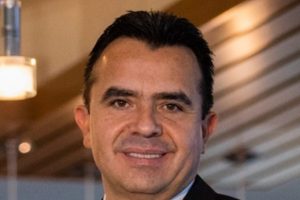
Oswaldo Bernal explains how Mexico is BMS' top-performing market in Latin America (outside of Brazil) and plays a significant role in the company's global growth strategy. He also discusses how Mexican patients face hurdles in accessing new treatments due to low health investment and lengthy regulatory approval processes, as well as how BMS is working to reduce these barriers through partnerships and regulatory reliance, and touches on the employee engagement and culture, leading BMS Mexico to have one of the highest employee engagement rates globally.
Could you share with us how you ended up in Mexico and what drew you to Bristol-Myers Squibb (BMS)?
I was born in Bogotá, Colombia, but raised in Caracas, Venezuela, where I spent most of my life. So, while I consider myself Venezuelan, my roots are Colombian. My journey to Mexico began when Pfizer, where I was leading the Latin American cardiovascular portfolio, invited me to relocate. Mexico, being the second-largest market in Latin America, presented a significant opportunity for me, as I had never previously managed such a large market.
Additionally, throughout my career, I had handled areas such as nutrition, vaccines, oral contraceptives, and primary care, but I had never worked in oncology. This was another major factor that made this move attractive. Later, I transitioned to Johnson & Johnson to oversee high-risk specialties, which encompass a broader scope beyond just oncology.
Eventually, BMS approached me with an opportunity. At that time, they needed someone with experience in immunology and mergers and acquisitions both of which aligned with my background. While I initially thought I would be managing different aspects, I ended up overseeing the Hematology portfolio, which has proven to be an excellent fit in the treatment of oncological diseases worldwide.
BMS operates with centers of excellence in various regions rather than having subsidiaries in every market. How significant are BMS operations in Mexico for both the regional and global group?
Mexico is a hugely significant market in the region. This year our country is positioned as the number one market in Latin America outside of Brazil.
In terms of growth, Mexico is also the top performer in the Intercontinental region, which encompasses Asia, Africa, Europe, and the Middle East. This demonstrates the substantial role Mexico plays in BMS’ operations and its overall significance in our global strategy.
You were named General Manager of Mexico in 2022. What were the first changes you implemented, and how would you describe the evolution of your role since then?
When I assumed the role of General Manager, I had already been with the company for two years, so I was familiar with the culture and most of the team. My priority was to focus internally. This meant focusing on people and culture and developing strategies to connect with and understand the team better. Although I was knowledgeable about oncology, haematology and immunology, I needed to deepen my understanding of other areas like finance. This internal focus was crucial for driving innovation, advancing our digital transformation, and forging strategic alliances to broaden access.
In the second year, I shifted my focus to the external environment while still maintaining the internal perspective. I balanced this 50-50, ensuring that I was actively involved in key conversations where decisions and alliances are made with other parts of the health ecosystem, to consolidate a patient-centred health system that is democratic, equitable, and sustainable.
For me as the General Manager, it is essential to be engaged in relevant discussions and to influence where necessary.
What drives your relationships with stakeholders and patients in Mexico?
As a pharmacist (Central University of Venezuela), my background is deeply rooted in health, which aligns perfectly with BMS’ vision of transforming lives through science and innovation. This vision is a core driver for me. For instance, at a recent convention with the American Society of Mexico (AmSoc), I was asked about the challenges we face in Mexico. I emphasized our goal of transforming patients’ lives by ensuring they have access to innovative treatments. This access is crucial for improving the health outcomes of Mexican patients.
Access to innovation in Mexico can indeed be challenging due to regulatory and budget constraints. In your view, what are the main hurdles Mexican patients face in accessing innovation?
The challenges are quite significant. Firstly, Mexico has one of the lowest levels of health investment relative to GDP, around 5.5%, especially if it is compared to the average of OECD member countries of 9.2% or Latin American nations such as Argentina, Brazil or Chile, which invest between 9 and 10% respectively. Moreover, 47% of this investment comes from out-of-pocket expenses, which places a heavy financial burden on individuals.
Secondly, the time it takes for innovation to reach Mexico is another major hurdle. This includes the time required for clinical trials, regulatory approval for new treatments, and access to key institutions such as social security. Currently, approval for clinical trials can take up to 400 days, whereas it should ideally be around one month. Reducing this approval time and implementing tools such as regulatory reliance, which allows for faster local approval of treatments already approved by agencies like the FDA or EMA, could significantly improve access. Accelerating access to social security and other institutions would also help, reducing the typical wait time from four or five years to one or two years.
Do you feel that the government and other stakeholders truly understand the value of innovation?
Today there is a broad consensus regarding the benefits of investment in health and of biopharmaceutical innovation. We are not only talking about the reduction in mortality, the improvement in life expectancy and the quality of the years lived by the patient, but also the positive impact that these indicators have on the economy.
I believe they do understand the value of innovation and are aware of the challenges we face in Mexico. As part of my external focus, I currently serve as President of the Regulatory Affairs Commission of AMIIF and CANIFARMA. In these roles, I have had the opportunity to engage directly with key stakeholders, including COFEPRIS. They recognize the issues we are dealing with and are actively working to address them. The crucial first step is acknowledging the problems, and that’s already happening. How long it will take to resolve these issues is another matter, but progress is being made.
What strategies or incentives has BMS implemented to broaden access to medicines and ensure patients remain at the center of your efforts?
Patients are always at the heart of everything we do. Our commitment is reflected in several key strategies. For example, we are heavily invested in bringing innovation through clinical trials. Over the past five years, we have invested more than USD 70 million in clinical trials, continuing medical education and patient support programs in Mexico. This year marks our 78th anniversary in the country, underscoring our long-standing commitment to this market and our desire to continue supporting patients here.
So far this year and next year, we plan to introduce new therapies to the Mexican market in areas such as oncology, haematology, cardiovascular and immunology.
Additionally, each year, we introduce new advancements and run numerous clinical trials in Mexico. This includes exploring how new treatments can be adapted and applied to local needs, such as in oncology and immunology. One area of particular interest is lupus, a condition that can affect multiple organs and currently lacks effective treatments. We are dedicated to bringing these innovations to Mexico as swiftly as possible, enhancing our contribution to global healthcare.
This ongoing investment in innovation demonstrates our dedication to addressing unmet medical needs and improving patient outcomes.
What innovations are you most excited about introducing to the Mexican market?
I am excited about all the innovations we are bringing, and here’s why. Each new treatment addresses significant medical needs. For instance, just this year, we introduced a new molecule for a rare haematological disease: Myelodysplastic Syndrome, a condition that hadn’t seen a new treatment in 10 to 15 years. I had the opportunity to present the results from Mexico to our global team, and they were impressed by the impact we are making. Over 50 adult patients have already benefited from this new treatment, which could reduce the need for blood transfusions. This not only helps those patients but also frees up blood supplies for other critical needs or emergencies in medical institutions. This represents a significant impact beyond the immediate patient benefit, extending to broader healthcare resources.
What kind of market share does BMS hold in its key therapeutic areas in Mexico?
According to external audits, BMS is the leading company in the antineoplastics market in Mexico. This strong market position reflects our commitment to providing innovative solutions and addressing critical medical needs.
You’ve mentioned the importance of clinical trials as the first step toward innovation. Mexico is often cited as having great potential in this area, but it seems that potential hasn’t always been fully realized. What do you see as the future potential for clinical trials in Mexico?
I remain optimistic about the future of clinical trials in Mexico. Recently, I encountered something quite promising. A high-level member of the Social Security system spoke about a new agreement with AMIIF and the IMSS to develop clinical trials and gather real-world evidence. This is a significant development, given that having access to a large institution with around 50 to 60 million people for running clinical trials is exceptional. We are also about to finalize an agreement with IMSS, which will provide innovative companies with the opportunity to conduct trials and generate data and valuable evidence.
We have heard that a significant portion of clinical trials are currently conducted in private hospitals. How does this new development impact the industry?
The willingness of institutions like COFEPRIS and IMSS to collaborate and form partnerships reflects a broader trend of working together to improve patient outcomes. The industry is recognizing that we need to join forces to advance clinical research and ultimately contribute to a healthier and more prosperous Mexico.
How crucial are partnerships for BMS, and what kinds of partnerships do you have?
Partnerships are absolutely crucial for BMS. We have numerous collaborations that span various initiatives. Two examples stand out to me.
First, there is All.Can, an initiative focused on elevating cancer within the broader conversation. This initiative aims to highlight the impact of cancer, and together explore potential solutions that help us break down the barriers (economic, social, educational, gender, territorial, etc.) that prevent equitable access to health. It is a collaborative effort involving not just BMS but also other pharmaceutical companies, medical societies, NGOs, and different institutions.
Second, we have a notable initiative in Latin America called Continent 2 Continent 4 Cancer (C2C4C). This is our third edition, where participants, BMS volunteer collaborators, cycle approximately 300 kilometres in Chile, to raise funds to promote innovative cancer education and research all donations from this event in Mexico go to the Mexican Association for the Fight Against Cancer. This partnership is more than just a collaboration; it is a way to support cancer patients directly through financial contributions that aid in their treatment and care.
BMS has been recognized as a leader in employee engagement. What has been your role in achieving this recognition?
We have received both external and internal recognition for our employee engagement. Internally, it is particularly gratifying to see our team’s optimism and satisfaction with the company. To give you an example, BMS Mexico is currently a top-performing site worldwide in terms of employee engagement, with a 90% engagement rate. This is a remarkable achievement and the highest level of engagement we have ever reached in Mexico. It reflects our commitment to fostering a positive and supportive work environment.
To keep our workforce highly engaged, we focus on maintaining consistent communication and creating a supportive environment. I prioritize daily or weekly interactions with the team, ensuring that we stay connected and aligned. I believe in the importance of human connection, so I make an effort to engage with team members personally. Simple actions like greeting them with a “good morning” or asking how they are doing can make a significant difference in fostering a positive and inclusive culture. It is all about showing genuine care and being open to feedback.
What does BMS aim to continue bringing to Mexico, and how can Mexico continue bringing value to BMS?
BMS sees Mexico as a land of tremendous opportunities. Despite the global social, economic, and political challenges, Mexico’s strategic location and potential for growth make it an attractive market for investment. Nearshoring is particularly promising, given Mexico’s proximity to key markets and its growing infrastructure and educational advancements. To make the most of this historic opportunity, we must integrate health as a crucial part of our strategic approach. By aligning health initiatives with broader economic goals, we can maximize the benefits for both BMS and Mexico, ensuring continued growth and collaboration.
With the current nearshoring trend, how does Mexico’s proximity to the US factor into this opportunity?
Apart from Canada, no other country is closer to the US than Mexico. We have the necessary infrastructure, a large population, and all the resources required to capitalize on this opportunity. I believe we can maximize the benefits of nearshoring, not just for businesses operating in Mexico, but for the Mexican people as well. It is important to ensure that the Mexican population is healthy and prepared to take full advantage of nearshoring.
Is BMS planning to leverage this opportunity in the pharma industry, as we have seen with other sectors?
I believe BMS will benefit from this opportunity. The US-Mexico-Canada Agreement (USMCA) is crucial as it helps protect our intellectual property and harmonize regulatory requirements. While health investment remains at 5.5% of the economy, which I hope will increase, it still represents a significant amount of money for health investments, even if the percentage stays the same.
On a more personal note, what motivates you, and how do you inspire your team to believe that each day will be better than the last?
I would say that my motivation starts with a deep belief in what we are doing. If I didn’t truly believe in our mission and vision, I wouldn’t be able to inspire others or communicate our goals effectively. I passionately advocate for our work because I see its value not just for us as individuals, but for our families and for Mexico as a whole. Although I’m not Mexican, I have grown to love this country deeply, and I speak about it with the same pride and commitment as a native.
In addition to personal conviction, it is crucial to recognize that people today are looking for more than just a paycheck. They seek growth, a healthy work-life balance, and a supportive environment. We strive to provide all of these. Our workplace is designed to be inclusive and to allow individuals to be themselves, regardless of their background, religion, or personal preferences. We have strong diversity and inclusion strategies in place, which our team members truly appreciate. It is this open environment that helps us keep moving forward and continually improving. I am convinced that D&I are our engine to continue innovating.
To conclude, what final message would you like to share with our global readers?
My final message would be centred on the evolving role of leadership. In today’s world, the salary is no longer the only nor the most decisive indicator of employee permanence and satisfaction; it is about delivering value as leaders. The connection between leaders and their teams is now more personal and meaningful.
When asked at our headquarters about the impressive engagement numbers in Mexico, my response is straightforward: our success is due to our focus on people. We prioritize our teams and cultivate a strong culture based on the principles of integrity, ethics and transparency. For BMS, integrity is always doing the right thing for patients, employees, communities and our stakeholders. It is trusting in what we do, how we do it and why we do it, and this approach has yielded positive results.