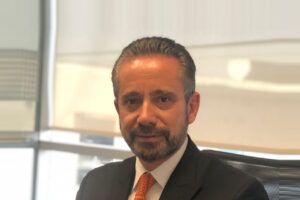
The Mexican National Association of Drug Manufacturers (ANAFAM) aims to support its members through advocacy, regulatory support, and professional development. The association's president, Dr Miguel Lombera, emphasises the importance of ensuring universal healthcare coverage and equal access to primary healthcare and vaccination for all Mexicans; how frequent changes in Mexico's medicine purchasing system have caused confusion and shortages; and lends his support to generic medicines and local production to ensure healthcare accessibility.
This is your second term as president of ANAFAM. Why did you decide to run again?
I was previously president of the Mexican Society of Public Health, which gave me a broad vision of how to bring health closer to people. The only way to achieve this is through collaboration and strengthening common interests for a higher purpose. One of my greatest strengths has been my ability to link national and international companies in a common goal.
I have always been committed to comprehensive health, and as an epidemiologist, I have always been passionate about being close to health. Being president of the National Association of Medicine Manufacturers (ANAFAM) is an honor that allows me to unite the industry for the health of the country and the pharmaceutical sector in Mexico.
Our vision at ANAFAM and as the pharmaceutical industry is to prioritize the health of the people. That’s why I wanted to be president of ANAFAM, to achieve a closer relationship between the national industry and different authorities: health, economy, foreign relations, the legislative power, and even the judiciary. We are part of an ecosystem where all actors in the health chain must actively participate.
What are the current priorities for ANAFAM?
Our mission at ANAFAM is clear: to ensure the health of the population. This involves close collaboration with various authorities: health, economy, foreign relations, legislative and judicial, as we are all part of an integral ecosystem. That said, there are four points aligned with the entire Mexican industry and a fifth that is more national but also relates to the international arena.
First, the right to health. The aim of both the current and incoming government is to achieve universal coverage. To achieve this, it is essential to regain strong health leadership. In this aspect, it is necessary to strengthen it. It will not happen magically; it requires investment. It is necessary to increase the gross domestic product allocated to health, as we are currently very low, around 2 percent. In comparison, countries of a similar economic development level to ours allocate at least 6 percent. I think that is one of the goals we must pursue.
In this regard, primary health care and vaccination are fundamental. I call it “an equal start in life.” The idea is that from birth, we all have equality in terms of health. There may be economic and social differences, but there should be none in health. At birth, everyone should have the same opportunities for access to vaccines and primary, secondary, and tertiary care as needed.
Second, the supply of medicines. The purchasing system in this administration has changed between 5 and 6 times, almost once a year, which has generated confusion and shortages. In 2017-18, we had a consolidated purchasing model managed by the Mexican Institute of Social Security (IMSS). IMSS consolidated purchases for all sector institutions, including the Ministry of Health, states, Pemex, Navy, and Defense. Although with its ups and downs, it was a great consolidated purchase.
Then, towards the end of 2019, the Ministry of Health implemented its own purchasing model. After that, the model changed again, and the Major Office of Ministry of Finance took over the purchases. Later, INSABI assumed the purchasing model, followed by a purchasing model through UNOPS. Currently, we are with a model of IMSS Bienestar, linked to Birmex. The change in the purchasing model has meant constantly breaking paradigms, and in the end, the population loses. What we need are quality, efficient, timely, and cost-effective medicines. I believe the government should look for ways to buy better. This means ensuring the quality, efficacy, and safety of medicines, but also obtaining better prices. With better prices, more people can be covered, and more medicines can be purchased.
This change in the purchasing model has generated product shortages in hospitals, which in the long run is more costly. When there is an urgent medication and it is not available, it must be bought at any price, instead of at a more efficient price obtained through a tender. There is a great opportunity to improve public purchases of medicines.
As for the private market, it plays a crucial role. The private market often must compensate for deficiencies in the public market. When certain medicines are not available in the public market, people turn to the private market. This includes pharmacy consultations and private doctors in small, medium, and large health units. Creating an economic impact on families, as they must pay out of pocket for medical consultations, surgeries, medicines, medical supplies, and devices.
Third, health regulation. We must reduce the backlog of procedures and move towards Mexico’s incorporation into the ICH. A fundamental issue is reducing the backlog in regulatory procedures. I must say they have been very kind, and there has been good communication recently. However, during the first two years of this administration, communication between the pharmaceutical industry and the health authority was broken.
With the arrival of the new Federal Commissioner, Alejandro Svarch, there was an opening to say: “let’s listen, let’s talk.” Today I can say with great pleasure that there is a strong connection between the regulator and the regulated, that is, between COFEPRIS and the pharmaceutical and medical device industry. There are periodic meetings, I would say monthly, with the Federal Commissioner or his team. In addition, there are weekly, biweekly, or even daily meetings with the COFEPRIS team to advance various issues.
It is clear that there is a backlog of procedures, something the health authority and even the transition team is very aware of. It is necessary to find ways and methods to reduce this backlog. Another important regulatory issue is Mexico’s incorporation into the ICH. CTD and ICH are topics we have been working on diligently. It is necessary to continue closely collaborating between COFEPRIS and the pharmaceutical industry. We have contributed many valuable ideas, always thinking about the health of the people. For this, we need quality, effective, safe, and timely medicines.
However, some new medicines are not reaching the country for various reasons, such as research protocol studies, stability, and bioavailability. All this generates a delay in the availability of both brand-name and generic medicines. It is crucial that the authority and the governed find more economical and safe ways, comparable to innovative medicines but with greater access. Personally, I use generic medicines not only because I produce them but because I am convinced of their quality and effectiveness.
A fourth point is that we need an industrial policy that strengthens the local production of medicines.
Do you think the population is convinced of the quality and effectiveness of generic medicines?
Yes, and there are great efforts because today medical prescriptions must include both the generic name and the commercial name suggested by the doctor. For over 20 years, generics have been gaining ground. I think we need more communication to highlight that there are very high-quality generic products. People often ask for the price of the generic in the pharmacy and change their decision based on that. We need to offer more options to take care of our people health.
Regarding supply and regulation, there have been initiatives to bring medicines from abroad, thinking they would be more economical. However, since the 2019-2020 exercise with UNOPS, the presence of medicines from countries like India and China was marginal in public tenders. It is not the same to have the medicine here in Mexico as to import it; planning and logistics are complex and require months of preparation, especially for medicines and vaccines. Generic medicines are a very good option because they allow a faster response. Here in Mexico, we have the raw materials, we can transform them and obtain the final product in less time. The idea of bringing medicines from abroad has not shown great benefits, and there are also concerns about medicines that have arrived without sanitary registration. This is very sensitive because we do not know the origin or quality of those products.
We have made efforts at the guild level to communicate this to COFEPRIS and purchasing areas. We comply with the regulation and have a sanitary responsibility. Importing medicines without sanitary registration may seem like a more economical option, but it does not offer security. It is a sensitive issue that affects supply and regulation.
There are models where products must submit their dossier with all the necessary information to be evaluated. If the product does not meet the standards, it must be rejected. This is an issue that must be handled very carefully. Personally, I would not use products without sanitary registration.
What can you tell us about product manufacturing in Mexico?
The companies that are in ANAFAM, the National Association of Medicine Manufacturers, have plants in Mexico, which is essential to produce here to have the product accessible and available locally.
We produce products of the highest quality, and the personnel working in the pharmaceutical industry are highly specialized. I love to say that most of the workers in this industry are women. In Mexico, we have a great capacity to respond to the most pressing needs of the country. Although some products are needed from abroad, most are produced here without any problem, and Mexico has the capacity to supply both the local market and international markets.
The competitiveness of Mexican companies has grown. Many already export to Latin America, and some seek to be U.S.A.F.D.A approved to export to the United States. The quality of Mexican products has improved significantly over the years. The Mexican industry is large, strong, and serious, committed to our country. We live here and work to give Mexico the best we can.
The Medtech industry has a plan to develop raw materials suppliers in Mexico, is there something similar with ANAFAM members?
In the past, there was more raw material formulation in Mexico. However, after NAFTA and other trade agreements, there was a reduction in the manufacturing of raw materials in the country. Although raw materials are still manufactured in Mexico, there is potential for much more.
I believe we need to work together with the government to provide fiscal and other incentives that boost the development of the raw material industry in Mexico. This would help reduce our reliance on external sources. As we achieve the best raw material formulations within the country, we will grow, create more jobs, and produce higher-quality products. This will enable us to increase our exports, especially to the north. We are already exporting, but we can do much more. I see a great opportunity to generate raw materials here.
What would be your final message to our readers about the future of the Mexican pharmaceutical industry?
ANAFAM’s commitment is clear, starting with its dedication to the health of the Mexican population. As ANAFAM members, we are committed to the highest quality standards and compliance with the country’s health regulations. We meet fiscal, economic, and labor obligations, but above all, we are committed to people’s health.
On that note, what do you see as the biggest opportunities?
Undoubtedly, the growth of the production plant and the pharmaceutical industry in Mexico. This will allow us to supply the national market and be a key player in the supply of medicines in both the public and private sectors. By doing so, we will ensure a longer life expectancy for our population, which is our main goal.
We are working in collaboration with various government entities, such as the Ministry of Health, the Ministry of Economy, and the Ministry of Finance. We have developed a joint document that we have already presented to the transition team. This document has contributed to part of the health project for 2024-2030 with our ideas.
The right to health involves ensuring supply in the public sector, making appropriate public purchases, and complying with regulations. All this is part of a comprehensive industrial policy. I believe that if we focus on these areas, we will achieve great progress. Additionally, we must always respect intellectual property. It is essential to respect the period during which innovators have the right to recover their investment in research. After those 20 years, we must continue to respect intellectual property in the same way. We are in complete agreement with this and have discussed it with AMIIF. Once that period expires, it is crucial to respect people’s right to health by allowing access to quality generics at a more attractive cost.
Regarding manufacturing, it is essential that Mexico continues to produce high-quality medicines. ANAFAM companies have plants in Mexico and are committed to the health of the population. Furthermore, we must work to increase raw material production in Mexico, reducing reliance on external sources.
ANAFAM’s commitment is clear: to meet the highest standards of quality and regulation and to collaborate with authorities to improve the health of Mexicans. We see great opportunities to grow the production plant in Mexico and be a key player in medicine supply in both the public and private sectors.
In summary, our vision is to ensure longer life expectancy and better health for all Mexicans, working in collaboration with various authorities and respecting intellectual property