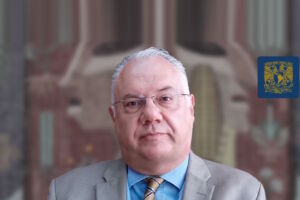
Dr Germán Fajardo currently serves as Director General of Health Services at leading Mexican university UNAM, having previously been director of its Faculty of Medicine. In conversation Dr Fajardo emphasises the vital importance of providing medical students with a holistic education that includes technical, scientific, and human aspects; highlights some of the significant challenges faced by Mexico's health system, including underfunding, fragmentation, and weakened institutions; and the growing importance of digital health in medical practice.
You were the director of the Faculty of Medicine at UNAM for eight years. What were the main initiatives developed during this time?
There were eight very intense, different, and unexpected years because we experienced the pandemic, which changed the game of teaching and medical care not only in our country but worldwide. During this period, several important initiatives were undertaken within the faculty. The most important aspect, what concerns us the most, is the student. We aim for students not only to have good development during their studies but also to have a promising future. In the end, they are individuals who are with us temporarily, acquiring knowledge, skills, and abilities to become doctors. But what distinguishes us as professionals are the principles and values that identify us. Our primary focus was to ensure that the medical students’ education had a comprehensive approach, not only technical and scientific but also human, bringing them closer to the patient.
Aside from what I just mentioned, I would highlight the international certification. The Faculty of Medicine was certified with international excellence, which is a quality guarantee for everyone: parents, students, and society. We also had very important dual degree programs with the University of Córdoba in Spain and recently a dual master’s degree program. This means that students can pursue a master’s degree in public health parallel to their studies during their third year, with a selection process to enroll in the Mexican National Institute of Public Health.
Shortly before my term ended, we signed an agreement for students in social service to pursue a master’s degree in health administration at the Ortega-Marañón Institute and the Gaspar Casals Foundation, both in Spain.
Additionally, we made significant changes such as renewing simulation equipment. Today, ensuring patient safety is crucial, and simulation offers those advantages, allowing students to practice as many times as necessary before attending patients. Furthermore, animals are no longer used for practice. For years, preclinical surgery practice at the faculty involved animals, mainly rabbits. This practice was eradicated six years ago and replaced with simulated models using inert materials, which is a significant advancement.
You mentioned that a fundamental part is the development of doctors and their values. What would you say are the main challenges that doctors in Mexico face today?
I would mention several. The first is that they can develop in the future they desire, that they can pursue the medical specialty they want. The second, something that is changing in the world of medicine, is everything related to digital health. This will continue to change and be a great facilitator for both doctors and patients. The immediate access to information gives us a great advantage. The use of digital health is one of the main challenges we face as a profession, particularly for newly graduated doctors.
How do you see the progress of digital health in Mexico?
It is something that is just beginning. I think the gap between what is happening globally and in our country is significant. However, we are making progress. For example, at UNAM, we changed the name of the subject from numerical informatics to digital health, not just as a name change but as a change in concept. Today, the student, the future doctor, must be able to diagnose, prescribe, and provide digital recommendations that help in treatment, especially now that patients are aware of the various applications that can assist in their treatment. Thus, the health system and doctors will need to be capable of providing digital recommendations for better patient follow-up. Digital health will continue to accelerate, and we must keep up.
In Mexico, the current health expenditure is 2.8 percent of GDP, far from the 6 percent recommended by the WHO. From your perspective, how do you see Mexico’s health system?
I see an impoverished, fragmented health system where institutions have been weakened. Not only have government contributions to health spending decreased, but there has also been under-execution of the allocated funds. Less is spent than what is designated, leading to a weakening of the systems. The health system has suffered structural damage. The Seguro Popular disappeared, CONAMEX and COFEPRIS weakened, the General Health Council, practically disappeared. The Undersecretary of Integration and Development was practically dismantled, causing damage that we still cannot fully measure. This has resulted in patients having less effective access, which the WHO would define as equitable access.
Today, there is talk of shortages, but for this to happen, the patient must have reached medical care, and many people do not receive it at all. They don’t seek it out or can’t reach it, so they turn to pharmaceutical chains or the private sector. In this context, the damage has been very significant, not only from an economic standpoint from the government’s perspective but also economically from what patients spend month by month on medicines, which is extremely high.
In a recent interview, you referred to the WHO’s motto “My health, my right” and mentioned that in Mexico we are not there yet. What is needed to get there?
I think what is needed is leadership. Today, it is not clear who is in charge of the health sector. The Ministry of Health is diminished, the entire public health aspect has been weakened. Vaccination has decreased; we were once a world example of vaccination, and this disappeared.
For better management, it is essential to know who is in charge of medical care and avoid confusion about who is responsible. The changes from INSABI to IMSS Bienestar and OPD IMSS Bienestar cause confusion. What people want is to be cared for, regardless of the name given to the institution. The problem is that there have been no agreements, dialogues, or consensus; the changes have been based on occurrences, not on organization and operation. There needs to be order regarding leadership, financing, and jurisdiction. Additionally, we need to expedite processes and authorizations in COFEPRIS to promote access to innovation.
Now that we will have the first woman president from the same party, what are your expectations?
Considering the individuals who could be part of the cabinet, like Dr. Kershenobich and Dr. de la Fuente, I am hopeful that things will improve. However, I don’t know how much they will be allowed to execute. The previous government was characterized more by operating ideologically than technically and rationally.
Coming back to your career, a few months ago, you were appointed Director General of Health Services (DGAS) at UNAM. Can you tell us about your main tasks and objectives?
It is a very important and interesting role for the university, as we carry out many activities. Among them is the automated medical exam, where students entering and graduating are evaluated from a physical and mental health perspective. This helps us understand health problems, obesity levels, adolescent pregnancies, unwanted pregnancies, anxiety, depression, rape, suicidal tendencies, and vulnerabilities due to social and family aspects. Having this information to support them makes us a significant institution.
Additionally, we are responsible for authorizing and overseeing the food vendors, both restaurants and street vendors, within the university, ensuring they provide safe food for consumers.
Another activity is the medical care provided by doctors, dentists, and nurses. We conduct around 160,000 consultations a year. We also have emergency services for the entire community, with ambulances and five hospital care beds. These are the three main activities we carry out.
The goal is to attend to and help young people more, especially from the perspective of their mental health, as mental health issues have increased after the pandemic. Likewise, we want to support the reduction of alcohol consumption and decrease teenage pregnancies, as the rate is still high in our country. Within our community, we aim to provide enough information to both students and parents, as we have a significant proportion of minors (between 15-18 years) in high schools, where parents remain responsible for their children.
A few months ago, The Royal Academy of Medicine of Spain awarded you a recognition. How does this impact your work and vision for the future of education?
Any recognition is a commitment. Beyond being a great personal satisfaction, it commits you to continue working. As a university member, academic, and doctor, you have a commitment to others. Our work is to see how we can help people live longer and better.
What advice can you give to young medical students?
There are several pieces of advice. Do everything with passion. Study and finish. When you get tired, start again. Along the way, laugh, grow, and have fun healthily. It’s a very important part of life.
What message would you like to give our readers about Mexico and health?
Mexico is a wonderful country, a unique country. Come, visit us.
Regarding health, we need to look outward, and although no two countries are the same, we must learn from others’ experiences. Take the positive aspects, like public-private partnerships, to help improve the health of the population.