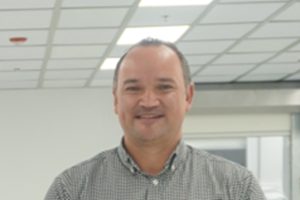

Carlos Hernandez and Daniel Kilian discuss OECHSLER's decision to diversify into the medical device industry, leveraging the company's expertise in automotive manufacturing; how Mexico has become a crucial strategic hub for the group; and why the Mexican workforce, characterised by strong education and adaptability, has been a key factor in OECHSLER’s success.
Why did OECHSLER choose to establish a presence in Mexico 12 years ago?
Daniel Kilian (DK): At that time, there was a significant push within OECHSLER to enter the North America Free Trade Agreement (NAFTA) region and get closer to our customers. The company was primarily automotive-driven, and our main product that influenced the decision to move to Mexico was an EPB actuator. This is essentially a combination of high-precision plastic injection parts and assembly, which results in the final product—an electric brake actuator for the parking brake.
The primary reason for choosing Mexico was to be closer to the North American market and to benefit from the trade agreements here. Our customers also required this step to ensure we had the necessary certificate of origin. Additionally, because of the size of the market, many German companies were making similar moves. I saw many companies arriving around 2008, with even more, including some of our suppliers, coming over between 2010 and 2020.
For many mid-sized German companies, the first step in diversification was to enter the Chinese market. Once they achieved a considerable size, these companies—often family-owned—turned their attention to Mexico to access the vast American market.
Today, there are several German-owned companies here, and the Bajío region, including Querétaro, has a significant German business community. In fact, in a WhatsApp group that we have for intercompany communication and idea exchange, there are about 80 German companies represented just in the Querétaro region.
You began as a leading supplier in the automotive industry in Mexico. What led to the decision to shift towards medical devices?
DK: OECHSLER has actually been an important partner in the medical device industry in Germany for nearly 30 years. We have developed and produced medical devices such as asthma inhalers for many years. While the automotive industry was our primary focus, a strategic decision was made in 2021 to leverage our extensive experience in medical devices even further. The company’s owners decided to invest heavily in clean room infrastructure across our subsidiaries in Asia, China, Mexico, and Europe, particularly in Romania. The goal is to diversify our operations, increasing our presence in the medical device industry globally while balancing our business between the medical and automotive sectors.
You have mentioned significant investments in clean rooms and expanding capacity. What specific services does OECHSLER offer to the medtech industry?
Carlos Hernandez (CH): At OECHSLER, we offer a comprehensive range of services. We have a large R&D department in Germany that collaborates with customers to design and review product designs, validate them, and potentially offer better solutions in terms of materials. In terms of manufacturing, we have capabilities in injection molding, handling everything from general to the most complex plastics. Additionally, we manufacture our own molds, which is a key service we provide. This allows us to not only analyse designs and handle injection moulding and assembly but also create the moulds needed for production.
DK: Moreover, we have substantial expertise in 3D printing. This enables us to produce prototypes quickly, which is crucial during the development phase. In fact, we can even handle 3D printing at an industrial scale, providing our customers with the flexibility and efficiency they need during prototyping and beyond.
Several large multinationals have established their own manufacturing facilities in Mexico, particularly in the northern region. How does OECHSLER’s offering fit into this landscape? Are you complementing these operations, or is your business entirely separate?
CH: At OECHSLER, we primarily focus on the initial stages of production for medical devices, specifically the manufacturing of components. We have the capability to assemble the complete devices as well, but this typically occurs only at the customer’s request. Given the stringent regulations in the medical device industry, the final assembly is usually handled by the original equipment manufacturers (OEMs) themselves. So, we play a crucial role in the supply chain by producing the components or partial assemblies that form part of these devices.
Our client base includes well-known OEMs like 3M and Roche. Additionally, we have partnerships with companies such as Kindeva, Amneal, BD, and Baxter. This positions us as a key player in the supply chain, complementing the larger operations of these multinational companies.
Given Mexico’s role as an international manufacturing hub, how significant is the country to the OECHSLER Group today?
DK: Over recent years, Mexico’s importance within the OECHSLER Group has grown substantially. Initially, like many German companies in the 2000s, our focus was on Asia, building up capacities and establishing a strong presence there. However, as we moved into the 2010s, particularly around 2012 when we began operations in Mexico, the North American market, including the entire NAFTA region, became increasingly vital to our strategy.
Mexico has grown steadily and profitably without causing any concerns for our parent company. While the group’s focus had often remained on Asia, we now see Mexico rising to a position of equal importance within OECHSLER, potentially even surpassing our operations in China. This shift is partly due to the geopolitical tensions between the U.S. and China, which have made the North American market, including Mexico, a more strategic and stable option.
CH: Furthermore, Mexico’s role is not just significant in terms of market size, but it has also become a crucial strategic hub for OECHSLER ’s future development. This is particularly true for our expansion into the medical industry, given the concentration of OEMs here, not just in North America but also within Mexico itself.
It seems that the health industry is becoming increasingly significant for OECHSLER. What does this shift mean for your company, and how would you describe your relationship with the Mexican government?
CH: The Mexican government has been quite supportive of foreign companies like ours, making it easier for us to invest and expand here. We haven’t encountered any significant issues when launching new investments in Mexico.
DK: Over the years, we have even received support in areas like technology transfer from Germany to Mexico. This positive relationship has certainly facilitated our growth.
CH: Regarding the health industry, we recently held the OECHSLERhealth Medical Day to officially launch our new initiative within the sector. We wanted to make a strong impression on the key customers we are targeting by hosting an event that not only showcased our capabilities but also provided valuable insights into the political and economic landscape. It was a success, highlighted by the presence of prominent figures, including the future Minister of Health, which underscored the event’s significance and the importance of our expansion into the health industry.
What strengths and weaknesses do you observe in the Mexican medical device manufacturing industry?
CH: One of the key strengths I see is the people. In Mexico, the workforce is well-educated and capable of handling not only basic tasks but also very complex operations. We have a well-trained middle management level—managers, supervisors, and department leaders—who truly understand the needs of our customers.
Another strength is the technology infrastructure. There is a substantial base of suppliers here in Mexico that can support us during the startup phase of new operations as well as throughout serial production.
DK: I see challenges, particularly in terms of labour policies. With the United States-Mexico-Canada Agreement (USMCA), which substituted NAFTA, there is a push for Mexican labour conditions to align more closely with those in the US or Canada. While we certainly did not come here just to make a profit—we are committed to contributing to society in a socially responsible way—the move to equalize conditions, especially if done hastily, could have significant impacts on decisions about where companies choose to invest.
If labour conditions become identical, it could lead companies to consider moving directly to the US, bypassing Mexico altogether. It is crucial that these policies are implemented thoughtfully, considering what companies can realistically afford. Abrupt changes in labour laws can be challenging to adapt to, especially if they were not anticipated in the business plan.
Security is another concern. While it is still manageable, the deterioration of security in Mexico over the years is troubling. We foreigners living here adapt, but there is a limit to how much adaptation is possible before it becomes a significant issue.
Finally, investment in education remains an opportunity. At OECHSLER, we have a program called Semilleros, which offers technical education to the children of our operators, providing access to higher education and better-paid jobs. It is rewarding to see some of these children rising through the ranks and even becoming supervisors to their own parents. It is a way for us to give back to the Mexican society that has welcomed us so warmly.
When people ask why things are not working as they do in Germany, my first response is always, “Because this isn’t Germany.” You need to open up to the differences between the cultures. By combining the strengths of both Mexican and German cultures, you often end up with better solutions.
A simple example from my personal life is that my wife, who is Mexican, has become a bit more punctual over time, while I have learned to enjoy life more without planning every minute of my weekend. It is this blending of cultures—taking the best from each—that has made us successful here.
In our company, for instance, we have a strong foundation of Mexican talent running the operations. While I am German, and we have a few others from places like Argentina and Venezuela, the vast majority of our team is Mexican. Their education, their adaptability, and the way they have learned to manage and improve operations over the past 12 years have truly contributed to our success. It is a testament to the exceptional talent pool here in Mexico.
OECHSLER’s initial focus in Mexico was on the US market. Considering the strong MedTech manufacturing presence in Mexico, how do you see this capability being leveraged to better serve patients in Mexico, rather than just using it for nearshoring to the United States?
CH: Our strategy involves leveraging Mexico’s MedTech manufacturing capabilities in both directions. While it is true that many companies are still heavily focused on the US market, there is a growing recognition of the opportunities within Latin America, including Mexico.
The emphasis in healthcare is shifting towards early detection and prevention, which requires advanced devices and technology. By manufacturing high-precision testing and prevention devices locally in Mexico, we can address the specific needs of the Mexican market and provide high-tech solutions that are tailored to local conditions.
Our goal is to not only serve as a nearshoring hub for the US but also to contribute significantly to Mexico’s healthcare sector. By aligning our capabilities with the evolving needs of both regional and global markets, we can enhance patient care and drive growth in the local MedTech industry.
With the new president-elect Claudia Sheinbaum set to take office on October 1st, what are your expectations for his administration? Do you foresee a continuation of the current policies, or do you anticipate significant changes that might impact the business environment?
CH: We are anticipating positive changes. While the current administration has been quite conservative, particularly with a strong focus on protecting the workforce, there has been a noticeable lack of strategies to further grow the industry. We hope the new administration will bring more progressive policies that foster industrial development and attract additional companies to Mexico.
One major area of concern for businesses right now is the energy sector, which is crucial for our operations. Access to reliable and affordable energy is a significant challenge, impacting growth and development. Similarly, water resources are also a pressing issue. In regions like Querétaro, which is highly industrialized, these challenges are particularly pronounced.
We are optimistic that the new government will address these issues and implement strategies that support industrial expansion and infrastructure development, thus improving the overall business climate in Mexico.
To conclude, what final message would you like to convey to our global readers?
CH: Success is not something you can simply demand; it is something you earn through hard work and dedication. At OECHSLER, we strive every day to deserve our success and be a significant part of the industry.
DK: I would add that Mexico is a truly remarkable country. Its vibrant culture and people, combined with advanced technology and know-how from Germany, create unique opportunities that might surprise you. This blend of cultures fosters an environment where innovative solutions can thrive.