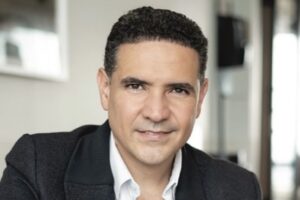
Gilead’s Mexican affiliate is its largest in the LatAm region, and one that has had an impressive impact as 85 percent of those living with HIV in the country are treated with the company’s therapies. With just seven months behind him as GM, Arturo de la Rosa explains what is on his agenda, namely addressing the country’s HIV diagnosis gap, continuing to make strides with Gilead’s existing portfolio, and gearing up for forthcoming oncology launches.
Could you start by introducing yourself and sharing what led you to join Gilead?
I was born and raised in Mexico, coming from a traditional Mexican family. I initially trained as an electronic engineer and began my career with Procter & Gamble in logistics. After some time, I pursued an MBA in the US, which is where I was introduced to Eli Lilly and the pharmaceutical industry. I started at Eli Lilly in a sales role and progressed through various commercial positions, eventually becoming the Marketing Director for Brazil and then the General Manager for the Southern Cone, which includes Argentina, Chile, Uruguay, and Paraguay.
I later transitioned to lead the Mexican affiliate for AbbVie, where I spent four years before taking a sabbatical in 2023. During my sabbatical, I explored various opportunities, including entrepreneurship. However, I found that my passion for the pharmaceutical industry remained strong. When Gilead approached me, I was drawn to its biotech-driven approach and its commitment to life-saving medicines. This alignment with my interests and career goals led me to join Gilead at the beginning of this year.
Gilead Sciences has a compelling narrative, particularly with its leadership in HIV and Hepatitis C. Could you elaborate on Gilead’s operations in Mexico and the impact it has had there?
Gilead plays a crucial role in Mexico’s healthcare landscape. Currently, 85 percent of individuals living with HIV in Mexico are being treated with one of our therapies. Remarkably, recent data from the government indicates that up to 93 percent of these patients have achieved what we call an undetectable viral load. This means their HIV is so well-managed that it cannot be detected in tests, and importantly, patients cannot transmit the virus to others. Additionally, it means their immune systems are protected from the potential complications associated with advanced HIV infection.
On the Hepatitis C front, Gilead has revolutionized treatment. What was once a potentially fatal disease is now manageable with our advanced cure. A patient can take just one pill a day for three months to clear Hepatitis C and prevent progression to cirrhosis or liver cancer.
Currently, our primary focus is on these areas, but we are also gearing up to enter the oncology market. We have been laying the groundwork by engaging with oncologists and sharing our innovations in cancer treatment. We anticipate that we will be able to launch our oncology offerings later this year or early next year. This expansion is indeed an exciting development for us.
Gilead’s global operations include a diverse international presence. Could you discuss the importance of Mexico within Gilead’s international market division and its growth trajectory?
Within Gilead’s international market division, Mexico stands out as a major affiliate. In fact, it is the largest affiliate in Latin America and one of the most significant globally. Despite Brazil being a larger country, Mexico has achieved this status due to the extensive presence of generics in Brazil’s HIV market, which has influenced Gilead’s operations there.
Since its establishment in 2017, the Mexican affiliate has grown rapidly. It is noteworthy that Gilead, a company with just 35 years of history, has managed to introduce ground-breaking, first-in-class drugs and medicines across various therapeutic areas. This rapid growth in Mexico reflects the company’s innovative approach and its ability to adapt quickly, which is crucial for maintaining its leadership in the industry.
Since joining Gilead seven months ago, what are your primary focus areas for the affiliate in Mexico?
At the top of my agenda is ensuring continuity and progress in our work with the new government, particularly in the areas of HIV and hepatitis C. The previous government made a significant move in 2019 by transitioning many people living with HIV to state-of-the-art treatments, which has successfully brought over 250,000 individuals under control. This achievement is remarkable, and it is crucial that we maintain this momentum despite any changes in administration.
I am particularly optimistic about working with Dr Kershenobich, the new Secretary of Health, who has been deeply involved in HIV and hepatitis C initiatives for many years. His experience and understanding of the epidemic are invaluable as we continue our efforts. My immediate goal is to engage with the government to discuss strategies for ending the HIV epidemic, leveraging the advancements and tools we now have. This aligns perfectly with Gilead’s global objective to eradicate these diseases and is both inspiring and critical for our ongoing mission.
With your extensive experience in launching innovative portfolios across various markets, what insights can you share about introducing cutting-edge therapies, particularly in the field of HIV and virology, to the Mexican market?
Introducing innovative therapies into Mexico involves navigating two main challenges. The first is regulatory approval. Recently, under Dr Alejandro Svarch’s administration, COFEPRIS has made significant strides in streamlining the approval process. There have been notable improvements in reducing bureaucratic hurdles and expediting the approval of new treatments. This progress is encouraging, as it means that innovative therapies can reach the market more quickly, which is a major advantage for patient access and healthcare advancement.
The second challenge is reimbursement. For many patients, especially those covered by public healthcare systems like IMSS and IMSS-Bienestar, the affordability and inclusion of high-cost treatments are critical. As a company, it is essential to demonstrate the value of our therapies not only in terms of clinical outcomes but also in how they contribute to the overall sustainability of the healthcare system. This means providing a clear value proposition that justifies the cost while improving patient outcomes and system efficiency. Addressing these challenges effectively is key to successfully introducing and sustaining innovative treatments in Mexico.
Given your focus on working closely with the government and Gilead’s innovative approaches in different countries, could you share any upcoming plans or strategies that you are developing to improve access to HIV treatments and diagnostics in Mexico?
One of our major priorities is addressing the significant gap in HIV diagnosis. In Mexico, between 50,000 to 100,000 individuals living with HIV are unaware of their status. These individuals are at risk of serious health complications and also pose a risk of transmission. To tackle this, we are focusing on improving diagnostic outreach.
Rather than relying solely on traditional healthcare settings, we are collaborating with non-governmental organizations (NGOs) within communities most affected by HIV, such as the LGBT community. These NGOs are often more adept at reaching individuals in need of testing. By equipping them with rapid diagnostic tests, we aim to enhance early detection and treatment initiation.
Additionally, we are exploring ways to expedite the treatment process. Currently, there can be a significant delay—ranging from a week to six months—between diagnosis and the start of treatment. To address this, we are piloting the use of point-of-care diagnostic machines in Quintana Roo, a state heavily affected by HIV. These machines can provide results within an hour, allowing for immediate initiation of treatment. Our goal is to streamline this process so that individuals can be diagnosed and start treatment on the same day, improving both their health outcomes and the overall effectiveness of our intervention efforts.
Can you provide any insights into the availability of Gilead’s portfolio in Mexico? Specifically, what ground-breaking solutions are currently available or on the horizon?
Gilead’s portfolio in Mexico continues to make significant strides, primarily within virology and now expanding into oncology. Currently, our focus remains on enhancing our virology portfolio with advanced treatments and preventative solutions. For instance, we are dedicated to improving liver disease treatments and expanding our offerings in hepatitis C.
On the oncology front, we are excited about our forthcoming entries into this therapeutic area. Although we are still in the preparatory stages, we are actively engaging with oncologists and healthcare institutions to better understand the landscape. We are gathering data on various conditions, such as metastatic triple-negative breast cancer, to identify where our future treatments can make the most impact.
This collaboration helps us tailor our approach and ensures that once our oncology therapies are approved, we can address significant unmet needs effectively. We are eager to advance these initiatives and contribute to better outcomes for patients in Mexico.
Looking ahead, what are your long-term aspirations for Gilead over the next three to four years? What specific achievements or milestones would you like to see during that period?
Over the next few years, Gilead’s primary goal is to diversify beyond its strong virology foundation. Our global objective is to have at least 30 percent of our revenue come from oncology drugs. For us to meet this target, each country, including Mexico, needs to contribute effectively.
In the short term, my vision includes two key objectives: First, solidifying our leadership in virology. This commitment remains crucial as we continue to support those living with HIV and maintain our role in providing essential treatments.
Second, we aim to make a substantial impact in oncology. We are focused on achieving a successful entry into this field, which will position us as a significant player capable of addressing critical challenges in cancer treatment.
As we pursue these goals, it is essential to remember that none of this would be possible without a dedicated team. My role also involves motivating and guiding our team to embrace and drive these new projects forward with enthusiasm.
How do you keep your team motivated and inspired? What values or culture do you aim to instil within the team at Gilead?
One of the inherent advantages of working at Gilead is the tangible impact our work has on society. There are times when we meet individuals who share that our products have been life-saving for them, which is incredibly powerful and motivating.
In addition to this, it is crucial to translate this impact into a daily sense of purpose. At Gilead Mexico, we benefit from a highly experienced team with diverse backgrounds from various pharmaceutical companies and industries. This combination of experience and shared purpose creates a strong and dynamic environment.
My role is to communicate this purpose as clearly and emotionally as possible. The more closely I can connect the team’s daily work to the real-world impact it has, the more effectively I can foster a shared sense of purpose and motivation. It is about making the connection between their efforts and the meaningful difference we are making in people’s lives.
What were your initial impressions when you joined Gilead, and how have they evolved over the past few months?
When I first arrived at Gilead, I was immediately impressed by the depth of experience within the team. Seven months later, my admiration has only grown stronger. One notable evolution in my perspective has been the approach to problem-solving. Initially, we focused on reducing stigma and discrimination surrounding HIV. However, I soon realized that while addressing stigma is crucial, our immediate priority should be reaching people living with HIV despite these challenges.
By shifting the question from “How can we reduce stigma and discrimination?” to “How can we effectively reach those in need despite stigma and discrimination?” we have explored innovative solutions. For instance, collaborating with NGOs within the LGBT community—where stigma is less prevalent—has proven effective. These organizations are already integrated into the communities and can provide vital testing and support where it is needed most.
The Zeroing Grant, which includes USD 1.3 million allocated to Mexico, exemplifies our commitment to this approach. This grant supports NGOs across Latin America and helps us equip them with rapid tests to extend our reach and impact, ensuring we meet people where they are rather than waiting for them to come to us.
Before we conclude, do you have a final message for our international readers who are engaged in the global healthcare landscape?
I would like to add that the fight against the HIV epidemic and other major health challenges requires a collective effort. No single entity can address these issues alone. It is crucial for governments, healthcare systems, pharmaceutical companies, and communities to work together harmoniously. At Gilead, we are committed to being a proactive partner in this collaborative effort.
Our aim is not only to advance treatments but also to ensure they are accessible and effective in real-world settings. With ongoing innovation and the united efforts of all stakeholders, I am confident that we can make substantial progress in ending the HIV epidemic and addressing other pressing health needs.