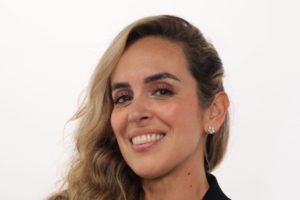
Adriana Eguia Alaniz is President of Tijuana EDC, leading efforts to diversify and strengthen the region’s economy. Under her leadership, Tijuana has strengthened its role as a major medical device export hub, with 55,000 workers, $3B in exports, and 40+ global companies. Her priorities include cross-border speed-to-market, supply chain resilience, and workforce development to bolster North American manufacturing.
From a high-level perspective, can you provide an overview of Tijuana’s role in Mexico’s medtech ecosystem and highlight the EDC’s key priorities for supporting this sector?
Tijuana’s medical device export hub represents one of the largest concentrations in North America, encompassing approximately 55,000 direct jobs within the city and generating over three billion USD in annual exports. We host more than 40 anchor companies, including BD, Johnson & Johnson, and Boston Scientific, amongst others.
The EDC’s priorities towards this market centre on three principal areas. First, bi-national speed-to-market initiatives, addressing border logistics and permitting processes for these companies. Second, strengthening local supply chain capabilities, particularly in processes such as moulding, sterilisation, and contract manufacturing services. Third – and we consider this paramount – developing specialised talent, particularly in validation, quality systems, and automation capabilities.
An additional priority involves assisting companies with scaling operations. Given that these enterprises engage in complex engineering and advanced manufacturing; we facilitate their transfer processes. This comprehensive support framework is why we position ourselves as one of the premier hubs in Mexico.
The EDC encompasses multiple industry sectors. How important is the medtech industry for the EDC, and what type of associates or partners constitute your medical device sector ecosystem?
We focus on three principal sectors citywide: electronics, aerospace, and medical devices. These three sectors encompass our market’s core strengths. The ecosystem actors involved include primarily shelter companies that assist enterprises in establishing and scaling operations. We also work closely with industrial developers who provide physical spaces for operations, and naturally, the comprehensive network of consultants – ranging from legal counsel to accountants and beyond – who support industry growth. These professionals possess deep sector expertise derived from our 40-year operational history in this domain.
You joined the EDC as President about a year ago and have since established new strategic priorities. Can you elaborate on these priorities and what prompted this shift within the EDC?
Our foremost priority centres on innovation and market diversification. This imperative arose because the majority of our GDP concentrates in manufacturing. As trade policies have evolved significantly in recent months, we recognised the risk of maintaining excessive concentration – proverbially, all our eggs in one basket.
Consequently, we are pursuing diversification into the innovation sector, with particular focus on medtech and talent development, whilst attracting startups across various sectors to the city. We can assist these ventures in scaling more rapidly without exhausting their capital reserves, as might occur in expensive ecosystems such as San Francisco or comparable locations. We believe this approach provides leverage whilst capitalising on an existing city strength.
Given that Tijuana may not possess the world’s most favourable reputation, how do you convince investors of the region’s opportunities despite potential concerns?
One of our most effective strategies involves enabling companies that have already established operations here to share their business cases directly. We regularly request their participation – whether through testimonials, interviews, or direct conversations with potential investors – enabling them to communicate their success stories firsthand.
Whilst our narrative alone may not achieve complete credibility, hearing from entities already operating successfully here provides the concrete evidence prospective investors require to advance their investment decisions.
This year has brought challenges, especially as a U.S. neighbor. With USMCA up for review in 2026, how is Tijuana EDC preparing for possible U.S. trade policy changes and ensuring business continuity for medtech clients?
We focus on three principal areas when working directly with companies. First, advocacy: we collaborate with chambers and clusters to ensure companies remain informed regarding USMCA negotiation developments. This information dissemination proves critical.
Second, continuity planning for potential tariffs: we assist companies in understanding business case scenarios – what occurs if tariffs reach certain thresholds – and help them navigate Rules of Origin changes, including considerations such as dual sourcing or regional value engineering, which involve highly technical aspects of their operations.
Third, friction-proof cross-border protocols: we assist with Customs and Border Protection processes and address any cross-border delays. We maintain open relationships and bi-national connections, which is why we believe this represents an ideal location for operations, given our established relationships with companies and allies throughout Southern California.
Tijuana is Mexico’s leading medical device export hub, with Baja California holding nearly half of the country’s medtech jobs. What advantages come from this concentration, and how does the EDC sustain and grow this leadership?
As you noted, Baja California concentrates nearly half of Mexico’s medtech employment. This concentration yields several advantages. First, minimal logistics costs to California – border crossing can require as little as 20 minutes, depending on certification status. We also possess a certified supplier ecosystem, with most companies having secured certifications required by major global enterprises.
Additional advantages include cross-learning opportunities in validation, quality systems, and technology specifications – we can facilitate support in these domains. Critical talent mass represents another strength: we possess professionals specialising in this sector.
We sustain this leadership through market intelligence provision, matchmaking support, manufacturing transfers, and ramp-up assistance when companies pursue regional growth.
Mexico’s Plan México aims to double foreign direct investment by the end of the decade. How is Tijuana EDC aligning its medtech strategy with this goal, and are you seeing more growth from established companies or new entrants
Plan México’s purpose is doubling foreign direct investment in Mexico by this decade’s conclusion. Locally, we are translating this ambition through several mechanisms. For example, we maintain a shovel-ready site portfolio, enabling companies to understand precisely what we offer – whether for potential mergers with existing companies or partnerships with established operations.
We also provide soft landing packages, including assistance with specialised building acquisition, contract facilitation, talent recruitment, and aftercare for expansion needs. Consequently, we observe both medtech firms and new entrants now considering our location based on these comprehensive offerings, our experience, available funds, and direct alignment with Plan México’s objectives.
The sole timing consideration is that, absent tariff certainty, companies express interest – acknowledging Mexico’s growth potential – but require policy clarity. Once definitional certainty emerges, we anticipate this will flourish rapidly throughout the country.
Regarding investment patterns, are companies primarily pursuing greenfield operations with dedicated manufacturing, or are mergers more prevalent? What dynamics characterise current investment approaches?
Most companies initially establish small operations with limited personnel. Following six months to one year of ramp-up, they begin scaling. We have numerous cases where companies commenced modestly, then within one or two years requested additional space, suppliers, and materials. This pattern represents the fundamental dynamic for our region.
We have witnessed several mergers and acquisitions, typically reflecting worldwide strategies that subsequently impact the region, as we observe operational changes manifesting locally. Therefore, we experience both patterns, though predominantly first-time operations that evolve into scaling strategies over subsequent years, with mergers and acquisitions representing approximately ten percent of market activity.
Are there particular tax incentives or distinctive offerings that readers should understand regarding Tijuana’s value proposition?
Primarily regarding talent development. We also maintain several programmes through the Ministry of Economy for maquiladoras, where companies incur no tax obligations when importing products for manufacturing, then exporting finished products to destinations in Canada or the US. This structure helps minimise operational cost impact.
Additionally, we offer VAT returns through a Mexican certification programme. When companies import foreign materials or acquire supplies domestically, they receive this governmental incentive.
With Baja California’s focus on high-volume manufacturing, how are its industrial parks, logistics, and infrastructure adapting to support more complex medtech production needs?
Baja California has been advancing talent capabilities, understanding industry requirements whilst recognising the sector’s increasing complexity. Ultimately, population needs continue evolving and shifting, and the sector adapts accordingly to these needs.
We maintain constant awareness of global-scale requirements, then communicate these directly to companies – both regarding processes and new talent specialisation. These two areas constitute our primary focus for maintaining company currency with evolving demands.
Tijuana’s proximity to California is unique. How is the EDC fostering collaboration between California’s ecosystem and Tijuana’s manufacturing base to advance beyond assembly into higher-value activities?
One initiative we consistently promote is our design-to-scale cross-border programme. We maintain agreements with universities and research and development centres in California, facilitating process transfer programmes for companies. For instance, if companies require validation or design-for-manufacturing support, we can provide this collaboratively with our partners.
We have launched initiatives focused on moving beyond assembly into higher-value processes – activities such as multi-targeting, automation, and sterilisation, which we can execute on both sides of the border. We provide mutual assistance: identifying needs and offering guidance accordingly.
Mexico’s medtech sector employs 160,000 skilled professionals, and you’ve highlighted talent as a key priority. How does the EDC support a sustainable talent pipeline, and which specialised skills are most in demand today?
Addressing skills first: the most requested capabilities include validations – for example, Installation Qualification, Operational Qualification, Performance Qualification – and quality systems talent versed in ISO and Medical Device Single Audit Programme standards. Additionally, special processes such as extrusion moulding or catheter manufacturing represent highly demanded skills in our region.
As an EDC, we support this talent pipeline through partnerships with universities and technical schools. We convene regularly with educational institutions to ensure they understand precise sector requirements, inviting them at minimum quarterly for conversations with companies. This enables us to provide sector-specific job fairs or regulatory upskilling opportunities, ensuring awareness of evolving changes.
Looking ahead, what opportunities exist for smaller and mid-sized medtech companies in Tijuana?
Several opportunities present considerable potential. For example, the sector requires shared cleanroom sterilisation facilities – we have been advancing this concept for possible new service offerings or partnerships with existing market participants. Co-location with California research and development centres for pilot programmes represents another promising opportunity.
Digital integration – encompassing product traceability or inter-facility product movement – possesses substantial potential, particularly regarding final product security ensuring destination arrival.
Expansion support constitutes another area where we can assist companies. A frequent expansion-related question concerns consumables sourcing. Companies often establish operations near our local facilities to facilitate growth, and we are actively promoting this development in the near term.
I understand you will serve as EDC President through 2026. What legacy or priority do you hope to establish during your tenure?
We are crafting a programme where we perceive tremendous potential: people, talent, and upgrading the city’s quality of life. The recent H-1B visa situation has created significant impact, with substantially increased costs affecting US companies’ ability to recruit talent domestically.
We observe considerable potential because, as a border city, these companies can establish Mexican operations whilst enabling talent to visit facilities with B-1/B-2 visas – working in Mexico rather than the US. We can assist them in scaling operations, reducing costs, and naturally, accessing required talent on this side of the border.
We are assembling this programme for presentation to local governments and private companies for validation, commencing with a minimum viable product test. Should we speak next year, we will likely have ongoing initiatives to discuss.
As we conclude, what final message would you like to convey to our readership?
We would welcome the opportunity to host visits and transform paradigms regarding our city. I have resided here for twelve years with two children attending local schools. Some perceive the city as insecure or unsuitable for families. I can affirm from twelve years’ experience that this represents an excellent location providing quality of life.
Given the talent requirements you need to fulfil, I believe visiting personally and experiencing the city firsthand proves essential. We would gladly provide tours and share more comprehensive understanding of Tijuana.
Is there anything additional you would like to communicate regarding the EDC or the medtech industry that we have not addressed?
Actually, regarding infrastructure – one detail I should mention: we are advancing towards a new border crossing in Tijuana. We have completed all infrastructure requirements on the Mexican side and are encouraging the US to complete their corresponding infrastructure. Visibility for this crossing’s opening is two years – 2027 – which approaches rapidly. We believe this will prove transformative for companies regarding border wait times. This represents a significant development I should highlight.