
Chinese biotech is booming, led by a generation of pioneering individuals at the forefront of science and business.
A country once best known as a low-cost manufacturing destination for ‘me-too’ copycat medicines now accounts for over 28 percent of the global drug development pipeline. Western companies approaching patent cliffs for their top-selling drugs are tapping Chinese firms for development- and commercial-stage innovations, both through licensing deals and outright acquisitions.
In 2024, a third of all major pharma licensing tie-ups came from China, with deals exceeding USD one billion increasingly common. Despite geopolitical uncertainty around the US-China relationship, dealmaking shows no sign of slowing down.
Factors driving the current proliferation of Chinese-developed innovative molecules include low labour and trial operation costs compared to the US and Europe and a deep physician talent pool. Moreover, China boasts an enormous untapped patient population, a network of high-spec hospitals eager to host trials to supplement falling service revenues, and light-touch regulation that allows for faster ethics approval and overall timelines.
Then there are the Chinese biotech companies themselves. After regulatory reforms in 2015, hundreds of biotechs launched in the country, many staffed by Big Pharma returnees and pursuing similar targets.
Following a period of brutal competition and consolidation, the very best Chinese biotechs are now global players with a laser focus on high-impact therapeutic areas as well as world-class pipelines, partnerships, trials, and leaders.
Rather than pursuing individual molecules, the top Chinese biotechs tend to favour platform-based business models. Through proprietary technology platforms, these companies can both develop internal pipelines and license out tech, an important revenue source for clinical-stage companies without products on the market.
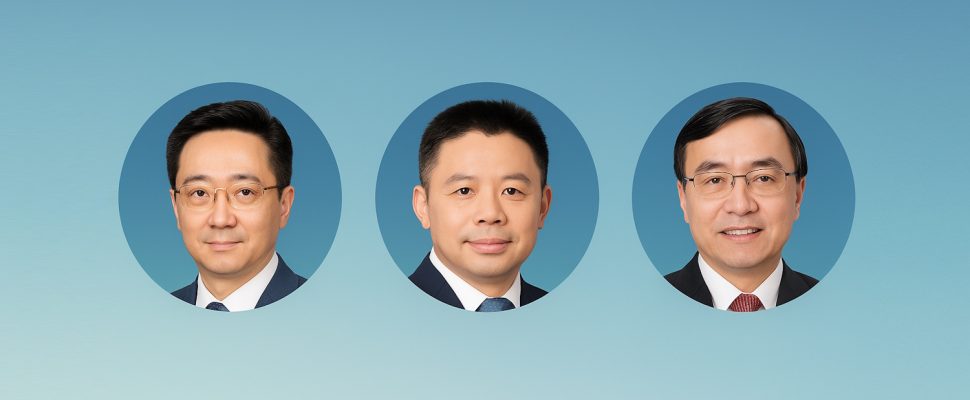
Here are three standout leaders at the vanguard of China’s biotech wave.
Jingsong Wang, founder, chairman and CEO, Harbour Biomed
Jingsong Wang spent over a decade in the US, first as a Clinical Fellow at Brigham & Women’s Hospital / Harvard Medical School before transitioning to the pharma industry with research roles at Wyeth and Bristol Myers Squibb. In 2011, he returned to China to become head of China R&D and translational medicine Asia-Pacific at Sanofi, before taking advantage of the 2015 regulatory reforms to found Harbour Biomed in 2016.
Harbour focuses on antibody therapeutics in oncology and immunology and is one of the few companies listed under the Hong Kong Stock Exchange (HKEX)’s Chapter 18A for pre-revenue biotechs to be breaking even. The company’s self‑funding power is growing, with 2024 revenue of USD 38.1 million and net profit of USD 2.7 million, plus operating cash flow of over USD 30 million.
It has two antibody engineering platforms, known as ‘Harbour Mice’ and ‘HBICE,’ which allow it to pursue a ‘dual engine’ approach spanning therapeutic development and platform partnerships and over 19 molecules in or entering the investigational new drug (IND) stage (including programs targeting myasthenia gravis, melanoma, asthma, COPD).
While Harbour is headquartered in Shanghai, Wang has consistently articulated a more global vision and built Harbour as a multinational from the start with offices in Rotterdam and Boston.
“We have never positioned ourselves as region-bound, our model is consistent with how leading multinational biopharma players operate, allocating resources and capabilities where they add the most value,” he explains.
“Innovation, by its nature, transcends borders, and our structure reflects this. While some may scrutinise operations that include a presence in China, we see that footprint as an advantage, providing speed, infrastructure, and executional excellence that complement scientific partnerships elsewhere.”
That configuration seems to be paying off. In 2025, Harbour struck deals with global pharmas AstraZeneca (a deal potentially rising to USD 4.4 billion to co-develop multi-specifics, next-generation antibodies that can bind to more than two targets) and Otsuka (an out-licensing partnership for one of its bispecifics, antibodies engineered to simultaneously target two different antigens, with a value of up to USD 670 million).
It may soon have a proprietary product on the market in China too, with its Anti-FcRn therapy – designed to reduce pathogenic antibodies by blocking the neonatal Fc receptor – under BLA (Biologics License Application)-equivalent review at the National Medical Products Administration (NMPA), backed by positive Phase III data and a Breakthrough designation.
John Zhu, founder, CEO and chairman, DualityBio
While Jingsong Wang is cut from the classic mould of first wave Chinese biotech entrepreneurs – drawing from a research background with Big Pharma experience in the US – others bring a different skillset.
John Zhu, for example, spent over a decade in venture capital before founding the antibody drug conjugate (ADC)-focused Duality Biotherapeutics in January 2020. Reflecting on the rationale behind this decision, Zhu – who also has a PhD in biomedical science – says “The idea of nurturing a company, watching it evolve day by day, and being wholly responsible for its direction and outcomes held deep personal appeal.”
“Founding Duality Biotherapeutics was not simply a professional decision but an emotional commitment; I approached it with the same dedication one brings to raising a child.”
Zhu chose ADCs – targeted cancer therapies that link a monoclonal antibody to a potent chemotherapy drug, delivering it directly to tumour cells while sparing healthy tissue – as a focus, having been inspired by the then-recent breakthrough of Daiichi Sankyo’s Enhertu.
“For the first time, an ADC demonstrated not only compelling efficacy but also a more manageable safety profile, even at higher doses,” explains Zhu. “That was the moment I realised the bar had been raised; this was no longer an incremental shift, but the start of a wave that could reshape cancer therapy.”
As with Harbour, Zhu envisioned Duality as a global innovator from day one, with internal R&D and multi-region clinical trials as core pillars of its strategy. Today, it has over 10 candidates in clinical phases; more than a dozen trials across 20 countries, and over 2000 enrolled patients. Despite its global trial footprint, Duality runs lean, employing fewer than 150 staff. Zhu explains that this is a deliberate ploy to that keeps decision‑making fast and overheads low.
Its lead candidate, an ADC that targets the HER2 protein, which is overexpressed in some cancers like breast and gastric, has received FDA Fast‑Track & Breakthrough Therapy Designations. A Phase III study was initiated earlier this year.
In January 2025, DualityBio deepened its partner‑led model by granting Avenzo Therapeutics an exclusive licence (ex‑Greater China) to develop its EGFR/HER3 bispecific ADC, securing USD 50 million upfront and up to USD 1.15 billion in milestones, with first‑in‑human studies slated for later this year.
Also in 2025, despite market volatility, Zhu led Duality to successfully IPO on the HKEX Main Board.
Looking forward, given Big Pharma’s need to refresh its portfolios and Duality’s strong pipeline and history of partnerships, Zhu foresees much more collaborations ahead. “I’ve always believed that partnership is fundamental to successful drug development,” he says. “Therapeutic assets are not like wine, they do not grow in value simply by being preserved over time.”
“To reach their full potential, they need to be developed by the right teams, with the right infrastructure, at the right moment. That belief continues to shape how we engage with multinational companies. Our current partners – including BioNTech, GSK, BeiGene [now known as BeOne Medicines – ed.], and 3SBio – have consistently valued our speed, transparency, and ability to execute.”
Chengbin Wu, CEO & founder, EpimAb Biotherapeutics
Then there is Chengbin Wu, another US-returnee who helped bring the first-generation of human antibodies to the market while at Abbott in the 2000s. On returning to Shanghai in 2010, he established the biologics organisation at local contract research organisation (CRO) ChemPartner before moving on to Hong Kong‑listed 3SBio, which mainly focuses on biosimilar development.
Since 2016 he has piloted his own firm – EpimAb Biotherapeutics – which makes next-generation bispecific and multispecific antibodies for cancer and immune diseases. Like Harbour and Duality, EpimAb has its own platform technology, invented by Wu, called Fabs-In-Tandem Immunoglobulin (FIT-Ig). This technology aims to allow EpimAb and its partners to build precise cancer drugs more quickly and cheaply. Still privately held, but having filed a listing application for HKEX in June 2025, EpimAb has thus far raised around USD 220 million across three funding rounds.
Its lead asset EMB‑01 is scheduled to enter a global Phase II trial for metastatic colorectal cancer in the second half of 2025, putting the program on the cusp of late‑stage development.
Wu has signed deals with well-established international firms like the Spanish outfit Almirall for skin and immune diseases, as well as new US spin-outs such as Vignette Bio. EpimAb keeps the China rights for most of its drugs while sharing global rights with partners. The aim is to move its first products into late-stage trials over the next two years and strike more Big Pharma collaborations.
“We are actively seeking more partnerships with multinational pharma or biotech companies with strong expertise in clinical development, especially in therapeutic areas that align well with the profile of our drug products,” explains Wu. “These partners are ideal because they can help move our molecules quickly into the clinic, ensuring that development progresses efficiently.”
However, his partnership horizons are not limited to Big Pharma. “The second type of partnership we are looking for involves US-based venture capital (VC) companies that are interested in incubating or developing new companies in the US,” he adds. “In these collaborations, we might retain the rights to develop the product in China while the VC-backed company focuses on the US market. This co-development approach allows the VC to fund the project to a point where its value significantly increases, making it more attractive for a later-stage partnership with a big pharma company.”
More funding, however it comes, will be crucial. “Looking ahead, the company will need capital to progress,” admits Wu. “Currently, it appears that securing business development deals might be easier than raising financing. Our focus is to advance our molecules to the next stage of development, creating more value for the company. This progress will then facilitate discussions about financing or partnership deals. Big Pharma typically looks for data that supports milestones, such as Phase 2 POC, when considering deals.”
He adds that EpimAb’s future success will hinge on flexibility, pragmatism, and humility. “One of the most important lessons I have learned is the value of feedback: understanding what works and what does not,” he concludes. “Over the past few years, it has been crucial to learn from our experiences with various programs, target combinations, and mechanisms. Identifying which targets, combinations, and mechanisms work best with our technology has been a key part of this process. This accumulated know-how helps us in developing future molecules.”