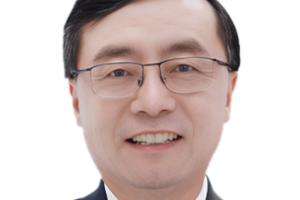
2024 marks a moment of inflection for Harbour BioMed, as the company collect the rewards of a strong global execution. In this interview, Dr Jingsong Wang reflects on the strategic, scientific, and operational advances shaping the company’s trajectory. With its proprietary HCAb platform at the core, Harbour BioMed is extending its reach across bispecifics, ADCs, and autoimmune innovation, while embedding AI and advancing clinical programmes with precision. Its dual-track model, spanning therapeutic development and platform partnerships, signals a company increasingly shaping the future of biologics from both sides of the value chain.
What made 2024 a defining year for Harbour BioMed’s growth and evolution?
2024 represented a significant inflection point for Harbour BioMed, both in terms of financial performance and strategic evolution. Following more than eight years of sustained development, we achieved profitability for a second consecutive year, supported by a growing international presence spanning Boston, Shanghai, and the Netherlands. At the same time, we expanded our scientific capabilities beyond the original Harbour Mice® platform, building out four integrated drug discovery engines that now underpin our innovation across a broader range of therapeutic areas.
This technological progression enabled the full-scale expansion of Nona Biosciences, our wholly owned subsidiary dedicated to platform innovation, licensing, and co-discovery. Initially launched as a fee-for-service operation, Nona Biosciences has rapidly evolved into a global strategic partner, signing over 100 collaborations to date with multinational pharma companies, biotech innovators, and investors. Headquartered in Boston but operating globally, Nona represents one of the two pillars of our business model, complementing our therapeutic product development efforts.
Clinically, we deepened our focus on immunology and autoimmune disease. Our long-acting, fully human anti-TSLP monoclonal antibody, developed in partnership with Kelun-Biotech and Windward Bio, has demonstrated strong potential in type 2 inflammatory conditions in previous preclinical and clinical trials and is set to initiate a global Phase II trial. In parallel, we advanced a Phase I-ready BCMA × CD3 bispecific antibody, which has shown robust B-cell depletion in both tissue and peripheral settings. We are also developing CD19 × CD3 bispecifics and trispecific formats to broaden efficacy in autoimmune indications. These candidates build on the foundation of our lead asset, batoclimab (HBM9161), currently under BLA review in China for myasthenia gravis, and signal a strategic expansion from autoantibody degradation to B-cell targeting.
Our revenue base reflected a healthy balance across both arms of the business: platform income from licensing and technology services, and product-driven deal flow from early- and clinical-stage programme out-licensing. Taken together, these developments underscore a year of focused execution, expanding our scientific footprint while reinforcing the sustainability of our innovation-led model.
How does Harbour BioMed maintain its laser focus while advancing across multiple technology and therapeutic platforms?
As our pipeline and platform capabilities continue to expand, we remain grounded in two fundamental priorities: addressing areas of significant unmet medical needs and fully leveraging our technological differentiation. From the outset, our growth has been rooted in the Harbour Mice® antibody discovery engine, which laid the foundation for our broader evolution into complex biologic formats. A central element of that evolution is our fully human heavy chain-only antibody (HCAb), which enables the development of structurally diverse, next-generation therapeutics, including bispecifics, multispecifics, antibody–drug conjugates (ADCs), and engineered cell therapies. Collectively, we refer to this as our “Antibody Plus (Ab+)” strategy.
Through Nona Biosciences, we have extended the application of this technology into emerging fields such as CAR-T platforms built on HCAb, mRNA-based antibody delivery, and AI-supported antibody discovery and optimisation. These are not opportunistic expansions but deliberate extensions of our core strengths, each aligned with our platform’s inherent adaptability and the therapeutic challenges we are positioned to address.
We also apply the same discipline operationally. Our investment strategy is tightly focused on areas where our intellectual property, technical capabilities, and infrastructure provide a distinct competitive edge. Rather than spreading our resources too thinly across a wide array of programmes, we concentrate on opportunities that offer clear scientific differentiation and long-term strategic value. This approach allows us to innovate at scale while maintaining the cohesion and focus required to execute effectively.
How does Harbour BioMed approach global development programs versus China centric ones, and how your operating model support ultimately the best for patients? Would you ultimately commercialize the medicines that are currently under development?
We have operated with a global perspective from the very beginning, building an innovation model that addresses the needs of international patients rather than aligning with a single market. While our programmes are designed to meet the highest global regulatory standards – including those of the FDA – they are not confined to any one jurisdiction. Our geographic footprint reflects this orientation: scientific collaboration and academic innovation are rooted in the US, technological expertise is sourced from Europe, and operational scalability is supported by our infrastructure in China. This distributed model enables us to operate with both agility and depth across the full drug development lifecycle.
Internally, we remain focused on our core strengths, deploying proprietary discovery platforms, progressing assets through preclinical and early clinical phases, and executing biomarker and translational science with precision. Our capabilities in China allow for efficient transition from early-stage research into clinical development, while later-stage development and global commercialisation are typically carried out through partnerships with multinational companies. These collaborators bring the regulatory experience, clinical infrastructure, and market access needed to maximise the potential of our pipeline. In China, while we may take development further, commercial activities are currently led by local partners.
At this stage, we have no plans to internalise downstream operations. Our focus remains squarely on discovery and early development, areas where our platform technologies and scientific expertise provide the greatest strategic value. Through this model, we aim to remain a driving force in innovation while enabling broader market access through trusted global partnerships.
What drives Harbour BioMed’s translational efficiency in antibody-drug conjugates, an area where China seems to lead recently, at least in terms of speed of development and out-licensing?
Our ability to move efficiently from discovery through to clinical development stems from both internal capabilities and the maturation of China’s broader biopharma ecosystem. At an operational level, we benefit from a well-established infrastructure that includes integrated supply chains, trusted partnerships, and a dynamic network of collaborators, all of which support seamless progression from early-stage research into the clinic. Just as critical has been the evolution of China’s regulatory environment. Previous restrictions that delayed clinical trial initiation until a drug had been approved in major markets have been lifted, reducing barriers and significantly accelerating development timelines. Coupled with sustained investment and an influx of scientific talent, these reforms have transformed the landscape for translational science.
This environment has proven particularly well-suited to the development of ADCs, a modality once pursued broadly by multinational pharmaceutical companies but later deprioritised by many due to its scientific complexity and development risk. As these companies scaled back internal ADC pipelines, they increasingly turned to external innovation hubs. China, with its integrated capabilities in antibody engineering, linker and payload chemistry, and end-to-end manufacturing, has emerged as one of the few ecosystems capable of moving ADCs from early research through to commercial readiness. As a result, the global industry now recognises China not only as a manufacturing resource, but as a centre of innovation at the modality level.
Our own journey in the ADC space has evolved alongside this shift. In the early phase, we contributed antibody assets to partners such as Kelun-Biotech and Duality Biologics, whose programmes were later licensed to Merck and BeiGene, respectively. In the next stage, we out-licensed a proprietary ADC candidate to Pfizer for continued development and commercialisation. Today, we have built a fully integrated ADC platform in-house, with the capabilities to combine novel antibodies with our own linker and payload technologies. This progression reflects both the expansion of our internal capabilities and the broader emergence of China as a global leader in complex biologics innovation.
Harbour BioMed signed a recent agreement with Insilico for integrating artificial intelligence into its research capabilities. Does this mean you believe AI will be a game changer for drug discovery?
At Harbour BioMed, we view artificial intelligence as a fundamental shift in biomedical innovation, one that will unfold gradually but irreversibly across the industry. While enthusiasm for AI is widespread, particularly in public-facing conversations, its practical application often falls short, especially within large pharmaceutical organisations where adoption can be more symbolic than substantive. Our approach is different: we see AI not as a short-term differentiator but as a long-term enabler, and we are focused on embedding it where it can make a measurable difference.
We have already begun to see tangible outcomes through partnerships such as our collaboration with Insilico Medicine and other US-based groups. These initiatives are helping us refine antibody generation and optimisation, accelerate candidate selection, and improve translation from preclinical to clinical stages. In some cases, AI has allowed us to identify and advance molecules that would likely have been missed using conventional methods.
That said, we are realistic about the pace and scope of impact. We do not expect AI to replace decades of scientific and clinical experience, nor do we view it as a shortcut. Instead, we are building capacity deliberately, applying AI where it adds immediate value while laying the groundwork for broader integration. Over time, we believe this will transform how we discover and develop medicines, not by replacing human expertise, but by extending its reach.
How has Harbour BioMed built collaborative bridges in the US, and how are its global operations perceived in a context of trade tensions like nowadays?
Harbour BioMed has operated with a global mindset since its inception, structuring its footprint not around a single geography but around a distributed model designed to serve international innovation. Our first operational unit was launched in Rotterdam, and our entry into the US followed soon after, beginning with a base at Cambridge Innovation Centre (CIC) in Boston and expanding to a dedicated laboratory in Natick. Today, our teams are active across both coasts of the US, and many of our partners, advisors, and senior leaders are themselves US-based. These early steps were not about establishing a satellite presence, but about embedding Harbour BioMed in the world’s most active biotech ecosystems from the ground up.
We have never positioned ourselves as region-bound, our model is consistent with how leading multinational biopharma players operate, allocating resources and capabilities where they add the most value. Innovation, by its nature, transcends borders, and our structure reflects this. While some may scrutinise operations that include a presence in China, we see that footprint as an advantage, providing speed, infrastructure, and executional excellence that complement scientific partnerships elsewhere. Just as Merck or Pfizer leverage global operations for strategic gain, we aim to do the same: placing activities in the regions that best suited to carry them forward.
A prime example of this approach is HBM Alpha Therapeutics, a US-based entity we established six years ago in collaboration with Boston Children’s Hospital, an affiliate of Harvard Medical School. The company focuses on developing treatments for neuroendocrine disorders, including congenital adrenal hyperplasia (CAH), and draws upon our proprietary platforms alongside the research strength of the Boston ecosystem. While operating out of the US, HBM Alpha exemplifies our broader philosophy, leveraging local expertise to solve global challenges. For us, geography is not a constraint but a resource, and structuring our operations accordingly has been key to sustaining our momentum.
What are the principal challenges Harbour BioMed faces today, and how does it navigate the volatility of the public markets?
As a growth-stage biotech operating in the public sphere, our challenges are both structural and strategic. Without the scale or infrastructure of a mature multinational, we build from a more limited base, requiring constant focus, selectivity, and a clear understanding of where we can create the greatest value. That clarity of purpose is what allows us to remain competitive: we do not aim to do everything, but instead focus sharply on areas where our platform offers meaningful differentiation. Over time, this discipline has helped us define our space and avoid the distraction of comparisons that are neither relevant nor productive.
Being publicly listed introduces an additional layer of complexity. We recognise that equity markets do not always reflect operational progress; share prices may be influenced by factors beyond scientific milestones, partnerships, or clinical advancement. While we maintain a strong investor relations team to ensure transparency, our strategy is grounded in long-term execution. Ultimately, we measure success by the quality of our science and the potential of our pipeline to make a real difference for patients, not by short-term market cycles.
Our HCAb platform sits at the core of that strategy. As the biopharmaceutical landscape evolves beyond monoclonal antibodies to more complex formats – bispecifics, multispecifics, ADCs, engineered cell therapies, and mRNA-based modalities – HCAb provides a uniquely adaptable, fully human scaffold. It is this capability that has attracted over 100 partners in recent years, including collaborations with AbbVie in monoclonals, AstraZeneca in bispecifics, and Pfizer in ADCs. These alliances reinforce both the platform’s scientific strength and our ability to deliver. We remain attuned to external headwinds, but we do not allow them to define our direction. Our priority is to advance transformative science with consistency, wherever unmet need exists. As long as we stay anchored in innovation and aligned with patient needs, we are confident in our ability to grow, differentiate, and endure.
What final message would you like to share with the global biopharmaceutical community?
This is a pivotal moment for our industry, marked not only by scientific complexity but also by shifting dynamics across regional and cross-border collaboration. In such an environment, one constant remains: meaningful value will be recognised wherever it is created. Regardless of where a company operates, if it contributes to building innovative therapeutic solutions and advancing the broader ecosystem, that impact will resonate. At Harbour BioMed, we remain deeply committed to two principles: advancing technological innovation and addressing areas of significant unmet medical need. Yet we also recognise that innovation does not thrive in isolation. It requires more than licensing agreements or transactional partnerships; it demands long-term engagement within local and global ecosystems. We believe in contributing to these ecosystems not only as a developer of science, but as a partner in building the infrastructure, trust, and continuity required to sustain innovation.
As a global company, we are focused on forging collaborations that go beyond geography, designed not merely to transact, but to co-create. By investing in regional platforms, sharing expertise, and building integrated innovation networks, we hope to support a biopharmaceutical landscape that is more resilient, more inclusive, and more capable of delivering transformative solutions for patients everywhere.