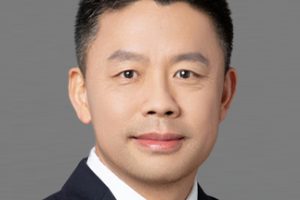
Swapping the predictability of venture capital for the high-stakes volatility of biotech entrepreneurship, John Zhu set out to build something few in China had dared: a globally oriented biopharma with the speed of a startup and the reach of an MNC. As Founder, CEO, and Chairman of Duality Biotherapeutics, Zhu recounts a journey marked by conviction, agility, and a sharp eye for opportunity, from crafting a next-generation ADC platform to striking a high-profile partnership with BioNTech, and leading global trials with a lean, execution-driven team.
What motivated your transition from venture capital to launching Duality Biotherapeutics, and why did you choose to focus on antibody-drug conjugates?
After over a decade in venture capital, during which I consistently generated strong returns for our LPs (limited partners), I found myself drawn to a different kind of challenge, one where I could take full ownership of building something from the ground up. The idea of nurturing a company, watching it evolve day by day, and being wholly responsible for its direction and outcomes held deep personal appeal. Founding Duality Biotherapeutics was not simply a professional decision but an emotional commitment; I approached it with the same dedication one brings to raising a child.
My focus on antibody-drug conjugates (ADCs) arose from both long-term observation and a belief in their transformative potential. As an investor, I had followed the modality for years. The earlier generations, based on payloads such as pyrrolobenzodiazepine (PBD) and monomethyl auristatin E (MMAE), were constrained by narrow therapeutic windows; while potent, they caused significant off-target toxicity, which limited dose escalation and, ultimately, their effectiveness. However, around 2018 or 2019, I recognised a turning point with the advent of trastuzumab deruxtecan (Enhertu), an HER2-targeting ADC developed by Daiichi Sankyo. For the first time, an ADC demonstrated not only compelling efficacy but also a more manageable safety profile, even at higher doses. That was the moment I realised the bar had been raised, this was no longer an incremental shift, but the start of a wave that could reshape cancer therapy.
I have come to view ADCs as a form of “smart chemotherapy”, an approach that retains the cytotoxic strength of traditional chemotherapy but delivers it with far greater precision. While challenges remain, particularly around toxicity, advances in design and combination strategies are allowing ADCs to move from late-line settings into earlier lines of therapy, including frontline use in certain contexts. The potential to improve patient outcomes with safer, more effective drugs is real, and increasingly within reach.
Another compelling factor was the platform opportunity. An ADC is fundamentally composed of three elements: the antibody, the linker, and the payload. With a strong linker-payload platform, one can flexibly attach antibodies targeting diverse tumour antigens, greatly enhancing R&D productivity and scalability. This modularity informed our strategy from the outset. When we launched Duality in January 2020, we committed to building internally from the ground up rather than relying on in-licensed or partially developed programmes.
Based on my experience, I also knew that building a globally competitive biotech in China required more than scientific talent, it demanded a clear strategic direction. First, a robust, differentiated technology platform is essential. Second, global ambition must be embedded from day one. Many companies in China had traditionally focused on licensing assets for domestic development, but we believed that model was insufficient for long-term success. Instead, we set out to run multiregional clinical trials (MRCTs) from the beginning, enabling faster regulatory timelines and broader market access. We also prioritised global partnerships with multinational companies (MNCs), both to validate our science and to secure the financial runway through upfront and milestone payments that could be reinvested into R&D. In short, Duality was founded not only on a belief in science, but on a conviction that world-class innovation can and should emerge from China, and compete on a truly global scale.
How did you establish early credibility in such a competitive therapeutic space, and what enabled Duality to secure a partnership with BioNTech?
Establishing credibility early on was a core priority for us, and that meant taking a deliberate and strategic approach. From the beginning, we chose to work with validated targets – specifically HER2 and TROP2 – which allowed us to demonstrate the strength of our third-generation ADC platform against well-understood biological frameworks. This decision enabled us to move quickly, generate compelling data, and prove the platform’s robustness without the added burden of de-risking novel targets.
The results spoke for themselves. In our preclinical studies, particularly the GLP toxicology work in monkeys, our HER2-targeting ADC DB-1303 showed a maximum tolerated dose of up to 80 mg/kg with only mild toxicity, a significant contrast to established benchmarks like Enhertu from Daiichi Sankyo, which exhibited severe toxicity at much lower doses. These findings gave us strong confidence in the platform’s potential and provided a compelling story to share with prospective partners.
This platform-led differentiation, combined with a bold and well-considered clinical strategy, laid the foundation for our 2023 partnership with BioNTech. The deal encompassed three of our ADC assets: DB-1303 targeting HER2, DB-1305 targeting TROP2, and DB-1311 targeting B7-H3. For DB-1303, we selected endometrial cancer as the lead indication, a space with relatively limited competition, and our strategy was validated when the US FDA granted us Breakthrough Therapy Designation. In parallel, we pursued HER2-low breast cancer, but with a forward-looking approach: instead of competing in the post-chemotherapy setting, where Enhertu had already gained approval, we aimed for the chemo-naïve population. This strategic positioning allowed us to advance without requiring a head-to-head comparison with Enhertu; the FDA approved a trial design using chemotherapy as the comparator, significantly accelerating our timeline.
The B7-H3 programme further demonstrated the value of our team’s insight and execution. Although still in the preclinical stage at the time, we identified B7-H3 as a highly promising target early on. Our confidence was rooted in the strength of our data and the calibre of our scientific leadership, particularly Dr Haiqing Hua, our Head of Drug Discovery, and Dr Yang Qiu, our Chief Scientific Officer, both of whom brought extensive experience from Daiichi. Their combined expertise allowed us to move quickly and secure licensing of DB-1311 to BioNTech under a co-development structure, with BioNTech retaining US rights. The negotiations involved direct discussions with BioNTech CEO Ugur Sahin and were far from routine. However, the final agreement helped to firmly establish Duality’s credibility and underscored the scientific and commercial potential of our linker-payload platform.
What distinguishes Duality Biotherapeutics’ execution model, and how has agility shaped your growth trajectory?
At the core of our execution model is a commitment to speed, discipline, and data-driven decision-making. In an industry where timelines are long and risks are high, we operate with a philosophy of insight-driven execution. We generate hypotheses, test them rigorously – whether through in vitro and in vivo models, GLP toxicology, or early clinical studies – and act decisively based on what the data shows. If a programme fails to meet expectations, we are not afraid to terminate it and reallocate resources. I describe this as a Bayesian approach to biotech: when an insight proves invalid, you must pivot swiftly and move forward. There is no room for inertia or emotional attachment.
This mindset permeates the entire organisation. Internally, we have discontinued numerous programmes, quietly, efficiently, and without hesitation. These decisions are not visible from the outside, but they are fundamental to how we operate. Our team is small, but highly empowered. During the time of our BioNTech partnership, we had fewer than 40 employees, yet we had already delivered tangible outcomes that drew the attention of global players.
Our agility extends beyond internal decision-making and has become a key strength in external engagements. For example, during partnership discussions, we are often able to respond to due diligence requests within one or two days. That level of responsiveness is simply not possible in large MNCs, where processes are often bogged down by multiple layers of approval, legal reviews, and interdepartmental coordination. In contrast, we maintain full transparency and a flat structure that allows us to execute rapidly. If a legal matter arises, we handle it directly and promptly. There is no need to wait weeks for clearance from headquarters or to pass through committee after committee.
At the J.P. Morgan Healthcare Conference in early 2023, several global R&D heads expressed surprise at the scale and speed of our progress. In just three years, we had grown from a Start-up to a company capable of closing a major deal with BioNTech, all without the overhead, politics, or inertia that often slows down larger players. Our lean structure is not a constraint; it is a strategic advantage that allows us to outpace many in our peer group. We aim to remain fast, focused, and globally competitive; not through size, but through clarity of vision and precision in execution.
What is Duality Biotherapeutics’ long-term ambition: to continue as a platform-driven company, or evolve into a fully integrated global biopharma leader?
Our long-term ambition has always been to build Duality into a fully-fledged global biopharmaceutical company, not simply a platform or deal-making engine. That said, our journey began with a deliberate and pragmatic strategy we refer to as the “Duality flywheel”, a model that combines rapid target selection, efficient clinical execution, and timely strategic partnering. Every time we complete this cycle, we generate meaningful capital, deepen our scientific capabilities, and expand our international network. So far, we have successfully executed seven such cycles, placing us in a strong financial position with more than USD 500 million in cash and a further USD 200 million expected in the next few years from existing partnerships.
Partnerships have been vital to fuelling our growth, particularly as a young company seeking to run global clinical trials, but they are not our final destination. The ultimate objective is to bring a wholly owned asset through late-stage development and global commercialisation under the Duality name. Companies like Regeneron have demonstrated that it is possible to begin with co-development models and eventually transition to independence without compromising ambition. That is the trajectory we aim to follow. From inception, we have never viewed ourselves as a service platform or a licensing business. We have always envisioned becoming a global innovator with the scientific maturity, operational scale, and commercial reach to deliver our own medicines to patients worldwide.
How are you ensuring that Duality’s global aspirations are matched by its organisational structure and footprint? Is China a place to host a global company in our industry?
To be truly global, a company must be structurally and operationally embedded in the global value chain, not simply running international trials or adopting the label of “global” in branding. We recognised early on that this could not be achieved by remaining China-centric. For that reason, we established a strong presence in the US, where approximately half of our management team is now based. Today, we have around 30 employees in the US and continue to grow that footprint. This US base has been instrumental in connecting us with leading investigators, regulatory experts, and senior industry talent.
One example is Dr Antoine Yver, Chair of our Scientific Advisory Board and former Head of R&D at Daiichi Sankyo’s US Oncology division. He was the driving force behind the development of several landmark ADCs, including Enhertu and Dato-DXd. His decision to leave Daiichi, after being asked to report back to Japan, reflects the challenges global executives often face in overly centralised structures. At Duality, we have made a conscious effort to avoid those constraints and instead operate in a way that supports autonomy, integration, and global relevance. Our growing US presence is central to that vision, enabling deeper engagement with the international biotech ecosystem.
Our geographic duality allows us not only to access global expertise but also to structure our partnerships more effectively. In many cases, we license US commercial rights to our multinational partners while maintaining innovation leadership and retaining ex-US rights. This collaborative framework expands our influence, supports sustainable growth, and positions us as a serious player across both the innovation and commercial spectrum. We may be headquartered in China, but every aspect of our structure is designed to deliver on a global stage, with global talent, global trials, and global ambition.
Why did Duality Biotherapeutics decide to pursue an IPO amid market turbulence, and how has the transition to public company status influenced your leadership and operations?
Although we could have delayed the IPO, our shareholders were aligned on the timing and eager to move forward. Waiting for a more favourable market would have been speculative at best, and in such environments, clarity often matters more than timing. We made the decision to proceed in April 2025, fully aware of the volatility. I remember the week of April 7 vividly, during the book-building process, the Hang Seng Index dropped nearly 19 percent amid escalating tariff tensions. I was on a call with Fidelity that morning, watching the market fall in real time. And yet, they stayed committed. Their support, along with that of other peers, was incredibly motivating. At that moment, nearly twenty biotech companies were queued for Chapter 18A listings, all closely watching how we would fare. With partnerships already in place, including with BioNTech and AstraZeneca, Duality had become something of a bellwether for the sector. The pressure was real, but so was the sense of responsibility.
The listing itself brought a brief wave of excitement, our stock price doubled within the first week, but it was short-lived. By the following Monday, I was back in the office at 7 a.m., focused on execution. Becoming a public company has not changed how we operate. We remain hands-on, fast-moving, and deeply committed to delivery. That said, the demands are intensifying. We are managing a growing number of global clinical trials, and for the size of our pipeline, a multinational would typically require three or four times our current headcount. Scaling the team efficiently has become one of our most immediate challenges.
At the same time, public listing has brought significant advantages. We’ve seen stronger investor interest, deeper regulatory engagement, and even more tangible support from government stakeholders. The increased visibility has given us a broader platform, but it has not slowed our pace. We continue to operate with discipline and speed. Shanghai remains a core hub, offering robust infrastructure, exceptional chemistry talent, and strong CRO support. What sets our team apart is not just technical capability, but a shared commitment to our vision. While our structure has evolved, our mindset has not: we stay focused, agile, and grounded in the mission we set out to achieve.
Where is Duality heading next in terms of pipeline advancement and scientific innovation, and what hurdles do you see on the horizon?
Our clinical programmes are progressing steadily. Although our HER2-, TROP2-, and B7-H3-targeting assets are partnered with BioNTech, we continue to lead many of the global trials. BioNTech treats us as true collaborators and provides significant support, including funding extended analyses, which has enabled us to retain both scientific and operational leadership. As we work toward becoming a global biopharmaceutical company, advancing clinical development capabilities alongside our ADC platform remains a key priority.
We now have over 2,000 patients enrolled across our studies worldwide – around half outside China, across over 20 countries including the US and Australia – placing us second only to BeiGene among Chinese biotechs/Pharmas in terms of global clinical reach. Our B7-H3 programme is particularly promising, showing efficacy signals across small cell lung cancer, head and neck squamous cell carcinoma, and hepatocellular carcinoma.
We are also pushing platform innovation. Under Dr Haiqing Hua’s leadership, we are developing novel payloads designed to reduce toxicity and introduce mechanisms distinct from topoisomerase I inhibitors. With Enhertu expected to reach peak sales of USD 14 billion, resistance will become a growing issue. Our internally developed payloads are designed to address that gap with a broader therapeutic window. Beyond oncology, we are applying our ADC platform to autoimmune disease. DB-2304, currently in clinical trials, targets BDCA2 on plasmacytoid dendritic cells and uses a glucocorticoid payload to improve potency. Early safety data is encouraging, and we see strong potential in systemic lupus erythematosus and related conditions.
The main challenge now is scaling our team. Our current headcount is stretched relative to the scope of our pipeline, where multinationals might deploy three or four times the resources. We are also investing in AI to enhance efficiency across the value chain. Ultimately, success depends on sustained agility, execution, and scientific insight, converting innovation into meaningful therapies that reach patients globally.
What message would you share with multinational companies considering partnerships, and how would you characterise the experience of working with Duality?
I’ve always believed that partnership is fundamental to successful drug development. Therapeutic assets are not like wine, they do not grow in value simply by being preserved over time. To reach their full potential, they need to be developed by the right teams, with the right infrastructure, at the right moment. That belief continues to shape how we engage with multinational companies. Our current partners – including BioNTech, GSK, BeiGene, and 3SBio – have consistently valued our speed, transparency, and ability to execute. We hold ourselves to a high operational standard and deliver on what we commit to. A recent example illustrates this well: our partner Avenzo Therapeutics encountered an unexpected issue, and we were able to resolve it within 24 hours. They were genuinely surprised by the speed and clarity of our response, and it’s that kind of agility, even as a relatively small organisation, that defines the experience of working with Duality.
To MNC leaders facing internal pipeline pressures and seeking differentiated assets or collaborative innovation models, I would say: we are open, engaged, and ready to move. Several of our advanced assets – including a next-generation B7-H3 ADC and a novel PD-L1/B7-H3 bispecific ADC – remain available for partnership. But beyond the assets themselves, we’re flexible in how we structure collaborations. While we have experience with traditional licensing, we’re also exploring co-development and alternative models that better reflect today’s scientific and commercial realities. We understand that no two partnerships are alike, and we approach each with the goal of building something both efficient and lasting. For us, collaboration is not simply a business transaction, it is a shared endeavour to advance meaningful therapies, with accountability, creativity, and pace.