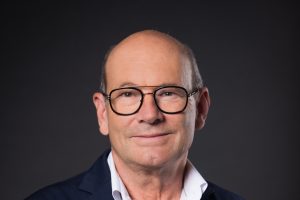
Stéphane Legastelois has spent 35 years bridging science and business. After founding Indicia, he transitioned to healthcare investing, backing 30 early-stage companies, mainly in Lyon, and now heads up 33 Californie, a boutique investment firm which combines capital with strategic guidance, de-risking start-ups before Series A financing. As he explains, Lyon’s dense pharma ecosystem, anchored by major players, hospitals, and clusters, offers unmatched opportunities for health start-ups, though securing sufficient financing for innovation remains a pain point.
How did you become involved in the healthcare investment space?
I am a biochemist by training, but early on recognised the gap between academic science and business. To address this, I undertook executive courses at EM Lyon, one of France’s top three business schools. This exposure was important, as French academic training remains relatively disconnected from business compared with the US, where foundational commercial education is more integrated.
I began my professional career in a start-up environment, before moving to a larger organisation. I spent four years at Merck, the German pharmaceutical company, working as a sales and marketing manager across several products. Even then, I had a clear ambition to build my own company and, with the support of Merck, I founded Indicia in 1998.
Indicia developed both organically and through external growth, operating as a hybrid CRO and CDMO. Starting from zero, we grew the business to approximately EUR 12 million in turnover with 70 employees. It was not a major player, but it was a solid and credible company. In 2019, the business was sold to a larger French group. I stayed on for one year following the acquisition, then decided to explore what I often call the other side of the moon – the investor perspective.
I was familiar with raising capital, but far less so with deploying it, particularly into early-stage companies. That challenge was intellectually appealing. In 2019, I created my own seed investment fund using personal assets and co-founded Calyseed, a seed capital firm based in Lyon. We are currently preparing to launch a third fund. Alongside this, I work with other venture capital firms like Angelor, supporting their investments in small healthcare companies.
To date, I have invested in approximately 30 companies, all within the health sector, though across a range of sub-sectors. All but one are based in France, with a single investment in Switzerland, and the majority are concentrated in Lyon. We have achieved four exits so far. Inevitably, some companies have failed – that is inherent to seed investing. The risk profile at this stage is extremely high: valuations are low, but uncertainty is significant.
For an international audience less familiar with Lyon, what distinguishes the Lyon Métropole as a healthcare and life sciences hub, and what types of investable assets does the region offer?
The density of Lyon’s ecosystem is exceptional, particularly in pharmaceuticals, and few other cities in Europe can match it. Its roots go back over a century, when Lyon became a centre of the chemical industry along the so-called chemical corridor, with major players such as Rhône-Poulenc. Over time, this foundation transitioned naturally into pharmaceuticals.
Today, Lyon’s industrial backbone remains strong. Sanofi operates its vaccine division from here – formerly the Mérieux Institute, later Sanofi Pasteur – a global leader in vaccines. Meanwhile, bioMérieux, founded in the 1960s, is a major global diagnostics company. In animal health, Merial, now part of Boehringer Ingelheim, maintains a large manufacturing presence and Charles River also has substantial contract research operations close to the city.
These companies have acted as anchors. Many professionals trained within them went on to create start-ups, some growing into mid-sized enterprises. This has generated a dense network of CROs, CDMOs, and specialised firms unique in France.
The industrial base is reinforced by major hospitals, engineering schools, universities, business schools, and clusters such as Lyon Biopôle and Mabdesign. Several of these global players generate more than one billion euros in turnover and actively contribute to cluster development, though there remains untapped potential. Much of this ecosystem stems historically from the Mérieux family, whose influence still shapes Lyon today.
That said, the environment is not perfect. While the industrial, academic, and clinical foundations are strong, financing innovation is a critical challenge across Lyon, France, and Europe. Globally, competition from the US and increasingly China is intensifying. Europe risks losing its position if it does not address this gap. Lyon has the underlying conditions to succeed, but capital remains the missing piece. Securing sufficient financing to retain and grow innovation locally is essential, not just for Lyon, but for France and Europe as a whole.
How do you select the companies you invest in, and which therapeutic areas or technologies currently offer the most promise?
We apply a highly rigorous process. Each year, we receive more than 150 applications, so selectivity is essential. All our investments are in the health sector, but we deliberately span multiple sub-sectors to diversify risk and maintain a balanced portfolio.
The team is central to our decision-making. We invest in people as much as, often more than, technology. Leaders must demonstrate commitment for five to seven years, and in some cases we decline opportunities solely because we lack confidence in the team or chief executive. This is critical, as we always take board seats in the companies we support. Clear communication and high-quality reporting are non-negotiable.
We also evaluate the technology and strength of intellectual property. Even after thorough analysis, uncertainty remains. We typically spend several months reviewing the company and its product before investing, and risk does not disappear once capital is deployed. Scientific hypotheses can fail, technologies may not scale, and team dynamics can falter.
We do not claim a formula for guaranteed success. Among the 30 companies we have backed, we expect eight or nine may fail by 2030. If five succeed and three or four achieve strong exits, that generates sufficient returns to reinvest and continue supporting new ventures.
Your model appears to go well beyond capital deployment. What gaps are you seeking to fill with founders, and how do you support companies operationally and strategically in their early years?
Our approach is deliberately hybrid. Providing capital alone is straightforward: select a project, write the cheque, and the transaction is complete. Our focus, however, is on the product, the strategy, and the long-term development of the company.
Most founders come from academic environments. They bring strong science and innovative ideas but often lack business experience. In France, scientific training is highly siloed, offering little exposure to commercial or managerial disciplines. Navigating company building can therefore be challenging.
To address this, 33 Californie and Calyseed operates with an investment committee of around 20 professionals with deep health-sector experience, from large pharmaceutical companies, start-ups, banks, and venture capital firms. Investment is not just my involvement – the entire committee contributes strategic, operational, and analytical support. Our priority is to follow founders closely, guiding the company rather than simply funding it.
We act as an intermediary between the initial phase – we invest only once a company exists – and a Series A round, typically three or four years later. Our goal is to de-risk the company sufficiently to attract venture capital. Even if we exit at that point, the mission is accomplished. Preventing failure before Series A is central to our mandate.
In practice, seed financing alone rarely covers the full four- to five-year runway. We often provide bridge financing, investing more than initially planned to sustain momentum until venture capital arrives. In France, and across Europe, seed rounds usually cover only two years, in contrast to the US, where significantly larger sums are deployed upfront. This incremental approach forces frequent fundraising and heightens risk. Ensuring start-ups have both the right team and sufficient capital from the outset is therefore central to our approach and something we prioritise deeply.
Beyond bridging the gap between seed capital and Series A, what policy, regulatory, or investment changes could better support start-ups in France, particularly in Lyon?
Beyond our role in bridging seed and Series A, the broader question is how innovation should be financed in France. We actively engage with public authorities to explore what more can be done. Bpifrance, for example, plays an important role by providing both equity andnon-dilutive funding, and we strongly encourage founders to combine this with private capital. Ideally, when we invest EUR one million, a similar amount should be secured through public or complementary sources. Today, however, this remains insufficient.
There are other seed investors, business angels and occasional co-investments, but the overall pool of capital remains too limited. Expanding this funding base is now a central challenge. Ultimately, the question is who should finance innovation in Lyon and across France: seed funds like ours, business angels, industry, or a more coordinated combination of all three. Without a stronger pipeline of well-financed start-ups, large pharmaceutical companies, whose growth increasingly depends on acquisition, will simply not have enough innovation to acquire.
If most global innovation now comes from small companies rather than major corporations, how can Lyon and the broader industry ensure these start-ups receive sufficient support to develop their pipelines and remain competitive internationally?
Large pharmaceutical companies increasingly recognise that internal R&D is no longer their primary source of innovation. In most cases, they grow by acquiring technology and new molecules. If too few start-ups reach the necessary level of maturity, there will simply not be enough assets to acquire, and competition from China and other regions will intensify.
Our objective is therefore to mobilise the entire ecosystem, including large pharmaceutical groups, local industry and public actors, to co-invest and provide sustained financial support to these start-ups. We work closely with BPIfrance, but we also need additional financing routes, because firms like ours lack sufficient scale on their own. Financing 30 companies is positive, but in reality we should be supporting 100 or even 150.
The challenge is to secure enough capital to accompany companies through their first five years. What we can typically provide at the outset is not sufficient. We must find ways to strengthen early financing so these companies can mature and become genuinely attractive for Series A venture capital investment.
Are there specific therapeutic areas where Lyon demonstrates particular strength or momentum, or is the ecosystem genuinely diversified across healthcare?
Perhaps the cluster’s most developed areas – and this reflects the history of companies in the region – are immunology and bacteriology, stemming from the vaccine industry. There is substantial clustering in infectious disease, connected to the vaccine industry and diagnostic testing for infectious disease. Immunology and infectious disease represent a core strength.
However, oncology is also exceptionally strong. We possess a major cancer hospital with numerous start-up companies that have launched in this field. Many patients travelthroughout Europe to receive treatment in these hospitals. They possess substantial expertise and advanced capabilities in oncology. The result is numerous start-up companies in oncology focused on new targets, monoclonal antibodies, novel approaches, and cellular approaches – biotherapy. This is the second major axis alongside the infectious disease area.
Hepatology is very strong as well, and neurology, which is growing in importance worldwide. We have a major neurological hospital here. There are several sectors now, and naturally we invest in these companies. These types of companies emerge organically in these different fields for pharmaceutical aspects and molecules. We also have significant players in medical devices. I would say that patient care and especially Lyon Biopôle cover an exceptionally broad spectrum of the health sector.
What message would you share with international investors considering Lyon as a place to invest across the healthcare value chain?
Lyon offers a combination that is difficult to match in Europe. Major pharmaceutical companies, global leaders such as Sanofi and bioMérieux, and exceptionally strong hospitals are embedded within a dense and interconnected ecosystem. This configuration is largely the result of a long industrial history and the network that grew around it.
Today, four major healthcare companies alone employ more than ten thousand people in the region, creating a deep reservoir of expertise. Over time, some of this talent moves on to establish new companies, sustaining a continuous cycle of innovation. When combined with leading hospitals, academic research centres, and non-profit organisations such as Mabdesign and Lyon Biopôle, this creates a level of concentration that is rare in France and probably in Europe.
For founders and investors, proximity matters. In Lyon, CROs, investors, non-profit funding bodies, and industrial partners are all accessible within the same ecosystem. This density significantly increases the likelihood of success for early-stage companies. It is the reason why around three-quarters of our investments are now based in Lyon, and why entrepreneurs increasingly relocate here to build their businesses.
The cluster is strong, but further engagement from major industrial players remains essential. That involvement is increasing, as these companies recognise both the scale of unmet needs and the opportunity to benefit from local innovation. We expect this momentum to continue.
Lyon is therefore not only a strong scientific and industrial hub, but also a place where companies, capital, and talent can grow sustainably – and where people genuinely want to live.