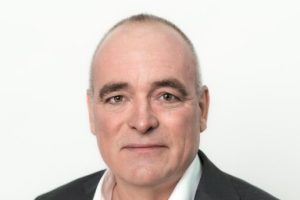
As global vaccine development grows more complex and capital more selective, Valneva is sharpening its identity and returning decisively to its roots. The company’s decision to close its Nantes site and re-centralise French operations in Lyon is more than operational streamlining; it signals a strategic recommitment to one of Europe’s historic vaccine capitals. CEO Thomas Lingelbach explains why Lyon, home to global vaccine leaders such as Sanofi and the Mérieux Institute, is once again the anchor of Valneva’s ambitions, and how a focused commercial portfolio and late-stage pipeline are designed to secure both public health impact and long-term profitability.
In November 2025, Valneva chose to close its Nantes site and centralise all French operations in Lyon – the firm’s historic home. What was the rationale behind this decision and what does Lyon mean to Valneva today?
The Nantes site is primarily a pre-clinical R&D center with overlapping capabilities with our Vienna site. Concentrating our R&D will support efficiencies and our financial sustainability. In addition, the consolidation allows us to focus our R&D resources on more later-stage programs and activities.
Valneva will keep a strong presence in France, and our registered office will move back to Lyon, where it was when Valneva was created in 2013. The city of Lyon in France is internationally recognised as a leading vaccine hub, home to major players such as Sanofi Vaccins and the Mérieux group. Valneva also intends to remain listed on Euronext Paris, in addition to its US Nasdaq listing.
Valneva has three commercialised vaccines against infectious diseases (for chikungunya, cholera, and Japanese encephalitis) Which products are driving growth for Valneva today and having the greatest impact on preventing these serious diseases?
Valneva’s product sales are primarily driven by our travel vaccine portfolio. Our three vaccines are highly differentiated and address significant medical needs due to the substantial risks these diseases pose to travelers and the limited availability of preventative solutions. IXIARO®/JESPECT®, which protects against Japanese encephalitis, has historically delivered double-digit year-on-year growth. DUKORAL®, which protects against cholera, and also licensed for LT+ ETEC in certain countries such as Canada, has also been a stable contributor to our revenues since its acquisition in 2015. Most recently, we strengthened our commercial portfolio with IXCHIQ®, our vaccine against the chikungunya virus.
We aim to maintain the growth trajectory of our established proprietary travel vaccines (IXIARO®, DUKORAL®) and unlock IXCHIQ®’s value in the markets where the vaccine is and may be approved. This includes travel vaccine markets, outbreak preparedness as well as endemic countries through a targeted partnering model.
We firmly believe that vaccination is one of the strongest tools in modern medicine to prevent major outbreaks and has a measurable impact on global health preparedness and outcomes.
These vaccines are primarily for travelers to regions and countries where such diseases are endemic; what is your strategy for also making them available for local populations?
A strong part of our business strategy is collaboration and partnership. We have collaborated with local partners in key markets, such as Biological E in India or Instituto Butantan in Brazil. We are also committed to an agreement with the Coalition for Epidemic Preparedness Innovations (CEPI) to support tech transfer to additional manufacturers to supply specific Low and middle-income countries (LMICs), targeting key markets affected by chikungunya. We hope to grow local partnerships in endemic regions in the future.
A further aspect to consider is that, with the rise of global warming, some of these diseases are progressively spreading to new territories (such as Europe), which will impact how we develop our strategy going forward.
To what extent does the recent US FDA decision regarding the chikungunya vaccine illustrate the broader operational and regulatory challenges facing infectious disease vaccine developers today?
Vaccine developers are navigating an environment that is more complex and demanding than ever. Ongoing debates at the FDA and potential shifts in regulatory expectations are creating new layers of uncertainty, including paths to licensure, evidence requirements or product indications.
Ensuring that every vaccine meets the highest safety standards is essential not only for protecting individuals but also for maintaining public confidence in immunisation programs, something the entire ecosystem depends on. As regulatory expectations evolve, demonstrating robust safety data across broader and more diverse populations becomes even more critical.
Taken together, these factors create a landscape where developers must balance scientific rigor, regulatory alignment, global clinical operations, and economic viability, all while delivering vaccines that are both highly effective and unquestionably safe. It’s a complex environment, but also one where responsible innovation can have an enormous impact on global health.
The company also has a research pipeline of candidates covering Lyme disease (Phase III), Shigella (Phase II) and Zika (Phase I)/II). Given that Valneva operates in a field where public health need and commercial sustainability are not always aligned, how do you decide which infectious disease programs are worth pursuing?
Our strategy supports our vision of a world where no one dies or suffers from a vaccine-preventable disease. It is based on an integrated business model that has allowed us to build a portfolio of differentiated products and product candidates addressing significant unmet medical needs with the goal of delivering first-, best-, or only-in-class preventative solutions.
Of course, we need to ensure commercial viability and hence positive returns on our investments in R&D. Strategic partnerships allow us to help funding our programs especially for those addressing vaccines for emerging markets. Here, it is worth highlighting our partnership with CEPI, which supported the development of our chikungunya vaccine and enabled efforts towards global access to the vaccine. Conversely, due to insufficient funding contributions, we were unable to continue the Zika program and had to place it on hold.
Strategic partnerships with well‑established pharmaceutical companies are essential to maximizing the value of some of our development assets. These collaborations allow us to leverage our partners’ clinical and commercial strengths and to optimize the long‑term potential of our innovations. A clear example is our Lyme disease vaccine candidate, developed in partnership with Pfizer. We are currently conducting the Phase 3 field efficacy study, with results expected in the first half of this year. This vaccine targets the six most prevalent Borrelia serotypes in the Northern Hemisphere and, if approved, would be the only available solution to address this significant unmet medical need. It therefore represents a meaningful step forward for global health and for the regions most heavily affected.
How do you hope these candidates will come to meet the unmet needs and what are your expectations for the development and commercialisation timelines?
We focus on developing vaccines that address clear and meaningful unmet medical needs, particularly in disease areas with a significant and growing annual burden. Our goal is not only to bring forward innovative vaccines, but to ensure they reach the populations that need them most.
To achieve this, we are expanding our global commercial footprint through a combination of our own portfolio growth and strategic partnerships, while seeking regulatory approvals in additional countries. This approach enables broader access to our vaccines and supports the revenue generation needed to reinvest in our research and development pipeline – ultimately allowing us to tackle additional unmet medical needs over time. Subject to the successful approval and commercialisation of our Lyme disease vaccine, we believe Valneva is well-positioned to achieve sustained profitability from 2027 onward. This would give us additional capacity to accelerate investment in our pipeline and advance new vaccine candidates. Across every stage of development, we work closely with regulatory authorities to secure the necessary licensure and approvals before commercialisation. This ensures that our vaccines meet the highest standards of safety, efficacy, and quality as we bring them to market.