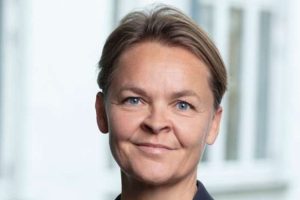
Denmark and France are intensifying their cooperation in life sciences at a time when resilience, innovation and industrial capacity have become strategic priorities for Europe. In this interview, Hanne Fugl Eskjær, Denmark’s Ambassador to France, reflects on how complementary strengths in research, digital health and public-private collaboration are shaping a long-term, policy-driven partnership between the two countries. The discussion sheds light on how political alignment and practical cooperation can translate into more resilient health systems and better outcomes for patients.
How do Denmark and France align in life sciences today, and where do you see the strongest complementarities between the two countries?
The alignment rests on the fact that both Denmark and France have made life sciences a long-term strategic priority, while approaching it through complementary models. Denmark has recently launched its third national life science strategy, Strategy for Life Science towards 2030, which builds on earlier frameworks and focuses on strengthening regulatory and investment conditions, supporting industry growth, advancing health innovation, leveraging health data responsibly, and embedding international cooperation as a core element. The ambition is not only to reinforce life sciences as a national strength, but also to contribute to more coherent and sustainable healthcare systems, in Denmark and through partnerships abroad.
From my perspective in Paris, this creates a natural convergence with France’s own ambitions. Our cooperation is already anchored in a formal political framework through the Declaration of Intent on health cooperation, signed by the French and Danish Ministers of Health in 2019 and renewed in 2023 and 2025. This agreement sets clear priorities around resilient health systems, chronic disease management, digital health and the exchange of best practices, and, importantly, places bilateral collaboration on a stable, long-term footing rather than relying on ad hoc initiatives.
There are also strong complementarities in research and innovation. France brings deep scientific expertise in areas such as oncology, infectious diseases and advanced biotechnologies, supported by a large and diverse research base. Denmark complements this with a highly productive pharmaceutical and biotechnology ecosystem, including strong capabilities in diabetes and metabolic diseases, supported by global players such as Novo Nordisk, alongside innovative medtechs such as Coloplast, specialised in intimate medical care. Danish strengths also extend to obesity, skin health, neuroscience and allergy underpinned by high clinical trial activity and close collaboration between academia and industry. Together, this creates a scientific critical mass that neither country could achieve in isolation.
Digital health is another area where the alignment is particularly clear. Denmark’s long tradition of digitalisation, combined with robust health data infrastructure and a high level of public trust in data use, provides a strong foundation for work on digital health solutions, real-world data and integrated care models. At the same time, both countries increasingly share a focus on strengthening industrial capacity in Europe. Denmark’s life sciences sector, characterised by close public-private collaboration and a significant number of foundation-owned companies, aligns well with France’s emphasis on industrial sovereignty, sustainability and long-term investment under France 2030.
Taken together, these elements point to a convergence rather than a competition. Denmark’s integrated innovation model and France’s scientific and industrial strengths reinforce each other, supported by a shared culture of long-term investment rooted in the public interest. The ultimate objective is to build more resilient health systems and deliver better outcomes for patients, not only in our two countries, but across Europe.
How does the Danish governance model shape the Embassy’s active role in life sciences, and why is this treated as a public responsibility rather than a purely commercial function?
From a Danish perspective, the Embassy’s role reflects a clear political mandate and a particular way of thinking about health and life sciences. These are not viewed solely as engines of growth or export, but as areas of strategic importance for society, with direct implications for resilience, sustainability and public trust. For that reason, we do not believe that business interests and public policy should be treated as separate spheres. Decoupling them would limit our ability to address challenges that cut across governments, healthcare systems and citizens’ needs. The Embassy therefore acts as a facilitator and convenor, bringing together public authorities, companies, researchers and healthcare actors around shared objectives. Strong health systems are built through cooperation, not silos, and none of the stakeholders involved can succeed on their own. By connecting the right people and helping to clarify complex issues, we aim to create the conditions for cooperation that is practical, credible and focused on long-term impact.
Dialogue plays a central role in this approach, particularly when dealing with issues that are both complex and politically sensitive. Access to care, affordability, innovation and workforce shortages are challenges we all face, and neither the public sector nor private stakeholders can resolve them independently. Working together, in a structured and transparent way, is essential to strengthening health systems that are resilient, inclusive and capable of delivering for citizens over time.
How do differences in healthcare systems and institutional culture between Denmark and France influence cooperation, and how are these differences managed in practice?
While Denmark and France operate within different healthcare systems and institutional cultures, these differences have not proven to be an obstacle to cooperation. On the contrary, I have been positively struck by the openness I encounter in France. When I took up my role, a structured framework for dialogue was already in place through the Alliance franco-danoise de santé, established in 2019 under the auspices of the Danish Embassy. It brings together Danish health companies active in France and provides a platform for evidence-based discussion with French public authorities and private stakeholders on issues ranging from chronic disease management and innovation to access to care and industrial resilience.
What stands out is the willingness on both sides to engage candidly and to acknowledge shared challenges. These include demographic pressures, workforce constraints, supply security and preparedness for future health crises. There is also a clear understanding that, within Europe, no country can operate in isolation. Cooperation is therefore not only desirable, but necessary to sustain innovation and ensure reliable access to healthcare and medicines. This dialogue is widely seen as mutually beneficial. It helps companies navigate and succeed across borders, while also supporting national objectives around innovation, industrial revitalisation and stronger health systems. Crucially, it supports the solid political framework of the Declaration of Intent on health cooperation signed by our Ministers of Health, and reinforced by a long-term mandate for the Embassy. This gives the cooperation continuity and credibility beyond short-term initiatives or electoral cycles.
That continuity also allows for a more honest exchange. Sharing experiences of what has worked, as well as reforms that have fallen short and how they were adjusted, strengthens trust and improves collective learning. Platforms such as the Alliance, which has already contributed socio-economic analyses and policy-focused reflections, also keep bringing robust evidence into the debate. This sustained and transparent approach is essential if we are to move towards more integrated patient pathways and more resilient health systems over time.
How does the cooperation flow in both directions, and what does Denmark draw from French experience within this partnership?
The strength of the cooperation lies in its reciprocity. For a smaller European country such as Denmark, working closely with France carries clear strategic value. We are allies, and this relationship is anchored in a Strategic Partnership Agreement signed in April 2025, in which health is recognised as a top-level priority alongside defence and security, the green transition, and digitalisation and innovation. This broader framework makes clear that cooperation in health is part of a long-term strategic relationship rather than a stand-alone initiative.
Within this context, Denmark learns a great deal from France. France’s scale and role as a major scientific and industrial player are highly relevant for Danish stakeholders. The depth of its scientific critical mass and the strength of its industrial base offer important points of reference, particularly when combined with Denmark’s capabilities in digital health, data use and integrated public-private collaboration. These strengths create a complementary model that benefits both countries. What is decisive, however, is that this partnership goes beyond broad statements of intent. Progress comes when experts, public authorities and private stakeholders engage at a detailed, practical level and focus on the specific areas where healthcare systems can be improved. This willingness to work through the concrete issues is essential.
Ultimately, the value of this cooperation lies in its impact. It supports our populations, strengthens our economies and contributes to more sustainable health systems at a time of demographic pressure and constrained public finances. In an increasingly unstable and unpredictable geopolitical environment, the case for sharing experience, learning from one another and developing solutions together has become even more compelling.
Looking ahead, what would success look like for you in strengthening Franco-Danish cooperation in health and life sciences during your time in France?
From my perspective, the essential foundations are already in place. We have a clear political framework through the Declaration of Intent on health cooperation, committed stakeholders on both sides, and a solid understanding of where our respective strengths lie. The next phase is therefore not about creating new structures, but about consolidating what exists and extending it in a more deliberate and inclusive way.
A key priority for me is to broaden the group of actors who are directly engaged in this cooperation. Healthcare is largely decentralised, and meaningful progress depends on involving regional and local stakeholders, not only national institutions. As I travel across France, beyond Paris, it becomes clear how important it is to connect these local realities with the broader strategic dialogue and to ensure that knowledge and experience circulate more widely within the system.
Success also depends on keeping this exchange genuinely two-way. What we learn in France must feed back into Denmark, just as Danish experience should continue to inform discussions here. That reciprocity is the foundation of a credible partnership. I believe in cooperation where both parties have a mutual interest and have the trust to offer solutions to each other. It requires honest engagement, including openness about what has not worked and a willingness to learn from those experiences.
If, over the coming years, we can deepen this mindset, expand participation across levels of the system, and sustain a culture of open, long-term collaboration, then I would see that as real success. It would mean that our cooperation delivers lasting value for health systems in both countries and remains relevant well beyond individual initiatives.