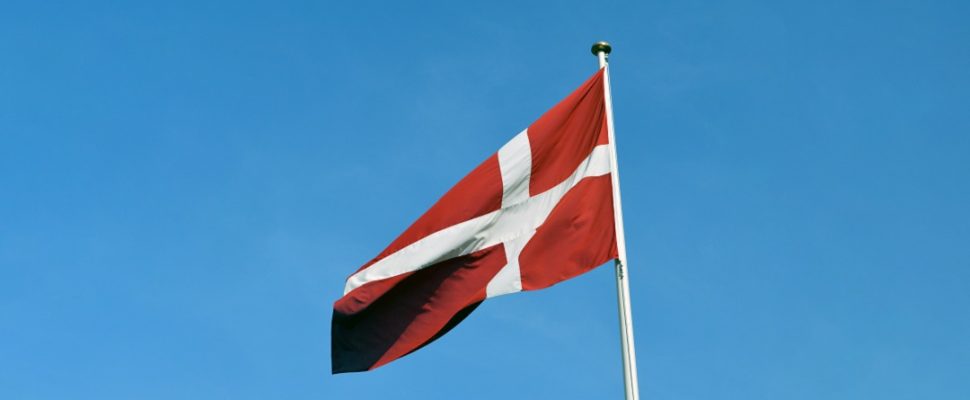

At first glance, Denmark might seem an unlikely hub for pharmaceutical production. With its small size and some of the highest labour costs in Europe, manufacturers might decide to look elsewhere. Yet major global players like Fujifilm Biotechnologies and AGC Biologics are doubling down on their Danish investments, expanding facilities and workforce. Why? The answer lies in a potent mix of talent, trust, and a thriving life sciences ecosystem that few other countries can match.
A Small Country with Big Biopharma Ambitions
Betting on biopharmaceuticals as a mainstay of its economy, Denmark is home to several solid native players, including the maker of weight-loss blockbuster Wegovy, Novo Nordisk, and long-standing midcaps ALK, LEO Pharma, and Lundbeck. But the small but innovation-rich nation is also steadily attracting manufacturing investment.
Danish pharma companies have well-established production facilities in the country. Novo Nordisk for example operates the world’s largest insulin manufacturing plant in Kalundborg and plans to further invest in Danish manufacturing with a USD 1.2 billion expansion planned in Odense to add rare disease drug manufacturing by 2027.
Denmark has also drawn the interest of international players, particularly contract manufacturers. Banking on its combination of qualified talent and strong ecosystem while profiting from a low-risk production environment and its strategic location in northern Europe, these companies have chosen to build their production capacity there.
Home to Top Talent
Denmark boasts a highly-skilled workforce, boosting Danish biopharma, which has grown by 25 percent in 12 years, and producing the highest employment growth among European life science nations.
For contract manufacturer Fujifilm Biotechnologies, the nation’s qualified workforce was a compelling driver behind its increased Danish presence. Having acquired its facility in Hillerød from Biogen in 2019, and gaining what GM and SVP Christian Houborg calls “an immediate foothold in a mature biomanufacturing environment,” expansion was almost immediately on the agenda.
Behind the firm’s decision to double its number of bioreactors and introduce drug product filling capabilities, was Denmark’s qualified workforce. “What has really sustained and expanded our investment here is Denmark’s exceptional concentration of talent,” says Houborg.
“With over 100,000 professionals working in biotech and pharmaceuticals across the country, the availability of highly skilled people isn’t just a strategic advantage, it’s a necessity for scaling with confidence,” Houborg adds.
Top talent does not come without a price tag, however. Denmark has one of the European Union’s highest average hourly labour costs of EUR 50.1, second only to Luxembourg. Yet for companies committed to Danish manufacturing, cost is but one factor among many and one that can be balanced. “While labour costs are high, the level of competence is equally high,” he says. “We focus on offsetting labour intensity with technology by automating processes, embracing digitalisation, and improving operational efficiency.”
Contrary to popular belief, Denmark’s labour laws can be advantageous for foreign companies. “Many investors are surprised to learn how flexible and employer-friendly the Danish system is,” says Vanessa Vega Saenz, director of Invest in Denmark.
A Fully Integrated Life Sciences Ecosystem
A skilled workforce goes hand in hand with a strong ecosystem and Denmark ticks that box too. With over 700 life science companies concentrated in hubs like Innovation District Copenhagen and the Medicon Valley, its excellent hospitals and research institutes and the single entry point programme, Trial Nation, Denmark, although small, packs a punch.
Additionally, the government has typically adopted life science-friendly policies and aimed to boost the industry at home and within the EU, promoting its “Strategy for Life Science Towards 2030” and urging the European bloc to boost its competitivity.
“Investing in Danish life sciences means joining a robust and well-integrated ecosystem,” says Vega Saenz. “The entire value chain, spanning from early-stage research to manufacturing and commercialisation, is accessible within the country. This structure appeals strongly to foreign investors.”
US-headquartered CDMO AGC Biologics whose Copenhagen facility is its largest globally and a leader in mammalian single-use bioreactor capacity, has taken these advantages into account. “Denmark may not be the most cost-efficient location in Europe, [but] its real value lies in the strength and maturity of its life sciences ecosystem,” says Kasper Møller, chief technical officer and executive VP for Europe and Japan Regions.
Copenhagen, where AGC has been operating a facility for over two decades, and by extension the Medicon Valley region, have unique ecosystems that enable companies to quickly set up operations. “The Medicon Valley region offers a rare concentration of capabilities across the entire life sciences value chain. This value ranges from research and innovation to clinical development, manufacturing, and commercial operations,” Møller point out.
With “a foundation of reliability, quality, and innovation that’s hard to replicate elsewhere,” says Møller, “Denmark delivers.”
The Danish ecosystem may be thriving, yet for some it is unrealistic to think that such a small European country could work in a vacuum. “With a population of six million, Denmark cannot operate in isolation. I believe we need a coordinated, pan-European approach to life sciences development”, says Lundbeck president and CEO Charl van Zyl.
Denmark’s Role in Global Supply Chains
Both companies’ Danish facilities are part of a larger network of global sites that operate in tandem and provide clients with options across geographies.
For Fujifilm, its Danish sites, along with those in the US, are the backbone of a global production network. “This globally connected manufacturing platform is designed for scalability, flexibility, and seamless tech transfer across regions,” says Houborg. “It lets us maintain a local-for-local supply model, with European facilities serving Europe and US sites focusing on North America, all while still ensuring we can transfer products between sites efficiently and in line with regulatory requirements.”
AGC’s Møller also views drug substance manufacturing as inherently global. “Our client base at the Copenhagen site reflects that,” he says. “About 70 percent of the programmes we support come from across Europe, with the remaining portion mainly from North America, and a smaller but steady group of clients in Asia, particularly Japan and South Korea.”
“While we do support companies based here in Scandinavia, the majority of our portfolio is directed toward global biopharma players,” Møller adds. “Copenhagen’s role is not just about offering capacity, but about providing unique capabilities backed by the experience, resilience, and reliability that AGC Biologics has built over decades.”
A Shadow Over Success: The China Challenge
Despite Denmark’s rising status, the global reality is complex. China and India still dominate API production, with up to 80 percent of the EU’s APIs sourced from the two nations.
That pressure is real. Danish API producer Xellia Pharmaceuticals recently announced plans to wind down manufacturing in Copenhagen, citing unrelenting competition from China. “To survive, we had no choice,” the company stated.
This highlights the broader challenge facing European manufacturers: how to stay competitive while maintaining high standards, high wages, and strategic autonomy. Even with EU efforts to reshore pharma supply chains post-COVID, cost competitiveness remains a stumbling block.