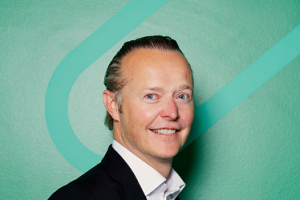
Christian Houborg, General Manager and Senior Vice President of FUJIFILM Biotechnologies Denmark, shares how the Hillerød site has evolved from a legacy facility into a cornerstone of the company’s global CDMO network. From expanding capacity to embracing cutting-edge technologies like AI and digitalisation, FUJIFILM Biotechnologies is setting new standards for biomanufacturing. Houborg elaborates on how the company is preparing for the challenges of next-generation biologics, fostering innovation, and aligning with the growing demand for sustainable, high-quality production. With an eye on long-term growth, Christian goes on to explain how Fujifilm is positioning itself as a CDMO partner of choice in building and scaling sustainably designed production, allowing customers to focus on innovation.
How did FUJIFILM Biotechnologies Denmark evolve from a legacy site into a cornerstone of Fujifilm’s global CDMO strategy?
The facility in Hillerød was originally developed by Biogen as a key production site within its global network. When Biogen’s strategic priorities shifted, FUJIFILM Biotechnologies acquired the site in August 2019. This was more than just a change in ownership, it marked a significant cultural and operational shift for those of us who remained. Moving from the innovator space into a CDMO was jokingly described as stepping into “the dark side.” But we embraced this transition wholeheartedly, and it has since become one of our defining strengths.
Rather than positioning ourselves as just another conventional CDMO, we aimed to become a true extension of our partners’ operations. We wanted to create an environment where clients feel like this is their site, run by their people. That ethos of ownership, trust, and integration has been a guiding principle ever since. We carried forward the best of Biogen’s legacy of technical depth, rigorous standards, and a collaborative mindset, then layered on Fujifilm’s commitment to partnership and innovation.
At first, our ambitions were relatively modest. We initially considered adding just two bioreactors to the six already in place, but the vision quickly grew. We proposed a significant first-phase expansion: doubling the number of bioreactors and introducing drug product filling capabilities to make the site fully end-to-end. Not only was the plan approved, but Fujifilm leadership encouraged us to bring even more ideas forward. That moment really catalysed a broader transformation for the entire organization.
What followed were a series of strategic investments extending well beyond Denmark. A sister site closely modelled after Hillerød was approved in Holly Springs, North Carolina. That was followed by second-phase expansions in both regions. What began as a USD 1 billion acquisition has now grown into a tenfold investment of over USD 8 billion as Fujifilm builds a globally connected network of gigasites to meet the rising demand for biologics manufacturing.
Bringing these gigasites online is no small feat. It requires not only technical capabilities but also a strong, aligned culture. Today, this site is producing nine commercial products following its recent go-live, marking a unique milestone in the industry and underscoring the strength of our team.
What factors led FUJIFILM to continue scaling its investment in Denmark, despite the country’s reputation of having relatively high operating costs?
When Fujifilm made the decision to expand, the vision for what this site could become was largely shaped here in Hillerød. Lars Petersen, who was the site’s Chief Operating Officer at the time and is now the President and CEO of FUJIFILM Biotechnologies, played a key role in articulating that ambition and turning it into actionable plans. What started as a strategic acquisition quickly evolved into a long-term commitment.
The original attraction to Denmark was Biogen’s established infrastructure, which gave us an immediate foothold in a mature biomanufacturing environment. But what has really sustained and expanded our investment here is Denmark’s exceptional concentration of talent. With over 100,000 professionals working in biotech and pharmaceuticals across the country, the availability of highly skilled people isn’t just a strategic advantage, it’s a necessity for scaling with confidence. You can replicate equipment and buildings, but you can’t develop strong competencies overnight.
Along with talent, Denmark’s strong commitment to environmental values has been another important factor. The country’s focus on innovation and sustainable industries made it a natural fit for Fujifilm’s long-term sustainability goals. While labour costs are higher here compared to many other regions, they were on par with those in the US when we acquired the site, and in some areas, they’re still more competitive today. Ultimately, we’ve never viewed our approach as competing on cost alone. Instead, we focus on offsetting labour intensity with technology by automating processes, embracing digitalisation, and improving operational efficiency. That’s how we continue to grow in a high-cost market. Not by compromising on quality or talent, but by building smarter, faster, and more connected systems on a strong local foundation.
How is FUJIFILM scaling its manufacturing network globally, and what role does the Hillerød site play in this strategy?
Since joining FUJIFILM Biotechnologies, the Hillerød site has been at the heart of shaping our global manufacturing strategy. What started with six legacy bioreactors is now evolving into a fully integrated network of 36 bioreactors. 20 are here in Denmark and 16 at our sister site in Holly Springs, North Carolina. This growth reflects both the scale of our ambitions and a thoughtful approach to building capacity for the future. We’re also breaking ground on a new facility in Toyama, Japan, which will be Fujifilm’s first Bio-CDMO site in the country, expected to go live in 2026.
What makes our model stand out is the concept of “modular” facilities. By building these gigasites in parallel, using the same equipment, layouts, and processes, we avoid the issues that often arise when sites are developed one after another. Too often, companies start with the intention of replicating success, but over time, evolving ideas or technologies can erode that consistency. We’ve made sure to resist that temptation. Our network is designed for true interoperability. This not only simplifies tech transfer but ensures a consistent quality and experience for our partners, no matter where they are in the world.
This model is already coming to life. First, the Hillerød site went live in December 2024, and two major go-lives are planned at Holly Springs later this year. Looking ahead, we have further expansions planned in Denmark in 2026 and 2027, with additional capacity coming online in the US through 2028. The agenda is packed, and intentionally so, because we believe the industry no longer needs to operate under the assumption that every innovator must also become a manufacturer.
In what ways is Fujifilm preparing to meet the technical challenges posed by emerging biologics and next-generation therapies?
Our strategy is built on three core pillars: putting people first, fostering innovation through site integration, and always delivering on our commitments. These aren’t just abstract concepts, they’re the foundation of our ability to execute at scale.
Our role is to industrialise biomanufacturing, not just in terms of scale, but also in reliability and speed. This allows our partners, from large innovators to mid-sized biotechs, to stay focused on discovery, knowing that we’ve got production covered with speed, precision, and global coordination. The Fujifilm model is built on maturity, and we believe it will increasingly define the future of advanced biologics.
As a global organisation, our strength lies in aligning capabilities with needs across different sites. The Hillerød facility remains focused on large-scale monoclonal antibody (mAb) production, which still represents a significant share of global demand. But even within this space, things are evolving rapidly, particularly with formats like antibody-drug conjugates (ADCs) and other novel constructs, and we’re adapting to meet those changes.
At the same time, several of our other sites are dedicated to more advanced modalities like cell and gene therapies. These are supported by highly skilled process development teams who are deeply engaged in addressing the technical challenges these therapies present. Their work enables us to anticipate what partners will need as their pipelines evolve, and to build scalable, robust solutions that keep pace with that progression.
This distribution of focus is intentional. We continuously assess where to invest and how best to position each site. For example, our Holly Springs facility is advancing the industrialisation of mAb manufacturing by combining scale, automation, and standardisation to drive speed and reliability. Together, this network allows us to stay agile while building the depth needed to support both established biologics and next-generation therapies.
How does Fujifilm define industrialisation in biomanufacturing today, and what role does digital transformation play in that journey?
Industrialisation is a key focus for us, and Fujifilm’s legacy of innovation gives us a strong foundation in this area. Our transformation from an analogue film producer to a digital leader, surpassing competitors like Kodak, was driven by a culture of reinvention. That same mindset is now guiding our approach to healthcare, with biomanufacturing becoming a strategic priority and backed by significant long-term investment.
As a biotech organisation within a much broader innovation ecosystem, we’re increasingly benefitting from Fujifilm’s extensive R&D capabilities. With over 50,000 patents across the group and an ambition to add 10,000 more in biotech alone over the coming decades, the scale of innovation we’re tapping into is enormous. This momentum is beginning to directly impact our work, and the collaboration between our operations and Fujifilm’s scientific expertise will only grow stronger.
On the practical side, we’re integrating technologies that give us real-time, data-driven control over production. For example, we’ve incorporated Raman spectroscopy into our bioreactors to continuously monitor critical variables like nutrient levels, cell viability, and product formation without relying on traditional offline sampling. These systems are already improving consistency and our understanding of processes. At the same time, we’re embedding AI tools within our quality systems not just to ensure compliance, but to use quality as a lever for broader operational excellence.
This alignment is intentional. In our industry, compliance and efficiency are often seen as opposing forces: one focused on safeguarding, the other on driving progress. We see it differently at Fujifilm. The more control you have over quality systems, the more confidently you can scale and optimise operations. That’s why we’ve placed digitalisation and AI development directly within our quality organisation, ensuring that data insights enhance both sides of the equation.
This approach also supports our competitiveness in Denmark. While labour costs are high, the level of competence is equally high. Digital transformation allows us to maintain quality while scaling operations.
What tangible steps has FUJIFILM Biotechnologies Denmark taken to align sustainability goals with operational strategy?
Sustainability at Fujifilm is not simply a response to external pressure or regulation; it is a value that resonates deeply within the organisation. It matters to us as a team, and it matters to me personally. If we take pride in the medicines we produce, we should take equal pride in how we produce them. From our perspective, scientific innovation and environmental responsibility are inseparable. One cannot come at the expense of the other.
While we see growing interest from partners who want to align with environmentally conscious manufacturers, our sustainability agenda has always been internally driven. We’re not aiming for minimum compliance; we’re focused on doing what’s right and doing it decisively. In the second phase of our expansion, we’re transitioning from fossil-based steam generation to fully electric boilers, which will eliminate gas usage entirely in this utility. While this is a significant shift that will increase our electricity consumption tenfold, it’s crucial if we are to make a meaningful reduction in our carbon footprint.
To balance that impact, we’ve entered into a long-term power purchase agreement that will supply the site with renewable electricity from the Vedde Solar Park, which is currently under development in Zealand and expected to go live later this year. Additionally, we’re investing in high-temperature heat pumps to recover excess process heat, which is another important step toward full climate neutrality. The first unit is already being installed and is set to come online in 2026 or early 2027.
These decisions are not easy, nor are they driven by short-term returns. From a purely financial standpoint, there are certainly more immediately profitable ways to allocate capital. But this is about long-term responsibility. Sustainability is not just an abstract goal for us; it’s operationalised through clear, measurable actions. It’s also good business, but we do it because we believe it’s the right thing to do.
Looking ahead, what are the key milestones you hope to achieve in the coming years?
We have some important milestones ahead. Our first drug substance line is already live, and later this year, we expect our drug product capabilities to come online. This will allow us to support clients from start to finish, covering everything from the substance to the finished product. Not only does this streamline the supply chain, but it also strengthens our sustainability agenda by reducing the number of handovers and the need for transport.
Additional milestones are set for 2026 and 2027, and we’re on track for a major launch in 2025 at our Holly Springs site in the US. Together, our facilities in Denmark and the US will become the largest of their kind in Europe and North America, thus forming the backbone of our kojoX network. This globally connected manufacturing platform is designed for scalability, flexibility, and seamless tech transfer across regions, which is an especially strategic advantage in today’s geopolitical landscape. It lets us maintain a local-for-local supply model, with European facilities serving Europe and US sites focusing on North America, all while still ensuring we can transfer products between sites efficiently and in line with regulatory requirements.
As we continue to grow, we’re also prioritising digitalisation and operational efficiency. These efforts are not only central to our long-term competitiveness but also reinforce our core proposition: biopharma innovators don’t need to build their own manufacturing sites. Instead of investing billions and waiting years to launch a new facility, they can partner with us, and we can deliver on a much shorter timeline, at industrial scale, and with full regulatory compliance.
What final message would you like to share with your partners across the healthcare ecosystem?
Our message to the industry is simple: let us handle industrialisation so you can focus on discovery and innovation. We’ve built the infrastructure, systems, and expertise to bring therapies to market reliably and at scale. Ultimately, the patients who are waiting will benefit from faster, more efficient access to the medicines they need.