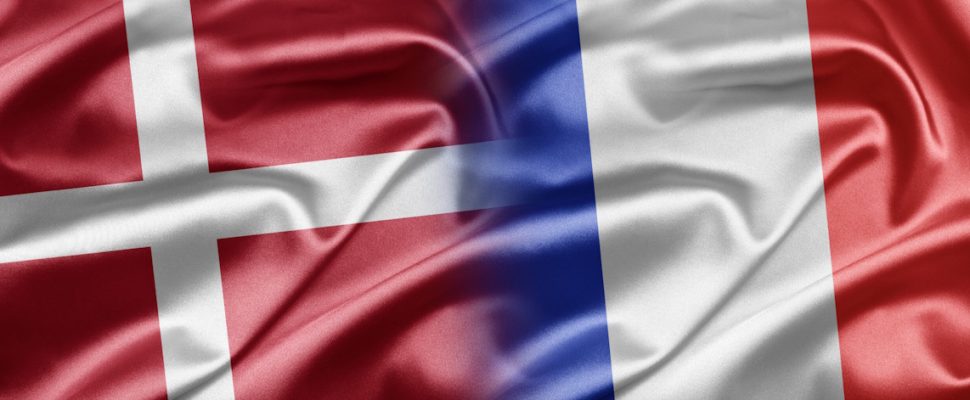

France and Denmark have a rich history of healthcare collaboration, from basic research to clinical trials, as well as major manufacturing investments. What links these two nations, and what are the threats to further collaborations in the coming years?
For a country with a population of just six million people, Denmark’s life sciences industry punches well above its weight. Denmark is a global leader in digital health and health data, while Danish companies like Novo Nordisk (obesity/diabetes), LEO Pharma (dermatology), Lundbeck (neuroscience), Coloplast (intimate medical devices), and ALK (allergies) are internationally recognised players in their respective fields.
What’s more, many of these Danish companies have chosen France as a key node in their global expansion efforts, taking advantage of the cordial trading relationship between the two nations, access to the sizeable French market, manufacturing incentives, as well as its research scope and excellence.
For instance, France hosts LEO Pharma’s largest manufacturing site outside of Denmark and 600 of its 4,000 global employees. ALK’s French facility, meanwhile, is one of its largest globally, while Novo Nordisk has established a dedicated clinical trial centre in France. It has also invested a whopping EUR 2.3 billion euros in French manufacturing in 2023, driven by skyrocketing global demand for its weight loss drugs.
A common thread running through these investments is a commitment to sustainability. Novo Nordisk France GM Etienne Tichit serves as president of the French National Industry Council’s Sustainability Roadmap for the healthcare sector, while ALK, whose plan operates on 100 percent green electricity, recently invested EUR two million in replacing its gas heating systems with heat pumps. It also switched its packaging from plastic to cardboard, with General Manager Nicholas Dufourt noting that “our commitment to sustainability is a core Danish corporate value.”
There is scope for even greater cooperation moving forward, according to Hanne Fugl Eskjær, Denmark’s Ambassador to France. “Both Denmark and France have made life sciences a long-term strategic priority, while approaching it through complementary models,” she says, noting that the two countries’ commitment to mutual health cooperation has been formalised via a Declaration of Intent signed in 2019, renewed in 2023, and again in 2025.
“Denmark’s integrated innovation model and France’s scientific and industrial strengths reinforce each other, supported by a shared culture of long-term investment rooted in the public interest,” adds Ambassador Eskjær, whose embassy takes a more proactive role in business than many of its equivalents from other nations, bringing together public authorities, companies, researchers and healthcare actors around shared goals.
However, further investment from Danish companies into France is being threatened by market headwinds. Dufourt of ALK – a key player in helping create a National Allergy Strategy in 2022 – feels the authorities do not fully appreciate the commitment it, and other industry actors, have displayed to the country.
“We have achieved a comprehensive green transition and invested substantially, but this has very low recognition in pricing discussions,” he laments. “France is one of our three most important markets globally, but I face internal competition with other European affiliates, where governments offer genuinely positive investment incentives, as well as increasingly from the US.”
He concludes, “We must continue convincing headquarters that French investment remains justified despite the pricing pressures, regulatory complexity, and international reference pricing constraints.”