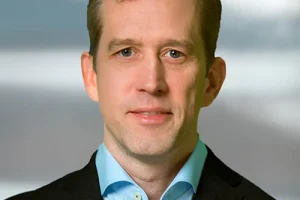
Kasper Møller, Chief Technical Officer and General Manager of AGC Biologics Denmark, shares insights into the company’s strategic priorities and the role of its Copenhagen facility in AGC Biologics’ global network. Møller discusses the ongoing expansion of the site, the growing complexity of biologics manufacturing, and the evolving demands of the life sciences sector. He also highlights the importance of collaboration in driving innovation and bringing new therapies to market.
How do you manage your multiple responsibilities as CTO, regional leader, and General Manager of AGC Biologics’ Copenhagen site?
Currently, I’m serving as Chief Technical Officer at AGC Biologics, where I’m responsible for our internal technology platforms and overseeing the overall technical strategy across the organisation. In addition, I manage our protein manufacturing operations in Europe and Japan, and since April, I’ve also taken on the role of General Manager at our Copenhagen site. Right now, a lot of my focus is on Copenhagen, especially after our recent significant expansion, and we’re now ramping up operations there.
Having spent nearly two decades with the company, I’ve grown alongside it, which naturally led to taking on more responsibilities. On the one hand, I help drive innovation by developing and implementing technologies that improve quality and speed across our global projects. On the other, I’m closely involved in the day-to-day leadership of the Copenhagen site, where we’re scaling up to meet rising demand.
How has AGC Biologics’ footprint in Denmark evolved over time, and how has the facility’s recent expansion expanded your production capabilities?
AGC Biologics’ presence in Denmark started back in 2001, when we first established the site with the vision of building a Scandinavian CDMO. This was led by Danish biotech entrepreneur Mads Laustsen, whose leadership laid the groundwork for what we’ve built since then. In 2007, we expanded into the US by acquiring a biologics site in Seattle, and later joined AGC Inc., forming the global CDMO network now known as AGC Biologics.
Today, our Copenhagen facility is the largest within that network and a cornerstone of our biologics platform. The site focuses on the development and manufacturing of protein-based biologics using both microbial and mammalian systems. Our most recent expansion, which came online under GMP conditions in 2024, has more than doubled our mammalian production capacity. With 2,000-litre single-use bioreactors, the new facility can deliver up to 200 batches annually, making us one of the world’s leading CDMOs in terms of mammalian single-use capacity.
This investment has greatly enhanced our ability to meet the needs of both new and existing clients. Since I joined in 2006, the team has grown from 140 people to over 1,100. Today, we support seven commercial products and 25 clinical programmes from this site alone. This scale and diversity reflect the deep expertise we’ve developed over the years and the strategic importance of Copenhagen within our global operations.
How is your client portfolio distributed across regions, and what role does the Copenhagen facility play within AGC’s global network?
Biologic drug substance manufacturing is inherently global, and our client base at the Copenhagen site reflects that. About 70 percent of the programmes we support come from across Europe, with the remaining portion mainly from North America, and a smaller but steady group of clients in Asia, particularly Japan and South Korea. This distribution has remained fairly stable, although in recent years, we’ve noticed a gradual shift in mindset. Many companies are now looking to manufacture closer to their target markets, especially when product characteristics or regulatory considerations demand it.
This is where our global network becomes a real advantage. With sites in the US, Europe, and Japan, we can offer geographic flexibility within jurisdictions that are known for their regulatory stability and reliable manufacturing. That sense of predictability is especially important right now, as clients are navigating a more complex geopolitical environment.
Despite these challenges, demand remains truly international. While we do support companies based here in Scandinavia, the majority of our portfolio is directed toward global biopharma players. Copenhagen’s role is not just about offering capacity, but about providing unique capabilities backed by the experience, resilience, and reliability that AGC Biologics has built over decades.
With the CDMO segment seeing rapid growth in recent years, how would you describe the evolving profile of your clients and how has AGC Biologics adapted to meet their needs?
Across our network, and especially here in Copenhagen, we continue to work with a diverse range of clients from early-stage biotech firms to well-established multinational pharmaceutical companies. While smaller biotech companies driving innovation in biologics are getting more attention, this has always been a key feature of our industry. For over a decade, we’ve seen a steady mix of company types driving clinical programmes, with many assets changing hands through acquisitions as they move into later-stage development. This diversity, both in the companies and in the products themselves, remains a defining characteristic of the CDMO landscape.
What this requires above all is flexibility in manufacturing capacity and how we engage with each project. Our 2,000-litre single-use systems are well suited for both clinical supply and product launch, offering the scalability and speed that most programmes need as they progress. Being able to adjust, whether to shifts in demand, project timelines, or technical specifications, is critical.
Over the years, we’ve worked with more than 250 clients and handled over 400 distinct products. This experience has shaped how we built our newest facility, knowing that no two products are the same. We typically onboard five to ten new products each year, and we do so with an operating model designed to adapt to the unique characteristics of each one, rather than expecting clients to fit into a one-size-fits-all approach. As we see it, our role is to enable their progress, not limit it.
What makes Denmark a compelling destination for long-term investment in biomanufacturing, despite its higher cost base?
While Denmark may not be the most cost-efficient location in Europe, its real value lies in the strength and maturity of its life sciences ecosystem. This is an advantage that in our experience far outweighs the higher operational costs. Our Copenhagen facility, with over two decades of experience and a highly skilled team, continues to attract investment because of the expertise we’ve built locally. But it’s the broader environment that truly sets Denmark apart.
The Medicon Valley region offers a rare concentration of capabilities across the entire life sciences value chain. This value ranges from research and innovation to clinical development, manufacturing, and commercial operations. This is supported by long-standing collaboration between government, academia, and industry, a robust educational system aligned with sector needs, and a talent pool that is both specialised and adaptable. These elements come together to create a foundation of reliability, quality, and innovation that’s hard to replicate elsewhere.
This is especially important in areas like cell and gene therapies or biosimilars, where success depends less on marginal cost and more on having experienced professionals and purpose-built infrastructure. Once those conditions are in place, cost structures can be optimised over time through scale. But to get there, you need an ecosystem that can enable execution from day one, and Denmark delivers exactly that.
How is AGC Biologics leveraging automation and artificial intelligence, and what role will these technologies play in the evolution of your manufacturing capabilities?
Automation and digitalisation are becoming key to how we design and operate our facilities, and this is especially evident at our new site in Copenhagen. Compared to previous generations, the facility incorporates more advanced automation systems, and this evolution will continue with our next major project: a new manufacturing plant under construction in Yokohama, Japan. The insights we gain from these developments are shaping future builds, and we’re also applying them to existing sites, although adapting GMP-compliant operations does take time and requires regulatory precision.
When it comes to artificial intelligence, we’re still in the early stages of integrating it. Right now, we’re piloting AI in process development and R&D, primarily for optimisation purposes, and we’ve started an internal assessment to define a broader strategy for its adoption. While AI isn’t yet part of our GMP operations, we see its potential to drive efficiencies, and we expect its role to expand significantly over time.
Of course, certain aspects of single-use biomanufacturing, like manual system connections, will likely remain outside the scope of full automation. But across much of our work, digital tools are already helping to enhance reliability, traceability, and responsiveness. Our Copenhagen site, which is ramping up production, was designed for flexibility rather than being tied to a single product. Its full utilisation will unfold over the next few years, depending on demand.
With the Yokohama facility set to come online in two years, we expect it to support our global growth and also enable future expansion in Denmark. The exchange of knowledge between sites, particularly from newer builds to established operations, is central to our continuous improvement model and how we define the future of agile, state-of-the-art biomanufacturing.
What role does the Copenhagen site play in advancing AGC Biologics’ sustainability agenda, and how are environmental priorities being embedded across your operations?
Sustainability is becoming a key strategic priority for AGC Biologics, and our Copenhagen facility has become a central driver of this agenda across our global network. This site is not only leading the way in terms of environmental implementation but also benefits from Denmark’s progressive regulatory environment and the collaborative Medicon Valley ecosystem, where best practices are shared across academia, government, and industry.
Our efforts are supported by structured frameworks. The site holds ISO certifications and participates in the EcoVadis sustainability programme, where we received a Gold rating in 2023, recognising both our performance and the strength of our data management. Looking ahead, Copenhagen will be the first of our facilities to submit a full Corporate Sustainability Reporting Directive (CSRD) report as part of our annual disclosures, with the scope and depth growing in line with evolving EU requirements.
What’s perhaps most significant is how these principles are being integrated into our daily operations. Environmental impact is considered from the start, whether it’s in chemical selection, process design, or water usage, and sustainability is now part of our customer intake process. This proactive approach reflects not just our own goals but also the clear expectations of our biopharma partners, many of whom now demand demonstrable environmental responsibility from their suppliers. As a major employer in the region, we also extend that expectation to our supply base.
Although sustainability is an ongoing journey, we believe the foundations we’ve laid in Copenhagen position us to lead by example. We want to be role models not only in compliance but in shaping how environmental responsibility will be embedded into the future of biomanufacturing.
What are your strategic priorities for AGC Biologics in Denmark, and how do you see the organisation’s role evolving within the broader life sciences landscape?
In the near term, our focus is on ramping up the newly expanded Copenhagen facility, making sure we have the right people, systems, and operational readiness in place to support a growing pipeline. Once this capacity is fully utilised, we see a clear path toward further expansion. The site was designed with long-term scalability in mind, and with land available next to our current footprint, we’d likely replicate this model to build one of Europe’s most significant hubs for single-use biologics manufacturing.
From a portfolio perspective, we continue to support programmes across all development stages. Currently, we supply seven commercial products and are preparing eight additional late-stage projects for Process Performance Qualification (PPQ) and eventual launch. At the same time, we’re actively onboarding new products in earlier stages. This broad mix ensures we stay agile and responsive to our clients’ evolving needs.
We’re also seeing a continued shift toward more complex modalities. Many of the antibodies entering clinical development today are bispecific, trispecific, or fusion proteins. While this doesn’t fundamentally change our manufacturing layout, it does put greater demands on our analytical and process development capabilities. We’re continuously investing to stay ahead of this curve, adapting our technologies and workflows to meet the rising expectations in both scientific and regulatory terms.
When I take a step back, what stands out more than ever is how essential collaboration has become. Our purpose at AGC Biologics, “Bringing Hope to Life,” depends on seamless coordination across the healthcare ecosystem. Whether we’re accelerating a novel therapy into the clinic or ensuring the consistent delivery of commercial products, these aren’t efforts any one player can manage alone. Success in this field is built on trust, shared purpose, and the ability to work together toward a common goal.