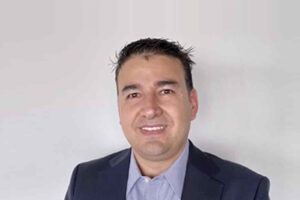
Stendhal Pharma operates with an "unlimited pipeline" approach by forming strategic alliances with global pharmaceutical companies that lack a presence in Latin America. Rodrigo Ruiz Mingramm explains how, as companies reconsider their direct presence in Latin America due to political and socio-economic uncertainties, Stendhal's model is becoming more appealing, and why Stendhal is committed to ethical practices to maintain its reputation as a reliable partner.
To begin, could you elaborate on the business model of Stendhal, which focuses on strategic alliances with global companies?
Our business model is quite unique and has proven to be very successful. Essentially, we operate with what I like to call an “unlimited pipeline.” This means that we continuously research and identify companies worldwide that do not currently have operations in the Latin American region, which includes Mexico, Central America, and the Andean countries. Once we identify a promising molecule that meets a market need, we approach these companies to explore potential partnerships. We conduct thorough research to determine if they have plans to enter the region or if they have existing business partnerships. From there, we develop a compelling value proposition and begin discussions. This approach has allowed us to successfully launch and grow businesses for companies like Gilead Sciences in Mexico, and then transition these successful ventures back to our partners.
What specific criteria do you consider when selecting global companies to partner with?
Our selection criteria focus on a few key factors. First and foremost, we prioritize innovative products that address unmet needs in our markets. This ensures that we are bringing valuable and unique solutions to the region. Secondly, we look for companies with a strong reputation and values aligned with ours, as this is crucial for developing a sustainable partnership. Lastly, we seek partners who are open to creating win-win scenarios, ensuring mutual benefit and long-term successful collaboration.
How popular is this model currently, and how has it evolved over time, especially considering some companies are withdrawing from Latin America due to declining interest?
The Stendhal business model has proven to be highly successful and continues to gain traction. We anticipate its growth due to a notable shift in how companies view the Latin American market. For instance, at events like the BIO International Conference in the U.S., we observe that many companies that once aimed to establish a direct presence in Latin America are now reconsidering their strategies. Instead, they are evaluating models like ours. This shift is largely driven by the political and socio-economic uncertainties in various countries, which make the idea of a direct investment less attractive. Consequently, our business model, which offers a way to navigate these complexities without taking on the full risk, is becoming increasingly relevant.
Given the dynamic nature of the market, how do you manage the risks associated with companies potentially deciding to go solo after seeing the success of your business model?
One of the advantages of our model is that we are not reliant on our own R&D department. We focus on maintaining a robust product lifecycle management strategy. We recognize that once we achieve significant success with a product, some companies might choose to establish their own presence in the region. We are prepared for this and view it as part of our role. Our approach includes transitioning products back to partners when necessary while continuing to manage relationships with those partners. For example, we successfully handed back portfolios to Gilead and Biogen but we still manage their products and portfolios in certain regions. This flexibility and continued partnership illustrate our commitment and capability as a reliable partner.
Could you elaborate on the role of your manufacturing facility in supporting your strategy?
Our manufacturing facility is a key component of our strategy. We operate a fully GMP-compliant facility, which provides us with significant flexibility in product conditioning. This is particularly valuable because the volume requirements in our region are relatively small compared to markets like Europe or the U.S. For some companies, producing small volumes may not be cost-effective. By having our own manufacturing capability, we offer a solution that addresses this issue, allowing us to efficiently supply products to our markets. This capability enhances our value proposition by enabling us to meet regional demands more effectively.
Your portfolio covers a wide range of therapeutic areas, including HIV, hepatitis C, multiple sclerosis, high blood pressure, epilepsy, and rare diseases. Given this diversity, what synergies exist among these areas? How do you manage sales efforts across such varied therapeutic fields?
The management of such a diverse portfolio is indeed complex and varies by country. In Mexico, for instance, we have specialized sales teams for different areas. We have a dedicated primary care sales force, another team focusing on high-specialty milk products, and yet another for high-specialty hospital products. For orphan drugs, which is a smaller segment in Mexico, we have a focused approach tailored to that niche.
In contrast, in Central America, orphan drugs have become a significant part of our business. We are currently managing portfolios from leading pharmaceutical companies such as Alnylam, Biomarin, Ultragenyx, and Biogen. We are also finalizing a major alliance with a new UK partner, which will further enhance our capabilities in this area.
Our approach involves strategically selecting partners and tailoring our sales force to the specific needs of each therapeutic area, ensuring we effectively address unmet needs across the spectrum. This allows us to grow aggressively while maintaining a high level of specialization and expertise in each therapeutic field.
When selecting therapeutic areas to focus on, how do you prioritize them? Is Mexico always the primary consideration, or do you assess potential across the entire region?
Prioritization is based on several factors, including disease prevalence and market potential, which can vary significantly from country to country. Historically, Mexico was our largest market. However, we have observed that other countries in the region now offer greater potential for access to our products. Thus, our focus shifts depending on the specific product and the opportunities in different markets.
Rare diseases seem to be a newer focus for Stendhal. What new capabilities are you developing in this area, and how has market access been in Mexico compared to Central America?
In Mexico, our involvement with rare diseases is still developing. We currently have a partnership with Alnylam for hepatic porphyria and another condition, and we are finalizing a new partnership for additional rare diseases. However, we are still navigating the registration process for orphan drug recognition. This has slowed our ability to fully launch and create disease awareness compared to our efforts in Central America. One of the significant challenges in Mexico is the lack of a comprehensive law for rare diseases, which affects our ability to gain market access and support patient care as efficiently as in other countries.
When selecting products or introducing them to the market, are there specific requirements for localizing clinical trials in Mexico?
There are specific requirements. For instance, we conducted a clinical trial with Alnylam at the Instituto Nacional de Nutrición for a rare disease. However, transitioning from a clinical trial to product approval and access remains challenging. There is no clear pattern for this transition, which poses significant difficulties.
The industry has noted that while progress is being made, the process can still be slow. What impact does this have on innovation and development for Stendhal and the Mexican pharmaceutical industry in general?
The impact is substantial. We need to work more closely with Cofepris and other authorities to expedite clinical trials and product registrations. We have been in discussions with Cofepris for two years to accelerate access for products already approved by the FDA or EMA. The delays impact patients who need these products urgently. It is not necessarily a bottleneck but rather a complex process. We need clearer timelines for each phase to improve efficiency and patient access.
The key is collaboration. The COVID-19 pandemic demonstrated that when all stakeholders work together, significant progress can be made. This approach should be extended beyond COVID to address all key stakeholders, including patients, doctors, government, and the pharmaceutical industry. It is about finding solutions that work for everyone involved.
Mexico currently handles about $200 million worth of clinical trials per year, a number that could potentially reach $4 billion with fewer regulatory hurdles. What specific steps do you believe should be taken to improve the approval process? And do you think Mexico can become a global hub for innovation and clinical trials?
I am confident that Mexico has the potential to become a global hub for clinical trials and innovation. Historically, Mexico was well-regarded in this area. However, recent regulatory processes have slowed significantly. A major issue is that clinical trials are conducted simultaneously worldwide, and delays in Mexico can result in trials finishing before our approvals are granted. To address this, we need to expedite the approval process and work closely with regulators. By clearly communicating the benefits of conducting clinical trials in Mexico and streamlining regulatory procedures, we can enhance our standing and attract more global trials to the country.
If we turn our attention to the global pharmaceutical industry, there is an interesting shift occurring with increased innovation coming from small biotech companies and startups. How is Stendhal adapting to this new dynamic, and what opportunities do you foresee?
We see a great deal of opportunity in this shift towards smaller biotech companies and startups. Our approach is to actively engage with these smaller players, as our value proposition aligns well with their needs. Unlike larger pharmaceutical companies, we offer a more personalized partnership, where their products become part of our dedicated portfolio rather than just another addition to a vast array. This adaptability is something we excel at, and it positions us advantageously as the sector continues to grow. We are accustomed to working with startups and smaller companies, and it is encouraging to see this segment expanding daily.
Building trust with international partners, must be challenging. How has Stendhal managed to establish and maintain this trust?
Building trust is crucial, and we approach it in two key ways. First, we focus on delivering results consistently. Second, we ensure that everything is done correctly and ethically. We are the only Mexican pharmaceutical company that is a member of the AMIIF, and we adhere not just to CETIFARMA compliance codes but also to the IFPMA standards. This commitment demonstrates to our partners that we are a reliable and trustworthy extension of their own operations. In fact, our compliance standards often exceed those of our partners due to the complexity and breadth of our work. Managing 22 partners means we must maintain exceptionally high standards across all aspects of our business, which further solidifies the trust our partners place in us.
After 12 years at Stendhal, what continues to motivate you, and how do you inspire your team to believe that each year will surpass the previous one?
What motivates me most is working with top-tier talent from across multinational companies. This environment allows me to continually learn and grow. Our vision is to maintain an “unlimited pipeline,” setting ambitious goals and striving to bring innovative products to Mexico. The enthusiasm and entrepreneurial spirit of our team drive us to achieve these goals. Each successful project and product launch is a celebration and a testament to our collective efforts.
Maintaining flexibility and a strong entrepreneurial mindset is crucial, given that each partner has unique expectations and requirements. We don’t rely on corporate departments for guidance; instead, we develop and implement strategies ourselves, turning our aspirations into reality.
Given the competitive nature of the industry, how do you attract and retain top talent at Stendhal?
Attracting top talent is manageable as we offer competitive compensation comparable to multinational companies. However, retaining that talent is where we focus our efforts. We achieve this by empowering our team, involving them in our vision, and making them an integral part of the exciting journey we are on at Stendhal
Currently, we have seven different projects running simultaneously, which keeps the environment dynamic and stimulating. The continuous evolution of our business model and the adrenaline of working on new products and partnerships create a unique and engaging atmosphere. While this fast-paced environment may not suit everyone, it drives those who thrive on challenge and innovation.
What final message would you like to share with our global readers?
We aim to be the partner of choice for companies seeking to succeed in the Mexican market and those re-evaluating their go-to-market strategies. Our goal is to support and collaborate with organizations that want to make an impact in this dynamic region.
Additionally, we were recently ranked 30th among the best workplaces for multinational companies with 200 to 500 employees in Mexico. This recognition reflects the positive culture and commitment we have at Stendhal, as highlighted by our employees themselves.