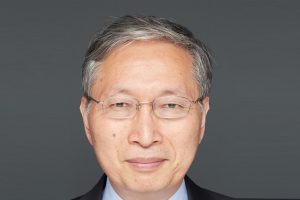
Cancer drug development has produced an abundance of therapies, yet outcomes in solid tumours remain constrained by resistance and relapse. In this interview, Zaiqi Wang, Chairman and CEO of InxMed, explains why the company starts from tumour defence biology rather than individual targets, and how this perspective informs its combination strategy, late-stage pipeline, and disciplined path towards commercialisation. The conversation offers a clear view on how science-first thinking, executed with focus, underpins InxMed’s approach as China’s innovation ecosystem matures.
What motivated you to found InxMed, and what gap in cancer treatment were you aiming to address from the start?
We founded InxMed in 2018, at a point when China’s innovation ecosystem and regulatory environment were becoming mature enough to support genuinely differentiated drug development. The question we wanted to address was not whether more cancer drugs were needed, but why outcomes in solid tumours remain so limited despite decades of therapeutic progress. Most patients still die from treatment resistance and metastatic disease, not from a lack of available agents.
When we looked closely at the history of cancer treatment, one pattern became clear. Many therapies deliver benefit for a period of time, but tumours adapt, escape, and return. This is particularly true in solid tumours, where cancer cells exist within a complex ecosystem. They are protected by their surroundings, including fibroblasts and stromal components, which form a defensive network that supports survival under stress and enables resistance. In that context, repeatedly trying to kill cancer cells more aggressively only goes so far.
This led us to a different starting point. Instead of focusing solely on cytotoxicity, we chose to focus on adaptability. Cancer is difficult to eradicate because it is resilient. It defends itself, remodels its environment, and finds ways to survive therapy. Our view is that if you weaken the tumour’s defence and resistance mechanisms, other treatments can work more effectively and for longer. That principle underpins our approach to combination therapy, which we see as the future of cancer treatment, provided those combinations are biologically rational.
My own experience reinforced this perspective. Before founding InxMed, I worked at MSD on pembrolizumab, an anti-programmed cell death protein 1 therapy. While it delivers durable benefit for some patients, many do not respond, and others relapse due to acquired resistance. That gap between promise and reality pushed me to focus on tumour escape biology and on how to design combinations that address the underlying mechanisms of failure.
From the beginning, we chose to be driven by first principles and fundamental biology rather than by individual assets. We asked what cancer really is, why it has been so hard to treat effectively, and what we can learn from past efforts. That thinking led us to the concept of tumour defence as a unifying framework for our work. Operating in China allows us to execute efficiently once the biology is clear, but execution alone does not create value. Without deep biological insight, speed simply produces more of the same. We spent several very difficult years building that foundation, and it is this work that defines our strategy today and gives us confidence in the path we are pursuing.
How does InxMed translate its scientific thinking into a coherent pipeline and development strategy?
Our pipeline is built around a single, coherent idea: tumour defence is a central reason why many cancer therapies fail, and addressing it early can change both depth and durability of response. This approach is anchored by ifebemtinib (IN10018), an oral focal adhesion kinase (FAK) inhibitor licensed from Boehringer Ingelheim. FAK is not a classical oncogenic driver. It sits within adaptive pathways that enable tumours to survive stress, remodel their microenvironment, and develop resistance. As a result, FAK inhibition shows limited activity as monotherapy, but its value becomes clear when used in biologically rational combinations. In practical terms, inhibiting FAK does not aim to kill tumour cells directly. It weakens the tumour’s defensive capacity, particularly within the stroma and microenvironment, allowing partner therapies to work more effectively and for longer. That biological insight defines how we design combinations, with each component addressing a distinct mechanism rather than relying on single-agent efficacy.
Clinically, ifebemtinib is now in late-stage development in China, including registrational Phase III programmes in combination settings. Our most advanced indication is platinum-resistant ovarian cancer, where we combine ifebemtinib with pegylated liposomal doxorubicin (PLD) in a high unmet-need population. In parallel, we have built a strong position in RAS-driven tumours. In first-line KRAS G12C-mutant non-small cell lung cancer, we combine ifebemtinib with the KRAS G12C inhibitor garsorasib from InventisBio, where we have reported high response rates with durable benefit. Importantly, we have also generated randomised data in KRAS G12C colorectal cancer, demonstrating a clear add-on benefit compared with KRAS inhibition alone. For us, that evidence matters, because it shows a genuine clinical contribution from targeting tumour defence rather than a single-arm signal.
From a regulatory perspective, China’s NMPA, particularly its Center for Drug Evaluation, has been supportive of innovative combination approaches when the data are compelling. Breakthrough Therapy Designation for specific programmes has enabled closer regulatory interaction and a clearer path toward registration. Our strategy is China-first, with an internal ambition to reach the market in the 2026 to 2027 timeframe, subject to data strength and review timelines. Commercially, we are taking a disciplined approach. We plan to launch first in China using a lean model, combining a focused internal medical and scientific team with external commercial partners to scale efficiently. We do not intend to build a global sales infrastructure at this stage. Instead, once we have generated robust human proof of concept and de-risked the asset, we will pursue ex-China partnerships and out-licensing with global biopharma groups.
Beyond ifebemtinib, we are expanding a broader tumour defence portfolio. This includes antibody-drug conjugate programmes that target elements of the tumour microenvironment, particularly cancer-associated fibroblasts. Our most advanced ADC, OMTX705, is a fibroblast activation protein-targeting programme partnered with Oncomatryx, which has entered Phase I development in China following investigational new drug clearance in August 2023. We also have additional ADC candidates and a next-generation FAK inhibitor in preclinical development.
Across the pipeline, consistency is deliberate. We are not chasing formats or trends. Every programme follows the same biological logic: weaken tumour defence, enable rational combination therapy, and improve the durability of benefit for patients. That focus defines how we translate our science into development decisions and long-term value.
What does it take to make meaningful progress in particularly challenging solid tumours such as pancreatic and liver cancer?
In these indications, success begins with understanding the battlefield rather than the modality. Pancreatic and liver cancers are not short of therapeutic ideas. What consistently limits progress is a failure to account for the underlying disease biology. In pancreatic cancer, for example, tumour cells exist within an exceptionally dense stromal environment, often surrounded by multiple fibroblasts that create fibrosis, physical barriers, and immune suppression. If that protective layer remains intact, even highly sophisticated therapies struggle to reach their target.
This reality is why our strategy centres on tumour defence and combination therapy. Defence mechanisms operate both within the cancer cell and across the surrounding microenvironment, particularly through stromal cells and cancer-associated fibroblasts. Together, they drive resistance and limit durability of response. Approaches that focus exclusively on killing the cancer cell, while ignoring the stroma, tend to underperform in desmoplastic tumours such as pancreatic cancer. Our aim is to address both components in parallel, dismantling the defensive architecture that enables escape and resistance, and thereby allowing other agents to penetrate more effectively and work for longer.
We see this principle reflected in our clinical experience. When the biology is addressed properly, short-lived responses can be converted into more durable benefit. In our KRAS G12C programme, for example, combining our oral FAK inhibitor ifebemtinib with a KRAS G12C inhibitor delivers depth and durability of response that exceed historical expectations for monotherapy. This reinforces our conviction that winning in these tumours is not about deploying ever more aggressive weapons, but about first clearing the environment in which the cancer survives. That biological logic has consistently guided our development decisions. Across indications, ifebemtinib serves as a backbone, paired with different partners depending on tumour biology and resistance mechanisms. The specific combinations may vary, but the principle remains the same: weaken tumour defence first, then enable other therapies to perform as intended.
As InxMed enters its next phase of development, how are you thinking about growth and positioning within China’s evolving biotech landscape?
We are approaching this phase with discipline rather than acceleration for its own sake. We have recently completed a financing round, and our priorities are clear: advance the pipeline, progress business development, and prepare for a potential IPO in parallel. The investment environment has improved compared with last year, but it remains selective. At the same time, the Chinese biotech ecosystem has become markedly more efficient, which intensifies competition and raises the bar for differentiation.
In that context, clarity matters. Speed alone is no longer an advantage. Speed without differentiation quickly leads to commoditisation. Our model is therefore to collaborate early, generate robust human proof of concept, and pursue partnerships or out-licensing only once the data justify it. China offers strong patient access, but that is not the core value proposition. A programme that exists only because enrolment is fast risks becoming another “me-too” asset. What ultimately matters is whether you address a real biological problem and demonstrate meaningful clinical impact.
This philosophy also guides how we deploy capital. At this stage, we are prioritising the lung cancer programme, where we believe the opportunity to generate high-quality, value-defining data is strongest. More broadly, our message to investors is consistent and focused. InxMed is built around two persistent challenges in oncology: treatment resistance and tumour defence. Our strategy is to weaken tumour defence mechanisms so that other therapies can work more effectively in combination, rather than trying to compete by adding incremental variations on crowded approaches.
How have you determined where your lead programmes can deliver the greatest clinical impact?
Our positioning is deliberate and guided by both unmet need and mechanism. In ovarian cancer, we focus on platinum-resistant disease, where treatment options are limited and outcomes remain poor. In China, ifebemtinib combined with PLD received Breakthrough Therapy Designation in April 2022, and we are currently running a registrational Phase III programme in this setting.
In lung cancer, the most mature data come from first-line KRAS G12C-mutant non-small cell lung cancer. Here, we combine ifebemtinib with the KRAS G12C inhibitor garsorasib from InventisBio. In that first-line cohort, we reported an objective response rate of around 90 percent, with disease control close to 97 percent. With longer follow-up, median progression-free survival was approximately 22.3 months, while overall survival data are still maturing. These outcomes are meaningful because KRAS G12C inhibitors alone typically deliver lower response rates and more limited durability.
What matters to us is not only response, but durability and contribution. This is not a single-arm story. In refractory KRAS G12C-mutant colorectal cancer, we conducted a randomised comparison of garsorasib alone versus the combination with ifebemtinib. The combination improved objective response rate to 44.4 percent compared with 16.7 percent, and median progression-free survival to 7.7 months versus 4.0 months. That controlled evidence is important because it demonstrates a clear clinical contribution from the focal adhesion kinase inhibitor rather than an incremental effect.
Taken together, these data help us understand where this approach has the greatest impact. When the mechanism is well understood, you can place a therapy where it changes both the depth and durability of response. That is why we view ifebemtinib as a rational backbone for combinations in RAS-driven tumours and potentially beyond. From a partnering perspective, we are open to working with groups that have serious ambitions in RAS pathway cancers and are building differentiated regimens across targeted therapy, antibody-drug conjugates, or immunotherapy, and we aim to advance those discussions over the coming months.
With an IPO on the horizon, how do you prioritise focus and differentiation while derisking the assets and right capital allocation?
The IPO is an important milestone, but it does not change our direction. Any capital we raise will be used to advance the programmes we are already committed to. We are not pivoting into new areas. For a small organisation, focus is not a choice but a necessity. It determines how we allocate resources, how we prioritise execution, and how we protect value over time.
What differentiates InxMed is not breadth, but coherence. In a market where many companies chase formats or targets, often simultaneously, we remain anchored in a single strategic logic. That discipline matters, especially in China’s biotech environment, which has become extremely efficient but also highly crowded. This reality also shapes how we think about capital deployment. We prioritise programmes that can generate clear, value-defining human data and that strengthen the overall strategy, rather than expanding the pipeline for its own sake. The objective is to build assets that can stand on their own, either commercially or as credible partnering candidates, rather than relying on momentum or market sentiment.
Engagement with larger pharmaceutical companies reinforces this view. Initial skepticism is common, particularly when a smaller organisation advances a differentiated approach. That skepticism only changes when the data is credible and reproducible. Scale does not create belief. Evidence does. Once the clinical signal aligns with the underlying biology, conversations shift quickly, regardless of company size.
The broader challenge is maintaining pace while remaining selective. There is no shortage of molecules entering the clinic in China, particularly in areas such as ADCs, where many programmes converge on the same targets. This creates intense competition for capital, talent, and ultimately pricing power. Pricing and reimbursement pressure are real, driven by national negotiations and volume-based procurement, but the deeper issue is oversupply. When ten or twenty near-identical products compete in the same space, value erodes rapidly and the market, not the developer, sets the price. Over the long term, only true differentiation protects value. If a product meaningfully changes outcomes, buyers appear and pricing pressure becomes manageable. If it does not, the market responds accordingly. That principle underpins how we think about focus, financing, and growth as we prepare for the next phase of InxMed’s development.
What message would you like to leave with the global pharmaceutical community as China’s innovation ecosystem continues to mature?
China is entering a more substantive phase of innovation. Over the next few years, we will see medicines with genuine global relevance emerging from China, not simply fast-following programmes or assets built for local execution. The ecosystem is evolving from one focused primarily on speed to one increasingly capable of producing differentiated science with international impact.
For global pharma, the takeaway is to look beyond scale and efficiency and focus on substance. Companies that start with biology, build a clear scientific rationale, and then execute with discipline and engineering strength are the ones that will matter. Speed alone does not define success. Deep biological insight, translated into robust clinical data, is what will shape the next generation of meaningful innovation.