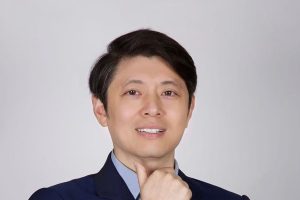
Suzhou’s bioBAY has emerged as one of China’s most dynamic biotechnology clusters, bringing together hundreds of biotech and medtech companies within an ecosystem designed to support the full innovation cycle, from early discovery to global partnerships. In this conversation, CEO Michael Yin reflects on how the park has evolved alongside China’s rapidly advancing life sciences sector, its strategy of building strong technology clusters rather than individual champions, and the growing role Chinese biotech is beginning to play on the global stage.
How did bioBAY develop into one of China’s leading life sciences clusters, and what distinguishes its model?
bioBAY, located in Suzhou Industrial Park and founded in 2007, has evolved into one of China’s most prominent life sciences clusters. Fully owned by the Suzhou Industrial Park authority, it hosts several hundred biotech and medtech companies and tens of thousands of professionals. The ecosystem spans a broad range of fields, including drug discovery, cell and gene therapy, RNA technologies, as well as medical devices and diagnostics, bringing together start-ups, growing biotech firms and MNCs within a single environment.
What distinguishes bioBAY is the way the ecosystem was designed from the outset. Many European bioparks function primarily as incubators focused on early research and translational science, with companies often relocating once they reach later development stages. In contrast, major US clusters such as Boston or the San Francisco Bay Area grew largely through market-driven concentration of companies, investors and universities. bioBAY followed a more structured approach, aiming to host the entire biotechnology value chain in one location. Companies often begin with small teams in incubator laboratories and expand into larger research or manufacturing facilities as they progress, allowing them to move from discovery through clinical development and ultimately commercialisation without leaving the cluster.
Public support played an important role in establishing this platform. The government provides the infrastructure and the ecosystem, while the companies themselves remain privately funded and must raise venture capital to build laboratories, acquire equipment and develop their pipelines. Biotechnology is inherently capital-intensive, and bioBAY’s role is therefore to provide the environment and technical capabilities that enable companies to grow, while the firms themselves invest in their own development and manufacturing capacity.
Over time the ecosystem has evolved alongside China’s broader biotechnology industry. Early activity focused largely on generics and biosimilars before shifting toward more innovative modalities. Today the park hosts companies working across advanced therapeutic areas including antibody-drug conjugates, bispecific antibodies, RNA-based medicines, and cell and gene therapies, alongside a growing medtech sector. Importantly, firms at different stages of development operate within the same cluster, allowing early research teams, clinical developers and manufacturing partners to interact within a shared innovation environment.
Suzhou’s location has also been a key advantage. Situated within the Yangtze River Delta innovation region and closely connected to Shanghai, the city benefits from a dense network of universities, hospitals and research institutes that provide both scientific talent and clinical collaboration. When bioBAY was first established it hosted only a small number of early biotech teams, but as those companies grew and achieved success they attracted additional entrepreneurs, investors and partners. Over time this created a strong cluster effect, enabling bioBAY to develop into one of the principal life sciences hubs in the region.
How does bioBAY determine which companies and technologies to support within its ecosystem?
At bioBAY, our approach begins by identifying priority technological directions rather than trying to predict from the outset which individual company will succeed. We focus on fields where scientific progress and industry momentum are strongest, such as cell therapy, RNA-based medicines including mRNA and small interfering RNA (siRNA), and antibody-drug conjugates (ADCs). Once these areas are defined, we encourage companies working in those domains to establish themselves within the ecosystem and grow alongside one another. The objective is to build depth at the sector level, recognising that innovation is often driven by clusters of companies rather than a single champion.
This strategy has already produced visible results. Companies such as Innovent Biologics, founded by Michael Yu in Suzhou, illustrate how firms within the ecosystem can evolve from earlier capabilities in biologics and biosimilars into globally recognised innovative biopharma platforms. In more recent modalities, bioBAY has built strong clusters around technologies such as ADCs, with companies including MediLink Therapeutics and DualityBio developing next-generation platforms and entering international licensing partnerships. A similar logic applies to RNA-based therapeutics, where the park has deliberately encouraged a concentration of companies working across different RNA technologies instead of relying on a single flagship player.
Investment within the ecosystem follows a comparable principle. bioBAY itself typically does not take direct equity stakes in tenant companies. Instead, we work closely with venture capital firms that finance the startups operating within the cluster. In practice this functions similarly to a fund-of-funds model: public capital helps attract venture funds, while professional investors remain responsible for identifying and supporting individual companies. Maintaining this separation ensures that all companies within the park are treated equally and avoids potential conflicts that could arise if the platform itself invested directly in selected tenants.
As a result, the success of bioBAY is measured less by the park’s own profitability than by the performance of the ecosystem it supports. Financial sustainability remains important, with revenues largely derived from rents and services, but the more meaningful indicators are the outcomes generated by the companies operating within the cluster. These include the number of new startups created, pipelines advancing into clinical development, licensing and business development agreements, initial public offerings, and products approved by China’s NMPA. In the end, bioBAY’s reputation rests not on its infrastructure, but on the companies that grow within the ecosystem and carry its name onto the global stage.
What trends are you currently observing in China’s biotechnology industry, and how do you see its global role evolving?
China’s biotechnology sector has progressed significantly over a relatively short period of time, moving from a modest starting point to becoming an increasingly visible participant in the global innovation landscape. At major international industry forums such as the J.P. Morgan Healthcare Conference, a substantial share of global business development discussions now involves Chinese biotechnology companies, which illustrates how the country has moved from being largely an observer of global innovation to becoming an active contributor. This shift has been driven by several factors, including a growing base of scientific talent, a strong work ethic among younger biotech professionals, and a broader economic environment that continues to support the development of advanced industries.
At the same time, the quality of China’s biomedical research and clinical trial ecosystem has improved considerably. Universities, hospitals and research institutes are increasingly engaged in advanced clinical studies, and the standard of principal investigators and clinical infrastructure has risen steadily. As a result, research led by Chinese institutions is appearing more frequently in leading international journals such as Nature and The New England Journal of Medicine, reflecting the growing maturity of the country’s scientific and clinical research capabilities. These developments are gradually strengthening the country’s position within the global biotechnology ecosystem.
Looking ahead, the next phase is likely to involve a greater number of original therapies and new modalities emerging directly from China. While the industry is often described as catching up with the United States, there is increasing expectation that truly novel innovations will originate from Chinese research institutions and companies. As this evolution continues, China is likely to become an increasingly important engine for life sciences innovation globally, while collaboration with international partners will remain essential to navigate regulatory pathways, commercialisation and global market access.
How is bioBAY adapting to emerging technologies such as artificial intelligence as the biotechnology industry continues to evolve?
bioBAY has always been guided by the direction of scientific and industrial progress, which means the ecosystem must constantly adapt to the speed at which new technologies are transforming the life sciences sector. Today the pace of innovation is accelerating, and the translation of research into clinical development is happening far more quickly than in the past. In that environment, we often feel that every new technological wave places us back at the starting line alongside the rest of the global industry. One of the most important shifts we are observing is the rapid integration of artificial intelligence into biotechnology. AI is already influencing how research is conducted and how data are analysed, and it will increasingly become part of the broader drug development process. The convergence of artificial intelligence with biotechnology has the potential to reshape how therapies are discovered, developed and evaluated.
At the same time, the expansion of AI in life sciences raises important questions around governance and responsible use. As artificial intelligence begins to extend beyond research and into areas such as clinical trials, manufacturing and CMC, clear frameworks will be needed to guide how it is applied. Both China and the United States are actively exploring regulatory approaches for AI in healthcare, and these two countries will likely play a central role in shaping the global standards that emerge. In that sense, while the technology itself is advancing rapidly, the future of AI in biotechnology will depend not only on innovation but also on international collaboration and well-defined regulatory principles.
What message would you share with multinational pharmaceutical companies regarding potential collaboration with bioBAY?
bioBAY can be a strong collaborator for multinational pharmaceutical companies, and we have already seen tangible examples of this through companies within the ecosystem. In areas such as ADCs, firms including MediLink Therapeutics and DualityBio have demonstrated that innovators based in bioBAY are capable of generating assets with global partnering value. Several international licensing agreements with large pharmaceutical companies have emerged from this environment, showing that technologies developed within the cluster can integrate naturally into global drug development pipelines. These cases illustrate that the ecosystem is increasingly producing companies that are relevant partners for multinational pharma.
In practice, the roles are often complementary. Many biotechnology companies focus primarily on scientific discovery and early drug development, which is where their core strengths lie, while multinational pharmaceutical companies bring extensive experience in late-stage development, regulatory navigation and global commercialisation. Working together therefore allows each side to build on its respective capabilities. Today bioBAY hosts around 500 companies, including more than 200 biotechnology firms alongside a similar number of medical technology companies, and we regularly welcome visitors from international pharmaceutical groups who come to meet with these innovators and explore potential partnerships.