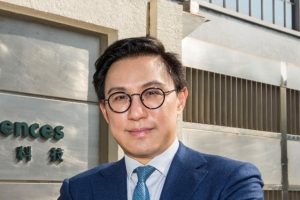
Following our conversation with CEO Lance Yuen on CK Life Sciences’ strategic direction, Chief Scientific Officer Melvin Toh now takes us inside the scientific engine driving that vision forward. He traces the organisation’s evolution from US-based acquisitions to a protein/peptide and circular RNA vaccine platform built in Hong Kong, explains why Asia-centric tumour biology guides its choices, and outlines how Greater Bay Area integration is accelerating early clinical development. His insights reveal a research organisation gaining definition, confidence and momentum.
What drew you from Pfizer to CK Life Sciences, and how has the organisation evolved since you first joined?
I started my career in Singapore with Pharmacia and Upjohn in the early 2000s, working at their Asia Pacific drug development centre. It was one of the first attempts by a major multinational to embed Asia into global clinical programmes from the outset rather than add the region only after work had been completed in the United States or Europe. As the organisation went through successive mergers and ultimately became part of Pfizer, I continued in Singapore and took charge of Pfizer’s Phase 1 Clinical Research Unit at the Singapore General Hospital. At that time, very few early-phase facilities existed in Asia, so conducting first-in-human studies locally was still uncommon. I later moved to the United States to focus on early oncology and virology development, designing clinical pharmacology studies and contributing to several early-stage programmes.
In 2008, CK Life Sciences invited me to Hong Kong. The organisation then concentrated more on acquiring or partnering with companies that already had viable assets rather than building broad internal discovery capabilities. Polynoma illustrates that phase well. It was a San Diego-based immuno-oncology company whose lead candidate, seviprotimut-L, was a polyvalent melanoma vaccine at an early stage of development. We helped translate the academic work into a fully industrial programme by completing IND-enabling studies and shaping the late-stage clinical strategy, and Polynoma eventually became a wholly-owned subsidiary.
In 2025, we agreed to sell Polynoma to TransCode Therapeutics in the United States and invested USD 25 million as part of that transaction. This move allows seviprotimut-L to progress within a more specialised, NASDAQ-listed biotech company focused on RNA therapeutics, while giving us the freedom to concentrate on the early-stage cancer vaccine research now taking shape in Hong Kong.
How is TransCode advancing the Polynoma assets, and what degree of involvement does CK Life Sciences retain?
TransCode now oversees a combined pipeline that includes both its internal RNA therapeutic programmes and seviprotimut-L. The melanoma vaccine has completed Phase II and has an FDA-approved Phase III protocol under a Special Protocol Assessment for adjuvant treatment in stage IIB and IIC melanoma. Alongside this, TransCode is developing TTX-MC138, an antisense oligonucleotide directed at inhibiting microRNA-10b to target cancer metastasis and delivered through its nanoparticle platform. That programme has completed a Phase I study in advanced solid tumours and is preparing to commence Phase IIa clinical testing, enrolling patients with colorectal cancer who have completed standard curative-intent therapy but are ctDNA positive.
Although TransCode is fully independent and manages its own financing and regulatory strategy, our investment supports its early development activities, and we maintain close engagement as a significant shareholder. We maintain visibility on progress and ensure that the trajectory of the programme aligns with our expectations. Any expansion into Asia will be decided by TransCode, yet the biology of microRNA-10b, which is expressed across multiple tumour types, suggests that the science may eventually support wider regional development. TransCode also intends to explore potential synergy between TTX-MC138 and seviprotimut-L.
How did WEX Pharmaceuticals’ merger lead to the creation of Dogwood Therapeutics, and how do you continue to guide the development of Halneuron®?
In 2024, we brought together our Vancouver-based subsidiary WEX Pharmaceuticals with the US biotech Virios Therapeutics to form Dogwood Therapeutics, which continues to operate as a NASDAQ-listed entity. The combination placed WEX’s lead candidate, Halneuron®, within a larger and more specialised structure that offers stronger access to US capital and a broader platform to support its advancement. In addition, the Dogwood team has deep experience in the development and commercialisation of pain therapeutics. Halneuron® is a tetrodotoxin-based, non-opioid NaV1.7 sodium channel blocker being developed for chemotherapy-induced neuropathic pain (CINP), and a Phase IIb study is in progress, with more than 130 patients already dosed. An interim analysis performed in December 2025 by an independent statistical review committee concluded that patients treated with Halneuron® achieved higher responder rates compared to those receiving placebo. This CINP trial represents the most advanced stage of the programme, with study completion expected in 3Q2026, and will shape the path toward Phase III.
Dogwood leads its clinical, regulatory and financing activities from the United States, and the company has the autonomy to drive development at the pace required by that market. As major shareholders and being represented on the board, we remain closely connected to the scientific and strategic direction of the programme while allowing Dogwood the flexibility it needs to progress Halneuron® effectively within the US system.
What prompted CK Life Sciences to establish its own therapeutic cancer vaccine platform, and why focus on circular RNA at this stage?
We began developing our in-house therapeutic cancer vaccine programme about five years ago, and that effort has now been consolidated under Sequencio Therapeutics, a newly established subsidiary of CK Life Sciences created to advance our cancer vaccine R&D in a focused and dedicated structure.. By operating as a separate entity, Sequencio enables greater scientific focus, operational clarity, and strategic flexibility, while continuing to benefit from CK Life Sciences’ organisational infrastructure and support.
Our work with seviprotimut-L had already given us significant experience in immuno-oncology, so therapeutic vaccines offered a natural foundation on which to build. Although mRNA became widely recognised through the success of COVID vaccines, the technology’s original intent was oncology, and that perspective shaped much of our early thinking.
We started by working with established vaccine formats such as proteins and peptides, then expanded into RNA. At that stage we made a conscious decision to focus on circular rather than linear constructs. Circular RNA has a covalently closed structure, and the available evidence suggests that it can deliver greater molecular stability, more sustained antigen expression and less demanding storage requirements. These characteristics aligned well with what we were trying to achieve in vaccine design, and we felt that an early commitment to circular RNA would position us ahead of the curve as the field evolved.
Our preclinical results have reinforced that direction. The circular RNA candidates have produced strong responses in mouse models with few doses, which contrasts with the more intensive dosing usually required for linear mRNA or for protein and peptide-based vaccines. The technology is still emerging, and no circular RNA vaccine has yet reached approval, but the pace of development is accelerating, and we expect the platform to mature quickly. Taken together, these elements shaped the rationale for making circular RNA the core of our internal oncology pipeline. At the same time, we maintain programmes spanning fusion protein, peptide, and linear mRNA vaccine constructs, giving us greater flexibility going forward.
How have the experiences of larger players shaped the way you design and position your own therapeutic cancer vaccine programmes?
We spend a great deal of time examining what has been attempted across the field, because the collective experience of companies like Moderna and BioNTech provides a clearer roadmap than existed a decade ago. Entering at this stage offers the advantage of perspective. We can see where strong scientific ideas struggled in practice, where combinations mattered, and where timing within the patient journey became decisive. Our own work with the melanoma vaccine reinforced these patterns. Therapeutic vaccines tend to perform best in early-stage disease, often in the adjuvant setting, and usually when paired with immune checkpoint inhibitors. When you consider these insights together, the contours of a more effective development strategy begin to emerge.
This is the lens through which we design our programmes, shaping decisions around antigen targets, adjuvant systems, patient selection and the sequencing of vaccines with immunotherapies. Recent progress from Moderna’s combination with pembrolizumab shows how outcomes can shift when these variables align, and it gives us confidence that a more deliberate approach can unlock meaningful results.
Because we are rooted in Asia, we also prioritise tumour types that are particularly relevant to Asian patients. One of our lead candidates targets TROP2 in triple-negative breast cancer, a disease that is both aggressive and more prevalent in Asian women in midlife. The preclinical data have been encouraging, with complete tumour-growth inhibition in mouse models, and advancing this programme into human studies is one of our most important near-term objectives.
All of these efforts focus on therapeutic rather than preventive vaccines. The intention is to treat patients after surgical resection, when visible disease has been removed, and no tumour or only molecular residual disease remains. This window, where tumour burden is at its lowest, offers the greatest potential for a vaccine to prevent recurrence and interrupt micrometastatic growth. These principles, drawn from both our own experience and the lessons of the broader community, form the basis of how we plan our next steps.
What kind of scientific capabilities are you building in Hong Kong to support an expanding circular RNA portfolio?
At Sequencio, we operate as a relatively lean group, yet we have been very intentional about building the scientific depth required for early immuno-oncology work. The R&D team in Hong Kong is anchored by researchers with doctoral training, many holding PhDs or MD-PhDs, which reflects the stage we are in and the kind of discovery-driven effort our programmes demand. Because we have not entered the clinic yet, we have fewer clinicians or study management specialists, but these roles will expand naturally as we prepare for first-in-human trials.
Our recruitment approach is broad and pragmatic. A substantial part of the team consists of Hong Kong-trained PhDs or mainland graduates who completed their doctoral studies here, while others joined us directly from institutions in China because of the proximity to the Greater Bay Area, and the type of cross-border science we are trying to build appeals to them. At the same time, several leaders in the group bring long international careers, with academic and industry experience in Asia and the United States. Many of us in senior roles have worked either in global pharma or in major academic centres overseas, and that mix of local capability and external perspective has helped shape the culture we want.
We do not impose geographic boundaries on hiring, but people need to feel comfortable committing to Hong Kong. For a platform as technically demanding as circular RNA, this combination of local scientific depth, international experience and regional connectivity gives us a foundation that fits the stage we are in, while giving us room to scale as the programmes progress.
Beyond hiring the right people, we set up a Scientific Advisory Board at CK Life Sciences to ensure the cancer vaccine programmes at Sequencio are informed by the best external thinking. The SAB brings together experts in immunology, oncology, translational science, and clinical development who actively challenge our assumptions and help us pressure‑test key decisions early. Their input is invaluable in sharpening target selection, trial design, and overall development strategy, allowing us to move the pipeline forward with greater rigour and confidence.
How far do you expect to take your in-house cancer vaccine programmes, and what regulatory path will guide their transition into the clinic?
We now have two lead candidates in IND-enabling development, and we aim to file INDs within the next eighteen to twenty-four months. Alongside these, we are advancing a wider set of vaccine projects at the discovery stage, and the strategy is to bring the most convincing assets into human studies while keeping our internal focus on reaching proof-of-concept. The resource demands increase considerably beyond that point, so we intend to generate meaningful early clinical signals, then either partner the programmes or, if the data justify it, raise the capital needed to progress further. At this stage, proof-of-concept is where we can create the most value in a disciplined way.
In terms of regulatory planning, we are drawing on models that have served us well in the past. In my past life, we anchored first-in-human oncology studies with a US IND and complemented that work with early-phase sites in US, Australia and Asia. That pathway remains one of the most efficient for early development, and the combination of Caucasian and Asian data creates a strong foundation for broadening studies into other regions in later phases of development. A similar approach makes sense for us now. A US IND provides the level of regulatory scrutiny we want and supports subsequent filings with the NMPA, which is essential since we plan to include Chinese patients early on.
Because our programmes target cancers that are particularly relevant to Asian populations, we expect a significant share of early clinical activity to take place within the Greater Bay Area. We intend to work with HKU, CUHK and leading GBA hospitals to run coordinated, cross-boundary Phase I trials. This gives us access to a broader and more representative patient base while keeping the development close to the scientific and operational ecosystem we are building in Hong Kong.
How are you approaching the need for development speed, especially as neighbouring ecosystems advance cancer vaccine research at a pace?
Speed is one of the hardest variables to control in drug development, especially in a place like Hong Kong, where both talent and patient numbers are more limited than across the border. For us, the key is to structure our programme so that we can enrol patients quickly and generate data that speaks to more than one population, because neither Hong Kong nor the United States can deliver that alone. The Greater Bay Area provides the most practical solution, giving us access to a broader patient base while keeping us close to the scientific and regulatory networks we operate in.
The policy environment is becoming more supportive, which helps. The government has been pushing for deeper GBA clinical integration, and the establishment of the GBA International Clinical Trial Institute (GBAICTI) creates a coordinated pathway for trials that span Hong Kong, Shenzhen and Guangzhou. Running studies across these sites allows us to shorten timelines, manage costs more effectively and gather early signals from a more diverse cohort, which is critical when building a therapeutic cancer vaccine portfolio in tumour types that affect Asian patients disproportionately.
Manufacturing will also influence how quickly we can move. We have been assessing GMP-qualified manufacturers in Greater China and the broader region who can meet our technical standards cost-efficiently. Our circular RNA constructs are designed entirely in-house, but for the lipid nanoparticle delivery systems, we are evaluating specialist partners in North America and China to understand who can deliver the best performance and scalable production. The final choice will depend on technical data, capacity and the regulatory climate, but the goal remains the same: to make sure that manufacturing supports, rather than limits, the pace at which we advance our programmes.
What does Singapore’s Biopolis experience, which you witnessed first-hand, offer Hong Kong as the city builds its own biomedical research platform?
Hong Kong has the benefit of examining Singapore’s journey with clear hindsight. Over more than twenty years, Singapore has succeeded in building a world-class manufacturing base and attracting significant multinational investment, particularly in GMP production. That part of the ecosystem works well. The challenge has been translating strong infrastructure into biotech exits and sustained clinical progress.
Hong Kong enters this space at a different moment, shaped by the strength of its capital markets and its proximity to the mainland. The city has become an attractive fundraising destination for biotechnology, and if policymakers continue to build around that, they can create an environment where companies anchor both financing and R&D activity in Hong Kong. The geographic advantage is equally important. Being able to collaborate easily with mainland institutions, laboratories and technology companies gives Hong Kong a level of access that Singapore cannot match.
Our work with XtalPi is an example of this. Combining our oncology vaccine research with their AI and robotics capabilities allows us to design modified shared neoantigen vaccines with speed and precision. The collaboration has already produced some promising vaccine candidates, and the ability to operate within the Greater Bay Area gives us a broad pool of talent, infrastructure and clinical partnerships that accelerate the entire programme. If Hong Kong continues to align capital, policy and cross-border research, it can build a platform that avoids many of the structural bottlenecks Singapore faced and position itself as a differentiated hub for Asia-centric innovation.