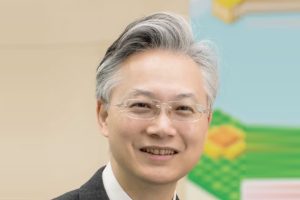
Professor Yun-Ching Fu serves as Superintendent of Taichung Veterans General Hospital, Taiwan's largest national medical centre in the central region. A paediatric interventional cardiologist by training, Professor Fu established Taiwan records for minimally invasive cardiac defect repair and now leads a 1,632-bed institution serving 10,000 outpatients daily. Under his leadership, the hospital has achieved global recognition in smart healthcare, whilst pioneering CAR-T cell therapy, regenerative medicine, and establishing Taiwan's Clinical Trial Alliance to accelerate pharmaceutical research timelines.
What has your career journey looked like to this point and how has this shaped your leadership philosophy?
I am a paediatric interventional cardiologist specialising in the repair of congenital heart defects without open surgery. My work focuses on catheter-based interventions – inserting devices through arterial access to correct structural defects that traditionally required open-heart procedures. Earlier in my career, I established a Taiwan record for atrial septal defect repair, completing the procedure in four minutes and 30 seconds under local anaesthesia whilst the patient remained conscious.
However, technical achievement alone never defined my motivation. Throughout my career, I have been driven by a simple belief – hospitals exist to create value for patients. That philosophy ultimately shaped my transition into leadership.
From 2017 to 2021, I served as Superintendent of China Medical University Children’s Hospital before returning to Taichung Veterans General Hospital in my current capacity. Leadership, in my view, is not about administration alone. It is about building systems that allow physicians, nurses, technicians, and administrators to work together as one coordinated team. Modern medicine is no longer individual craftsmanship – it is structured collaboration. Creating value collectively for patients defines our institutional philosophy.
Could you characterise Taichung Veterans General Hospital’s scale, focus areas, and distinctive strengths?
Taichung Veterans General Hospital was established in 1982 and has now operated for 44 years. With 1,632 beds, it is the largest national medical centre in central Taiwan. We serve approximately 10,000 outpatients per day.
As a national institution, we operate on a non-profit basis with a strong public mission. At the same time, we balance three core pillars – clinical excellence, research, and education. We collaborate closely with National Yang Ming Chiao Tung University and National Chung Hsing University, and we train hundreds of residents annually.
We prioritize areas that have the greatest impact on national healthcare and patient outcomes, while also leveraging our hospital’s strengths. For example, precision medicine, advanced imaging, and regenerative therapies are key focus areas for us. We also collaborate with universities, industry, and international partners to identify high-potential projects that are feasible to implement. This ensures that our research not only improves patient care but also contributes meaningfully to the global scientific community. Clinical observations inspire new research questions, and research findings feed directly back into clinical workflows. This creates a positive, ongoing cycle between care and innovation.
We are also expanding geriatric and chronic disease programs while building telemedicine platforms and collaborating with community healthcare providers to deliver care beyond the hospital. By combining technology, research, and multidisciplinary teams, we aim to provide sustainable, patient-centred solutions for Taiwan’s ageing population.
Training hundreds of residents annually, how do you ensure clinical education maintains pace with biologics advancement and therapeutic innovation?
Education is our highest priority – you cannot deliver excellence without exceptional people. Each year, we send more than 500 staff members overseas to acquire advanced technologies and exposure to global best practices. I believe we may send more staff abroad than any other hospital in Taiwan.
At the same time, we invest heavily in acquiring advanced medical technologies domestically. However, innovation must never compromise humanity. Technical sophistication without compassion is incomplete. Therefore, we emphasise balance – scientific excellence combined with warm, patient-centred care.
Public hospitals face nursing shortages and budget constraints. How do you maintain staff motivation for delivering compassionate care?
Last year our work environment was ranked number one for employee satisfaction, receiving three awards. Whilst many Taiwan hospitals experience nursing shortages, we maintain sufficient nursing capacity, earning government recognition with a 16-month financial award of USD 1.3 million specifically for nursing staff quality care initiatives. This allocation goes exclusively to nursing support.
We have built a supportive work environment that includes an on-site childcare center accepting infants as young as one month old, the largest hospital gym in Taiwan, and a renovated sports complex available to staff and their families, featuring badminton courts and a swimming pool.
Many nurses leave the profession due to family responsibilities or childcare needs. By providing structured childcare support, we have removed this barrier. In this sense, we operate more like an organization that actively supports employee growth, rather than a traditional, rigid public hospital system.
As a major referral centre, which disciplines represent your competitive strengths?
We achieved particular distinction in smart healthcare. Last year, US News and World Report ranked us 85th globally – the only hospital in Taiwan to enter the top 100 worldwide. We operate Asia’s largest automated laboratory, processing more than 10,000 samples daily. Our system connects 24 different analytical instruments with intelligent tube detection, automatically routing specimens to the appropriate machines according to test type and specification. Reports are generated within 60 minutes and transmitted directly to patients’ mobile applications for immediate access.
In addition, we have developed numerous AI software platforms. Several have already received approval from the Taiwan FDA, and applications are currently under review with the US FDA. Alongside these digital capabilities, precision medicine represents another key strength. For infectious disease diagnostics, we employ third-generation sequencing technology capable of detecting more than 20,000 pathogens – including 10,000 bacterial species, as well as thousands of viruses, fungi, and parasites – within hours. This allows physicians to select antibiotics with far greater precision.
Our cell therapy and regenerative medicine centre has also achieved either first or second position nationally in CAR-T therapy volume. Novartis confirms that we lead Taiwan in total CAR-T case numbers. We have further pioneered fast CAR-T applications for autoimmune diseases, whereas traditionally CAR-T has been used primarily in oncology. Last year, we treated two refractory systemic lupus erythematosus cases. I recall our first patient clearly – a 37-year-old man with severe SLE that was destroying his kidney function and who was facing dialysis. Following fast CAR-T therapy, his kidney function normalised within one month – the first case of its kind in Taiwan.
Building CAR-T capacity involves substantial logistical complexity beyond pharmaceutical administration. How did you establish this capability and current operational scale?
Building CAR-T capacity involves substantial logistical complexity beyond pharmaceutical administration. We recognised early that advanced therapeutics infrastructure represents a critical investment. Three to four years ago, we committed significant capital to establishing GMP laboratory facilities, enabling us to operate as one of the few qualified CAR-T centres in Taiwan and Southeast Asia capable of full CAR-T cell production. In parallel, our chest medicine department pioneered stem cell therapy for interstitial lung disease, treating the highest case volumes for this severe condition.
When considering why some institutions adopt advanced therapies more slowly, two factors prove essential: vision and financial commitment. Leadership must maintain a clear vision to develop cutting-edge technologies and demonstrate a willingness to invest in their development. Our hospital possesses both these elements, which have been key to our successful adoption and scaling of advanced therapies.
Beyond partnering with companies like Novartis, do you conduct proprietary research?
Beyond partnering with companies such as Novartis, we also engage in proprietary research initiatives. Last year’s Nobel Prize in Medicine recognised advances in regulatory T cell research, an area in which we are actively involved. We are conducting a trilateral collaboration between our hospital, Northwestern University, and the Taiwan biotechnology company Grape King Bio to develop regulatory T cell therapy for kidney transplant patients. Traditionally, transplant recipients require lifelong immunosuppressive medication; however, with regulatory T cell therapy, dosages can be reduced substantially and may, over time, potentially be eliminated. Together, we are advancing this therapy at what we believe to be a globally leading level.
Taiwan’s new Clinical Trials Consortium launched last year with your hospital’s leadership’s participation. How do you attract sponsors, given regional competition from Korea and China?
Our principal strength lies in an integrated clinical trial ecosystem. We combine experienced research teams, state-of-the-art facilities, rigorous quality control, and highly efficient operational processes that enable trials across diverse patient populations.
A key differentiator is speed. In the past, contract completion required lengthy timeframes. We have reduced contract review periods from two months to one to two weeks through optimisation of legal peer review processes. For example, a recent Novartis clinical trial contract was completed within three days.
We also maintain template agreements with major pharmaceutical companies – GSK, AstraZeneca, Boehringer Ingelheim, and MSD – which further accelerates review. I require that all document reviews be completed within seven days, and our current average is three days.
The Taiwan Clinical Trial Alliance represents significant infrastructure. Could you elaborate on this initiative?
In collaboration with Taipei Medical University Hospital, we co-initiated the Taiwan Alliance of Clinical Trial Centers (TACTC) as a national consortium inspired by Australia’s unified clinical trial model. Previously, hospitals across Taiwan operated with fragmented documentation systems, heterogeneous procedures, and differing IRB structures, resulting in prolonged start-up timelines that often exceeded twelve months and discouraged pharmaceutical sponsors. With strong government support, the National Health Department formally approved the programme and established a dedicated national alliance integrating 32 regional hospitals and medical centres. By standardising IRB review and contract negotiation processes across institutions, TACTC aims to reduce multi-centre trial start-up timelines from twelve months to just three months.
Beyond accelerating administrative efficiency, TACTC is committed to cultivating clinical trial professionals, developing a national-level patient recruitment and matching platform, and enabling international pharmaceutical companies to leverage Taiwan’s high-quality healthcare infrastructure and robust R&D capabilities. Through these coordinated efforts, we seek to attract more early-phase clinical trials to Taiwan, strengthen cross-institutional collaboration, and enhance the country’s global competitiveness in clinical research, with our hospital playing a leading role in driving this transformation.
In what ways does your hospital support other institutions in improving clinical trial efficiency?
Our hospital is one of Taiwan’s eight Centers of Excellence for Clinical Trials and serves as a national-level clinical trial institution. We are also one of the principal hospitals responsible for Central IRB review, with a mandate to enhance and support the clinical trial performance of other medical institutions.
Over the past three years, we have actively driven digital transformation in clinical trial operations. This includes establishing an online clinical trial contract review system, developing an electronic GCP training platform, implementing remote monitoring systems, and founding an Academic Research Organization (ARO) to support investigator-initiated trials and collaborations with domestic biotech companies.
Through the establishment of the Central Taiwan Clinical Trial Collaboration Alliance, we have openly shared Taichung Veterans General Hospital’s operational models and best practices with regional hospitals and partner institutions. Our goal is not only to strengthen our own capabilities, but to elevate Taiwan’s overall competitiveness in clinical research
How are your clinical trials distributed in terms of early-phase versus later-phase studies, and which therapeutic areas attract the most sponsor and investigator interest?
When considering the composition of our clinical trials, approximately 35 to 37 percent qualify as early-phase studies – Phase I and Phase Ib. We actively encourage investigator-initiated trials, with our superintendent providing financial support to enable principal investigators to conduct these studies within the institution. Overall, around 90 percent of trials are sponsor-initiated, while ten percent are investigator-initiated, supported either institutionally or through national programmes, including National Science Council funding.
Oncology accounts for roughly half of our trials, covering breast cancer, lung cancer, neurologic cancers, and haematologic malignancies, including CAR-T therapy and early-phase novel molecular therapies. Beyond oncology, we conduct trials for chronic and rare conditions such as COPD, diabetes, chronic kidney disease, pulmonary fibrosis, and familial hypercholesterolaemia, reflecting our commitment to targeted therapeutic development.
In addition to common conditions, we focus on highly challenging diseases, including autoimmune disorders, which represent 20 to 30 percent of our trial portfolio. Last year, we expanded collaboration with general practitioners, allowing them to refer patients and serve as principal investigators. For example, our COPD trial with ten collaborating GPs achieved Taiwan’s highest patient recruitment, and our heart failure trial with AstraZeneca involving ten GP collaborators saw similar enrolment success.
Through these initiatives, we have built clinical trial ecosystems that extend beyond hospital patients to include community patients referred by GPs. This approach reinforces our hospital’s leadership role in central Taiwan and broadens access to innovative therapies, under the active support and guidance of the superintendent.
Beyond pharmaceutical partnerships, you collaborate with technology companies. What distinguishes long-term strategic partners from transactional relationships?
We work extensively across industries to address global nursing shortages. For example, we partnered with Foxconn to develop the world’s first AI robotic nurse. While Foxconn excels in robotics and autonomous vehicles, they initially lacked in-depth understanding of hospital operations. Through close collaboration between our nurses and Foxconn engineers, we were able to develop robotic nursing solutions that meet clinical needs.
Additionally, Nvidia’s Jensen Huang personally signed our first AI robot nurse when it was exhibited at last March’s GTC conference, demonstrating external validation of the technology.
Beyond Foxconn, we also develop Internet of Things solutions for monitoring vital signs and automated material movement robots for specimen transport. Recently, we created robotic systems for chemotherapy drug preparation. These drugs are extremely hazardous, with skin contact causing severe erosion, and the robotic system eliminates the risks associated with manual handling. In these initiatives, we leverage Taiwan’s strengths in semiconductors and robotics to innovate both healthcare practice and medical care delivery.
At the same time, we collaborate extensively with Taiwan biotech companies to advance therapeutic development. We work with Taiwan Bio Therapeutics on regulatory T cell therapy in partnership with Northwestern University for kidney transplantation. With ACT Genomics, we develop AI models for detecting pulmonary fibrosis. We also collaborate with Bionet, one of Taiwan’s prominent biotechs, pursuing various stem cell therapies for a range of disease applications.
In addition, we place strong emphasis on building long-term partnerships with technology companies and the biotech industry. Through jointly applying for national-level research grants, co-developing talent, and fostering collaborative ecosystems, many of our projects are designed with strategic continuity rather than short-term objectives.
Our collaboration with V5med Inc. serves as a representative example. After establishing mutual trust through initial joint projects, we signed a reciprocal and mutually beneficial agreement that clearly defines long-term intellectual property ownership and downstream benefit-sharing mechanisms. This structure ensures sustainability beyond a single project cycle.
Following regulatory approval of our AI-based lung nodule detection software as a medical device (SaMD) by both the US FDA and Taiwan FDA (TFDA), we have continued to advance additional SaMD co-development and regulatory initiatives together, including projects in pulmonary fibrosis and COPD. Such sustained, platform-level collaboration would not be possible under a purely transactional, one-off partnership model.
Looking toward 2030-2031, where do you envision the hospital’s position?
Previously, Taichung Veterans General Hospital operated primarily as a regional institution serving central Taiwan. Now, I encourage colleagues to advance toward achieving international-scale medical centre status. Reaching this level requires extensive collaboration with leading universities and biotech companies around the world.
This month, our team visited the Mayo Clinic, returning last week after signing a memorandum of understanding. Two years ago, we signed an MOU with Kyoto University in Japan, and just last month, I signed an MOU with the National University of Singapore. Beyond these, we maintain numerous MOUs with other international universities and biotech partners. Through these collaborations, our goal is clear: to achieve recognition as an international hospital of global standing.
We have several other strategic priorities. We aim to advance precision medicine, expand smart hospital initiatives, and nurture the next generation of healthcare professionals. Ultimately, our objective is to integrate high-quality care, cutting-edge research, and community health, making Taichung Veterans General Hospital a model comprehensive medical centre globally.