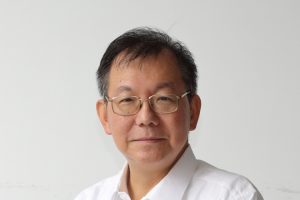
Dr Chen-Yu Cheng, founder and chairman at Formosa Laboratories & Pharmaceuticals, is leading a strategic transition from generic API manufacturing toward high- value CDMO services and innovative drug development. By leveraging proprietary nanotechnology and antibody-drug conjugate platforms, the group is diversifying into injectables and considering the US market. Dr Cheng also explains how Formosa is emphasising technical differentiation and strategic partnerships to ensure the group’s long- term global competitiveness.
How would you assess the evolution of Taiwan’s CDMO manufacturing industry in pharma and biotech? Has it fulfilled its early promise?
Starting with our company, Formosa Laboratories began as a small research organisation providing services in chemical synthesis and analytical chemistry. We transitioned into GMP API production in the year 2000, and by 2004, we had secured US FDA approval. This allowed us to build a reputation for compliance and secure projects with major brand-name companies such as Sanofi and Novartis. While we initially concentrated on generic APIs to maximise revenue across multiple clients, the rapid advancement of China and India in the late 2000s created heavy pricing pressure.
By 2010, the industry in Taiwan realised that the CDMO model was the only sustainable direction. Because Taiwan is a relatively small, free-market economy, the government cannot easily protect domestic players from international competition. Consequently, survival depends on expanding beyond our borders, maintaining high research capabilities, and diversifying. Over a decade ago, I recognised the importance of large-molecule proteins and antibodies, which led us to help found EirGenix. By combining our experience in high-potency small molecules with large-molecule capabilities, we moved into the Antibody-Drug Conjugate (ADC) space. More recently, we established an injectable operation to provide a comprehensive, end-to-end service that avoids the conflict of interest inherent in oral formulations, where we already serve many generic API clients.
Why did you decide to build or invest in separate companies, such as Formosa Pharmaceuticals, instead of developing everything internally, as is common in the typical Western fully integrated model?
The primary driver for this strategy is financial. By establishing a separate entity, you create the opportunity to raise capital specifically for that venture’s unique requirements. Furthermore, different sectors require vastly different skill sets. If you cannot provide both the necessary funding and the specialised personnel from within your existing structure, it is far more efficient to establish a new, focused company.
How do you assess the current capital markets environment for biotechnology and CDMOs?
The funding environment for CDMOs is generally not as buoyant as it is for new drug development. Investors in drug discovery can often see a return on their investment and exit the venture even before the company becomes profitable. In contrast, CDMOs and generic API producers are viewed strictly as manufacturers; investors focus heavily on revenue, profit, and earnings per share. While the success rate for new drugs is not particularly high, the ability to list those entities and raise additional funds on the stock market makes them more attractive from a pure investment standpoint.
Given global pricing pressure, lean margins, and competition, how do you ensure competitiveness operationally and technologically?
Our competitiveness is rooted in technical differentiation, particularly in the ADC sector. We have access to proprietary payloads through our collaboration with companies, which possess a series of toxins known as tubulysins. Because we are experienced in high-potency anti-cancer drugs, specifically with assets like Eribulin, we hold a very strong position. My strategy for the linker portion of the ADC is to maintain the technology to work with various systems, including our own in-house platform for which we are currently filing patents.
We also collaborate with partners who hold proprietary linkers, such as the systems we license from the University of Wisconsin. This combination of internal platforms and external partnerships ensures we stay ahead of the curve.
Is ADC production expected to be your main revenue driver within CDMO activities?
ADCs will certainly be our primary focus for the foreseeable future. However, we are also placing significant emphasis on our injectable operations. We are currently expanding to include large-scale filling for cartridges and pre-filled syringes, as well as the assembly of auto-injector devices. This allows us to handle the entire production process in-house, including high-demand products like GLP-1 therapies for diabetes and obesity.
Currently, generic APIs remain our primary revenue driver. However, the CDMO portion of our business is growing at a much faster rate. In the future, I expect the income from injectable contract projects and CDMO services to exceed that of our generic API business.
How do evolving global supply chains influence your international strategy and client negotiations?
Global shifts are the primary reason we have established a presence in the US. Our first step has been to improve small-scale production capabilities at our Chicago site. For many US clients, especially emerging drug companies, the ability to provide “Made in the USA” services is a significant advantage. We offer a trustworthy track record and high-quality standards, which is a critical alternative for clients who have concerns about the complexities of getting involved with the Chinese supply chain.
At present, the Chicago facility operates at a laboratory scale for both small-molecule APIs and ADC bio-conjugation. We have invested in analytical instruments and capacity for the critical bio-conjugation steps. Our strategy is to capture business from US inventors and small firms at the laboratory stage and then grow with them; as they advance into clinical trials, we are expanding our capacity to ensure we can handle their scale-up requirements right there in the US.
How do you balance regional competition from China, Japan, and Korea with opportunities for collaboration?
In the CDMO sector, we must differentiate ourselves. We cannot compete with the massive scale and low pricing of Chinese firms on early-stage, high-volume projects. Instead, we target small to medium-sized companies where we can build long-term relationships based on our record of FDA compliance for over two decades. Interestingly, we do not always compete face-to-face with Chinese firms; we actually collaborate with smaller Chinese companies, occasionally contracting teams for raw material supply or specific technical tasks.
Beyond Formosa Laboratories, what was the original rationale behind creating a second company Formosa Pharmaceuticals, and how has its strategy evolved?
I was trained in medicinal chemistry and have always been involved in drug discovery, so establishing a company dedicated to new drug development was a personal ambition. I founded the company in 2011 as a separate entity because I recognised that clinical trials require massive funding and a completely different set of skills compared to manufacturing. By separating the two, we could raise the necessary capital and recruit the right expertise without compromising the laboratory operations.
How transformative is your FDA approval for APP13007, and how do you plan to monetise it?
Securing NDA approval from the US FDA for APP13007 within seven or eight years is a major achievement. It serves as a vital validation of our proprietary nanotechnology and our ability to navigate a drug candidate through the entire clinical pathway to approval. This year, our focus is on proving the product’s success in the market to ensure we effectively monetise that validation.
Why did you choose ophthalmology as a core focus, and how do you maintain discipline in your portfolio strategy?
Our focus on ophthalmology was driven by our “APNT” technology. We acquired a small Japanese company that utilised a unique method of using sodium chloride crystals to grind APIs, rather than the traditional metal-based milling. This process is perfect for creating low-concentration suspensions that can be sterilised through microbial filters. Ophthalmology was the ideal therapeutic application for this specific technical advantage, which allowed us to maintain a very disciplined and logical portfolio.
What is the rationale for developing Antibody-Drug Conjugates (ADCs) within Formosa Pharmaceuticals, and how does this inform your broader partnership and commercialisation strategy?
Developing ADCs within the pharmaceutical entity allows us to maximise the profound synergy between our parent company, Formosa Laboratories, and our sister company, Eirgenix. We already have the requisite expertise in high-potency toxins and antibody biosimilars in place, and we are currently advancing assets such as a bispecific antibody- based ADC licenced from a partner in Cambridge, England.
Rather than building an internal commercial infrastructure, which is incredibly difficult and requires a level of experience and talent distinct from Research and Development, we have deliberately leaned into a model of licencing and strategic partnerships. While I admire the “Big Pharma” approach, it is more logical for an organisation of our size to share profits with established partners to leverage their commercial talents and existing networks rather than attempting to build our own from zero.
Our partnership strategy is driven by a goal of maximum regional coverage and diligence. We select partners who are stable and focused; for instance, while we experienced a minor delay in the United States when our initial licensee of APP-13007 faced financial difficulties, we have since successfully transitioned to a new partnership with Harrow. We currently maintain strong relationships with Apotex and Harrow in North America, and we are partnered with Adalvo, etc for the European market. Although we have essentially covered the major geographic regions for our lead assets, we remain open to new strategic collaborations that can help us further expand our global reach.
Looking ahead five years, what are your key priorities and milestones for the Formosa Group?
Our core priority is to ensure our new business lines, particularly CDMO services and injectable operations, become our major income drivers. Within five or six years, I expect the CDMO side to exceed generic APIs in profitability. History has taught us that transitioning in time is vital; in 2015, we lost our dominant position in the UV filter market to Chinese competition almost overnight. Because we were already moving toward high-quality GMP APIs, we were able to survive. We must continue that proactive transition.
From a leadership perspective, how do you balance science and business? What is your philosophy?
The secret is to surround yourself with capable people. To be successful, you cannot just “do the right thing” – you must be bold enough to take calculated risks. In Taiwan, we have been fortunate that the healthy financial climate, supported by the electronics industry, has kept interest rates low. This has allowed us to borrow from banks to fund our capital investments and expansions rather than constantly diluting ownership through new share issues.