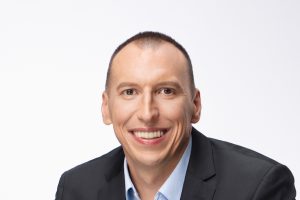
Siegfried Gschliesser, co-founder and CEO of Anya Biopharm, has spent over two decades shaping the pharmaceutical landscape in Asia. Under his guidance, Anya has pioneered a proprietary oral peptide delivery platform, leveraging capital-efficient strategies and Taiwan’s robust talent pool to challenge global standards in metabolic health and chronic disease management.
What initially brought you to Taiwan, and what instilled the belief that you could build an international biotechnology enterprise here?
I originally arrived in Taiwan at the age of 22 as a student. Curiously, I have now lived in Taiwan for more than half of my life – longer than I resided in my native Austria. Consequently, the entirety of my professional career has been anchored in Asia, specifically across Taiwan, South Korea, and China.
After completing my Master’s degree in Pharmacy in Austria, I bought a one-way ticket and came to the region permanently. I began my career with Sandoz, initially stationed in Singapore for several months before the opportunity arose to lead their market entry into Taiwan.
I devised the market entry strategy for Sandoz and was subsequently headhunted by Merck KGaA. After a year, Sandoz invited me to return and implement the very research report I had written. I served as their first Country Manager, and within three years, we scaled the team to 50 people with a portfolio of 30 products. Later, in 2011, I joined Alvogen when it was still a small startup. I championed their Asian expansion, oversaw three major acquisitions – including Lotus Pharmaceuticals – and served as the Chief Executive Officer (CEO) of Lotus, the Taiwan stock listed entity, for two years after the acquisition of a majority by Alvogen.
The decision to build a business here was not so much a calculated choice between global hubs as it was a natural progression. I was already on the ground, and I possessed the desire to establish my own venture. Taiwan is a remarkably entrepreneurial environment, which is a stark contrast to the professional culture I observed in Europe. In Austria, the thought of starting a business never crossed my mind. In Taiwan, however, the entrepreneurial spirit is ubiquitous; individuals of all ages are constantly contemplating their own ventures. This cultural vitality, combined with my local network, made it the obvious foundation for an international firm.
Could you elaborate on the original vision behind Anya Biopharm and describe the current standing of the organisation?
The vision was born from a desire for autonomy and the technical insights I gained during my university years. I was part of an oral peptide study group where we assisted companies with absorption studies. When my colleagues and I decided to leave Alvogen, we had the requisite capital – thanks to equity from our previous firm – to explore this niche.
We established the company on an oral peptide platform. It was a very early-stage research endeavour conducted in collaboration with various universities. For the first five years, we operated as a virtual, “bootstrapped” entity. We relied entirely on our own capital because I wanted to avoid the rapid dilution that often occurs when founders raise external funds too early. If you own a mere 0.2 percent of your company, you are essentially an employee. By self-funding, we retained control and reached the “First-in-Human” study milestone by 2021 using only our own resources.
Although we are headquartered in Taiwan, we conducted that inaugural study in India, as the modern biotechnology landscape is entirely geography-agnostic. A Taiwanese firm can execute clinical trials in the United States, Australia, Ukraine, or Colombia; the critical factors are not where the study occurs, but rather where one secures capital and sources talent. We found that India offered exceptional cost-efficiencies for that particular phase of clinical development.
Our operational structure is designed to be lean and highly functional, ensuring a seamless flow between our primary locations. Our key operations, project management, finance and intellectual property strategy are centralised in Taiwan to maintain strategic oversight. Simultaneously, we maintain our own dedicated laboratory facility in India to handle the technical execution of our research. Across the entire organisation, we currently employ between 25 and 30 individuals, which allows us to remain agile while maintaining the technical expertise required for our oral peptide platform.
Regarding your fundraising trajectory, why did you choose to raise capital in Taiwan specifically, rather than in alternative markets such as Hong Kong?
Fundraising is never easy, yet in retrospect, it often appears seamless once the capital is secured. Our journey was unique because we did not seek outside investment until 2021. When we finally approached investors, the fact that we had substantial “skin in the game” – having self-funded for five years – provided a high level of credibility.
Our first formal round in 2021 was led by Center Labs, supported by family, friends, and industry colleagues. We closed a second round in 2024, primarily involving Taiwanese venture capital, signed our first out-licensing deal and Just five months later, in October 2024, we went public on the Taiwan Over-the-Counter (OTC) market. We chose Taiwan because it offers excellent access to early-stage capital and a sophisticated investor base that understands the pharmaceutical sector.
The primary objective of these funding rounds was to provide the capital necessary for both our clinical studies and general working capital. Before 2021, we were essentially a four-person team; however, the second fundraiser allowed us to build a robust organisational structure. This included the establishment of dedicated teams for intellectual property, legal, finance, accounting, and project management, as well as our laboratory. Despite this growth, we remain extremely capital-efficient and shrewd in our procurement. For example, rather than paying a Clinical Research Organisation (CRO) large amounts for a protocol, we utilise internal expertise and artificial intelligence to complete the bulk of the work, thereby reducing our external costs to perhaps just 20%.
Is there a definitive line between the functions you retain internally and those you outsource?
The core technology remains strictly internal. We specialise in oral peptides. Normally, if one ingests a peptide, it is destroyed by proteases in the intestine. Our core competency lies in our library of protease inhibitors and peptide enhancers. We have developed the precise knowledge to look at a peptide and predict which proportions of inhibitors and enhancers will ensure its survival and absorption.
We are extremely protective of this knowledge. We do not share these details until a formal agreement is signed. Even during due diligence, we insist that external IP lawyers speak to our IP lawyers rather than sharing the data directly with a potential partner. Conversely, we are happy to outsource commoditised tasks, such as standard clinical trial protocols, which are often largely public information.
Could you explain the technical differentiation of your oral peptide delivery platform compared to other solutions currently being developed or on the market?
We began this journey ten years ago, long before the current craze for GLP-1 analogues. Our technology comprises three distinct components. First is the enteric coating, which protects the tablet/capsule from the acidic environment of the stomach. Second is our core innovation: protease inhibition. We use specific substances to block enzymes like trypsin or chymotrypsin. If the enzymes are blocked, they cannot degrade the peptide.
Third is the permeation enhancer, which assists large peptide molecules in crossing the mucosa into the bloodstream. While some competitors have oral products with enhancers, they often lack protease inhibitors. By combining both, we achieve significantly higher bioavailability, meaning we require a much lower dose of the expensive peptide to achieve the same therapeutic effect.
In the context of the burgeoning GLP-1 market, how do you intend to position Anya Biopharm? Do you aspire to be a therapeutics provider or a pure-play technology partner?
We will remain a technology company. Our focus is to become the “go-to” partner for any entity developing a peptide that requires oral formulation. The market often underestimates the burden of injections. For chronic conditions like diabetes or obesity, treatment is life-long. Patients experience “injection fatigue” and physical scarring over time.
Furthermore, the clinical reality is that most obese or diabetic patients are managing a high degree of comorbidity, including hypertension, dyslipidaemia, or non-alcoholic fatty liver disease. Integrating one additional tablet into an existing oral regimen is far more sustainable for patient compliance than requiring separate injectable therapy alongside several oral medications.
Beyond patient adherence, oral formulations eliminate the need for a liquid cold chain, which remains a massive logistical hurdle in markets such as Latin America, Africa, and India. While an injection might be the starting point for a patient, we believe oral delivery will become the clinical mainstay for maintenance therapy. GLP–1 is the immediate focus, but with numerous other peptides currently in phase three clinical trials, we see a significant opportunity to serve as the provider of oral formulation technology for the next generation of therapeutics.
What is your broader outlook on the peptide sector, particularly regarding the challenges of the “grey market” and future opportunities?
The “grey market” exists because peptides are relatively easy to manufacture once you have the amino acid sequence. However, peptides are the “Goldilocks” of therapeutics. They are more targeted than small molecules, resulting in fewer side effects, yet they are less costly to produce than monoclonal antibodies.
The primary historical challenge for peptides was their incredibly short half-life; for instance, our body’s internal GLP–1 has a half-life of mere minutes. The definitive innovation in the field was the ability to extend this half-life to enable once-weekly dosing. This stabilisation transformed peptides into viable drugs. We are now seeing a surge of new peptide targets, such as IL – 23 from Johnson & Johnson, which are either in phase three clinical trials or have already been filed for approval. In my view, if the first major step for the industry was half-life extension, the second essential evolution must be the transition to oral delivery.
What is your partnership strategy, and which specific types of collaborators are you targeting?
We are highly collaborative. While multinational corporations holding primary patents are obvious partners for line extensions, we also work with major generic players. We recently signed an agreement with a large Indian multinational firm for 40 countries, including the US, EU, and India. They expect to launch a product based on our technology in 2027.
Regarding your international ambitions, do you intend to scale the organisation significantly or remain a leaner entity?
I would prefer to remain small and nimble. However, as we grow, the requirements change. We are beginning to move further down the development path before licensing. The more data we generate ourselves, the higher the value of the final licensing contract. We are evolving from a very early-stage licensor to one that can carry a product through more significant milestones.
Looking ahead five years, what specific milestones do you expect Anya Biopharm to have achieved?
By 2031, I expect our first products to be launched in major Western markets, South Korea, and the EU. We just reached a significant milestone this week: the commencement of our first “First-in-Human” study in Australia for an oral Tirzepatide formulation. By the five-year mark, I anticipate the company will be very profitable.
For those unfamiliar with the ecosystem, what are the inherent strengths of building a biotechnology firm in Taiwan?
Taiwan is frequently undervalued. I view it as the “Switzerland of Asia.” It possesses a formidable export economy, a top-tier talent pool, and excellent economic policies. On a Purchasing Power Parity basis, Taiwan is a top ten global economy.
Crucially, the success of TSMC and the semiconductor industry has created a massive influx of capital. That capital eventually needs to diversify away from electronics and into sectors like biotechnology. We are the beneficiaries of that liquidity.
What is your personal philosophy regarding leadership and the culture you are fostering at Anya Biopharm?
I am diametrically opposed to micro-management. I prefer to provide direction and then empower autonomous decision-makers. In our firm, we have a “work from anywhere” policy. We do not care if you are in the office, at home, or on a flight, provided the work is executed. This level of freedom requires immense discipline & trust; if someone is slacking, it becomes visible very quickly.
We operate on what I call the “Three Es” – Excellence, Efficiency, and Engagement – but we also live by a simpler mantra: “Dream Big, Have Fun, and Get Stuff Done.” When you achieve your goals, that is when the work becomes enjoyable. We are a small, fast, and diverse team of Indians, Austrians, and Taiwanese. We do not just talk about being international; we simply are.
Are there any final thoughts you would like to share with our audience?
I would encourage the international pharmaceutical community to take a much closer look at Taiwan. The level of high-tech healthcare knowledge here is world-class. It is a polite, knowledgeable, and sophisticated market that has matured significantly over the last 20 years. It is an exceptional place to do business.