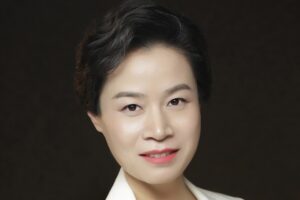
Coming to ALK China from an extensive and varied career, Xian Ji has helped build a new strategy for the allergy specialist’s local affiliate, which has led to quintupled business revenues. She discusses how ALK China has attracted new talent, the strong unmet medical need allergy immunotherapy (AIT) represents in the country, ALK’s focus on medical education, and its aim to strengthen its portfolio in China with the launch of AIT tablets.
You have had a diverse and extensive career in Big Pharma, covering various roles from marketing and market access to business unit management, and now as the general manager at ALK China. Could you share some highlights of your career journey?
Reflecting on this period, both personally and professionally, it has been incredibly rewarding. I began my career in the pharmaceutical industry, initially in marketing roles, before progressing to strategic marketing. My journey has taken me through various disease areas, including oncology, infectious diseases, neuroscience, gastrointestinal disorders, and immunology. Each role has provided invaluable experience and insight, contributing to my development as a leader. Before joining ALK I moved to New Jersey, worked at J&J’s headquarters, where I focused on market access strategies while gaining invaluable experience in emerging markets. These experiences including leading a business unit ultimately prepared me to take on the role of GM at ALK Pharmaceuticals in China.
When I joined ALK in 2020, the circumstances were unique due to the pandemic. My onboarding was entirely remote, and it took eight months before I could meet my direct reports in person and three years before I travelled to Copenhagen to meet my line manager and other global colleagues. That period was extremely challenging.
Since then, we have grown ALK from a team of 40 to nearly 200 employees and have quintupled our business revenue. This growth was made possible by leveraging the capabilities and insights I gained from my previous roles, focusing on building a resilient and agile organization. Equally important, this growth is a testament to the dedication and unity of every employee at ALK China. Together, we have faced challenges head-on and emerged stronger. We are grateful for the unwavering support and collaboration of our clients and partners, who have stood by our side in times of difficulty. Furthermore, we extend our heartfelt appreciation to our headquarters in Copenhagen. Their trust and support have played a crucial role in enabling our success and nurturing our growth in China.
ALK has been present in China for 24 years, how do you explain such a turnaround in performance?
When I joined ALK in 2020, the company had indeed been in China for two decades. However, during those 20 years the company saw very limited growth and had a team of about 40 people. Some different strategies were already tried but were not very successful.
When I came on board, it was clear that substantial changes were needed, not just in product strategy but in overall company strategy. We implemented a new vision, set measurable goals, and developed a five-year strategic plan. This transformation was challenging, especially as I started during the COVID-19 pandemic and had to lead remotely.
The first step in leading this change was creating a sense of urgency. With the help of my leadership team, we built a clear vision for the company, communicated it effectively, and executed it with discipline. A significant challenge was that, unlike previous roles where I built on established foundations, here we had to create that foundation from scratch. We needed to hire top talent and experienced leaders who could drive this change. Today, more than 2/3 of our team are new hires, brought in from leading pharmaceutical companies. These well-trained and experienced individuals have been crucial in driving the significant changes we have seen over the past few years.
In a quite evolving market like China, we needed to do better. The rapid progress we have achieved can be attributed to having the right people in place—dedicated, experienced professionals who believe in our vision and are committed to our strategy.
How did you convince so many talented young professionals to join ALK, given their ability to easily move between companies?
While ALK may not be a large company currently, every ALK person takes great pride in the fact that we are pioneers in helping people with allergies; and for over 100 years, ALK has consistently devised and developed major advances for the treatment of allergies. As a pharmaceutical company, ALK provides very good products which can meet treatment needs and holds the leading role in allergy immunotherapy treatment all over the world.
I know there are strong unmet medical needs in allergy treatment and the treatment choices for Allergy Immunotherapy (AIT) are very limited in China. Before joining ALK, I held a strategic marketing role at J&J China, where I evaluated markets, new compounds, and portfolios. I applied the same rigorous analysis to ALK, assessing market potential and unmet medical needs in China, particularly in the allergy disease area. This professional evaluation highlighted the significant opportunities at ALK, which resonated with top talent eager to make a meaningful impact.
Moreover, all our products are biological drugs without biosimilar competition. This stability allows us to focus on growth. Our clear and promising value proposition, combined with the opportunity to meet significant medical needs, inspired many people to join ALK and drive these changes with me.
Part of it comes down to the trust and the reputation I have built in the industry. Having spent my entire career in this field, my credibility and track record played a significant role at the early stage. ALK is one of 46 member companies of the R&D-based Pharmaceutical Association Committee (RDPAC), which adds to our credibility. Nowadays, there is increasing awareness of ALK China and it has a good reputation, which is more attractive to talent in the market. People stay with us and join us because they believe in our vision and enjoy the sense of achievement of serving allergy patients.
Looking at the numbers, China theoretically should have incredible potential in the AIT field. What are the challenges of the Chinese market?
Compared to oncology drugs, affordability may not be the major issue especially considering the urban population. However, the real challenge is the willingness to pay due to the low awareness of AIT. Despite affordability being manageable, the lack of awareness about this kind of treatment means we face significant challenges in terms of patient willingness to pay. Therefore, education on the value of AIT is crucial. ALK China is now heavily focused on medical education in the disease area to increase the awareness among healthcare professionals (HCPs), patients and the general public to meet the unmet medical needs in this heavily populated country.
Given the diverse landscape in China, with different tiers of cities and hospitals, what does ALK’s marketing and educational approach for such a specific therapeutic area look like?
Currently, our launched product is an injection, which is hospital-based, limiting our ability to adopt a multi-channel business model. However, our pipeline includes several tablet-based AIT products, creating opportunities for a more diverse business approach in the future. To prepare for this, our team is building digital and retail drugstore capabilities alongside our hospital channels.
In terms of Medical Information Communication Team, their role is to deliver medical information to HCPs. Given our relatively small size in such a large country, our strategy focuses on top-tier cities and hospitals. We recently started to strengthen our medical affairs team, which was non-existent when I joined.
Starting from major hospitals in big cities, we are gradually expanding our reach. As we introduce oral products, we can penetrate tier 2 and tier 3 cities, bringing better and more treatment solutions to a larger population of patients. Currently, we have two products in the market, but we are building the foundation for future growth.
How would you characterize the competitive landscape in the allergy space in China today?
Shortly after joining ALK, we became a member of RDPAC, demonstrating our commitment to upholding high standards and following the code of conduct set down by international R&D-based pharmaceutical companies. This commitment has been instrumental in ensuring the sustainable growth of our organization.
Currently, the local competitor is still the market leader in China. When I joined ALK, the local competitor held around 80 percent of the market share, with our share being around 5-8 percent. There were only three players in the market. Today, the local competitor’s market share has dropped to about 63 percent and we are around 22 percent[1] with the fastest growth rate in the market. Despite the initial market challenges, we have made remarkable progress and are well-positioned for continued success in the future.
Do healthcare professionals appreciate qualities like transparency, adherence to a code of ethics, and overall commitment to quality as competitive advantages in addition to product efficacy? How does this factor into your strategy in the China marketplace?
Physicians and key opinion leaders (KOLs) truly appreciate ALK because we focus on medical information communication and strive to be partners in developing allergy disease areas. We provide robust scientific support and continually advance our pipeline. This commitment resonates deeply with allergy physicians in China, as many of them genuinely want to improve patient care and stay updated on the latest advancements in allergy treatment. ALK is seen as their preferred partner in this journey.
From a cultural standpoint, Chinese healthcare professionals highly value scientific rigor and evidence-based medicine. Historically, they have respected leading pharmaceutical companies that provide solid medical evidence and collaborate on advancing medical knowledge in areas like hypertension and diabetes. While ALK may not yet be the market leader in business terms, our dedication to scientific integrity positions us strongly within the scientific community in China, which is even more important to ALK than the size of the business.
In terms of therapeutic areas for ALK, we currently focus on two main areas. The first is Respiratory Allergies, which includes products for diagnosis and treatment related to respiratory allergies, such as household dust mites and pollen. The second is Anaphylaxis Management, an adrenaline autoinjector (AAI) which is crucial for managing severe allergic reactions, including those triggered by food allergies and insect stings. It saves patients’ lives.
Looking ahead, our focus lies in meeting the needs of Chinese patients in the field of allergies. Our commitment to ongoing investments in R&D is what drives our leading role in allergic diseases. We look forward to expanding and strengthening our product portfolio in China in the future.
Additionally, ALK’s commitment to the Chinese market is underscored by its participation in global strategy meetings, where China is recognized as a key focus area for future growth. As the sole Asian representative at a recent international meeting in Copenhagen, I feel a strong sense of responsibility to advocate for the needs and potential of the Asian market within ALK’s global strategy. This mission drives my dedication to ensuring ALK’s offerings align with the specific medical needs and cultural dynamics of Asian patients and healthcare providers alike.
Can you provide details about ALK’s pipeline and how many of them might be launched in China?
ALK currently has a strategic pipeline that includes some promising assets aimed at addressing various allergic conditions. It is a priority to ALK to have robust clinical data including Chinese patient data.
Moreover, ALK is focusing on enhancing its engagement with Chinese clinicians and healthcare communities, which is crucial not only for market education but also for joint promotion of the development in clinical trials. This strategic alignment ensures that ALK can leverage its world leading position in allergic medical science to support efficient clinical trial conducted in China, aiming for more synchronized global product launches in the future, so as to bring first-class “new drugs” to China to benefit large population of Chinese people.
What are the expectations from the organization now, especially given the increased market share you mentioned? Looking forward to 2024 and 2025, what will success look like for you?
ALK China is still relatively small. We have been discussing expanding our commercialization capabilities, which involves more than just increasing the team size. It includes enhancing our digital and retail drugstore capabilities, building a robust professional team, and continuing to ensure compliance with policies and procedures.
As mentioned previously, we are determined to strengthen the product portfolio in China; we are intently focused on launching innovative products in China, particularly AIT tablets (there are no AIT tablets on China’s mainland), providing a unique opportunity to expand the availability of this disease-modifying therapy to those suffering from allergies. This formulation represents not merely a product release but the introduction of a more accessible and convenient therapeutic alternative for allergy patients, thereby potentially reducing the frequency of hospital visits and easing the load on our healthcare infrastructure.
In today’s global environment trust is not a given. How can trust in the Chinese market be built among global leaders?
Building trust in the context of bringing foreign medicines to Chinese patients and investing in the Chinese market is pivotal. It starts with consistently walking the talk—every commitment followed through on and every promise kept. When I joined ALK, I implemented a structured approach with 30- and 90-day plans, outlining key learnings and proposals. Initially, there was scepticism, which was understandable given the past experiences over two decades. Trust emerges from demonstrating reliability and alignment with objectives, not just in words but in actions that deliver tangible results. Despite challenges and uncertainties, trust grows as we consistently demonstrate our dedication to improving patient outcomes and advancing healthcare in China.
Recently, I had a meeting with my new line manager and our global CEO, and there is a clear consensus: everyone sees China as a crucial market. Through extensive discussions, we have helped our HQ understand the dynamics of the Chinese pharmaceutical industry. Chinese patients with allergies have significant unmet medical needs, and authorities have shown a strong willingness to support us to address these unmet needs. Looking towards the next decade, the implementation of the “Healthy China 2030” initiative has made chronic disease prevention and management a national priority. Among these chronic diseases, respiratory conditions pose a significant challenge, providing ALK China with an opportunity to grow alongside the entire company. It is the combination of the increasing unmet needs of Chinese patients with allergies, our dedicated Chinese team, the clinical and patient value of AIT products, and supportive policies that instil confidence in global leaders regarding the future of the Chinese market.
[1] Data source: IQVIA data (only the hospital segment is considered).