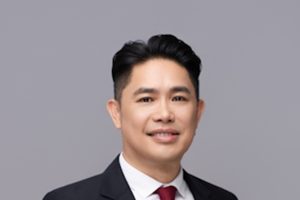
Will Hsu leads Sandoz operations across Taiwan, Hong Kong, and Macao, managing a portfolio spanning both generics and biosimilars in markets characterised by universal healthcare and significant budget constraints. With nearly 12 years at Sandoz, including three years in his current regional role, Hsu oversees strategic initiatives to increase biosimilar adoption in Taiwan from the current 12 percent penetration toward Taiwan's governmental target of 30 percent by 2027, whilst navigating complex reimbursement systems, patent challenges, and physician education requirements across oncology, autoimmune disease, and growth hormone therapeutics.
Having spent nearly 12 years with Sandoz, could you describe your career evolution and what led you to assume responsibility for Taiwan, Hong Kong, and Macao?
Sandoz is an exceptional organisation. Our corporate mission and vision centre on increasing patient access – ensuring patients receive the right treatment, at the right time, with the right medicine. This purpose provides profound motivation, which explains why I have dedicated almost half of my career to Sandoz. This commitment stems from genuine conviction, not mere rhetoric.
Taiwan and Hong Kong are distinct markets, sharing certain similarities yet marked by meaningful differences. In Taiwan, approximately 99 percent of citizens receive coverage through the National Health Insurance system. This creates substantial opportunities but also challenges. Hong Kong operates differently, with hospital tenders and a private market creating shared financial pressures but through alternative mechanisms. Sandoz plays crucial roles in both markets, albeit through different approaches.
I was appointed to this regional role three years ago in 2022. Previously, I was fully dedicated to the Taiwan business. Before Sandoz, I worked with different multinational companies in frontline operational roles across various therapeutic areas.
Since Sandoz’s 2023 separation from Novartis, how have you seen the company establish its independent identity in Asia, and what changes have you made in stakeholder communication and team management?
The separation from Novartis had a clear objective – to expand our capabilities in serving patients. As a business unit within Novartis, investment priorities and resource allocation limited our autonomy.
Since the separation, I have seen tangible progress. We have increased investment in building pipelines and assets across multiple markets, strengthened internal talent in every market, and revitalised our reputation with stakeholders. We now have the autonomy to invest where we intend. Remarkably, substantial transformation has occurred within just two years.
Given Sandoz’s global revenues of around USD 10 billion, with generics growing at eight to nine percent and biosimilars at double-digit rates, what are the key business metrics you focus on in Asia, particularly Taiwan? Which therapeutic areas reflect Sandoz’s strongest contribution?
Sandoz operates along two equally important pillars – biosimilars and essential small-molecule generics. Generics form the backbone of modern medicine: antibiotics, primary-care treatments for hypertension and dyslipidaemia, and high-volume therapies for chronic and infectious diseases across all age groups. This is our core societal contribution.
Biosimilars, however, address a different structural challenge. Taiwan applies exceptionally stringent reimbursement criteria: frequently, patients with cancer, autoimmune disorders, or other severe conditions must exhaust traditional therapies before accessing biologics due to cost. Biosimilars allow patients to be treated earlier or for longer, creating meaningful clinical benefit. Taiwan is also unique in that reimbursement often does not cover every approved indication of the reference biologic. Our ambition is to broaden access – enabling biosimilars to secure wider indication coverage than originators where possible.
Achieving this cannot happen overnight, as reimbursement policies are complex. One of our priority objectives is a close partnership with health authorities to accelerate learning. We have established robust dialogue between Sandoz Europe and Taiwan, given Europe’s far more advanced biosimilar adoption. By sharing European best practice, we help local authorities shape policy, enhance uptake, and understand how biosimilars simultaneously expand patient access and generate system-wide savings – a genuine win-win for patients and the broader health ecosystem.
Biosimilars remain widely misunderstood in many markets. In your experience, where do the main gaps lie, and how do you build the economic case for Taiwan’s universal healthcare system?
The science is unequivocal: biosimilars deliver comparable safety and efficacy to their reference biologics. This is an established fact. The challenge is education, raising understanding among all stakeholders: patients, physicians, payers and government officials. . Our priority is therefore to work with authorities to introduce differentiated reimbursement – enabling earlier access or broader indication coverage – thereby expanding treatment options and generating system-wide savings. That is the central objective.
Pricing is fundamental in universal healthcare systems. Biosimilars are typically 40 to 50 percent less expensive than originators, which in principle allows more patients to be treated within the same budget. This represents the core economic rationale. But pricing alone does not shift behaviour; adoption ultimately depends on physicians.
Taiwan differs from many markets in that there is also significant top-down pressure for adoption. Government policy actively directs prescribing behaviour, and we have seen successful cases emerge through this route. However, Taiwan’s experience also shows that a purely top-down approach is not always sufficient. Physicians hold considerable autonomy and authority within the value chain; when policymakers mandate or restrict products, some clinicians may respond by altering treatment protocols altogether.
In reality, success requires both top-down and bottom-up engagement. Different stakeholders play critical roles across the entire treatment pathway, and sustainable adoption only occurs when each is considered. That is why we work closely with medical societies and health authorities, sharing successful European case studies – such as Germany and the UK – to illustrate how aligned policy design, clear guidance and structured incentives can accelerate biosimilar uptake, enhance patient access and deliver durable savings for the healthcare system.
Looking at your portfolio, how many biosimilars do you currently offer, and how do they complement your primary care products?
In the biosimilar portfolio for Sandoz Taiwan, we focus primarily on three areas. The first is oncology, including haematological products for blood diseases. The second is autoimmune disease, among rheumatologists. The third is growth hormones for paediatrics, which is in high demand in Asia. In the future, we will introduce additional products to increase our market presence.
What are your current priorities and how has the year progressed for Sandoz Taiwan?
My approach is structured around three principal priorities. The first is maintaining a reliable and uninterrupted supply of medicines to support the sustainability of Taiwan’s healthcare system. The second is broadening our portfolio through the introduction of additional products, particularly biosimilars. Increased prescribing of biosimilars and generics delivers measurable savings and aligns with government policy objectives. The third is ongoing collaboration with the National Health Insurance Administration to support biosimilar policy development. Although the benefits of biosimilars are widely acknowledged, further work is needed to address remaining challenges through stronger engagement and targeted physician education. This is therefore a continuing focus for me.
Physicians in Taiwan show strong brand loyalty – how is Sandoz positioned among them, and are you embedding new values into the brand now that Sandoz is independent?
Sandoz’s value proposition and reputation remain strong and clear. We do not promote individual products, but position ourselves as a trusted partner delivering comprehensive solutions to physicians. With a broad portfolio spanning multiple specialties, Sandoz is viewed as a holistic solution provider – a position we continually reinforce.
How do you ensure strong reach across Taiwan’s diverse healthcare landscape, and what role do technology and AI play in supporting patient access and physician engagement?
We have approximately 80 personnel in total, all serving as frontline representatives. Optimising coverage relies on careful customer and product segmentation to ensure we reach the right physicians and patients. We also leverage advanced IT tools from corporate – aligning supply and demand forecasts, ensuring timely shipments from Taiwan production facilities, and enhancing productivity. Technology additionally supports how we communicate with customers, deliver Sandoz messaging, and identify physicians to expand patient access.
Regarding the business channels, Sandoz Taiwan operates across three main streams: hospitals, clinics, and pharmacies. Foundational medicines primarily flow through clinics and pharmacies, while autoimmune and oncology products are hospital-driven, involving tenders or hospital contracts of varying durations. These hospital tenders differ from European national tender systems, reflecting Taiwan’s unique healthcare structure.
With talent mobility between Taiwan and Hong Kong increasing, have you introduced any cross-market mobility or exchange initiatives across Taiwan, Hong Kong, and Macao?
Talent is the single most critical factor behind the success of Taiwan, Hong Kong and Macao. My foremost priority is ensuring we have outstanding people, supported by rigorous succession and talent planning. We strive to create opportunities by giving high-potential colleagues the right exposure and a breadth of assignments – not only between Taiwan, Hong Kong and Macao, but across the wider Asian platform. We have already placed talent in Singapore and even at our corporate headquarters in Switzerland. Developing our people is a top priority for both the cluster and the region.
Talent mobility is critical. Despite the strong security and consistency offered by Taiwan and Hong Kong, professionals must embrace opportunities beyond their comfort zones to meet our growth ambitions. But the starting point is always the individual: talent must first identify their own career aspirations. Once they do, it is our responsibility as leaders to provide the exposure, the opportunities and the support that enable them to grow – whether within their home market or across the broader organisation.
Looking ahead, what are your growth ambitions for Sandoz Taiwan, particularly given the perception that universal healthcare markets are more difficult to expand in?
We absolutely maintain growth ambitions. Our foundational business remains important, though we recognise that mature small-molecule products will not deliver the same performance as in previous years – mid to high single-digit growth is a realistic expectation. The real engine for future expansion in Taiwan is biosimilars. Sandoz is a global leader in this area, and few local players can genuinely compete.
Our focus is on accelerating access. First, we are working to bring products to market more swiftly by shortening registration timelines. Taiwan’s patent linkage system also requires us to ensure rigorous patent clearance while being sufficiently bold in challenging unreasonable originator protections, which can delay patient access. Over the longer term, faster biosimilar market entry across multiple dimensions is critical.
We monitor progress closely – the trend is improving, but still below our expectations. The National Health Insurance Administration has introduced its first biosimilar policy, targeting 30 percent penetration by 2027. Today, based on their own publications, penetration stands at roughly 12 percent. When compared with advanced markets such as the EU, Germany and the UK, where adoption often exceeds 50 percent, Taiwan has considerable room to progress. Higher adoption not only broadens patient access but also generates system-wide savings that can be reinvested into innovation – creating a virtuous cycle for the entire healthcare ecosystem.
For global pharmaceutical leaders and the financial community unfamiliar with Taiwan, what should they understand about this market?
From an industry perspective, I would like to highlight Taiwan’s reimbursement system, which is truly distinctive. It covers approximately 99 percent of the population with remarkably low insurance costs – an extraordinary achievement, even in the face of financial pressures. From a patient standpoint, this translates into exceptional access to high-quality healthcare and medicines.
Beyond the well-known semiconductor industry, I also wish to spotlight the talent in Taiwan and Hong Kong. Both regions boast highly skilled professionals in the pharmaceutical sector, yet their capabilities often lack sufficient exposure and opportunity. Given the right environment, these individuals demonstrate remarkable dedication, work ethic, and consistently high standards.
On a more personal note, what motivates you as general manager?
I ask myself this constantly. When my team and I set our plans, we agree on ambitious goals – never the easy ones – and we face the challenges together. When we genuinely deliver and see the impact we create for patients in Taiwan and Hong Kong, that is deeply motivating. I want the team to feel that same sense of purpose, because personal motivation is essential. Compensation matters, of course, but it is the internal drive that sustains you every day.