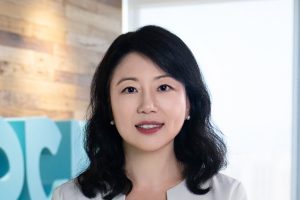
Vivian Zhang, Managing Director and General Manager of Merck China Healthcare, shares insights into the market’s strategic importance to the company and its current priorities in the country. She discusses Merck's long-term commitment to China, highlighting the company's 91 years of operations in the country, diverse portfolio, strong emphasis on innovation, and local R&D infrastructure. Zhang also touches on the importance of employee retention, local talent development, and Merck's vision for integrating Chinese expertise into its global operations.
Your career journey has been quite interesting—and you became the first women and first born Chinese to lead Merck’s Healthcare business in China. Could you share the key milestones that led to your position as Managing Director and General Manager of Healthcare for Merck China?
I am originally from Beijing and started my career in medicine. After graduating from medical school, I began my career at Tongren Hospital—one of China’s top-tier hospitals particularly renowned for its expertise in eye care. During my three years at Tongren, I gained firsthand insight into how public hospitals operate, which is an important point for my job today. It was also during this time that I was exposed to the pharmaceutical industry, this was a transformative moment for me as I realized there was a vast world beyond the traditional path of a physician.
Inspired by the opportunities and the scientific advances I saw, I made the bold decision to leave my job and join Pfizer as a sales representative. It was a significant shift, especially 25 years ago, when transitioning from a prestigious hospital role to a sales position was quite unconventional. Looking back, I still believe it was one of the best decisions I have ever made.
In 2002, I joined Novartis as a product manager—marking the beginning of a 16-year journey with the company. During my time there, I held various roles and gradually advanced within the organization. Fortunately, Novartis sent me to its headquarters in Basel, Switzerland, where I spent two years before returning to China to work in the oncology division. Later, I took on an opportunity as General Manager of Alcon Hong Kong- a relatively small but highly sophisticated market.
After three years in Hong Kong, I joined Johnson & Johnson for four years. Initially, I served as Commercial Vice President for general medicine- whereas after about two and a half years, I specifically requested to lead the market access team, because it is critical in China due to the importance of the National Reimbursement Drug List (NRDL), pricing strategies and Volume-Based Procurement (VBP). Leading the market access team has been an unmatchable hands-on experience for over two years.
Eventually, I was presented with the opportunity to join Merck, and I saw it as the perfect next step in my career. Each role I have taken has been part of a deliberate journey to deepen my skills and broaden my perspective to serve patients in China—ultimately preparing me for my current role as Managing Director and General Manager of Merck’s Healthcare business here in China.
Having worked with larger pharmaceutical companies earlier in your career, what motivated your decision to join Merck—which is known by its family roots?
To me, Merck stood out in the pharmaceutical industry for being both family-owned and having a highly diversified business . This combination is unique. In a rapidly changing environment like China, Merck’s culture—anchored in long-term commitment rather than short-term, quarter-by-quarter noise—felt like the right fit. I was also drawn to the opportunity to lead the entire organization in China, which goes beyond overseeing just one business unit and allows for a more holistic impact.
Another key factor in my decision was China’s strategic importance to the company globally. Unlike many MNCs where China typically contributes around 8% to global revenue, China accounts for approximately 15% of Merck’s operations—making it the second most important market for the company worldwide, right after the US. This elevated status brings a high level of influence, substantial investment, and robust support from the global team—all of which are critical for a general manager to drive success.
In my previous roles with other organizations, I often experienced challenges due to China’s limited share in their global portfolios, I remember advocating hard for China to be prioritized as a first-tier market for product launches. At Merck, this is not an issue—China is automatically a top priority for new product launches. That level of focus and strategic importance made joining Merck an exciting opportunity, allowing me to lead in a market where the company places significant emphasis and resources.
How does Merck’s approach to the market set it apart from other multinational pharmaceutical companies? Why is China a strategically important market for Merck?
Having established its presence in 1933, Merck has a deep and enduring history in China. With 91 years of development in the country, we are one of the longest-standing multinational pharmaceutical companies here. Over this time, Merck has built a comprehensive footprint that spans the entire value chain of the pharmaceutical industry.
Our manufacturing facility in Nantong, Jiangsu Province is a key site for Merck globally. Additionally, our R&D centre in Beijing is one of only four comprehensive R&D hubs of Merck’s Healthcare business globally, showcasing the strategic importance of China to our operations. Our commercial organization is also significant, with approximately 2,000 employees, making it one of the largest setups among Merck’s markets.
What truly sets Merck apart is its unwavering long-term commitment to China. This commitment is not new—it has been consistent through decades of leadership and the many challenges faced, including economic fluctuations and geopolitical tensions. Merck’s global leadership, including our Group CEO Belen Garijo, has always maintained a clear vision for the Chinese market, viewing it as a strategic priority not just for short-term gains but for sustained long-term growth.
Looking closer and the current market structure – based on your portfolio which therapeutic areas do you see as the key growth drivers for the organization?
Our portfolio in China is represented by four major therapeutic areas. The first and largest is chronic diseases, including cardiovascular conditions, diabetes, and thyroid disorders. This remains our biggest portfolio and a cornerstone of our operations.
The second area is oncology, where we have a strong presence with established products like Cetuximab, used for metastatic colorectal cancer (mCRC) as well as head and neck cancer. Additionally, we recently launched a treatment for a rare gene mutation in lung cancer as part of our evolving oncology portfolio.
Another key area for us is fertility—a unique and highly specialized therapeutic focus. Merck is the global market leader in fertility treatments, and this leadership extends to China as well. Our offerings in this space align closely with societal needs and government objectives to address population challenges, making it a highly impactful segment for us locally.
Lastly, we have a Neurology and Immunology (N&I) portfolio, and in China it is currently in the development phase and represents one key area of our future pipeline innovation.
At Merck, we describe our purpose as addressing the full cycle of human life—creating life, improving life, and prolonging life. Within certain strategic areas, we have achieved market leadership, such as in mCRC, fertility, thyroid treatments, and even foundational diabetes management with metformin. While we may not lead every disease treatment area, our goal is to establish focused leadership in the segment where we have strongholds where we can make the greatest impact.
It is interesting to see societal behaviour through the lens of population development. China is facing negative population growth for the first time in its history, what seems to be driving this trend? What role does Merck play in advancing reproductive health in China?
The issue of population decline in China is complex—driven by a combination of factors including economic challenges, societal attitudes, and the infertility rate, which currently stands at 18%. This means one in six couples faces difficulty conceiving, which poses a significant challenge to the country’s long-term development plans.
The government has recognized the urgency of this issue and has implemented measures aiming at easing the financial burden on young couples. From Merck’s perspective, we see it as our responsibility to support these efforts not only by providing leading reproductive medicines that can directly impact birth rates, but also by addressing broader societal needs.
For example, we are actively engaged in public education campaigns to raise awareness about fertility challenges—particularly among younger generations who may underestimate the impact of age on fertility. Many people do not realize that after the age of 35 fertility rates drop significantly, making timely family planning critical. Through partnerships with the government, the National Health Commission, associations, and medical professionals, we are working to bridge this knowledge gap and empower informed decision-making.
In addition to education, we are also involved in policy advocacy to improve access to fertility treatments. This includes advocating for expanded reimbursement options, multi-layer insurance coverage, and better geographic distribution of fertility centers—especially in underserved areas like northern and inland regions. These efforts align with national development goals and reflect our commitment to leveraging our expertise to address one of the country’s most pressing challenges.
Chinese policymakers are focused on fostering an innovative healthcare ecosystem, yet balancing the introduction of cutting-edge products with cost considerations remains a challenge. How would you describe the current pricing and reimbursement environment for innovative medicines in China?
The pricing and reimbursement environment for innovative medicines in China has undergone significant changes over the past decade. Before 2009, there was almost no reimbursement for innovative products, and regular updates to the reimbursement list were rare. However, starting in 2017, the situation began to improve substantially with the introduction of more frequent and transparent updates to the . The process has become more scientific—particularly in evaluating the value of innovative products.
That being said, there is still room for improvement. We believe that assessments are getting more evidence-based and better reflect the true value of innovation. Additionally, the price reductions negotiated during the NRDL process may bring some challenges for companies bringing cutting-edge products to the market.
In parallel, multi-layered reimbursement systems, including private insurance, have increasingly developed in recent years. The government has a clear objective to expand these systems, reduce the burden on public health insurance, and achieve a more balanced approach. Although this remains a long-term journey, we will join hands in continued efforts to create a sustainable and innovative healthcare ecosystem.
With one of Merck’s four global R&D centers based in Beijing, do you feel this infrastructure has the opportunity to enable a faster and more efficient pathway to market for the company, specially bringing China-based data for National Medical Products Administration (NMPA) filling?
Merck’s R&D centre plays a critical role in accelerating our clinical development process. As one of the few centres with the capability to conduct first-in-human clinical trials, it provides a significant advantage by allowing us to initiate clinical studies early and gather data that can be directly applied to both local and global markets. The importance of local data has been increasingly recognized by Chinese regulators, such as the NMPA, who offer considerable support for the first submission and approval in China, which helps streamline the approval process.
Additionally, this infrastructure with multiple centers across the country and the ability to conduct Phase I trials locally, enhances the efficiency of our clinical trials. This enables us to move products to market faster. For example, collaborations which involve local companies, like our licensing agreement with Hengrui and Abbisko respectively, further leverage these capabilities and local expertise to speed up development and bring innovative treatments to market more swiftly.
How is Merck engaging with and supporting the rapidly growing biopharmaceutical innovation ecosystem in China?
From a global perspective, I am very excited to share that Merck has embraced a new focus on leadership in innovation—aiming to balance its portfolio not only with internal, but also with a heavier focus on external innovation. Historically, we relied strongly on internal development, but we now see the value in expanding our external collaborations to improve efficiency, success rates, and leverage synergies. Given the importance of China as both a market and an innovation source, identifying and fostering local opportunities has become a top priority for our global business development teams and leadership.
China has rapidly become the second-largest innovation hub in the world, following the United States, with an impressive growth rate in its biopharmaceutical pipeline contributions. Over the past decade, this has increased from single-digit percentages to nearly 30% of global contributions. The government’s substantial investments in innovation and R&D have further fueled this ecosystem and created abundant opportunities for collaboration.
Local R&D companies in China are highly motivated to partner with multinational firms like Merck to expand internationally. Even leading companies such as Jiangsu Hengrui Pharmaceuticals, with whom we have established a licensing agreement to develop and market a PARP1 inhibitor and antibody-drug conjugate, are leveraging partnerships to navigate the complexities of entering global markets where regulatory environments and operational frameworks differ by country. This alignment creates a natural synergy for collaboration.
At Merck here in China, we see immense potential to build on our existing strengths And by integrating innovative portfolios with our established leadership, we aim to deliver new solutions that benefit both local and global healthcare. This strategic alignment between global vision and local opportunity underscores our commitment to advancing innovation in China’s dynamic biopharmaceutical ecosystem.
Employee retention is often a challenge in China, with many organizations experiencing high turnover rates. How does Merck counteract this trend, and what value proposition do you offer to encourage employees to stay in the organization?
I believe that Merck’s unique company culture plays a significant role in employee retention. Unlike more aggressive corporate environments, Merck’s culture focuses on long-term vision and care for our people. This approach is reflected in our diverse portfolio, and similarly, we cultivate an inclusive culture that values diversity, equity, and inclusion. As a result, our employee turnover rate tends to be lower than the industry average. This is because we foster a sense of ownership and belonging—giving employees a clear path for long-term growth and the opportunity to develop alongside the company. By aligning our vision with the personal and professional development of our employees, we ensure that they are motivated to stay committed to Merck for the long haul.
Do you see an opportunity for greater global exposure and integration of Chinese talent within Merck’s international operations?
There is definitely an opportunity to develop and leverage Chinese talent abroad. For Chinese professionals, gaining international exposure—whether in global markets or other regions—is crucial for developing a broader understanding of how different markets operate. This experience helps them grasp the global organization’s structure and operations more effectively.
At the same time, Merck’s global operations can significantly benefit from Chinese talent and the unique insights they bring—particularly from China. This market is incredibly dynamic and fast-evolving. The unique experiences and knowledge that our local professionals can provide can bring valuable perspectives for shaping global strategies. By giving local talent more opportunities for exposure we can foster mutual growth—creating a more connected and informed global team.
What final message would you like to convey to the global healthcare and life sciences community about Merck’s role and ambitions in China?
China is an integral part of our long-term strategy, and we are committed to both the local market and the global healthcare ecosystem. Despite the many economic cycles, geopolitical challenges, and global health crises we have faced, our diversified business model has proven to be a key factor in our resilience and success. We are proud of our robust and diversified businesses across healthcare, life science, and electronics which allows us to remain adaptable in uncertain times.
Our ability to pivot and sustain operations globally, even in the face of geopolitical challenges, reflects our strategic approach to business. We just unveiled our new Vision globally for the Merck Group – Sparking Discovery, Elevating Humanity. In Healthcare, we are at the forefront of developing pioneering therapies – boldly aiming to meaningfully change the lives of patients, their families, and their caregivers. Merck’s commitment to innovation, resilience, and long-term growth ensures that we will continue to serve patients worldwide—with China playing a crucial role in this vision.