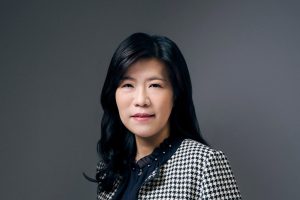
Vivian Kuo, General Manager at UCB, brings over two decades of pharmaceutical industry expertise across medical affairs, marketing, corporate strategy and commercial excellence. Having spent seven years at UCB, progressing from Neurology Head for Taiwan and Hong Kong to regional leadership across Southeast Asia, she now steers both affiliates through a transformative period. Her leadership philosophy centres on patient-centric innovation in immunology and neurology, whilst cultivating an inclusive, growth-oriented culture that empowers teams to deliver meaningful healthcare outcomes.
You have built an impressive career managing diverse specialty medicine portfolios across leading organisations – MSD, UCB, and others. How has this experience shaped your priorities today in managing the Taiwan and Hong Kong affiliates?
Throughout my professional journey, I have dedicated myself to the pharmaceutical sector, accumulating experience across medical, marketing, new product planning, corporate strategy, and commercial excellence at various leading organisations. My tenure at UCB spans seven years, commencing as Neurology Head for Taiwan and Hong Kong, subsequently expanding to regional leadership across Southeast Asia, and ultimately progressing to my current role overseeing both business units and general management responsibilities.
The fundamental principle guiding my approach as a General Manager centres on recognising that leadership is fundamentally about people – how we engage with individuals and how we ultimately serve patients. It is critical to lead with purpose, consistently positioning patients at the centre of all decision-making, whilst inspiring our teams to generate meaningful impact. My motivation for joining UCB stems from the organisation’s unwavering commitment to driving innovation, particularly within immunology and neurology, which constitute our strategic therapeutic focus areas.
I consider it essential to connect this sense of purpose to our enterprise objectives and to each individual’s role within the organisation. This alignment enables our colleagues to feel genuinely inspired, recognising that their daily contributions ultimately deliver meaningful outcomes for patients. This philosophical approach underpins all my interactions and discussions with team members.
As UCB pivots towards mechanism-based innovation in immunology and establishing rare disease platforms, how are you preparing the Taiwan and Hong Kong affiliates to maximise the impact of these next-generation therapies?
Our present portfolio concentrates on immunology and neurology therapeutic areas, with our current asset base encompassing treatments for epilepsy and Parkinson’s disease, alongside therapies addressing several immunological conditions. We are preparing to extend our presence into the rare disease space following new product launches scheduled for the coming years.
We are committed to making all newly approved products available to Taiwan and Hong Kong patients. Regarding innovative immunology – genuinely innovative therapies addressing several indications – we shall certainly ensure their availability across both markets. For the rare disease portfolio, including the innovative treatment for myasthenia gravis, we are equally committed to market introduction in both markets. Additionally, novel therapies for specific forms of epilepsy feature prominently in our launch strategy for both territories.
All elements of our global portfolio remain on track for local introduction. We are endeavouring to accelerate the entire process, navigating regulatory pathways and market access requirements to secure product availability as expeditiously as possible, ensuring Taiwan’s sophisticated healthcare system, renowned physicians, and patients benefit from these therapeutic advances.
The Taiwan Food and Drug Administration recently derestricted fenfluramine and allowing its use for Dravet syndrome and Lennox-Gastaut syndrome. How did you prepare regulators for this decision, and what constitutes your launch strategy?
This represents a genuinely inspiring case that continues to energise our organisation. To provide context: since 1980, the Taiwanese government prohibited substances containing fenfluramine due to its chemical similarity to amphetamine and potential concern of drug abuse.TFDA has allowed new drug applications and compassionate use for the use of fenfluramine in Dravet syndrome and Lennox–Gastaut syndrome, two highly refractory and severe forms of epileptic disorders.. The derestriction required extensive scientific dialogue, long-term safety data, and close engagement with clinical experts to demonstrate the clear benefit–risk profile for this treatment-refractory population.
Had we simply accepted the status quo, registration and importation would have remained impossible, depriving patients of access to superior therapeutic options. We recognised the imperative to challenge this paradigm, understanding that no single organisation could accomplish this transformation alone. We therefore initiated comprehensive dialogue amongst diverse stakeholders – crucially including government authorities, relevant medical societies, and patient advocacy organisations.
With government stakeholders, we sought to understand their historically rooted concerns, subsequently providing robust clinical evidence and documenting launch experiences from markets worldwide to address their reservations comprehensively. For medical societies, we furnished the most current clinical data, enabling them to engage constructively with government officials and articulate unmet medical needs effectively. Patient organisations, naturally, expressed urgent requirements for innovative therapeutic options, powerfully communicating these needs to regulatory authorities.
Following sustained engagement across all stakeholder groups, the government rendered a historic decision: lifting the prohibition on this substance after 45 years. This marked the first instance of unlocking such a prohibition in nearly half a century. Following this announcement, we secured the opportunity to register this therapy, and the registration process is currently underway.
This exemplifies how connecting our corporate purpose to strategic choices can positively influence and inspire our teams to drive superior patient outcomes. Initially, we possessed no clarity regarding potential outcomes, as no established legal framework existed for these discussions, nor any defined process. However, we remained determined to attempt creating opportunities to unlock this access. The registration process is now advancing, and we are optimistic about offering renewed hope to patients.
With Taiwan’s time to reimbursement for innovative medicines sometimes extending to 700 days – amongst Asia’s slower markets – what strategies are you employing to accelerate patient access, and how do the market dynamics differ between Taiwan and Hong Kong?
We must address this challenge both internally and externally. Internally, we must ensure Taiwan’s visibility and priority status within our headquarters, positioning it as an early launch market. This internal advocacy proves essential.
Externally, we collaborate intensively with key stakeholders – medical societies and patient advocacy organisations prove particularly vital – ensuring that urgent, unmet medical needs receive appropriate emphasis. Simultaneously, we must develop strategic approaches to accelerate market access, recognising inherent trade-offs amongst price, scope, and timeline. Genuinely accelerating timelines necessitates strategic balancing across these three dimensions.
Our government demonstrates openness to innovative access models, including risk-sharing agreements and collaborative early access programmes with National Health Insurance. Depending upon specific case circumstances, we do introduce these mechanisms into our dialogue with regulatory authorities.
When benchmarking Taiwan against Hong Kong, Hong Kong’s processes prove relatively expeditious due to comparatively streamlined procedures and reduced pricing pressures. However, Taiwan’s population represents three times Hong Kong’s scale, presenting different complexities and opportunities that warrant our sustained strategic focus and investment.
How effectively does Taiwan’s Rare Disease and Orphan Drug Act support UCB’s expanding rare disease portfolio?
The orphan drug designation and registration framework substantially assists pharmaceutical organisations through clearly defined processes for both registration and reimbursement. These transparent, established pathways enable systematic progression. For instance, we are currently advancing fenfluramine through this established framework, making satisfactory progress.
Our approach to stakeholder engagement begins with team leadership – inspiring colleagues to drive superior patient outcomes, fundamentally linking back to UCB’s corporate purpose: “Inspired by patients, driven by science.” We inspire our teams through this purpose, ensuring that every strategic choice and key decision positions patients centrally. This evolves into organisational culture – when interacting with customers and making decisions, patient centricity guides our approach and actions.
This cultural foundation manifests through extensive collaboration with patient advocacy organisations, medical societies, and physicians, becoming part of daily operational practice. Naturally, regulatory constraints prevent direct patient engagement in certain contexts, necessitating facilitation through healthcare professionals and advocacy groups. However, this framework – combining supportive regulatory architecture with deep stakeholder partnerships – enables us to advance meaningful outcomes for patients living with rare diseases across both markets.
Given Taiwan’s rapidly ageing population and rising prevalence of neurological conditions, how do you assess current government policy, and in what ways is UCB supporting longer, healthier, and more productive lives?
Examining government policy, authorities have established a vision – “Healthy Taiwan” – supported not merely by aspirational statements but by tangible financial commitments and substantive policy reforms. We observe increasing healthcare system budget allocations supporting this vision financially.
From a policy perspective, the government has implemented reforms accelerating innovation access. For example, they introduced parallel review processes – previously, all pharmaceuticals progressed sequentially from registration through reimbursement review. Last year, for certain priority drug categories, government implemented parallel review, enabling simultaneous registration and reimbursement evaluation for products meeting specific criteria. This innovation substantially reduces review timelines and expedites new therapy approvals, representing meaningful policy reform supporting the Healthy Taiwan mission.
From our organisational perspective, this remains linked to our purpose. Our therapeutic focus encompasses neurology and immunology. Whilst certain therapies specifically target elderly populations – Parkinson’s disease treatments, for instance – others span diverse age groups. By maximising patient reach with innovative therapies, we naturally improve quality of life for elderly patients. Simultaneously, for younger and middle-aged populations, quality-of-life improvements and support for workforce and educational reintegration indirectly address ageing population challenges.
By extending innovative therapies to broader patient populations, we enable more individuals to resume normal social functioning. Many epilepsy patients, suffering seizure attacks, cannot maintain the normalcy most individuals experience. Similarly, psoriasis – superficially appearing as merely dermatological symptoms – profoundly impacts patients through significant manifestations including rashes, pruritus, patches, and pain, affecting appearance and sleep quality whilst promoting social isolation. Accelerating innovative therapy launches enables patients to enhance quality of life, return to employment, and resume education – thereby expanding the productive middle-aged and younger demographic, partially addressing demographic challenges. This demonstrates how we align innovation with local needs.
Innovative medicines represent approximately seventy percent of reimbursed pharmaceutical value. In your view, is Taiwan an innovation-friendly market, and what challenges remain for companies bringing novel therapies to patients?
Taiwan represents an innovation-friendly market environment. Market data conclusively demonstrates innovative medicines’ market dominance – this represents factual reality. This market structure reflects physicians’ recognition and appreciation of innovation, and current market trends substantiate this observation.
Beyond commercial launches, where do you see the most compelling opportunities in Taiwan and how is UCB investing to capture them?
I would highlight three primary opportunity domains. Firstly, market access: given the government’s articulated vision, tangible policy reforms, and financial commitments, authorities demonstrably pursue accelerated product launch objectives. This aligns perfectly with our priorities – we are planning to launch four new products in each market imminently, representing substantial pipeline expansion.
Secondly, clinical trials: Taiwan’s clinical trial quality enjoys exceptional reputation. Medical centres and clinical experts demonstrate outstanding professionalism. Government data indicates increasing clinical trial activity with significant volume growth, and quality standards earn recognition from most pharmaceutical organisations. Consequently, I shall endeavour to communicate with headquarters, advocating for expanded clinical trial activity in Taiwan. This represents an additional pathway for providing early patient access preceding formal drug registration.
Thirdly, real-world evidence generation: Taiwan operates as a single-payer market, with government maintaining comprehensive reimbursement data within a national database. This database encompasses virtually universal healthcare data – approximately ninety-nine percent population coverage, effectively one hundred percent – providing an exceptional data source for real-world evidence generation. This represents a compelling value proposition when communicating with global teams.
How are you approaching digital transformation and the adoption of artificial intelligence across the Taiwan and Hong Kong affiliates?
Digital transformation represents an undeniable trend. We must leverage digital capabilities to enhance customer experience – both externally with healthcare stakeholders and internally within our organisation. We harbour ambitious objectives for artificial intelligence deployment, enhancing efficiency and effectiveness. We have established a Copilot & AI working group specifically for this purpose.
By leveraging artificial intelligence for lower-value-adding tasks, we liberate time for contemplating high-impact strategic priorities rather than operational minutiae. This constitutes a priority – internally leveraging artificial intelligence not merely for productivity enhancement but fostering creativity. Freeing resources from operational tasks enables energy concentration on innovation and strategic development.
Managing a team of approximately 50 professionals represents substantial affiliate leadership responsibility. What organisational culture are you cultivating?
We are assiduously cultivating a culture characterised by inclusiveness, trust, and growth orientation. Shaping this culture enables colleagues to manifest their optimal capabilities. Regarding inclusiveness: we welcome diverse perspectives and actively encourage feedback. Our trust culture genuinely empowers colleagues to become their best selves. Our growth culture responds to our ambitious new product launch timeline – we require out-of-the-box thinking and boundary-breaking approaches, exemplified by the fenfluramine case, to achieve genuine breakthroughs.
This represents the culture I am cultivating across Taiwan and Hong Kong – enhancing positive, growth-oriented environments where individuals feel highly motivated and inspired to generate impact. When people experience high engagement and inspiration, they drive results autonomously without requiring micromanagement.
Looking ahead, what strategic priorities will shape your focus over the next few years?
I aspire to build an organisation recognised as the biopharmaceutical company that industry talent most desires to join, whilst simultaneously establishing ourselves as the trusted partner with whom stakeholders prefer collaboration. Through these efforts, we ultimately improve patients’ lives.
My primary objectives encompass several dimensions. Firstly, accelerating new product launches to ensure our innovation pipeline reaches patients expeditiously. Secondly, deepening stakeholder engagement – mirroring our fenfluramine experience – enabling collaborative healthcare system advancement. Additionally, fostering positive, growth-oriented work environments to unleash colleagues’ potential and commitment proves essential.
Finally – critically important – ensuring long-term sustainable business performance. Only through driving sustainable business outcomes can we maintain the capability to generate enduring impact for Taiwan’s healthcare community and patient population. Sustainability enables us to fulfil our patient care obligations over the long term.