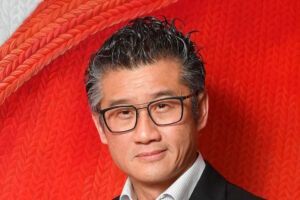
Prominent oncologist and chair of the clinical oncology department at the Chinese University of Hong Kong Professor Tony Mok comments on the potential of the Antibody Drug Conjugates (ADC) platform and discusses boosting clinical trials in Hong Kong and the difficulties posed by a shortage of doctors in the territory. Mok also remarks on the prospect of accessing a larger patient pool through the Greater Bay Area despite hurdles to recruiting Chinese patients.
Since our last interview, what have been the key focus areas of your work in clinical trials, particularly in the field of cancer?
In general, clinical trials here in Hong Kong have been continuing, with multiple new platforms emerging. One exciting platform that has kept us particularly busy is Antibody Drug Conjugates (ADC). All the major oncology pharmaceutical companies have their own ADCs, and there is significant activity in China as well, leading to numerous clinical trials in this area.
I am currently leading a trial involving an anti-HER2 ADC called Trastuzumab Deruxtecan. The data from this trial should be available sometime this year. The trial has been completed, and we are now waiting for the readout. The study targets patients with the epidermal growth factor (EGF) mutation who have failed in tyrosine kinase inhibitor treatment, comparing anti-HER2 ADC to chemotherapy. The study, known as HERFIN2, is expected to produce results soon.
As you mentioned, ADCs are gaining significant traction – especially in China – where nearly half of the partnering deals with global pharma are emerging. As a clinician, what is your perspective on the potential and challenges of ADCs?
ADCs are a promising concept, combining three components: the antibody, the linker, and the payload. The goal is to deliver a cytotoxic drug directly to cancer cells in a targeted manner. While we see efficacy, the targeting aspect still needs refinement.
The most successful example so far is the anti-HER2 ADC, triturosomalic placentegan, approved for both breast cancer and lung cancer with HER2 mutations. However, in the recent DESTINY-Breast06 trial, we observed efficacy in patients without the HER2 expression, including those with low or ultra-low levels. This raises questions about the targeting mechanism. Similarly, antitrope 2 ADCs show mixed results, with positive outcomes in some trials, but not in others, like those conducted by Gilead.
The ADC market still lacks a reliable biomarker to help us select patients effectively. While HER2 started as a biomarker, subsequent findings showed efficacy even in low HER2 expression cases. This leads us to question how to maximize ADC benefits in different populations and with specific biomarkers. There is much to learn in this area.
Future developments should focus on creating diverse payloads. Beyond cytotoxic drugs, there is potential for radionucleotide and targeted therapy payloads. This could significantly advance the ADC field and improve treatment outcomes.
As a lung cancer specialist, what recent advancements have you observed in lung cancer treatment and research? What insights have you gained about the disease?
Regarding targeted therapies, we have been working to maximize their benefits, starting with advanced stages of lung cancer, particularly with EGF mutations. Initially, we focused on advanced-stage treatment, but we have since moved to earlier stages. The ADORA study demonstrated that we could use targeted therapy in an adjuvant setting for EGF mutations. Recently another ADC study published in the New England Journal of Medicine showed that we can apply targeted therapy to stage three disease after concurrent chemotherapy. This progression shows how we are maximizing the benefits of targeted therapy across different stages of lung cancer. It is about extending these benefits to patients at all stages of the disease.
Another significant advancement is targeting genetic mutations that were previously difficult to control, such as KRAS. For example, we now have drugs for KRAS-G12C mutations. At this year’s American Society of Clinical Oncology (ASCO) annual meeting, I presented data on a second-line treatment for KRAS G12C. However, there is still much room for development in targeting non-G12C KRAS mutations. New inhibitors, including second-generation KRAS inhibitors, are in development and hold promise for the future.
We hope to gain more control over KRAS mutations, which are prevalent in about 20 percent of the Western population and 8-10 percent of the Asian population. The advancements in targeting these mutations offer hope for improved treatments and outcomes.
With the increasing number of clinical trials in Hong Kong and strong governmental support, do you feel there are sufficient resources to sustain the endeavour and turn Hong Kong into a clinical research hub?
Firstly, I appreciate the government and the Hospital Authority’s changed attitude toward encouraging clinical trials in Hong Kong. This support is crucial since the majority of trial resources are under the government and Hospital Authority. However, there is a practical problem: doctors are extremely busy. Even with the intention to support clinical trials, their primary duty is patient care.
Given the current shortage of doctors in the Hospital Authority, even with governmental or administrative support, there is a lack of manpower with spare time to conduct these trials. In academic hospitals, like Prince of Wales and Queen Mary Hospital, we have academic doctors with fewer clinical duties, which helps in running clinical trials. But we still rely on support from Hospital Authority staff, who are positive and helpful, but short on time.
In non-academic general hospitals, where academic institutions do not have direct extensions, conducting clinical trials is even more challenging. The Hospital Authority is trying to recruit more doctors, including from the United Kingdom, but there are barriers. These doctors need Hong Kong licenses, which the authority facilitates, but they also need to speak Cantonese. While some do, the language requirement limits potential recruits from international sources.
Unfortunately, there is no short-term solution. The long-term solution is to train more doctors locally. Another potential solution could be welcoming doctors from China, though this is controversial due to differences in healthcare systems and language. While clinical trials in China produce good data, practicing here requires fluency in both Chinese and English, which adds another layer of complexity. Direct patient care needs clear communication in the local language.
During your last interview, you discussed the Greater Bay Area. Some believe that while Hong Kong excels in clinical expertise, scaling up is a challenge due to a limited patient pool. Do you believe that increased alignment between the Greater Bay Area and Hong Kong could address this issue?
I think it is possible for Chinese patients from the Greater Bay Area to come to Hong Kong for phase one trials, but there are two primary hurdles. The first hurdle is integrating them into the Hospital Authority system. Most trials are conducted in academic units within Hospital Authority hospitals, and healthcare charges are typically itemized. For clinical trials, itemizing every cost for each patient creates a lot of extra work.
One solution I have proposed is a package price for patients from China. Instead of itemizing every cost, we could have a single package price, simplifying the billing process and reducing paperwork. However, this requires agreement from the Hospital Authority, and then we need to present it to future clinical trial sponsors. Simplifying the charging system is a crucial step.
The second hurdle is immigration. Chinese patients coming to Hong Kong usually get a seven-day visa, which is appropriate for regulating the flow of people. However, clinical trials often require longer stays. For clinical trials, immigration needs to grant special visas. Currently, we have to write many letters for each visa application, which is cumbersome. The immigration department needs to facilitate easier access for patients participating in trials.
Do you think the upcoming Greater Bay Area International Clinical Trial Institute in the Hetao Shenzhen-Hong Kong Science and Technology Innovation Cooperation Zone will effectively address the capacity challenges for clinical trials?
Personally, I see the practicality of placing a high-end medical centre at the border as a significant concern. For instance, it is hard to imagine commuting to the border of Hong Kong daily for work. Most doctors, myself included, are unlikely to be willing to make the journey there regularly. Those planning the new institute need to consider who will actually be willing to work there if it is to become a top-tier centre.
Conducting clinical trials cannot be a full-time job for physicians. We already have demanding schedules, so adding travel time to the border is impractical. Young doctors in particular may not be enthusiastic about this. It is not enough to just build a centre at the border and expect everyone to show up. The type of facility and the manpower needed must be carefully planned to make it work.
For example, transforming the Prince of Wales Hospital into an international centre took immense effort and talent. Location played a crucial role in its success. Therefore, starting from scratch at the border, where the location is less attractive to many, poses a challenge. Talented individuals in Hong Kong have choices about where they want to work and the border simply might not be appealing to them.
Is there anything else you would like to share with our global audience about the developments and future prospects of Hong Kong?
I hope to emphasize that Hong Kong continues to be a great place with a lot of potential. The Western media, especially in the United States, have often portrayed us negatively, which I believe is unfair. Having spent significant time in Canada, I can see how attitudes towards Hong Kong have shifted over time.
It is important to recognize that what is shown in the Western media may not always reflect the reality here. Hong Kong remains a vibrant and dynamic hub for innovation and development, and we should stay informed about the true situation rather than relying solely on potentially biased reports.