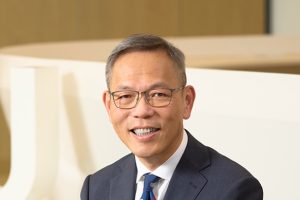
Professor Chak-sing Lau, BBS, JP, is Vice-President & Pro-Vice-Chancellor (Health) and Dean of Medicine at The University of Hong Kong (HKU). He leads HKU’s Li Ka Shing Faculty of Medicine (HKUMed), one of Asia’s highest-ranked medical schools. Professor Lau discusses the faculty’s evolution into a multidisciplinary health sciences hub, Hong Kong’s role as a bridge between the Chinese Mainland and the world, the integration of artificial intelligence into medical education, and the opportunities emerging from cross-border clinical research in the Greater Bay Area.
You became dean at HKUMed in 2023. Could you introduce the institution and outline the scope of your role?
The faculty will soon celebrate its 140th anniversary. It began as the College of Medicine for Chinese in 1887, founded on the belief that local doctors should care for local people. The University of Hong Kong was established in 1911, meaning the medical school predates the university itself.
Over nearly 140 years, the faculty has evolved from a training centre for doctors into a broad-based health sciences institution. Today, we comprise six schools and one department: the School of Clinical Medicine, School of Nursing, School of Chinese Medicine, School of Public Health, School of Biomedical Sciences, and the recently established School of Biomedical Engineering, alongside the Department of Pharmacology and Pharmacy.
The School of Biomedical Engineering reflects our interdisciplinary innovation through the joint effort of the Faculties of Medicine, Dentistry, Engineering and Science. This creates a four-faculty ecosystem that enables collaboration across disciplines.
Housing multiple health professions within one faculty allows flexibility in appointments and encourages principal investigators to work across schools. Medicine is inherently interdisciplinary. Doctors rely on scientists to advance knowledge, nurses to deliver care, and many other professionals to support patient care.
Through the hard work of our colleagues, HKUMed is recognised among the top medical faculties globally, reflected in recent Times Higher Education and QS World University rankings. We have numerous highly cited researchers and are well recognised by other higher education institutions around the world. This enables us to maintain strong partnerships in Hong Kong, Chinese Mainland, and across the globe.
You are known as a pioneer in rheumatology. How has the transition to dean been compared with clinical practice?
The past two to three years have been demanding, but in a constructive way. There is simply a lot of work to be done. Medicine is changing rapidly, and we must adjust how we train doctors, nurses, and other healthcare professionals.
Technological advances, particularly in artificial intelligence, are reshaping practice and education. We discuss AI almost daily. The pace is challenging, but it also presents significant opportunities for us to explore and make the most of.
What do you see as the biggest opportunities ahead to take advantage of?
There are multiple as far as medical and health sciences are concerned. Our reputation allows us to collaborate with leading institutions worldwide, including University of Cambridge, King’s College London, London School of Hygiene and Tropical Medicine, University of Toronto, Tsinghua University and many other leading universities, to advance medical research and talent development.
Geographically, Hong Kong occupies a unique position. It is a window into Chinese Mainland and a place where East meets West. China is developing rapidly in science and technology. At the same time, as a large country with a vast population, it faces significant healthcare and training needs.
With our long history and global connections, HKU is well placed to help train future healthcare professionals for Chinese Mainland while also enabling the international community to better understand China’s medical advances.
Hong Kong has inherited legacies of British systems and influence, while Chinese Mainland has its own distinct healthcare and medical systems. How do you see the opportunities with integration, but also the challenges of connecting across the border?
Integration is an ongoing learning process, for myself as for all stakeholders. Hong Kong and the Chinese Mainland are both evolving fast.
Historically, our training system has been British-based, but we are becoming more international. Last year, we introduced a graduate-entry track for the Bachelor of Medicine and Bachelor of Surgery (MBBS), similar to models in North America, Australia, and parts of the United Kingdom. The Chinese Mainland is also moving in this direction.
Our understanding of China’s education systems and our physical and cultural proximity enable us to mutually support one another. We organise exchanges and joint conferences to understand one another’s systems and build relationships. HKUMed / Queen Mary Hospital is also part of the China Consortium of Elite Teaching Hospitals, to foster exchange and cooperation in Hong Kong and the Chinese Mainland in undergraduate and resident doctor training.
Hong Kong’s specialist training system, regulated by the Hong Kong Academy of Medicine since 1993, is well established. Specialists undergo structured training, certification, and continuing accreditation. In Chinese Mainland, due to its size, systems vary across provinces. This creates opportunities for mutual learning. Elements of our model may be adapted there, and we can learn from their scale and diversity.
Hong Kong has a shortage of doctors compared to some other developed cities in Asia. What do you see as your institution’s role in addressing this, especially for specialties?
Student intake numbers are determined by the University Grants Committee (UGC). The faculty does not decide how many students to admit.
Whether there is a shortage depends partly on what our expectations are of the healthcare system or the healthcare service that we are able to receive from the government. Undoubtedly, by doctor-to-population ratio, Hong Kong trails several Asian economies. Yet, our life expectancy is among the highest globally, which reflects the strength of our healthcare system. This is despite the fact that of the 15,000–16,000 doctors in Hong Kong, only half work within the Hospital Authority, which serves 90 percent of the population. Despite resource constraints, outcomes have been strong.
Sustainability is essential. My background includes work in primary healthcare in the United Kingdom. A balanced system requires strong primary care alongside tertiary, quaternary and specialist services. Primary healthcare supports prevention and early detection and is proven to be more cost-effective.
The faculty is very keen on supporting Hong Kong’s latest primary healthcare reforms, including the establishment of the Primary Healthcare Commission and new district health centres. Within the faculty, we established the Comprehensive Primary Healthcare Collaboratory (CPHC). It brings together doctors, nurses, pharmacists, dentists, public health specialists, social scientists, social workers and more, to support local healthcare reform and promote primary care education. We want future doctors to consider primary care, not only specialisation.
How is artificial intelligence influencing your work? Where do you see its most interesting applications across healthcare?
I am honestly surprised by the speed and scale of advances! With all these advanced technologies, younger people often adapt faster.
We recently established the Centre for Health AI Research and Translation (CHART) as a shared platform for AI and data-driven health research and education. Similar to the Comprehensive Primary Healthcare Collaboratory, it serves the entire faculty. We have also been implementing EdTech (Education Technology) across our programmes, to promote the global use of technology in education.
Collaboration is essential. We work closely with colleagues in computer science and data science across the university. We have common interests in promoting the technology. From this academic year, university-wide, all HKU students will take a core course on AI. Within the faculty, we launched Students in Medical and Health Sciences Education (SIMHSE), enabling students to shape how they learn, including through AI. Students now contribute to curriculum design and assessment methods. Some have developed AI-enabled simulated patient programmes to practise clinical history-taking and decision-making. Together, the faculty and students are exploring how AI can support patient management and clinical education. Engaging young people is central to this effort.
Hong Kong will soon get a third medical school, based at Hong Kong University of Science and Technology (HKUST), with an institutional commitment of more than HKD 7 billion over the next 25 years. How will this impact the ecosystem in the city? Is this a source of competition or a potential for collaboration?
Naturally, the topic has generated debate, including concerns about competition for resources and human capital. I have also considered these questions. No matter what, we will continue to uphold excellence.
We have to be longer term in the way we consider things. Similar concerns arose when the Chinese University of Hong Kong established its medical school over 40 years ago. Today, Hong Kong has two highly ranked and reputable medical faculties. In the long term, a third medical school will strengthen the city’s medical education and research ecosystem. We will support its development.
In the short term, questions may persist concerning funding, or whether colleagues will move over to HKUST. This also happened 40 years ago, and it will all be resolved. Ultimately, the key issue is Hong Kong’s overall development, and how we can support the city’s medical training and research.
In terms of collaboration with Chinese Mainland, there are a lot of opportunities around training, clinical research and real-world data. There is also the newly-formed Greater Bay Area International Clinical Trial Institute (GBAICTI), aiming to combine the expertise and infrastructure of Hong Kong with the large patient pool and speed of the mainland. Where do you see the big opportunities in cross border clinical research and real-world data studies?
There are a huge number of opportunities. I frequently remind my colleagues and students that Hong Kong is a small city and our success is a miracle. With support from the Greater Bay Area and Chinese Mainland, we will be able to continue to grow and succeed. We won’t be just looking at data from seven million people, but potentially more than 80 million from across the region.
Looking at the Nature Index report, China is currently at the forefront of scientific research, particularly in medicine and health. Our goal is precise diagnostics and targeted treatments with high efficacy. Hong Kong can play a role in supporting this development.
Many clinical studies conducted in Hong Kong are recognised by regulators including the U.S. Food & Drug Administration (FDA), the European Medicines Agency (EMA), and China’s National Medical Products Administration (NMPA). Data generated here can support licensing applications across multiple jurisdictions. Through the GBAICTI, we can introduce global innovations into the Chinese Mainland, and help Chinese-developed medicines to be disseminated across international markets. Hong Kong acts as the “superconnector”.
Expanded access to real-world data also strengthens research. Treatment responses can vary across ethnic groups. Historically, many trials in the US have focused on Caucasian populations. The clinical trial and real-world data platforms will offer opportunities as greater inclusion of Asian populations enhances global evidence generation.
Could you offer a final message on behalf of your institution? What are your ambitions for the coming years and what will success look like?
Things are happening so fast these days that we need to think in longer terms. We will continue to support technological advances in both treatment of our patients and training of our students.
Importantly, we would like to be able to inspire humanity. Amidst technological innovation, we must remember that medicine and health is about humans. As AI and technology advance, we must uphold medical ethics. In recent years, with the pace of change, it has struck me that only a few countries in this world can afford AI and advanced technologies. As we progress, we must ensure that our work contributes to reducing health inequity and supports those who need our help most.