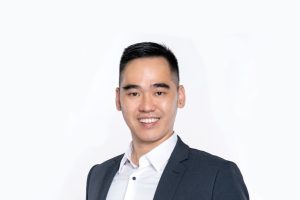
Since our last conversation with Tony Cheng in mid-2024, Merck Hong Kong has entered a new phase of consolidation and growth. The affiliate has strengthened its team, accelerated its adoption of AI, and deepened collaborations with the Hong Kong Science and Technology Parks. At the same time, Cheng continues to emphasise Hong Kong’s strategic importance as a dual gateway, bringing international innovation into China while helping Chinese biotech reach wider Asian and global markets.
Since taking on this leadership role, how has Merck Hong Kong evolved and what changes stand out most to you?
In the 16 months since our last conversation, I have witnessed a marked transformation within the organisation and the market. Over time, the team has stabilised and grown more confident, with a renewed sense of pride in our role within Hong Kong’s healthcare landscape. Our increased visibility, particularly through initiatives with the Hong Kong Science and Technology Parks Corporation (HKSTP), has reinforced the sense that Merck is not only a pharmaceutical player but also a science and technology company with strong life science and electronics divisions. This broader understanding of who we are has instilled greater confidence and energy across the affiliate.
This renewed momentum is further supported by developments in our pipeline. Partnerships with Abbisko Therapeutics (for pimicotinib) and Hengrui Pharma (for HRS-1167), along with our recent acquisition of SpringWorks Therapeutics in the United States, have generated significant excitement. For many colleagues, the prospect of new products entering the Hong Kong market is a tangible sign of progress and a reason to be optimistic about the future.
At the same time, the Greater Bay Area (GBA) remains central to our outlook. While there are still concerns in the market that closer integration with the GBA could dilute Hong Kong’s role, I see this as a new phase that requires fresh approaches. Despite the challenges, I believe the GBA will be an important growth driver for Hong Kong in the years ahead, offering opportunities that we are well positioned to seize.
How did you instil a culture in the Hong Kong affiliates that looks beyond immediate operations and embraces a longer-term vision?
For me, the foundation is optimism. If leaders themselves are not optimistic, the team will inevitably feel there is no future to work towards. Even when conditions are difficult, I remind colleagues that challenges come in cycles, and that a brighter phase will follow. It is therefore essential to consistently articulate what the future might look like, to help people visualise it, and to give them the tools to move in that direction.
Artificial intelligence has been one of the most important of these tools. At Merck Hong Kong we started to adopt AI last year, and we have continued to move faster than many other affiliates. Yet the true impact is not simply in using AI applications, but in embedding them as part of our culture, creating a shared language across the organisation. This is why we launched our AI Academy, known as MAX – Merck AI Xynapse– a programme that provides training for all employees. Through MAX, colleagues not only learn how to use AI tools but also begin to see how AI can enhance efficiency, expand creativity, and uncover opportunities that would otherwise remain hidden.
The benefits are already visible. As an example, in the past, marketers were expected to devise new strategies largely from experience and knowledge, which naturally limited the scope of their ideas. Now, with AI prompts, they can generate richer and more diverse strategies quickly, allowing them to explore possibilities that were previously out of reach. When they compare this with their peers in other pharmaceutical companies, it is clear that Merck is advancing at a much faster pace, reinforcing the perception that we are not only a pharmaceutical organisation but also a true science and technology company.
This progress has also been recognised externally. Earlier this year, CB Insights ranked Merck KGaA second in its 2025 Pharma AI Readiness Index, reflecting the Group’s strong global commitment to AI strategy, innovation, and digital transformation.
Why does Hong Kong remain relevant for Merck, necessitating having a separate affiliate, despite its relatively small market size and the strength of your mainland China operations?
It is an important question, and one I regularly put to my own team: if Hong Kong cannot demonstrate its value, then why should the Group maintain a full affiliate here? While our local sales are modest and any decline would not materially affect Merck globally, it is still our responsibility to ensure profitable growth and to highlight the wider contribution Hong Kong can make.
I see Hong Kong as a catalyst, particularly within the Greater Bay Area. The city’s strength lies in its role as a dual gateway. On one side, it can help innovative medicines and biotech products from China expand into ASEAN, APEC, and Belt and Road markets. On the other, it acts as an entry point for new medicines into China. This dual positioning makes Hong Kong strategically important not only for us locally but also for the wider Merck network.
Recent events illustrate this unique role. When the United States imposed higher tariffs on Chinese goods, many expected Hong Kong to follow Beijing’s lead. I argued that this would not happen, since doing so would diminish the city’s distinct value. In fact, the Hong Kong government chose not to implement tariffs, underlining its ability to maintain a differentiated position even while being part of China.
Challenges certainly remain. Many patients travel to mainland China for oncology treatment, largely because of cost to administrate these treatments in Hong Kong. Monthly treatment can exceed HKD 50,000, while the median income here is little more than HKD 20,000, making mainland options attractive for those paying out of pocket. Yet as incomes in China rise, I believe patients will increasingly look to Hong Kong not for lower prices but for the higher standard of service. Once they experience the difference, many are prepared to pay a premium.
Insurance dynamics also influence these decisions. Insurers often encourage patients to seek treatment in China, where claims are less costly. However, insured patients who have a choice usually prefer to remain in Hong Kong for reasons of quality and convenience. When an option exists, even at a higher cost, most patients would prefer to stay in Hong Kong. For those without insurance, China remains an important alternative, but ultimately what matters most is that patients have access to meaningful options.
How is Hong Kong’s medicines market developing, and which therapeutic areas are currently driving Merck’s growth?
The overall market is broadly tracking the economy, growing at around two to three percent annually, but the dynamics vary considerably by therapeutic area. A few years ago, oncology was the main growth driver; today, the private oncology market has contracted as many self-paid patients who are not covered by government opt to travel to mainland China for treatment.
What differentiates us is the breadth of our portfolio, which allows different areas to take the lead at different times. At present, growth hormone therapies and primary care are the strongest performers. Much of this momentum stems from the government’s Chronic Disease Co-Care (CDCC) Programme, introduced in late 2023, which subsidises screening and follow-up for conditions such as diabetes and hypertension. The programme has already increased patient flows into the system and raised awareness of chronic disease management, which in turn is driving demand for treatment. We are now seeing more patients with diabetes and hypertension presenting in hospitals and clinics, creating a noticeable shift in the market.
Therefore, chronic disease and primary care remain areas of strong growth.
What role do government support schemes such as the Samaritan Fund (SF) and the Community Care Fund (CCF) play in oncology medicines reimbursement?
The Samaritan Fund (SF) and the Community Care Fund (CCF) are central pillars of Hong Kong’s healthcare safety net. For us in the pharmaceutical industry, the primary objective is to see our medicines included in these schemes. This is because successful enlistment is the most significant step towards ensuring sustainable and equitable access for the patients who need them most. Our oncology products are already covered under the Samaritan Fund, which is an important achievement. As a result, our main challenges today lie in the private sector, where patients often prefer to seek care in China, largely to avoid the long waiting times they associate with local treatment. That is not something we can easily counterbalance.
In oncology, our products are mature, and in some cases new launches reach China before Hong Kong, which limits the GBA potential in the near term. The notable exception is our recent acquisition of SpringWorks Therapeutics, which brings promising assets that could allow us to leverage Hong Kong’s strategic position in the region more effectively and potentially do a launching here before Mainland.
What opportunities does EZMEKLY (nirogacestat) open up for Hong Kong and the wider mainland Chinese population based on Hong Kong 1+CPP approval scheme?
EZMEKLY, which was recently approved by the European Medicines Agency (EMA) for desmoid tumours, offers a distinctive opportunity for Hong Kong. Because no clinical trials have been conducted in China, the drug is unlikely to reach that market for at least five years. This creates a window for Hong Kong to act both as an access point for local patients and as a bridge into the GBA. If registered here, it could provide early treatment options while also paving the way for broader regional expansion.
Hong Kong’s 1+CPP pathway is particularly relevant. By allowing registration on the basis of a Certificate of Pharmaceutical Product supplemented with local or Asian data, it can significantly shorten timelines. I am keen to advocate for EZMEKLY’s early registration under this mechanism, as it would not only benefit patients in Hong Kong but could also accelerate access in China, where the patient population is vast.
Beyond the product itself, this illustrates how Hong Kong can reinforce its leadership role within the GBA. The city’s international orientation, coupled with advantages such as the widespread use of Cantonese across the region, positions it uniquely to guide collaboration. Other industries are already treating the GBA as an integrated cluster, and with supportive policy momentum, I believe pharma should do the same. Using Hong Kong to launch a product like EZMEKLY could serve as a strong example of how this model can work in practice.
From a regulatory standpoint, one CPP alone would not be enough; Hong Kong requires additional data. This does not necessarily mean a full clinical trial. Evidence could come from a local early access programme, which grants patients early access to innovative medicines while generating supportive data, or from a smaller local trial that would strengthen the case for eventual registration in China. SpringWorks Therapeutics, the company that developed EZMEKLY and was recently acquired by Merck, is still in the integration phase, but my hope is that we can move forward quickly in this direction.
Of course, this will require investment, but I firmly believe it is an investment worth making. Accelerating patient access by five to seven years in China could have a major impact. This is where Hong Kong’s true value lies: not simply as a small standalone market, but as a strategic launchpad for bringing innovative therapies into the region.
What is your perspective on Hong Kong’s ambition to become a primary reviewer for drug approvals by 2030, and what does this mean for Merck?
The government’s decision to set a 2030 target is significant, and while there was initial scepticism in the industry, we have since seen clear determination to make it happen. Officials have engaged with industry associations, held explanatory seminars, and even begun internal rehearsals within the Department of Health to prepare for this transition. These rehearsals have lengthened current timelines somewhat, but in my view, this is a worthwhile price to pay for building the necessary infrastructure for primary review.
The question that naturally arises, both within Merck and across the industry, is why companies would pursue primary review in a market of only seven million people. The answer is that Hong Kong’s importance is not defined by market size but by strategic value. Our KOLs are genuinely world-class, with influence that extends well beyond local practice to international guidelines. In the past, Hong Kong sometimes struggled to attract trials because other markets were larger commercially, but recently we have secured major studies precisely because of the credibility and authority of our KOLs.
What approach has you taken towards talent and building more diverse organisation?
When I became GM, I set out three priorities under the acronym SIT: Sales, Innovation, and Talent. The last of these is particularly important because for too long Hong Kong has been a comfortable environment where growth came easily. In the past, rising demand from mainland patients meant that sales increased almost automatically, even without major innovation. That era is behind us, and I have made it clear to my team that we now need to work harder, smarter, and more strategically to stay competitive.
To reinforce this shift, I have encouraged colleagues to engage more actively with the wider industry, such as through participation in the Hong Kong Association of the Pharmaceutical Industry (HKAPI). I have also brought in new talent from outside Hong Kong to challenge the status quo and bring fresh perspectives. One colleague from Taiwan, after five years with Merck’s global team in Germany, joined us last year, while a new product manager from Malaysia added valuable regional experience and language skills. We have also hired from outside pharma, including from finance, to introduce new ways of thinking. These additions remind our local team that past approaches are no longer sufficient and that adaptability is essential.
We can already feel the difference. New colleagues often observe that Merck operates at a faster pace than many industries, which inspires our people to raise their own performance. Even smaller initiatives, like bringing in an AI intern from Hong Kong University, have highlighted the need to keep learning and adapting in an increasingly competitive environment. As a result, morale is stronger, and there is a growing recognition that we can and must achieve more.
I also place strong emphasis on fostering an entrepreneurial mindset. Last year, we hired a sales representative who had previously co-founded an AI start-up. Although he applied for another role, his entrepreneurial spirit was so clear that I invited him to join as a sales rep. He has since thrived, showing how individuals without a scientific background can succeed in pharma today, particularly with AI tools enabling rapid knowledge-building.
What impact is your collaboration with the Hong Kong Science and Technology Parks having on your vision for innovation?
Our co-incubation programme with HKSTP focuses on digital health and AI-driven drug discovery. For Merck, it keeps us close to the latest technologies while inspiring our team with new ideas and approaches. For start-ups, we bring networks and expertise, helping them connect with hospitals and doctors. For the government, it supports Hong Kong’s ambition to establish itself as an innovation hub. It is, in many ways, a win-win-win arrangement.
The programme continues to expand. Most recently, an AI drug discovery start-up joined as an incubatee, reinforcing the value of this model. By working with such companies, we not only stay at the forefront of innovation but also expose our team to entrepreneurial speed and creativity. At the same time, we provide start-ups with access to stakeholders and industry knowledge that they would otherwise find difficult to obtain. Ultimately, innovation is critical to Hong Kong’s future, and through initiatives like this we can contribute to building the ecosystem while also strengthening our own affiliate.
As you look ahead to the remainder of 2025, what is the single most important outcome you hope to achieve for Merck Hong Kong this year?
If I had to choose one, it would be ensuring that both Merck globally and our wider stakeholders clearly understand the strategic importance of Hong Kong. Once that recognition is established, it naturally leads to greater confidence and resource allocation from the global organisation.
Equally, I hope people inside and outside Merck learn to fully leverage Hong Kong’s unique position and strengths, not only to reinforce the city’s role locally but also to create value across the broader region. Demonstrating and amplifying that uniqueness is, for me, the most important goal for 2025.