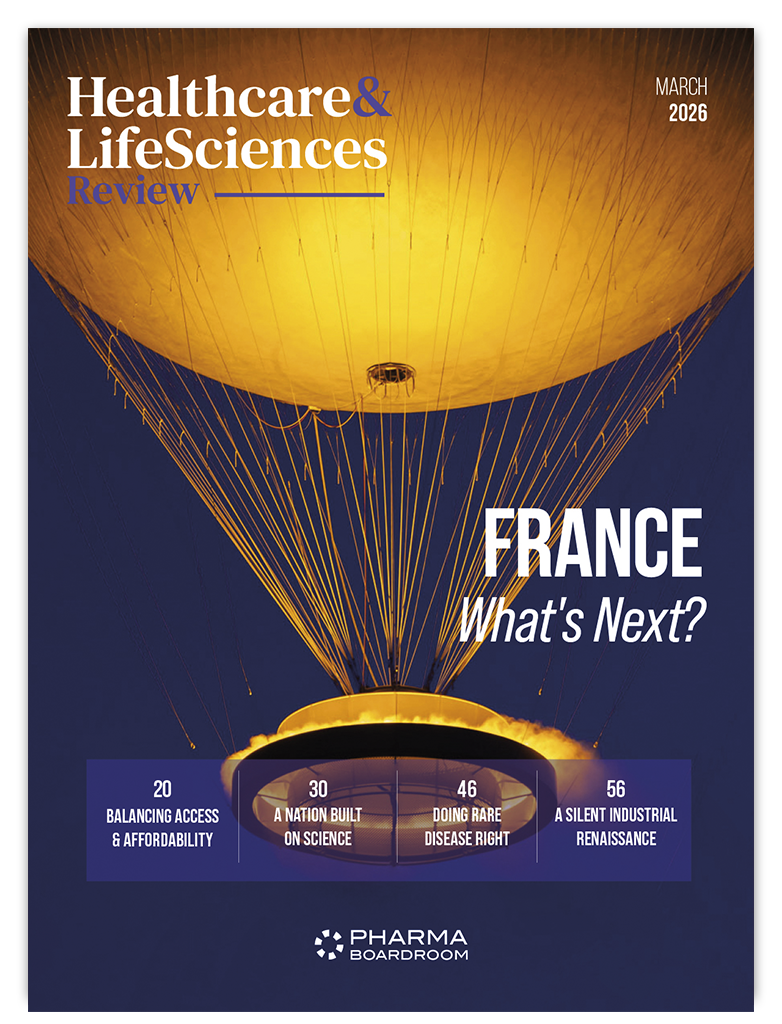
At the helm of EG Labo (STADA Group), Tiago Bartolomeu is steering one of France’s leading accessible medicine players through a period of renewal and ambition. With a clear focus on expanding access through generics, biosimilars, and consumer health, he reflects on the company’s growth strategy, its role as a trusted partner within France’s healthcare ecosystem, and the importance of authenticity and purpose in leadership.
What led you to join STADA, and what were your first impressions after taking on the role at EG Labo in France?
I already knew STADA quite well before joining, so there were no surprises when I arrived. It was a deliberate transition rather than a leap into the unknown. Over the years, I had met several of the company’s executives, including our CEO, Peter Goldschmidt, and other members of the senior executive committee. Their professionalism, combined with the clarity of STADA’s purpose and values, left a strong impression on me.
What drew me most was the company’s authenticity. Many organisations talk about values, but at STADA, they are genuinely lived. Agility, entrepreneurship, integrity, and the “One STADA” spirit are more than slogans; they guide how we operate every day. I was also inspired by our purpose of Caring for people’s health as a trusted partner and to create a tangible, positive impact on patients’ lives.
As a pharmacist by training, healthcare has always been part of who I am. My own motivation has always been to use the resources at my disposal to help patients and make healthcare systems more efficient. Working in generics enables me to reach a broad patient population, which aligns perfectly with that philosophy. And being part of a privately owned company on a growth trajectory adds another dimension of excitement and purpose to the role.
How do you assess EG Labo’s positioning and potential within the French market?
France represents a tremendous opportunity for us, and part of my decision to take on this position was the sense that there is still so much potential to be realised. While STADA is a multinational group, in France we operate under the EG Labo brand – as we do in Belgium and Italy – preserving a name with strong historical resonance among pharmacists and patients.
Our operations in France are built around three main pillars: generics, speciality medicines (mainly biosimilars), and consumer healthcare, which together account for nearly all our activity. Around 95% of our sales go through pharmacies, placing them at the very heart of our business model. These three categories are not only essential to patient care but also critical to the financial equilibrium of pharmacies, which depend heavily on them for their margins and sustainability.
We already benefit from an extensive and reliable portfolio, with one of the highest service levels in the industry. Product availability is central to our value proposition, as when a medicine is missing, treatment interruptions can have significant repercussions for both the patient and the healthcare system. Ensuring a consistent supply is therefore one of our top priorities.
EG Labo has a solid foundation in France, but the real challenge – and opportunity – lies in unlocking its full potential. Together with our team, we aim to build on these strong fundamentals and shape the next phase of growth.
How would you describe the current dynamics of the French market, particularly in terms of generic and biosimilar adoption, and where can progress be made?
There is still considerable room for expansion in both generics and biosimilars in France. In generics, the number of molecules listed in the répertoire des groupes génériques – the official register of medicines and their authorised equivalents – remains relatively limited compared to countries such as Germany. Broadening that list would allow a wider range of treatments to reach patients and significantly increase market penetration.
The same is true for biosimilars, where France still lags behind its European peers. Substitution rates remain among the lowest in Europe, meaning that originator biologics continue to dominate in several key therapeutic areas. A good example is adalimumab (Humira), which still holds the majority of the market despite around ten biosimilars already being available. Each time Humira is not substituted in the pharmacy, it represents a missed opportunity to reduce expenditure for the healthcare system and to widen patient access to essential treatments.
The third pillar, consumer healthcare, tells a different but equally promising story. France is one of the world’s most advanced and competitive consumer healthcare markets, home to many of the global leaders in areas such as dermatology and self-care. It is a market shaped by strong brands, discerning consumers, and an emphasis on quality, a space where healthcare and consumer goods converge. This combination continues to grow rapidly and presents significant long-term potential.
Across these three pillars – generics, biosimilars, and consumer healthcare – there remains a vast opportunity for us. In the first two, we are still catching up with other European markets; in the third, we are competing in a dynamic and fast-growing segment that continues to evolve year after year.
What are the key levers that could accelerate biosimilar adoption in France?
Education remains one of the most critical factors. Physicians and pharmacists need continuous support to build confidence in prescribing and dispensing biosimilars. There is little justification today for restricting prescriptions to originators like Humira when equally safe and effective biosimilars are available. The real challenge lies in shifting long-standing habits. Biosimilars are inherently more complex than traditional generics, as they target more advanced diseases and often serve patients with more intricate needs. This complexity can still make some pharmacists cautious, which is why it is essential that we, as EG Labo, play an active role in guiding this transition, ensuring that every healthcare professional understands the benefits it brings to patients, pharmacies, and the healthcare system as a whole.
The second lever involves stronger policy momentum. Regulatory and institutional support will be key to accelerating substitution. We have seen similar barriers before: when generics were first introduced in France twenty years ago, there was initial scepticism around equivalence, quality, and patient outcomes. It took about five years for generics to gain broad acceptance, but we cannot afford that same gradual trajectory today. Our healthcare systems are more sophisticated, and the financial pressures are far greater than they were two to three decades ago. Accelerating biosimilar adoption is therefore essential, not only to generate savings and improve access, but also to free up resources that can be reinvested in innovation and sustainable patient care.
France’s biosimilar substitution law has drawn attention across Europe. How do you assess its impact so far, and what makes this framework distinctive?
France is unique in allowing pharmacists to substitute certain biologic originator drugs with biosimilars directly at the pharmacy level. To my knowledge, this model exists only here and, in a different form, in the Nordic countries, which operate through tenders rather than pharmacy-based substitution. French pharmacists, therefore, occupy a distinctive position, and many governments across Europe are closely watching how this model evolves.
After three years of implementation, the results have been encouraging. The framework began with two molecules and has since broadened to cover more therapeutic areas. Pharmacists have, by and large, handled the transition very well, capturing the added value this model brings, especially for patients who can now collect their prescriptions from their local pharmacy rather than visiting a hospital. That may not be a major issue in Paris, but for those living in rural or remote areas, it makes a real difference. The maillage – the dense national network of French pharmacies – is a real strength, enhancing access and accelerating the substitution of originator products with biosimilars. Given such unique factors, this substitution model may not be applicable in other European countries.
Naturally, there are still some barriers to overcome. Certain long-standing habits persist, such as physicians blocking substitution when there is no clear clinical reason to do so. In several other European countries, these restrictions have already been lifted, leaving the decision to be made jointly by the healthcare professional and the patient. Of course, there are legitimate exceptions – for instance, a blind patient accustomed to a specific injection device – but most cases of non-substitution today stem from inertia rather than medical necessity.
Ultimately, every euro saved through biosimilar use can be reinvested into innovation. This is the role we see for ourselves at EG Labo: enabling broader patient access while helping health authorities free up resources to fund future advances. France’s model is both creative and pragmatic; it has proven effective so far, and I believe it offers a blueprint for other countries seeking to strike the right balance between access, sustainability, and innovation.
With price pressures and reimbursement constraints intensifying, how is EG Labo maintaining competitiveness while creating sustainable value for partners?
Price erosion has become a defining challenge for the generics industry, but we see it as an opportunity to evolve and strengthen our partnerships. When the recent regulatory and reimbursement changes began to reshape the market, we decided to act quickly rather than wait to see how events unfolded. We were among the first to engage openly with our partners, acknowledging that while the environment was shifting, we had the responsibility and the capability to help define the path forward.
Our first focus was the pharmacy network, and particularly the buying groups – structures that negotiate purchasing terms on behalf of independent pharmacies, adding valuable services and support – whose economic model had been built on assumptions that no longer held true. Stability and sustainability were paramount. We took it upon ourselves to support them in rethinking their financial framework and adapting to the new conditions. We immediately reached out to pharmacies across the country, reaffirming our commitment to stand by their side and make the necessary adjustments together. From there, we translated our words into action, refining our commercial offer, reshaping our portfolio, and preparing a series of launches that would bring renewed vitality to the market. Change can be disruptive, but it also presents a chance to reset expectations and establish a “new normal” built on transparency, agility, and shared growth.
Above all, the dedication of our teams has been essential in navigating this period. Their professionalism, responsiveness, and belief in our mission have allowed EG Labo to remain a reliable partner at a time when consistency matters most. Through clear communication, a robust pipeline, and close collaboration with pharmacies, we continue to strengthen our position and create value in an environment that, while demanding, remains full of opportunity.
Could you tell us more about EG Labo’s portfolio structure and the launches you are most excited about?
Our business still reflects our origins as a generics company, which continues to represent around 60% of total sales. The remaining 40% is evenly divided between speciality medicines (mainly biosimilars) and consumer healthcare. Naturally, the margin mix across these segments differs considerably; in France, generic prices are among the lowest in Europe, leaving limited room for manoeuvre, whereas biosimilars and consumer healthcare products provide a more balanced contribution.
From a market standpoint, we hold one of the broadest portfolios in France, covering roughly 83% of the répertoire des groupes génériques in value. This positions us solidly among the top three players regarding portfolio. We intend to maintain this strong footing by continuing to launch major molecules as patents expire, ensuring that our generics base remains comprehensive and relevant.
The main engines of growth, however, are biosimilars and consumer healthcare. In biosimilars, we currently hold the second broadest portfolio among generic companies in France, and are determined to reach number one in the near future. We are pursuing this ambition through a combination of internal development and partnerships with trusted external collaborators, expanding both our product reach and market depth.
On the consumer healthcare side, we are accelerating our acquisition strategy. One of the things I particularly value about STADA is the autonomy given to affiliates, which allows us to adapt our portfolio to the specific dynamics of each market. While there is a central business development team that identifies opportunities at the group level, we also pursue local initiatives in parallel. A recent example is Angi-Spray, a historic French brand we acquired from P&G Health France and will relaunch in December. We often describe such assets as “sleeping beauties,” once successful brands that have been overlooked but still hold significant potential. With the right commercial energy and investment, we can revive them and bring them back to relevance.
Our prospective new private equity owner, CapVest, has already pledged to leverage its “significant healthcare and consumer expertise to accelerate the development of the company” across global markets, and to “deploy significant new capital towards this objective”. This would strengthen our ability to invest further in acquisitions and to reinforce all three pillars – generics, biosimilars, and consumer healthcare – as we continue building one of the most complete and competitive portfolios in the French pharmaceutical landscape.
Supply security has become a European priority, especially under the EU Critical Medicines Act. How is EG Labo contributing to ensuring reliable access for patients in France?
We begin from a strong position when it comes to supply reliability. Our service level has consistently ranked among the highest in the industry, something we take great pride in and consider central to the value we deliver to our partners. Beyond performance metrics, this is also a matter of responsibility. When patients depend on one of our medicines, we have an obligation to ensure it remains available without interruption, and we treat that duty with the seriousness it deserves.
The French authorities share this concern. Their intent to guarantee continuous patient access to essential medicines comes from the right place. However, the way some of these measures are implemented, particularly the requirement to maintain two to four months of reserve stock, raises questions about economic sustainability. France already has the lowest generic prices in Europe, and the distribution network makes it easy for products sourced here to be exported to higher-priced markets. Balancing affordability with the financial realities of supply security is therefore a delicate exercise.
Across the industry, there is broad agreement on the need to maintain a stable supply, and pharmaceutical companies are already legally bound to do so. If we fail to meet these obligations, the penalties are substantial. So even before these new requirements, there was already a clear set of financial and ethical incentives ensuring that we, as an industry, fulfil our responsibility to patients.
That said, adding mandatory stock levels on top of existing commitments creates significant strain on working capital, particularly for affiliates like ours that already maintain very high service levels. We now find ourselves operating in a paradox where we must hold some of the largest inventories in Europe while working with the lowest margins. The intent is to mitigate shortages among less reliable suppliers, yet the rule applies to all, and as I often say, when the sun rises, it rises for everyone.
We fully comply with the requirements, of course, but this situation highlights a broader policy question: how can we strengthen resilience and guarantee access without undermining the economic balance needed to sustain it? For us at EG Labo, the focus remains on operational excellence, ensuring we continue to deliver reliably, support the national health system, and stand as a trusted partner to French pharmacies and patients alike.
How would you like EG Labo to be perceived by its key stakeholders in France?
Above all, we want to be regarded as a trusted partner by the authorities, pharmacists, physicians, buying groups, distributors, and ultimately by patients. Trust is the cornerstone of everything we do. We are clear about who we are, we honour our commitments, and we take our mission with great seriousness.
Equally, we aim to be recognised as an innovative partner that works alongside all stakeholders to achieve shared objectives. Healthcare is a collective endeavour, and its success relies on a seamless chain of trust, one that begins when a patient seeks care from a physician, continues through the nurse administering treatment, the distributor ensuring supply, and the pharmacist delivering the medicine. Every link in that chain depends on the others, and the strength of the system rests on that mutual reliability.
At EG Labo, we understand our role within this continuum. We strive to be a dependable and forward-thinking link, one that not only fulfils its responsibilities but also adds value through creativity and engagement. Whether by educating healthcare professionals, supporting patients more directly, or developing new ways to improve outcomes, our goal is to contribute meaningfully to people’s well-being. Ultimately, everything begins and ends with the patient, and what drives us is the opportunity to help give more time and a better time to life.
You have a diverse career background across consulting, market intelligence, and entrepreneurship. How does that shape your leadership style and the culture you want to build within EG Labo?
Throughout my career, I have been fortunate to lead what I call high-performance teams, not only in terms of achieving objectives, but in creating an environment where the collective output is far greater than the sum of its parts. At EG Labo, this is particularly important. We are not the largest player in the market, which means every individual must contribute with agility, efficiency, and creativity. It is not about working longer hours but about working smarter, being more adaptive and innovative in how we operate.
Diversity plays a central role in this vision. Having worked across different functions and geographies, I have seen firsthand how diversity of thought, background, and experience fuels innovation. In the French context, there is a wealth of strengths to build upon; we can be as decisive as the Germans, as flexible as the Spanish, and as communicative as the Italians. France sits at a cultural crossroads, and that mix gives us an edge if we know how to harness it effectively.
The journey ahead is ambitious. I do not believe we yet occupy our rightful place in the market, but we are moving purposefully in that direction. Change inevitably brings challenge and tension, yet it also brings progress, creativity, and a sense of fulfilment in pursuing a common mission. I feel the organisation is aligned and ready to take on that challenge together.
Looking ahead, what excites you most about EG Labo’s next phase of growth and the upcoming product launches?
There is much to look forward to. In consumer healthcare, we are preparing to relaunch Angi-Spray, a historic French brand we recently acquired, starting in December. In biosimilars, we are planning between two and four new launches next year, depending on patent developments and partnership agreements, with our pipeline including molecules such as golimumab, denosumab, and tocilizumab.
On the generics side, apixaban – an oral anticoagulant used to prevent blood clots and strokes – will be one of the most significant losses of exclusivity (LOE) in 2026. Beyond these, we are continuing to identify opportunities to fill portfolio gaps and strengthen our biosimilars offering, even beyond the immediate wave of new products.
The pace of launches at EG Labo is remarkable. Drawing on my experience in the sector, I can confidently say we are among the fastest in the industry when it comes to bringing new products to market, across generics, biosimilars, and consumer healthcare. Our team is highly capable, but as our ambitions expand, we will certainly need to grow. The road ahead is exciting, and we are fully committed to sustaining this momentum and continuing to position ourselves as a trusted partner for patients and healthcare professionals alike.