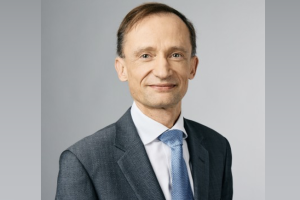
Thomas Courbe, Director General for Enterprise at the French Ministry of Economy and Finance, has led France’s industrial transformation since 2019. He oversees, within the EURO 54 billion France 2030 plan, reforms in manufacturing, decarbonisation, and digital innovation. Under his leadership, France has become a top destination for foreign investment, expanded biotherapy production targets threefold, and launched Europe’s most comprehensive AI strategy in healthcare and industry.
Could you provide an overview of your current strategic priorities and how they have evolved since our last discussion several years ago?
The fundamental priorities that guide our strategic direction remain consistent with the initiatives we launched in 2019, even though they have been significantly reinforced by the findings of the Draghi report on European competitiveness. Our approach centres on enhancing manufacturing competitiveness, accelerating industrial innovation, and maintaining France’s leading position in attracting international investments.
We have implemented substantial fiscal reforms to strengthen our competitive position. Most notably, we have reduced production taxes by EURO 14 billion annually, specifically targeting manufacturing activities. This represents a fundamental shift in our approach to industrial taxation. Additionally, we have significantly reduced corporate income tax rates while maintaining the labour cost reductions introduced in 2019, resulting in French manufacturing labour costs currently below those of Germany.
These reforms are complemented by France 2030, our most ambitious investment programme to date—EURO 54 billion focused on innovation and industrialisation. What makes this initiative unique is its explicit integration of innovation with industrial deployment, addressing the issue of a historical gap in European industrial policy. This comprehensive approach operates within a broader European framework of industrial policy ongoing since 2019, including specific financing mechanisms for innovation industrialisation through our Important Projects of Common European Interest (IPCEIs).
How do you measure the effectiveness of these initiatives, and what tangible results have you observed?
The most compelling evidence of our strategy’s effectiveness is France’s sustained position as the most attractive destination for foreign investment in Europe, including the UK. This achievement reflects the cumulative impact of our comprehensive policy framework.
Within our France 2030 programme, the Health Innovation 2030 plan has exceeded all initial projections. We estimate that we will produce 60 biomedicines in France by 2030, reflecting the dynamic response from industry. 800 therapeutic candidates are currently in various stages of development and testing, with 42 biotherapy production projects already receiving active support. Our strategic focus remains concentrated on oncology, rare diseases, and neurology.
Concerning digital transformation, we are training 230,000 professionals and students in digital technologies specifically for the healthcare sector by 2027. Additionally, 30 university hospitals have received infrastructure support to strengthen their real-world data capabilities, including comprehensive health data hubs and operational digital infrastructure.
Our decarbonisation programme demonstrates similar progress. We have established a specialised one-stop shop for healthcare industries—both pharmaceutical and medical device manufacturers—to facilitate their decarbonisation processes. This includes substantial financing for non-profitable decarbonisation investments, ensuring that sustainability initiatives do not compromise competitive positioning.
How do you balance the imperative for rapid decarbonisation with maintaining industrial competitiveness?
This represents one of our most complex strategic challenges, and our approach has evolved to address this tension more effectively. Our comprehensive analysis of industrial decarbonisation trajectories reveals that approximately one-third of the investments required to achieve our 2030 CO2 reduction objectives are profitable through energy efficiency gains. Most companies have already implemented these measures, often with minimal public support.
However, the remaining two-thirds of decarbonisation investments are not commercially viable without public intervention. This creates the exact competitiveness concern you raise. Our response is to provide targeted financial support that neutralises the competitive issue of these investments, ensuring that companies investing in decarbonisation do not suffer competitive disadvantages. The European Commission allows this financial support in as much as it compensates for non-profitable investments rather than distorting market competition.
We are simultaneously leveraging Europe’s leadership in low-carbon manufacturing as a competitive advantage. We are implementing this differentiation through multiple EU regulations, including the Net Zero Industry Act, which allows member states to consider environmental content in public procurement decisions. The Carbon Border Adjustment Mechanism (CBAM) exemplifies this balanced approach, creating a level playing field while Europe accelerates its decarbonisation ahead of other major economies.
Concerning the healthcare sector, medicines produced in Europe generate, on average, half the carbon emissions of equivalent products manufactured in Asia. France’s emissions profile is even more favourable. In France we developed a carbon footprint measurement methodology, that will allow European manufacturers to have appropriate recognition for their environmental investments.
Given your oversight of multiple industries, how strategically important is the healthcare sector within your broader industrial policy framework?
The healthcare sector represents one of our most strategically significant industries, both from an economic and a sovereignty perspective. The sector encompasses 200,000 jobs across 3,100 companies engaged in research and development or manufacturing activities, spanning pharmaceutical, medical device, and digital health segments.
France has developed a notably dynamic health technology start-up ecosystem, raising EURO 2.3 billion in 2023 alone. Our medical device sector ranks among Europe’s strongest, while our biomanufacturing capabilities have expanded substantially. Digital health has evolved across both our technology start-up ecosystem and healthcare system adoption of digital solutions and data analytics.
Beyond economic considerations, healthcare was specifically designated as a strategic autonomous sector during the Versailles Summit in March 2022, under the French EU presidency. This recognition illustrates our commitment to reduce dependencies while strengthening both innovation capacity and European manufacturing capabilities.
Our strategic approach to mature pharmaceuticals exemplifies this commitment. We have identified 193 critical medicines that combine healthcare system criticality with supply chain vulnerability. To this day, more than 40 critical medicines —prioritised by strategic importance—are concerned by projects aiming at increasing their production capacities. This initiative addresses both immediate supply security and long-term strategic autonomy objectives.
What additional elements of your innovation strategy should we understand to appreciate the full scope of your healthcare transformation agenda?
Two critical components deserve particular attention. First, we are developing flexible messenger RNA vaccine production capabilities, incorporating lessons learned from the COVID-19 pandemic. This represents more than pandemic preparedness—it provides flexible production capacity that can rapidly adapt to future pandemic requirements while serving as a foundation for broader therapeutic applications.
Second, we are implementing a comprehensive digital twins initiative focused on creating advanced virtual models of human organs. This program involves all stakeholders—companies developing digital platforms as well as new medicines, healthcare providers, and hospitals – and represents a fundamental shift in how we approach healthcare innovation. By enabling organ-level simulation and predictive modelling, it paves the way for improved personalized care across the entire value chain.
Our data strategy extends from hospital-based health data hubs to national-level infrastructure. We are encouraging implementation of artificial intelligence solutions throughout the healthcare system, from hospitals to private practice physicians. French radiologists have been early adopters of AI technologies, which are now fuelling general practice, particularly for administrative burden reduction and enhanced patient relationship management.
The regulatory framework supporting these initiatives includes our AI Act implementation, supported by two specialised entities: PEREN, which provides technical expertise on algorithms and data sciences to regulatory authorities, and INESIA, our AI Safety Institute, which addresses global AI safety concerns through international collaboration.
France appears committed to leading in AI adoption, yet European companies generally lag in AI integration. What obstacles must be overcome to achieve this leadership position?
Our fundamental position is that AI represents a transformative opportunity for competitiveness and innovation across all company sizes and sectors. To accelerate adoption, we are addressing the complete value chain systematically.
On the supply side, EURO 109 billion in AI-dedicated data centres have been committed during the AI Summit by private investors to ensure adequate computing capacity in France. While global leaders dominate AI solutions, we recognise that sovereignty considerations will drive demand for European alternatives. Beyond Mistral AI, France hosts 70 companies developing AI models, creating a rich ecosystem of specialised solutions.
Healthcare presents particularly compelling use cases. French companies have developed highly effective tools for physician practice management, including automated consultation report generation, medical file updates, and practitioner correspondence. These dedicated solutions address specific professional requirements that general AI platforms cannot serve as effectively.
On the demand side, our priority is building confidence through clear regulatory frameworks. The AI Act provides essential clarity on responsibility allocation when using AI systems. We are working hard at EU level to make sure that, rather than constraining innovation, this regulation serves as an enabler by providing the confidence companies require for adoption.
Most importantly, we focus on demonstrating qualified use cases rather than providing financial incentives. AI solutions typically offer strong returns on investment, unlike decarbonisation investments. Our approach involves cataloguing demonstrated use cases where solutions have proven effectiveness, including prerequisite data management and employee training requirements. This qualified marketplace approach accelerates adoption by reducing implementation uncertainty.
Looking toward 2025-2027, what are your primary strategic objectives, and what message would you convey to the international life sciences community?
Our immediate priority is delivering the ambitious targets we have established by 2030. This includes critical medicine relocation, comprehensive decarbonisation, innovation acceleration, and biotherapy production scaling. Implementation excellence remains paramount.
At the European level, both the Critical Medicines Act and the Biotech Act represent crucial levers for enhancing healthcare industry support. These regulations will provide positive differentiation for European production and streamline regulatory frameworks, creating genuinely pro-business enabling environments.
To the international life sciences community, I would emphasise our comprehensive, value-chain approach to sector development. Our commitment extends from university laboratories—supported through dedicated France 2030 funding—through technology transfer to start-ups and established companies, ultimately reaching practitioners in hospitals and private practice with tools that enhance their clinical effectiveness.
This comprehensive approach, proven by our continued ranking as Europe’s most attractive investment destination, demonstrates consistent results. The investment announcements at each and every “ChooseFrance” event span our strategic priorities: biotherapies, critical medicines, medical devices, and digital health. These outcomes reflect our systematic effort to create Europe’s most competitive environment for healthcare industry investment.
Our conviction grows stronger that a dynamic, robust healthcare industrial sector is fundamental to France’s overall health system strength. This determination, more resolute than ever, drives our continued commitment to this strategic direction. The healthcare sector’s industrial vitality directly supports our broader healthcare system objectives, creating a virtuous cycle that benefits both economic competitiveness and public health outcomes.