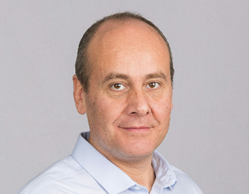
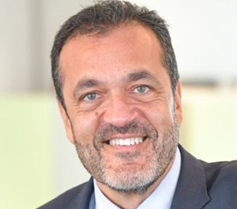
Erick Lelouche has served as President of Lyonbiopôle since February 2025, bringing more than 35 years of experience in the pharmaceutical industry across Pfizer and Boehringer Ingelheim, spanning human and animal health in France, Germany, and the US. Together with General Manager Teddy Breyton, whose background lies in regional economic development, he now leads France’s premier life sciences industrial cluster, representing 250 members – primarily SMEs and biotechs – across the Auvergne–Rhône-Alpes region. The region today employs more pharmaceutical professionals than any other in France.
Could you start by briefly introducing yourselves and explaining what led you to Lyonbiopôle?
Erick Lelouche: I am a veterinarian by training, although I have dedicated most of my career to the pharmaceutical industry. I spent many years with Pfizer Animal Health in France and later in New York, followed by senior roles at Boehringer Ingelheim in both animal and human health, working between France and Germany over 23 years. My final position was President of the Boehringer Ingelheim Group in France, overseeing all activities and roughly 2,300 employees. In October 2023, I retired to focus on the missions I genuinely wished to contribute to.
My arrival in Lyon was never pre-ordained. I came following Boehringer’s acquisition of Merial, a major animal health company headquartered in the city. Two years later, I assumed leadership of the Boehringer France Group. Lyonbiopôle is now one of my main commitments. Having served on its board as a Boehringer representative, I already knew the ecosystem well, valued its strengths, and saw the impact it could have. That familiarity, combined with my strong attachment to Lyon and the region, made it natural for me to continue supporting an ecosystem that has given me so much.
Teddy Breyton: I joined Lyonbiopôle only a few months before Erick took office, in November 2024. My career has been rooted in economic development, with a strong focus on the Lyon metropolitan region. Life sciences are one of Lyon’s industrial strengths, and when one dedicates a career to territorial development, one becomes deeply embedded in this ecosystem.
Two figures illustrate this strategic importance. The region accounts for approximately 20% of employment in France’s pharmaceutical industry, placing it ahead of both Normandy and the Paris region – a position strengthened by the addition of Auvergne. It also concentrates around 30% of French employment in medical equipment and technologies, evidencing a strong industrial fabric. Combined with France’s second-largest academic and research hub, split between Lyon and Grenoble, and four university hospitals serving the region, the foundations are exceptionally robust.
What is Lyonbiopôle’s mission, and what are your priorities today?
Erick Lelouche: Our mission remains unchanged: to act as a catalyst for health innovation across the region. This involves connecting organisations, facilitating collaboration, animating the network, and helping people identify complementary strengths and opportunities.
We support innovation through specialised technical groups that help prepare and label projects, which typically go on to seek funding elsewhere. This requires strong scientific and technical dossiers. Lyonbiopôle brings expertise that enables teams unaccustomed to these processes to prepare high-quality submissions, thereby maximising their chances of success.
Beyond this, we provide economic and financial support to companies, particularly through our acceleration programme, which equips young enterprises with essential capabilities that extend well beyond scientific and technical excellence.
In short, our purpose is to drive innovation, strengthen entrepreneurship, support financing pathways, and maintain an active and cohesive network.
Teddy Breyton: This region has an exceptionally dynamic entrepreneurial base. One of our challenges is ensuring that this energy translates into successful market access for innovative health products. Approximately 60% of our members are based in Lyon, although our remit genuinely spans the entire region – Grenoble, Saint-Étienne, and Clermont-Ferrand included. Ours is a regional, not local, responsibility. We complement Lyon’s critical mass with the scientific and technological strengths of Grenoble to form a coherent whole.
Turning to biotechs and start-ups, how do you address the challenges of progressing promising technologies to market?
Erick Lelouche: Of our 250 members, around 200 are SMEs. They are the heart of our mission. The largest companies do not necessarily need our support; they have internal teams, and if anything, they often support us with resources. Our work concentrates on ensuring that small, innovative companies can develop their ideas effectively.
Bringing an innovation from concept to market typically requires a decade or more and demands substantial financial investment – often many millions, sometimes tens of millions of euros. The support ecosystem is therefore fundamental. Our role is to prevent promising companies from falling into the so-called “valley of death”, by providing a combination of scientific and technical support, entrepreneurial guidance, financing advice, and strong network connectivity.
Large companies remain deeply interested in this ecosystem because we help identify emerging gems. Those that succeed may eventually be acquired by major groups seeking to further develop their innovations.
Teddy Breyton: Recent success stories illustrate the region’s potential. Mablink, created from research at the University of Lyon, was acquired by Eli Lilly. Amolyt Pharma, which reached Phase II and III development, was acquired by AstraZeneca in one of the most significant recent biotech transactions in France.
Today we see new emerging leaders such as MaaT Pharma and Osivax – companies with which we have long-standing relationships and which we continue to support closely as they scale.
One of Lyon’s advantages over Paris is visibility. Paris is dense and highly competitive, making it harder for young companies to stand out. Lyon’s ecosystem has the right scale: multidisciplinary, robust, and accessible. A company can become visible here far more quickly, and that visibility often extends naturally to Paris as well.
For an international audience, how would you describe the attractiveness and domain strengths of the region?
Erick Lelouche: Lyonbiopôle was created 20 years ago with a focus on infectious diseases. This built upon long-standing regional strengths in infectiology. From that foundation, we expanded into oncology and later neurology. Today, the region hosts a comprehensive range of expertise across medtech, biotech, Big Pharma, and digital health.
We are frequently asked whether we intend to specialise further. The truth is that we remain anchored in our historical domains – infectious diseases, oncology, and neurology – but if a small biotech were to emerge tomorrow with breakthrough innovation in a field where the region has little presence, we would support it fully. Strengths emerge where innovation occurs, and our role is to help such innovations flourish.
The region is underpinned by a strong academic network, leading research institutes, major industrial players, and excellent clinical capacity, supported by one of France’s most significant hospital infrastructures. We also have a renowned veterinary school – a subject especially close to me – which reinforces our ability to act credibly on One Health issues.
This heritage is not coincidental. Lyon recently hosted the “One Sustainable Health for All” congress, and the upcoming One Health Summit in April will take place here with the President of the Republic. The WHO Academy is based in Lyon, as is the International Agency for Research on Cancer. These are clear signals of Lyon’s established leadership in global health.
Lyon was also the site of the world’s first veterinary school. The historic interplay between human and animal health has been strong for centuries. Foundational innovations, including the rabies vaccine, emerged from collaborations between veterinarians and biologists. Charles Mérieux was one of the early advocates of the One Health vision, declaring decades ago that no meaningful boundary existed between human and veterinary medicine. This is not our sole focus today, but it is a defining strength that we intend to develop further.
Most recently, France’s new BioCluster for Infectious Diseases was established in Lyon, driven by lessons from the COVID-19 crisis and the need to prepare for future pandemics. It focuses on viral, respiratory, and infectious diseases through an integrated One Health lens.
Given this strong foundation, how do you approach cross-border collaboration?
Erick Lelouche: One principle is essential: openness. Lyon is already a major cluster in France and Europe, but we must continue to act as such. I am convinced that even the strongest European clusters cannot generate sufficient momentum alone, particularly when situated between the US and China. Lyonbiopôle cannot, on its own, match the scale of American or Chinese innovation ecosystems.
Only through close collaboration between clusters can we achieve a comparable critical mass. Too often, clusters are discussed in terms of competition. I believe this framing is misguided. The real issue is collaboration. If one cluster excels in a particular field, then we should work with them, share our strengths, and build reciprocity. In the current geopolitical climate, this spirit of cooperation is more important than ever.
Teddy Breyton: International connections have long been part of our DNA, although today’s geopolitical environment can sometimes complicate them. Our presence in the USA remains active through the Bio International Conventions, where we regularly support companies, particularly smaller ones. The US market remains the reference market for rapid returns on high-risk, early-stage investments. Our challenge is to ensure that emerging companies can access this market as early as possible. In practical terms, this means maintaining a strong presence in Japan and the United States through major trade fairs and missions.
In Europe, we participate in major events such as the Düsseldorf Medica exhibition, which aligns with our substantial regional medtech base. This includes developments in surgical robotics – an area made possible by the region’s industrial heritage in precision mechanics and automation, and one in which we work closely with our colleagues in Grenoble and St-Etienne.
We are also part of a European consortium, NAMWISE, which aims to reduce animal use in preclinical research. This reflects the direction of European public policy and raises complex regulatory questions for the pharmaceutical industry. Our partners include organisations in Birmingham, Austria, and the Netherlands. The project is particularly relevant because organoids and organs-on-chips are rapidly developing fields in which the region has strong assets, combining Lyon’s pharmaceutical expertise with Grenoble’s micro- and nano-technology capabilities. A company such as NETRI exemplifies this dynamic. At the same time, the region hosts a wide range of preclinical actors, including Charles River and Genoway, as well as numerous animal facilities. There is therefore a significant industrial stake in supporting this transition, which will unfold over the next decade or more.
Europe’s comparative weakness remains its fragmented market, especially when measured against the single US health market. As long as Europe remains divided, we shall find ourselves squeezed between two giants. This is why clusters such as ours must promote stronger European alignment.
How is your cluster perceived internationally in terms of attractiveness and competitiveness?
Erick Lelouche: In Germany, BioMindz recently hosted a meeting with us in order for us to know each other better and potentially collaborate. They view Lyonbiopôle as a successful and mature cluster with nearly 20 years of continuity, whereas they are at an earlier stage. They benefited from strong momentum during the COVID-19 period with BioNTech, but they admire what we have built.
The French scientific image remains strong globally. We recently hosted a Japanese delegation focused on oncology, who came with very clear objectives. Our reputation in clinical development is also excellent. We must capitalise on this, potentially in partnership with Paris. A Paris–Lyon axis in oncology could be extremely powerful. The same applies to infectious diseases, where Lyonbiopôle works closely with the “Institut Pasteur”.
Does the strength of the regional ecosystem help attract and retain the talent required for sustained growth?
Erick Lelouche: This is a nuanced question, because national discourse often suggests that talent is concentrated in Paris. This region has a deep reservoir of highly qualified professionals and an ecosystem that continually develops new expertise. The quality of life here is also decisive. Lyon offers a balance, accessibility, and environment that many professionals now prioritise. It is a compelling alternative to Paris.
We have exceptionally rich academic, research, and industrial sectors. These attract talent. However, certain professions – production technicians, laboratory technicians, and industrial operators – are experiencing national shortages. Because we host many major companies, competition for these roles can be intense, and firms may recruit from one another. This is why our partnerships with universities and specialised schools are critical for ensuring a stable talent pipeline.
Teddy Breyton: We recently organised an event dedicated to bioproduction technological and industrial issues, and observed a significant need to attract young graduates into industrial careers. Life sciences remain part of ithe ndustry, and we must continue convincing students and families that this sector offers strong long-term prospects.
The region possesses major structural advantages, particularly its large and diverse student population. Lyon hosts leading university centres, an important faculty of pharmacy, a renowned veterinary school, and a dense network of engineering institutions. INSA, Centrale, and various specialist schools form an engineering cluster that, combined with institutions in Grenoble, arguably places our region among France’s foremost sources of engineering talent. This provides a continuous flow of well-trained graduates for employers.
These strengths coexist with broader national challenges. This year marks the first decline in the number of students entering higher education due to demographic shifts, which will inevitably affect talent supply. In addition, our proximity to Switzerland presents a competitiveness challenge, as Swiss employers can be highly attractive for our industry’s workforce. Retaining talent requires constant attention.
Looking ahead to 2026–2027, what are the central objectives and ambitions guiding Lyonbiopôle’s next phase of development
Erick Lelouche: We are in the process of defining our plan for the coming years. Cohesion and methodological clarity are essential if the cluster is to remain effective, and our members must be active contributors in shaping their own future. We have consulted widely across the ecosystem, gathered extensive feedback, and initiated a series of workshops. From this work, eight strategic priorities have emerged, spanning clinical innovation and public–private collaboration, the strengthening of entrepreneurship and innovation financing, improved access to dedicated laboratories for biotechs and start-ups, the deepening of international engagement, more structured inter-regional and European cooperation, the development of data-driven and artificial intelligence capabilities, the decarbonisation of health, and advances in industrialisation and broader regional attractivity.
Not all of these can be tackled simultaneously, and prioritisation is crucial. For me, two areas stand out as immediate imperatives. The first is financing. A considerable number of biotechs and start-ups with genuinely promising technologies now face the possibility of closure simply because they cannot secure sufficient funding. This situation is visible across several therapeutic domains, including antimicrobial resistance. We must therefore determine how best to support these companies, create more fluid financing pathways, and reinforce the ecosystem’s overall resilience.
The second concerns laboratory infrastructure. For many years, Lyonbiopôle offered high-level facilities – up to BSL-2 or even BSL-3 facilities – through its Innovation Centre, providing start-ups that lacked their own resources with access to essential early-stage research environments. These laboratories were a major asset, but they no longer exist following the demolition of the building that housed them. In my view, reinstating such facilities within Lyonbiopôle is a matter of strategic importance, or at the very least one that warrants serious consideration. I am strongly in favour of this direction, because high-quality laboratory infrastructure would support emerging companies, strengthen the ecosystem, accelerate innovation, and ultimately serve the interests of France and Europe as a whole.
Teddy Breyton: Preserving dynamism and robustness is crucial, particularly as global competition intensifies. At the same time, major technological shifts – especially data and artificial intelligence – require careful stewardship. The region already has excellent companies emerging in these fields, and we must collectively ensure that we master this transition. Sustainability is another area of structural change, illustrated by promising projects in biomaterials for medical use.