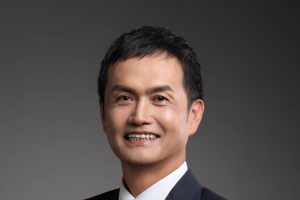
Taiwan, an early international market for Kyowa Kirin, now serves as a strategic hub within a Korea-Taiwan-Australia cluster. With a lean team, close government engagement, and clinical trial initiatives, Taiwan General Manager Tatsuru Iwamoto outlines his affiliate’s portfolio prioritisation, collaboration, and life-changing value delivery while leveraging Taiwan’s policy strengths and regional expertise.
To start, could you introduce yourself, your journey within Kyowa Kirin, and how the company’s early expansion into Taiwan fits into that story?
Kyowa Kirin is a Japanese pharmaceutical company now operating in more over 50 markets worldwide with 72 percent of sales coming from overseas. We employ approximately 6,000 people globally, and Taiwan has been part of our international footprint since 1991, making it one of our earlier overseas expansions.
I have been with the organisation for over 30 years, having joined in 1994 when it was still Kirin Brewery’s pharmaceutical division. I began my career in sales in Japan. A pivotal moment came in 2008 with the merger between Kyowa Hakko and Kirin Pharma, which formed Kyowa Hakko Kirin(currently Kyowa Kirin). That merger marked a profound cultural shift. Japanese organisations can be quite homogeneous and cautious about change, but the merger introduced real cultural diversity, which I found both challenging and energising.
In 2013, I moved to headquarters, representing a major transition from field sales into broader management and portfolio strategy responsibilities. I oversaw product strategy and indication expansion, including our long-standing collaboration with Amgen, which dates back to the 1990s. At the time, Amgen had exceptional scientific talent but limited commercial resources, while Kirin Brewery, still closely linked to a brewery business, had strong commercial capabilities and financial strength in Japan. The partnership was structured very clearly: Amgen focused on the US and Europe, while Kirin led development and commercialisation across Asia. It remains a defining example of how we approach global collaboration and regional responsibility.
Kyowa Kirin is currently one of the leading Japanese pharmaceutical companies in the Taiwanese pharma market. What are the key growth drivers in this market, and how does Taiwan fit within your global strategy and recent organisational restructuring?
Nephrology was the primary growth driver in Taiwan and accounts for almost half of our business. Our largest product addresses anaemia in patients with renal failure by supporting red blood cell production and maintaining haemoglobin at target levels. This strong foundation provides stability while we evolve our broader portfolio.
Globally, Kyowa Kirin’s strategy is anchored in our vision of creating life-changing value. Last year, we undertook a significant restructuring to sharpen that focus. Historically, the organisation was structured around broad therapeutic areas across different regions. We have since streamlined our priorities into three core areas: Bone & Mineral Disorders, haemato-oncology, and rare diseases, with a particular emphasis on rare diseases.
Following Kyowa Kirin’s Asia-Pacific restructuring, how has the positioning and role of the Taiwan affiliate evolved?
In Taiwan, our strategic transformation is not simply an organisational adjustment; it represents an upgrade to a more focused and purpose-driven operating model. We have reallocated our resources toward areas of high unmet medical need, particularly rare diseases, ensuring that every investment meaningfully amplifies patient impact and supports the delivery of truly life-changing innovations.
To achieve this, we have adopted a more flexible and efficient go-to-market approach. Non-core activities for Kyowa Kirin’s product are entrusted to well-established local partners, allowing our core team for our strategic products to concentrate its expertise on critical priorities such as market access, medical strategy, and disease awareness initiatives.
For Kyowa Kirin, this transformation is a strategic evolution. It enables us to operate with greater agility and precision—maintaining continuity of care for existing patients while strengthening our ability to respond to the needs of the rare disease community. As a result, our role in Taiwan is evolving from that of a traditional market operator to a key strategic partner contributing to the advancement of the rare disease care ecosystem.
How would you assess Taiwan’s market access and reimbursement environment for rare diseases, and how important is this policy framework to Kyowa Kirin’s long-term vision?
Taiwan offers a very constructive healthcare system environment for rare diseases. While market access and reimbursement require highly specialised expertise and close, ongoing engagement with government, Taiwan stands out for its openness and structured dialogue. Despite our limited local resources and a focused portfolio currently centred on therapies for rare bone diseases, we benefit from strong communication channels with policymakers and payers. Taiwan is one of the few markets with a dedicated rare disease budget, which reflects a clear policy commitment. Since joining as General Manager in 2023, I have been impressed by the quality of government engagement. Through my roles at IRPMA and as Chair of JCCI, we maintain regular, transparent dialogue with senior officials at MOHW and NHI, including formal meetings twice a year. I consistently report to headquarters that Taiwan presents positive long-term prospects, particularly as it faces challenges similar to Japan’s ageing population and is keen to learn from Japan’s experience. This policy environment makes Taiwan strategically important for supporting future launches and our 2030 vision.
How does your membership in the Japanese Chamber of Commerce and Industry enhance Kyowa Kirin’s presence and reputation in Taiwan?
This is a frequent topic within JCCI. The most important element is coordinated policy implementation. Rather than acting as individual companies, we build collective influence through JCCI to engage more effectively with policymakers. Another key aspect is networking. In Japan, pharmaceutical companies traditionally communicate less with one another, whereas Taiwan has a very open, collaborative environment across companies. This is a real strength for Taiwan. Japan can learn from this collaborative culture, while Taiwan can benefit from Japan’s experience in structured policy execution. By combining these strengths, we continue to build a more effective and strategic partnership between the two markets.
Beyond sales, what role does Taiwan play in clinical development and medical research?
Beyond commercial activity, Taiwan plays an important role in our clinical development strategy. We are conducting clinical trials for the pipeline here, which is valuable both for government priorities and for local physicians. Participating in trials before launch allows physicians to build experience, publish data, and present at international conferences, strengthening their professional standing.
While Taiwan is not a large market, the government is keen to attract pharmaceutical R&D investment, particularly given political and demographic challenges. With Taiwan facing a super-aged population similar to Japan’s, there is strong interest in learning from Japanese experience. As a Japanese company, we maintain close dialogue with authorities, including regular meetings with NHI leadership, to align on these long-term challenges and opportunities.
On a personal note, after 30 years with Kyowa Kirin, what achievements are you most proud of?
When I meet with other companies and other functions, I show our vision and mission: share hope with all people f diseases. I feel tremendously proud of this contribution to society – of creating life-changing value globally for people in Asia and beyond. This is exceptionally meaningful.
I have experienced the entire journey – from sales roles to now – working with physicians, nurses, and other healthcare providers, observing how our products improve patient situations with rare diseases. Witnessing these life-changing outcomes has been deeply meaningful throughout my career. My personal mission statement is: share hope with all people fighting diseases. This is my conviction.