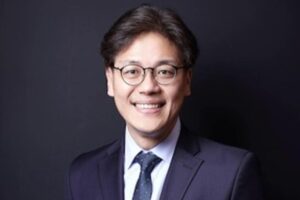
Johnson & Johnson Innovative Medicine veteran and general manager of the company’s Hong Kong & Macau affiliate SunKeun Huh explains J&J Hong Kong’s strong position in schizophrenia and its significant oncology milestones, comments on the affiliate’s push to enhance clinical trials in alignment with mainland China, local talent development and the Hong Kong government's 1+ CPP drug approval initiative.
You have a long-standing career at J&J Innovative Medicine. What has motivated you throughout your career, and how did you come to take on the general management role at the Hong Kong & Macau affiliate?
I joined J&J Korea back in December 2001, so it has now been 22 and a half years that I have been with the company! I have spent most of my time in Korea, though I had a one-year overseas work experience at J&J Canada in the middle of my career. After returning to Korea, I led a business unit focused on oncology and infectious disease.
Throughout my career at J&J, I have had the privilege of meeting great leaders who encouraged me to diversify my experience across different therapeutic areas and functions. I started as a sales rep, then moved to a medical affairs role, and eventually returned to the commercial side. These diverse experiences have enriched my perspective and provided numerous growth opportunities within the organization. Additionally, J&J’s purpose and credo, which focus on transforming patients’ lives and prioritizing responsibility, have been significant motivators for me. These values inspire and motivate me to continue my work at J&J.
The opportunity to come to Hong Kong was aligned with the advice of great leaders I have met, like our country leader back then Jenny Zheng, who encouraged me to be bold. Although I had not initially considered a general management role so soon, Jenny’s successor, Cherry Huang, encouraged me to apply for the Hong Kong general management position. After going through three rounds of interviews, I was given the opportunity. This process has helped me to also inspire my team members to think big and be bold in their career development, just as I was encouraged to do.
Did you have any prior knowledge of Hong Kong’s healthcare system before joining the affiliate? Were there any correlations with what you knew from Korea, which also has a quite efficient and cost-effective healthcare system?
I did not know much about the Hong Kong healthcare system initially. However, since I was working under the North Asia cluster, I frequently connected with colleagues in Taiwan and Hong Kong, which gave me some indirect insights into the Hong Kong market. Before joining the Hong Kong team, I studied extensively to prepare for my role.
Hong Kong’s healthcare system is quite unique with its universal healthcare and funded therapy approach. While I could leverage my knowledge from Korea regarding the reimbursement system, I also had to learn how to drive self-finance awareness, which is less developed in Korea due to government subsidies. In Hong Kong, although the government subsidizes many drug costs, certain disease areas like oncology and immunology have different funding sources.
What sort of organization did you find when you arrived at J&J Hong Kong? Was there a particular agenda regarding your role and goals here?
When I first took on my current role, my primary focus was on business growth and people development. One of my key business challenges was ensuring sustainable business growth in an ever-changing market to support the health and well-being of Hong Kong citizens.
According to IQVIA, as of the first quarter of 2024, J&J Innovative Medicine Hong Kong (J&J IM HK) ranked sixth by revenue and ranked second by growth, with a 14 percent increase, amongst the top 10 pharmaceutical companies in the Hong Kong market. Currently, J&J Innovative Medicine is leading seven therapeutic areas, which include multiple myeloma, B-cell malignancies, inflammatory bowel disease, rheumatic disease, ADHD, long-acting injectables for schizophrenia and pulmonary arterial hypertension. Traditionally, we have been very strong in the neuroscience area, particularly schizophrenia. While schizophrenia might not be the newest field, it remains crucial. The Hong Kong government is quite supportive of services for severe mental illness and fully subsidizes long-acting injectables for schizophrenia, which is relatively advanced compared to other countries. This government support has been instrumental in our ongoing success in this area. When I arrived at J&J Hong Kong, neuroscience was a major focus, accounting for over 30 percent of our portfolio.
However, my key interest has always been in oncology, particularly in ensuring access to our innovative drugs. Thanks to the great and unwavering efforts of our team members, we have achieved significant milestones in this area over the past two and a half years. The Hong Kong government has different funding mechanisms, such as the Samaritan Fund and the Community Care Fund, to support drugs in oncology and immunology. Despite the challenges of getting approval for these funds, we have successfully registered some major products, which is a significant achievement for J&J.
Regarding people development, I highly encourage my team to think differently about their careers, even though they might feel limited by the size of the Hong Kong market. Since 2022, we have promoted our global GROW Gig initiative. A GROW Gig is a short-term assignment that supports career development and skill building through hands-on experiences, enabling our employees to work in different functions and therapeutic areas without fully relocating. This initiative has been well-received, with over 10 colleagues – out of 75- applying. For instance, one of our people leaders now allocates 100 percent of her full-time equivalent to a role in Taiwan while still being based in Hong Kong, which sets a great example for others.
You have worked with Hong Kongese talent for two years now. What strengths have you found in their skills, and how do you think they can capitalize on these abilities if they expand their roles more broadly across Asia?
Hong Kong has a highly educated workforce, and their proficiency in English is a significant advantage, making them almost bilingual. Hong Kong’s talent is highly adaptable on a global stage. If they can broaden their experience across different functions or therapeutic areas, I truly believe they will be invaluable to J&J in the near future. It is encouraging to see that many of our colleagues are already applying for broader roles, which is a testament to their ambition and capability.
What are some of the key metrics that physicians in Hong Kong consider when deciding whether to prescribe medicines?
Hong Kong physicians and healthcare professionals highly value our brand in their specific disease areas. The key focus is broadening the patient segment. For example, while we provide long-acting injectables for schizophrenia, most patients are still treated with oral antipsychotics. Physicians appreciate our brand, but there is room for more widespread use. Our team’s main focus is on changing physician practices and accelerating the adoption of our treatments to improve patient outcomes. Internally, our KPIs include these practice changes and the value we bring to patients. Externally, we track physicians’ acceptance of our brand and innovations, ensuring they see the value for their patients.
How would you describe the oncology environment in Hong Kong, particularly regarding innovation? How has the ecosystem accepted the three products that have received reimbursement, and how are you working in this area?
The Hong Kong government has progressively invested in treatments for rare diseases and high-cost drugs. Previously, there was a limited budget for oncology and immunology, but now they are allocating more funds through sources like the Samaritan Fund and the Community Care Fund. This demonstrates their strong support for cancer and autoimmune disease patients. However, they also implement cost-containment measures. For example, the introduction of biosimilars allows them to save money and reinvest in other priority areas.
At J&J, we continue to focus on expanding access to our oncology and haematology products. Over the past two years, we have introduced treatments to lung cancer patients with cEGFR exon20insertion mutation and the first-in class bi-specific antibody for multiple myeloma.
In the future, we are planning to introduce several breakthrough treatment options across different disease areas we are serving at the moment and new disease areas such as bladder cancer and colorectal cancer.
Does J&J have a specific agenda in Hong Kong for clinical trials or community initiatives to drive innovation, similar to the efforts seen in other regions like Korea or Singapore?
Regarding innovation, J&J is indeed making significant strides globally. For instance, we have seen impressive developments with our JLABS life science incubators in various regions, including Korea, Singapore and Shanghai. These initiatives are part of our broader strategy to foster innovation and support the biotech community.
In Hong Kong, we have focused on enhancing our clinical trial engagement and participation. Recently, we have integrated our global clinical operations, with Hong Kong now aligned with Mainland China’s global clinical operations team. This shift opens more opportunities for global registration trials and strengthens our collaboration with Mainland China. We also work closely with leading investigators in Hong Kong and leverage their expertise to support global R&D initiatives. This alignment helps us propel innovation and contribute to advancing new treatments.
We have a robust pipeline of clinical trials ongoing in Hong Kong. Currently, we are primarily involved in Phase II or III trials. These include innovative treatments for neuroscience, autoimmune diseases, bladder cancer and lung cancer, which are promising areas for growth.
For bladder cancer, we are working with a new operational model that’s different from conventional approaches, integrating device and drug with new therapeutic modalities. Notably, Professor Jeremy Teoh is a key investigator in this area, and his work is pivotal in advancing our understanding and treatment of bladder cancer.
Lung cancer is another key focus. Thanks to endorsements from leaders and emerging experts in the field. For example, one of the doctors from the Chinese University of Hong Kong (CUHK) has been nominated to a global steering committee, reflecting Hong Kong’s growing influence in this area.
Although we are still in the early stages compared to some of the long-established players in Hong Kong, we see significant potential for future development and innovation.
If you were to step back and reflect on your tenure in Hong Kong, what kind of impact would you like to leave behind, both for the team and the organization?
My primary goal is to ensure that our team members in Hong Kong have a deep sense of confidence and pride in working for J&J. I want them to feel a strong sense of belonging and that the company genuinely cares about their growth and well-being. If they are motivated and proud of their work, I believe the business success will naturally follow.
My ambition is for J&J Hong Kong to be among the top three in the market by 2028. This is not only about achieving financial targets but also about establishing ourselves as a trusted partner to the government, healthcare professionals, and patients. I want to leave behind a legacy of strong internal cohesion and external respect.
If we look at future treatment modalities, precision medicine is becoming an integral part of Johnson and Johnson Innovative Medicine. So, our capability building and partnering with external innovators for precision medicine will be another area we need to keep exploring.
How do you view the impact of the Hong Kong government’s recent policy on drug approvals, specifically the 1+ CPP initiative? Will it affect your operations or the organization’s growth?
The ”1+” CPP policy, introduced last November, is an ambitious move by the government. While we have not seen immediate changes, I am optimistic about its potential. The policy aims to streamline regulatory approvals and market access, which could benefit us in the long term.
Currently, we are evaluating how to leverage this new policy to enhance our opportunities. Although initially, the impact might seem limited due to our simultaneous filings with other regulatory bodies like the US FDA and EMA, we are actively exploring how to maximize this policy for future assets.
If the policy effectively accelerates both regulatory approval and market access, it could significantly strengthen Hong Kong’s position as a hub for innovative medicines. It will be crucial for the government to ensure that both aspects—approval and access—are addressed to fully realize the policy’s potential.
Overall, I believe the “1+” CPP initiative could provide a unique advantage for Hong Kong, facilitating faster new product launches and better access for patients.
Do you have a final message to leave us with?
One point I would like to highlight is that this year marks the 37th anniversary of our founding in Hong Kong. While we are relatively young compared to other multinational companies, our team is deeply committed to transforming patients’ lives, just as our global counterparts are. Despite being a smaller organization, every team member is passionate about our mission to support patients and the community.
Our dedication to this mission is unwavering, and I am eager to continue working closely with our team members. I hope this commitment shines through, and I look forward to future opportunities and achievements.