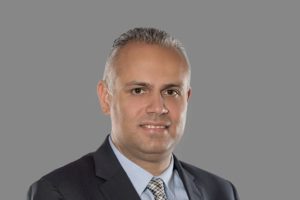
Sinan Atlig reflects on a 25-year global career spanning Turkey, Colombia, the Middle East, and the US, shaped decisively by vaccine leadership through the COVID-19 era. He identifies vaccines and oncology as Pfizer’s twin strategic priorities for Latin America, supported by expanding roles in obesity, rare diseases, and anti-infectives. His core message to the region is clear: accelerating access to innovation will require ecosystem-wide collaboration across regulators, governments, and industry.
Could you briefly outline your Pfizer journey and explain how your dual role as LATAM Cluster President and Emerging Markets Commercial Officer functions in practice?
I recently commemorated my 25th anniversary with Pfizer on August 1st. My career commenced at Pfizer Turkey in 2000, which is widely regarded as a leadership incubator within our organisation. More than 40 Turkish colleagues now hold positions across Pfizer’s international operations, a testament to that developmental culture. I spent my initial 11 years there across various responsibilities before seeking international experience.
My first opportunity emerged in Latin America, and I believe I was the inaugural Turkish expatriate in the region for Pfizer. I relocated to Bogotá to lead the specialty and oncology business for Pfizer Colombia, subsequently assuming leadership of the Andean cluster for our innovative portfolio. My family and I remember our Colombian tenure as an exceptionally fulfilling period. We acquired Spanish fluency, which has proven invaluable throughout my subsequent career. Learning another language and culture, particularly recognising its proximity to Turkish culture, created deeply rewarding personal and professional experiences.
Subsequently, I assumed diverse roles across emerging markets, residing in New York, Dubai, and London before returning to New York. These encompassed therapeutic area leadership, including rare disease for emerging markets, and geographical leadership as Regional President for Africa and the Middle East. The pandemic commenced whilst I was based in Dubai, and I was fortunate to join international developed markets vaccines in December 2020, precisely as we launched our COVID-19 vaccine.
That period represented the most demanding yet rewarding experience of my career. Throughout the pandemic’s first three years, particularly the initial six months, I worked essentially continuously, from contracting through commercialisation to launch execution. The experience profoundly shaped my leadership philosophy and deepened my understanding of pharmaceutical innovation’s genuine meaning. I subsequently led global vaccines marketing and US vaccines business, where we achieved a record by launching five vaccines—a benchmark that remains unmatched in the industry.
From there, I exchanged roles with the previous Latin America leader: he assumed US vaccines whilst I returned to what I consider my second home. I genuinely regard Colombia as my second homeland. Last year, my responsibilities expanded. Beyond leading Latin America for Pfizer, I now oversee commercial operations horizontally across all therapeutic areas in emerging markets. Regional marketing teams report to me, and we concentrate on our six priority emerging markets: Mexico, Brazil, Saudi Arabia, Turkey, Russia, and India. These markets, which I previously led in various capacities, constitute my additional focus alongside Latin America.
How has your extensive vaccine experience shaped Pfizer’s current strategic priorities in Latin America, particularly as the region pivots toward oncology and other high-growth areas?
Latin America enjoys the distinct privilege of maintaining an exceptionally vaccine-friendly environment. From regulators to public health officials and even public sentiment, we observe significantly less hesitancy compared with developed markets. The openness toward vaccination and the robust vaccine ecosystem—including PAHO’s highly functional procurement mechanisms and countries’ expeditious inclusion of vaccines in immunisation schedules—serves as an exemplar for the rest of the world.
Consequently, vaccines have been, are, and will remain our primary focus in Latin America, as the environment and unmet needs align exceptionally well with Pfizer’s capabilities. However, we have completed our merger with Seagen, which specialises in oncology and antibody-drug conjugate technology. Seagen pioneered this mechanism, and we already maintained significant oncology focus within our existing pipeline. Oncology has now become our second priority area, and we are tremendously pleased with our expanded opportunity set in this domain.
We naturally continue focusing on other areas including rare disease, but vaccines and oncology constitute my primary strategic agenda. You may have noted this week’s announcement regarding our agreement with Metsera, marking Pfizer’s entry into the obesity treatment space. Whilst we are only beginning to evaluate the implications, this development is extraordinarily exciting because obesity represents a major challenge in Latin America and emerging markets.. Whilst we cannot yet predict pipeline outcomes or clinical study results, from a public health perspective, the opportunity to deliver solutions to Latin America is genuinely compelling.
I would be remiss not to acknowledge our substantial legacy in antibiotics and anti-infectives. Pfizer’s history was built on scaled penicillin production during the Second World War. We remain a significant player in hospital antibiotics, with innovative medicines launching this year. Given that antimicrobial resistance constitutes a critical global challenge, I would position our hospital antibiotics portfolio alongside rare disease in terms of priority.
According to FIFARMA, access to innovation in Latin America is often delayed by more than five years. From your perspective, what are the most effective levers to accelerate access, and how is Pfizer helping to drive this change?
This constitutes an agenda we are pursuing intensively with FIFARMA. At my inaugural FIFARMA meeting in Mexico, I was enormously encouraged to observe regulators seated alongside industry representatives, genuinely seeking to understand barriers and address them collaboratively—not merely as a pharmaceutical industry but as a comprehensive healthcare ecosystem alongside leaders from provider, payer, and pharmaceutical sectors.
Examining that five-year timeline, two elements warrant direct intervention. First, regulatory processes demand increased harmonisation and adaptation of international standards. I observe concerted efforts in this direction, with certain regulatory agencies assuming leadership roles, notably ANVISA. I anticipate others will follow, as Ministers of Health with whom I engage recognise this value proposition. During my May visit to Mexico, we met the COFEPRIS leadership, who outlined plans to accelerate clinical trial approvals particularly—critically important for ensuring innovative treatments gain early Latin American experience and generate regional data.
The regulatory dimension shows genuine appreciation and coordinated efforts. Platforms such as RISE bring regulators together to discuss advancement mechanisms. The digital revolution and artificial intelligence present extraordinary opportunities because fundamentally these involve information management, which can dramatically accelerate processes. I am optimistic about progress, observing positive regional examples. Peru and Chile recently introduced mechanisms to accelerate innovation, and we are collaborating with them on this journey to expedite regulatory applications, employing reliance mechanisms.
As Pfizer, we have commenced utilising AI in our regulatory preparation. When clinical trial results emerge, we employ AI to construct regulatory dossiers from vast information repositories—sometimes millions of pages—into comprehensive regulatory submissions. The industry has already begun this transformation, and whilst government adoption may lag slightly, acceleration will occur rapidly.
The second element concerns innovation access—public listing and private insurance coverage. Challenges here primarily stem from budget constraints. A particularly interesting discussion emerged at the Mexico FIFARMA meeting regarding health as investment rather than expenditure. Valuable publications demonstrate that healthcare investment yields GDP growth. The question becomes how to convince Finance Ministers to allocate greater budgetary proportions toward healthcare. We must work collectively with Health Ministers to demonstrate that this investment merits prioritisation, building use cases collaboratively to strengthen their position during budget cycles.
When examining publications, particularly vaccine-related research but extending broadly, evidence confirms that investing in health produces healthier populations with direct GDP impact. One fascinating publication examined absenteeism and presenteeism—inability to work or diminished productivity whilst working. The primary cause of presenteeism and absenteeism in Latin America is migraine, predominantly affecting working-age women rather than elderly populations like many chronic diseases. Remarkably few countries cover or reimburse innovative migraine therapeutics. Many countries, including Chile, do not even classify migraine as a disease, representing fundamental resource misallocation. If governments provided coverage and improved treatment access, workforce productivity would increase substantially with direct GDP impact.
This paradigm shift, from viewing pharmaceuticals as costs to recognising healthcare as investment, must occur both conceptually and budgetary to accelerate access meaningfully.
Latin America accounts for only a fraction of global clinical trial activity despite strong fundamentals. How is Pfizer working to expand the region’s role in global research?
We maintain a robust Latin American clinical trial infrastructure of which we are tremendously proud. Argentina served as one of four countries where we tested our COVID-19 vaccine at unprecedented speed. Our recent RSV (respiratory syncytial virus) vaccine similarly utilised Argentina as a vaccine centre. This demonstrates that when appropriate connections exist, when we engage qualified scientists, when sites deliver quality data rapidly, Pfizer invests and has consistently invested. The question becomes how to scale this success.
Excellent success stories exist, but the industry constantly balances trial geographical distribution against potential delays. Excessive distribution might delay overall trials, ultimately disadvantaging patients because product availability gets delayed. This represents a persistent trade-off.
We typically conduct competitive recruitment, contacting numerous global sites with the first, for example, 300 patient recruits closing enrolment. Slower sites, despite being open, cannot contribute patients to the overall trial. This demonstrates that recruitment speed and data quality are paramount and becoming increasingly critical. With AI, everything is accelerating. Industry and patient expectations universally demand greater speed.
The fundamental question concerns how regulators and regulations will adapt. If a country approves clinical trials slowly whilst others approve rapidly, faster jurisdictions become more competitive and attract more trials. Slower countries lose trial opportunities ultimately harming their patients. I observe governments understanding this dynamic, hence regulatory modifications. Our responsibility in Latin America involves explaining to our R&D organisations that speed and quality must coexist at Latin American clinical trial sites. Demonstrating this will enable us to attract additional trials.
The infrastructure question persists, but we already possess clinics and sites delivering quality data. I conceptualise this analogously to highway infrastructure investment. Superior highways facilitate greater transportation flow—a self-reinforcing cycle. More accessible regulations and faster study registration will attract additional sites wanting to participate. I see these elements progressing interdependently in Latin America.
Pfizer’s manufacturing partnerships in the region have advanced regional vaccine self-sufficiency. Do you see further opportunities for local production and supply collaboration?
The pandemic illuminated for everyone how critical vaccine manufacturing capacity becomes. When you possess an effective vaccine and must reach mass populations, capacity proves decisive. I am immensely proud that we have shipped over five billion COVID-19 vaccine doses—a staggering figure considering our pre-pandemic annual capacity was 200 million doses. During the pandemic’s second year, if my recollection is accurate we reached 2.5 billion doses. We scaled capacity twentyfold during the pandemic, which presented its own challenges but demonstrated that rapid capacity expansion fundamentally determines how quickly countries return to normalcy.
Latin America benefits from strong local manufacturing partners. We have been active in this area since 2012, when we signed our first agreement in Argentina to locally produce a pneumococcal conjugate vaccine for national supply. Building on that foundation, we recently expanded the partnership to manufacture a next-generation version offering protection against seven additional serotypes.
The innovative element in this agreement is that whilst it will supply Argentina’s requirements—our original agreement’s scope—we subsequently signed a second agreement to supply not only Argentina but all Latin America through PAHO from this Sinergium partnership. This represented the first regional manufacturing and supply agreement of its kind, providing access to Prevnar 20 approximately two years earlier than otherwise possible. This demonstrates that when we align as diverse ecosystem players: multinational pharmaceutical companies, local partners, local governments, and supranational bodies such as PAHO, we can genuinely accelerate vaccine access.
Given rising vaccine hesitancy in developed markets, particularly the US, do you foresee any risk of sentiment spill over into Latin America? How important is continued education and communication?
We have always anchored ourselves to science. Science constitutes our guiding principle and we shall continue this approach in the US and globally. Yes, US discussions may generate negative impact. Fortunately, we have not yet observed equivalent discussion levels in Latin America, but these undoubtedly create questions.
The optimal response to misinformation remains relying upon and sharing science. I was enormously encouraged by announcements from other global regions regarding vaccines immediately following US pronouncements. We observed the UK and other countries substantively endorsing vaccine science. We must persist in these efforts. We have engaged in vaccine education since launching them, working hand-in-hand with governments, and we must simply continue this science-based approach. I see no alternative pathway.
Despite COVID fatigue, it persists as a significant hospitalisation cause, particularly for those over 65. Many regional countries recommend vaccines for specific risk groups, varying by country. Yes, COVID fatigue exists, but I also observe increased adult vaccination awareness compared with pre-pandemic levels.
Vaccines have traditionally been associated with infants and children—appropriately so during this vulnerable life stage. However, elderly individuals and those with certain risk factors remain highly vulnerable due to immune system status. This was understood pre-pandemic, predominantly within physician communities rather than public consciousness. Post-pandemic, we observe heightened public awareness regarding adult vaccination, with some countries demonstrating increased adult vaccine uptake rates.
Whilst substantial US vaccine discussion exists currently, with considerable information circulating, adopting a long-term perspective—and I remain inherently optimistic—science will prevail. When considering the extended horizon, vaccination trends will continue increasing because elderly individuals’ primary fear involves hospitalisation: the burden on families, the anxiety, the uncertainty regarding outcomes. Every hospitalised individual faces substantially higher rehospitalisation risk. Vaccines represent one of the foremost interventions preventing hospitalisation.
As our population ages and as healthy living and wellness concepts proliferate, I believe adult vaccination consciousness will increase over the long term.
What principles guide your approach to talent building in Latin America today?
I consider myself a fortunate and privileged alumnus of Pfizer Turkey’s leadership school. Three principles we consistently implemented, which remain with me and which I endeavour to replicate in Latin America, are: first, recruit the finest talent; second, rotate and challenge them with diverse responsibilities; third, provide engagement and maintain their engagement and cultivate further growth.
I am tremendously pleased to observe significant Pfizer leaders emerging from Latin America. You may have interviewed some of them. Rodrigo Puga, formerly Mexico Country Manager with whom I worked in Colombia and the US, recently assumed leadership for Middle East, Russia, and Africa as my peer. He exemplifies how diverse experiences accelerate career progression. He worked in Latin America, the US, before assuming leadership of a completely different cultural region I know intimately.
Another example is Carlos Murillo, originally from Bolivia, who served as Brazil Country Manager, assumed various Pfizer roles, and now leads Spain as Country Manager. When I examine my team, I am profoundly impressed by the women’s strength. My extended leadership team includes over 15 women. All my country managers are women, representing shining examples of diversity’s impact across Pfizer. I am exceptionally proud of them. Whenever opportunities arise for different experiences to develop additional leadership capabilities, I nominate and support them enthusiastically.
As we conclude, is there any final message or perspective you would like to convey on behalf of Pfizer to the Latin American region and the broader healthcare and life sciences community?
The message centres on ecosystem collaboration. Latin America possesses a growing population, expanding economies, and ageing demographics. The advantage lies in linguistic unity—the region shares language, countries exhibit similarity, and no barriers prevent enhanced inter-country cooperation. A substantial foundation exists that is unique to Latin America.
Collaboration opportunities span clinical trials, pooled procurement, and regulatory harmonisation, provided the ecosystem unites, ventures beyond comfort zones, moves past defensiveness, and engages in open dialogue. Everything becomes possible. I particularly wish to recognise Dr. Barbosa and PAHO for enabling this and facilitating our partnership, which is genuinely unique. I view this only as a beginning.
Last month in Brasília, we signed an agreement with Brazil’s government for RSV vaccine supply from Brazil. We are now exploring how to build upon this foundation even further. If all stakeholders unite with patients at the centre, this region possesses extraordinary potential to accelerate access and increase patient impact substantially.