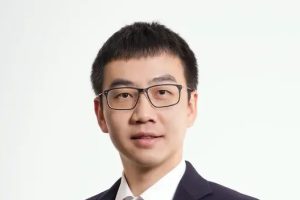
Dr Cyrus Yang, CEO of Taiwan Bio Therapeutics, outlines how he transformed the company – founded in 2014 with proprietary MSC‑expansion technology – into a global innovator in cell and gene therapy. Under his leadership, Taiwan Bio advanced MSC and Tregmodalities, built infrastructure via its TDM model, and aims to make immunosuppressants obsolete.
Taiwan Bio Therapeutics was founded in 2014. What was the original vision, and what drew you personally to the company?
Founded in 2014 by a physician‑scientist at Taipei Veterans General Hospital, Taiwan Bio Therapeutics began with proprietary mesenchymal stromal cell (MSC) expansion technology as its scientific base. At the time I joined, the business model – focused on ‘me‑better’ adaptations of US MSC indications for Taiwan’s small market – was limiting. I was brought in with a mandate to transform the company into a global innovator in cell and gene therapy.
With a background from Kennedy Institute of Rheumatology at Oxford, renowned for its research in inflammation and immune modulation, I saw autoimmunity and tolerance restoration as strategic opportunities. We pushed forward both MSC and Treg modalities: advancing MSCs into a Phase III osteoarthritis candidate, co-develop Treg technologies with global leaders, and exploring genetically‑modified MSCs to deliver growth factors.
Strategic partnerships with leading research institutions and medical centers accelerated development. In parallel, a collaboration with a US‑based Treg firm helped cut manufacturing costs by 40 percent and timeline by 25 percent, leading to US FDA IND approval for a multi-national Phase 2. Recognising the US market and our capabilities, we acquired that firm and rebranded as Singulera Therapeutics – a signal of our commitment to accessible, durable Treg therapies. Singulera now advances a Phase II Treg product and several next‑generation candidates, utilising Taiwan Bio’s manufacturing strength alongside Singulera’s US clinical platform.
Taiwan Bio also functions as an ecosystem builder. Recognising the unique supply‑chain demands of autologous cell and gene therapies, we created our Therapeutic Design & Manufacturing (TDM) model – engaging medical centres from the outset, mapping workflows from apheresis to infusion, and redesigning manufacturing to meet tight clinical windows (e.g., compressing typical 14–21 day processes into seven days). This integration enables cost control, operational feasibility and clinical scalability. We are now expanding this model across Asia‑Pacific and into the US.
With Singulera leading Treg therapeutic development in the US, how does Taiwan Bio position itself beyond manufacturing support?
When I joined Taiwan Bio, the field recognised that while science had delivered potentially curative cell and gene therapies, the business perspective had never functioned properly. We attempted to plug something fundamentally different into antiquated business models. These therapies are autologous – bespoke – eliminating any economy of scale. Supply chains are completely different: circular manufacturing cycles requiring material extraction from patients and return to patients, contrasting sharply with the familiar unidirectional supply‑chain model. GMP manufacturing proves exceptionally challenging for certain gene therapies; multiple complications arise.
I contend we have actually failed in making cell and gene therapy commercially viable. When I joined and in‑licensed cutting‑edge cell therapy technologies, I aspired to transform the whole business model. I recognised rapidly that we require infrastructure to make cell and gene therapy work; we must reconceptualise how we deliver these treatments. I use two analogies: first, in medical practice one should view cell and gene therapies similarly to surgery – bone‑marrow transplantation, for example. You must work intimately with medical centres. These are not pills dispensed via pharmacies. Second, I compare the cell and gene‑therapy field to early electric vehicles: when we first thought of EVs the question was “where can we charge them?” Without the right infrastructure, electric vehicles could not succeed and scale. Cell and gene therapy occupies a similar position.
Consequently, Taiwan Bio now positions itself as both a cell‑therapy developer and an ecosystem‑infrastructure builder. We integrate my philosophy of working closely with medical centres from inception – engaging them when designing products, understanding their practices: when they can perform apheresis, how they deliver products, what procedures precede infusion, how hospital departments coordinate. How do you build Centres of Excellence that attract patients? We start that from day one, before clinical trials. We design products that medical centres can readily utilise. We now partner with medical centres in Taiwan and are gradually expanding to Singapore, Japan and the United States. We term this model Therapeutic Design in Manufacturing (TDM). We invest substantially more time in pre‑clinical space to perfect manufacturing processes and set targets for cost, timelines, and clinical deployability.
In a landscape shaped by major players such as Lonza, Bristol Myers Squibb, Novartis, and Roche, what distinguishes your technology and approach from those of these global leaders?
We differentiate Taiwan Bio by building an open, holistic ecosystem for cell and gene therapy, in contrast to traditional pharmaceutical and CDMO approaches. Pharmaceutical companies established early infrastructure for autologous cell therapies, but it was often repurposed from antibody drug development, creating closed-loop systems that are difficult to modify. Smaller innovators typically cannot access these ecosystems unless acquired or licensed, limiting market participation. Taiwan Bio, by contrast, shares knowledge and capabilities openly with medical centres, creating a collaborative ecosystem that accelerates adoption of cell therapies regardless of origin. This open approach also positions us as the preferred partner for product design and manufacturing while retaining our own pipeline through Singulera. The larger the network of capable medical centres, the broader the market – and the more we benefit.
CDMOs often focus on scale-up as the primary route to cost reduction, but this model fails for cell therapies. Even allogeneic products face scale limitations, and autologous or on-demand formulations require batch-specific quality control. Distributed manufacturing is an eventual solution, but prematurely building multiple high-quality facilities is prohibitively expensive. Many CDMOs also fail to integrate with the full clinical process, focusing solely on production and technology transfer, often resulting in delays or misalignment with patient scheduling.
Taiwan Bio’s approach is different. We design manufacturing and clinical processes in tandem with medical centres, mapping the entire needle-to-needle workflow: patient identification, apheresis, shipping, manufacturing, infusion, and post-infusion care. This holistic integration reduces inefficiencies, shortens timelines, and ensures robust, repeatable operations. By establishing Centres of Excellence that function as local hubs, we create scalable treatment ecosystems that gradually expand access to cell and gene therapies, much like building the charging infrastructure needed for early electric vehicles.
In short, our differentiation lies in building an open, agile, and operationally integrated ecosystem, rather than a closed infrastructure or purely scaled manufacturing operation. This approach not only accelerates therapy delivery but lays the foundation for a sustainable, accessible cell and gene therapy market
How have you managed to reduce costs so substantially, and what role do automation and digital technologies play?
At Taiwan Bio, our approach to cost reduction in cell and gene therapy relies on three interconnected strategies, with automation, ecosystem integration, and pricing redesign as central components. Automation plays different roles depending on geography: in the US, it addresses high labor costs, whereas in Taiwan, the focus is on ensuring consistency in manufacturing due to challenges in recruiting and retaining skilled personnel.
Many cell types used in therapy, such as Tregs or CAR-T cells, expand naturally in vivo. By shifting some expansion from ex vivo manufacturing into the patient’s body, we drastically reduce manufacturing time and associated costs. For example, reducing manufacturing from twenty days to two days significantly lowers cytokine and media usage – cutting multiple supplementation cycles down to one, which translates into substantial cost savings. This approach also accelerates therapy delivery, improving patient access.
The needle-to-needle process – from patient apheresis to infusion – can be highly inefficient if medical centres, suppliers, and manufacturing facilities are not fully synchronized. Through the TDM (Therapeutic Design in Manufacturing) model, we integrate medical centres into product design from day one. Digitalization ensures seamless communication across all stakeholders, minimizing waste from misaligned schedules, expired reagents, or delayed shipments. This ecosystem approach reduces hidden costs that traditional manufacturing models overlook.
Cell and gene therapies cannot rely on traditional high-margin pharmaceutical pricing models. Manufacturing costs are substantial, often $120,000–$150,000 per treatment. Pricing strategies must account for the realities of patient access, medical centre operations, and payer benefit horizons. Engaging stakeholders early allows us to reverse-engineer manufacturing processes and target costs to ensure treatments are both economically viable and commercially accessible.
By combining faster manufacturing, frictionless supply chains, and stakeholder-informed pricing, Taiwan Bio reduces costs holistically, improves therapy accessibility, and establishes scalable, sustainable business models for the future of cell and gene therapy.
Could we touch on recent clinical milestones, perhaps focusing on the Singulera programmes or the legacy products from Taiwan Bio?
Singulera owns all the Treg products, and we’ve just enrolled the first patient in our lead Phase II trial early 2026. The programme targets living kidney transplant recipients and is a Taiwan–US multicentre study.
Our lead product embodies Singulera’s goal of eventually making immunosuppressants obsolete. Today’s treatments require multiple immunosuppressants and often steroids for non‑responders – creating significant challenges for patients. These drugs bring severe side‑effects, require frequent regimen changes, raise infection and cancer risks, and impose a heavy mental burden through frequent hospital visits and dose monitoring.
We aim to replace these drugs with a single treatment lasting years. While full elimination remains a future goal, our immediate focus is on maximal tapering of immunosuppression. This product already has US FDA Orphan Drug Designation.
We’re also developing three “in vivo on‑demand expansion” products: isolating Tregs from the patient, genetically modifying them, reinfusing, and enabling expansion inside the body. These are aimed at autoimmune diseases with relapse‑remission cycles, and are expected to reach clinical trials within 18–24 months – positioning us to lead the Treg field.
On the MSC front, Taiwan Bio is moving its on‑demand MSC product for osteoarthritis into pivotal Phase III, and a genetically modified MSC (licensed from UC Davis, engineered to secrete VEGF for critical‑limb ischaemia) is approximately 8–12 months from Phase I.
Combined, we now have a robust and diversified pipeline spanning Asia-Pacific and global markets: SGL contributes one Phase II Treg transplantation trial and several Treg candidates approaching Phase I, while TWB adds one Phase III MSC osteoarthritis trial and one MSC product nearing Phase I.
Regarding partnerships for your Phase III candidate, what is your commercialisation approach?
Currently, we consider either partnering directly with medical centres plus distributors or pursuing co-development with other biotechnology companies. You can probably discern I am not particularly enthusiastic about pharmaceutical acquisition deals– at least presently. I am not suggesting it cannot occur eventually, but right now we are building this infrastructure, partnering with medical centres. Some medical centres we will likely announce perhaps next year, early first half.
Several medical centres are substantial players. By partnering with large US medical centres here in Taiwan and Asia-Pacific, we believe we can achieve critical mass regarding patient treatment numbers. We can deliver products directly to medical centres, treating patients within that ecosystem. That is our thinking. If possible, I would prefer Taiwan Bio and Singulera to advance products through approval and establish all sales channels and medical centre communications ourselves, partnering with distributors or other biotechnology companies possessing commercial teams.
Eventually, I believe that if we succeed, it may transform pharmaceutical companies’ perspectives on cell therapy execution. At that juncture, I would welcome engaging larger pharmaceutical companies. Currently, I feel pharmaceutical companies view cell and gene therapies through exceptionally traditional lenses. It would consume enormous energy convincing them the ecosystem actually functions. Rather than presently expending effort convincing them to join, I believe we can collaborate with smaller and medium-sized stakeholders building ecosystems demonstrating viability. Subsequently, we can engage larger players regarding whether they wish to contribute resources for continuing ecosystem expansion.
You can envision initially we will emphasise niche indications – more severe conditions treatable in medical centres, potentially orphan drug designations. Partnering with sufficiently large medical centres or medical centre chains, we can still achieve critical patient treatment mass for commercial success, especially given our production efficiencies and enhanced accessibility. I believe this model can prove quite successful. That reflects our partnership philosophy.
Regarding medical centre partnership progress, we have established several. Regarding biotechnology partnerships, we are engaging several partners. Hopefully, once we demonstrate the ecosystem can successfully translate to the US – which would represent an enormous milestone – those partners can join. That is information we will share when more mature.
What potential does Taiwan possess to become a player in cell and gene therapy and regenerative medicine? What does Taiwan offer companies like yours?
Two critical factors explain Taiwan’s unique position in cell and gene therapy.
First, during my senior high school years around 2004, the Taiwanese government launched an initiative to make biotechnology the second trillion-dollar industry after semiconductors. This spurred a wave of students into life sciences, creating a deep pool of high-quality talent. For many years, however, there was no true biotech industry – pharmaceutical companies existed, but small-molecule and antibody work involved mostly analytical chemistry. Skills in authentic cell culture, genetic modification, and treatment development were largely absent until regenerative medicine emerged.
The government has since strongly promoted regenerative medicine, aiming to leverage this nearly two-decade talent surplus. At Taiwan Bio, many employees come from my alma mater, National Yang Ming Chiao Tung University, including colleagues returning from abroad or transitioning from pharmaceutical sectors. The field is new enough to allow disruptive business models and novel technologies, enabling Taiwan to leap ahead rather than follow. Legislation like the Regenerative Medicine Act further strengthens this advantage, providing benefits for companies partnering with medical centres, facilitating early safety and efficacy demonstration, and pathways to faster market access.
Second, cultural factors support Taiwan’s strengths. The nation excels in manufacturing and supply chain capability, with investors prioritising tangible capabilities over abstract intellectual property. Cell and gene therapy aligns perfectly: its science is proven and tangible, while remaining challenges – manufacturing, supply chains, and ecosystem design – fit Taiwanese investors’ sweet spot. Fundraising analogies to electric vehicles or TSMC resonate because Taiwan thrives on building infrastructure and assets.
Combined, talent, government support, cultural alignment, and global collaboration experience position Taiwan exceptionally well to become a leader in cell and gene therapy and regenerative medicine.
What continues to drive you as a leader? What lessons have emerged from building a ground-breaking disruptor in cell and gene therapy from Taiwan?
Before pursuing my Oxford doctorate, I was fascinated by translating scientific breakthroughs into real-world impact. I loved exploring novel data and concepts, and I always felt it was wasteful if discoveries could not become tangible solutions. I invested time learning technology transfer processes – how universities manage IP, identify licensing partners, and how larger biotech or pharmaceutical companies pursue acquisitions and mergers. Internships in these areas deepened my interest.
Returning to Taiwan Bio allowed me to turn these ideas into action. I could define strategies, set ambitious visions, and build collaborations. I always aimed to translate science into medicine, and now I occupy positions enabling exactly that.
When building companies, I encourage my team to forget constraints – resources, time, or expertise – and imagine what the world’s best Treg company would look like. From there, we gather technologies, capital, and creative solutions to construct towards that vision. Even reaching midpoints between vision and reality often suffices to deliver ground-breaking therapeutics.
This approach works especially well in high-risk fields like biotechnology, where setbacks are common. People can get lost in daily challenges, forgetting the true goal: developing medicines that impact patients. At Taiwan Bio and Singulera, we maintain a culture of vision-driven execution, dreaming ambitiously while staying grounded.
My perspective draws on experiences in the UK and US. Western cultures often claim more than they achieve; Asian and European cultures achieve more than they claim. Bringing these approaches together has worked remarkably well in Taiwan, where the biotechnology industry once struggled. By expanding Taiwan Bio’s pipeline and ecosystem, we’ve helped employees see their expertise as essential, turning past academic knowledge into tangible industry impact.
This ecosystem approach – building a company, collaborating with partners, and translating vision into action – makes our work in Taiwan deeply meaningful. We aim not only to develop impactful therapies for patients but also to create opportunities and purpose for Taiwan’s scientists.