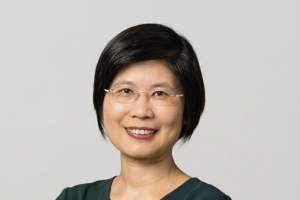
Dr Shuling Cheng is steering Oneness Biotech through a pivotal transition from a Taiwan-based research organisation to a globally focused commercial company. After 25 years in US biotech and medtech, she returned to Taiwan a decade ago and brought two companies to IPO on the Taipei stock exchange. She joined Oneness to oversee the global rollout of ON101 and the emergence of a next-generation metabolic-disease pipeline. With regulatory pathways opening across 60 markets and a first-in-class innovation model spanning wound care, immunology, and nucleic-acid therapeutics, Dr Cheng discusses how she is positioning Oneness for international scale – and why Taiwan’s distinctive strengths still give its biotechs a competitive edge.
Could you introduce yourself and explain how you came to lead the organisation?
I was born in Taiwan, PhD trained in the United States, and spent 25 years in the US working across research, development and commercialisation in the biotech and medtech spectrum. I returned to Taiwan ten years ago to bring that global experience to build companies capable of taking innovation to the global market.
Oneness is currently undergoing a significant transformation and reaching a different stage of maturity. What are your priorities today in leading the company?
Oneness has been research-driven since its inception, but always with a clear commercial vision. We have been listed on the Taipei stock exchange since 2011, and as early as 2016 began building our advanced wound-care manufacturing facility – with a capacity of 25 million units for global markets – even before regulatory approval. This reflected our confidence in meeting stringent requirements for both manufacturing and clinical evidence.
The goal has always been to transition from a research organisation into a commercial biopharma company. The IPO provided capital for late-stage development and the completion of our manufacturing infrastructure. In 2019, we acquired Fountain Biopharma, adding antibody and nucleic-acid platforms and strengthening our early-stage pipeline while our wound-care product, ON101, was already in late development, giving us a full spectrum from early to late-stage assets.
Taiwan alone is too small a market to justify large-scale investment, so from day one, we pursued global opportunities addressing unmet medical needs. Wound care is a good example – not an oncology-type space dominated by large pharma, yet the burden is significant. Over 500 million people worldwide live with diabetes, generating close to USD 1 trillion in healthcare expenditure, and diabetic foot ulcers remain a major cause of amputation.
The underlying driver is metabolic dysfunction leading to diabetes, which in turn leads to diabetic foot ulcers. ON101 offers a solution for limb salvage by accelerating healing and preventing amputation. But diabetes itself is a metabolic disorder, so our next-generation siRNA therapy with a novel mechanism – now entering Phase I – addresses the root cause more directly.
We do not pursue me-too products. We focus on first-in-class or best-in-class opportunities grounded in solving the underlying biology. Metabolism affects the entire body; symptoms may appear locally, but treating only the symptom is insufficient. By targeting the root cause, we can differentiate from many existing therapies that produce significant side effects because they are not precise in their mechanism. This is core to our innovation philosophy.
How do you ensure coherence across your diverse portfolio, spanning wound care, immunology, dermatology, and nucleic-acid therapeutics?
Although our portfolio spans several therapeutic areas, it shares a common biological foundation: metabolic dysfunction. These are systemic problems that surface in different ways— whether as an ulcer, an inflammatory response, or a dermatologic disorder. Of course, as a biotech company, we cannot address every manifestation, so we focus on indications with clear unmet needs and commercial potential. That may mean out-licensing early or taking products further ourselves, depending on where we can create the most value.
How do you allocate resources between near-commercial products and very early-stage programmes?
Partnerships are central to how we allocate resources. With a focused internal team, we prioritise where we can create the most impact and rely on strong external collaboration – from contractors for preclinical studies and CROs for clinical execution to KOLs who shape our clinical strategy.
Taiwan’s healthcare system, with many US-trained physicians, enables us to run early exploratory clinical work before formal regulatory trials. This is especially important when biological mechanisms are still being defined. Our medical advisors help design first-in-human studies that generate early proof of concept, while our R&D teams map biomarkers and mechanisms to determine the appropriate preclinical package.
We then invest in regulatory pathways that matter most for global leverage. Our strategy covers Asia, the US, Australia, Saudi Arabia, and Europe, each with demanding scrutiny from product design through clinical validation. For ON101, obtaining FDA approval would accelerate multiple markets that reference the US FDA system. Similarly, Europe’s MDR certification opens access to more than 27 countries. We also hold quality-system certifications that support Latin America, Canada, and Australia, and are entering around 60 countries over the next years.
Because the regulatory footprint is so broad, we rely on capable local partners for commercialisation. Few companies of our size pursue such extensive global filings. It is our ambition to ensure that patients worldwide can benefit from our innovations.
How do you decide when to partner, co-develop, or build commercial operations internally? What makes a good partner?
The starting point is having a clear view of what we do exceptionally well and where we benefit from complementary strengths. That guides whether we build capabilities internally or partner with organisations that can deliver them more efficiently. When evaluating potential partners, we look for a proven track record, quality of deliverables, transparency in communication, and the ability to collaborate as one team.
I have operated this model for more than two decades in the US. After the first meeting, I can usually gauge with about 60% confidence whether a second discussion is worthwhile; by the second meeting, it is often clear whether a partnership is viable and will work. I am used to this rapid assessment style during my 20 years in Silicon Valley, where companies scaled quickly by leveraging external partners rather than internalising everything.
At the same time, certain core capabilities must remain within Oneness: our scientific depth, cross-disease clinical understanding and insight, and close relationships with physicians who shape treatment realities. These are essential. 60 of our 160-person team in Taiwan focuses on these areas. For market assessment, we rely on external partners and consultant experts who bring deep data and insights across different markets and stages of development.
How are you structuring your evidence generation and clinical trial design for next-generation programmes to meet EMA and US FDA requirements?
Clinical validation is the most expensive and time-intensive phase of development. In Taiwan, ON101 received approval through a randomised controlled trial published in a peer-reviewed journal, establishing robust efficacy in diabetic foot ulcers. The product has a unique profile as a combination product that can be classified either as a drug or as a medical device, creating dual pathways. In Asia, we follow the drug pathway; outside Asia, the device pathway offers a more efficient route, accelerating time to the market while meeting rigorous quality and safety standards. We also began generating local real-world user experience several years ago to verify the clinical utility in the real-world practice.
In the US, we obtained an initial FDA clearance in 2022 for acute wound indications, which established a safety foundation. An additional scientific publication has described how the formulation supports a healthier wound environment through macrophage modulation. Based on this mechanistic evidence and the safety clearance, physicians began using the product for diabetic foot ulcers, where they reported that some previously stalled wounds showed early signs of improvement — even in cases such as failed grafts or hard-to-heal anatomical areas. That kind of real-world observation, shared independently by clinicians, reinforces what we saw in clinical trials and helps explain why clinicians apply the product across multiple wound types ahead of a specific indication, creating clinical traction and new collaborations.
The device pathway also allows us to explore multiple indications in parallel. In Asia, ON101 is approved specifically for diabetic foot ulcers; in the US, we have secured five indications: diabetic ulcers, venous leg ulcers, pressure ulcers, post-surgical wounds, and burns. Physicians have already begun using it across these wound types, providing strong market validation. Faster complete healing reduces complications, amputation, readmissions, hospital stays, and repeat surgeries, leading to clear health-economic benefits.
We are now expanding real-world use while advancing reimbursement with CMS, private insurers, hospitals, and long-term care facilities. The market is substantial but underserved. We work with partners across segments that bring strong distribution networks and benefit from introducing innovation into a field that has seen little advancement for more than 20 years, because major pharmaceutical companies have largely overlooked wound care.
Who do you see as your main competitors in this USD 9–10 billion wound-care market, and does ON101 address a truly unmet medical need?
If you accept the science and mechanism ON101 demonstrated, we effectively have no direct competitor. Physicians who use ON101 consistently report visible changes in the wound bed – granulation tissue appearing within days, sometimes within 24 hours. Many tell us they have not seen this in more than 20 years of practice. Some call it a “game changer” or even “magic.” One US board-certified plastic surgeon, Dr D Kapp, who works extensively with complex wounds, even described cases where the effect felt “Lazarus-like,” taking a flat, non-progressing wound and helping it transition rapidly into healthy granulation tissue.
Those comments reflect the type of unsolicited feedback we hear repeatedly from US physicians, nurses, and patients. One patient told us she had been unable to sleep because of her diabetic foot ulcer, but after starting ON101, the pain subsided enough for her to sleep through the night. Feedback like this, across many indications, strengthens our confidence in the product.
To your question on competitors: the market includes standard dressings, skin substitutes, negative-pressure wound therapy, and other long-established modalities. These approaches have been used for decades, yet amputation rates and medical expenditure remain extremely high. The current wound-care medical burden is about USD 300 billion, but the product market is USD 26 billion – far below its potential. That gap underscores both the persistent unmet need and the opportunity for solutions that meaningfully improve wound progression and outcomes.
Building a manufacturing facility before approval is often seen as risky. How did you manage that risk, and will you maintain internal manufacturing as your pipeline matures?
We currently operate one production line capable of producing 25 million tubes annually. Adding a second or third line is straightforward, as a single shift already yields that volume. Given there are around 95 million diabetic foot ulcer cases globally, we can scale rapidly as demand increases.
Different countries vary in pricing conditions and partnering models, so retaining internal manufacturing offers flexibility and ensures we meet diverse regulatory and quality requirements.
Why build manufacturing capacity internally instead of adopting a virtual model with extensive outsourcing?
Our technology is fundamentally different from small-molecule production. ON101 is a complex, plant-derived biologic, involving multiple active components rather than a single defined molecule, which makes quality control and batch-to-batch reproducibility especially critical.
If I were evaluating this product as a potential partner and saw the clinical outcomes, my next question would be: Can you manufacture it reliably at scale? The volume requirements for global markets will be enormously high. By investing early in internal manufacturing, we built strong credibility, ensured supply security, and established a strategic advantage when engaging with partners. It demonstrates that we can support both clinical demand and commercial scale-up without compromising quality.
What are Taiwan’s strengths as a base for your company? Where do you perceive bottlenecks for the future?
Taiwan has excellent scientific talent and a strong infrastructure for basic research and development. The main constraint is market size; it is not large enough to justify the investment, which leads many projects to adopt a more localised mindset. At Oneness, we focus exclusively on global opportunities, giving us the freedom to select indications and modalities that address real worldwide needs.
We remain open to assets with solid IP and early scientific validation, whether at the research or preclinical stage. Our collaborations range from research funding – where academic teams already have in vitro or in vivo platforms – to co-development agreements that transition into licensing once the programme demonstrates clearer clinical utility.
Academic researchers tend to think from a scientific perspective; our role is to apply a commercial filter. We assess what evidence is required, what the unmet medical need truly lies, and whether the science can meaningfully solve the global unmet medical needs. That ability to bridge academia with commercial development is one of our core differentiators.
In Taiwan, many biotech firms out-license early rather than pursuing Phase II or III. How do you balance licensing revenue with long-term development plans and financial strategy?
Our approach varies by asset. If a programme fits our capability scope and investment threshold, we will fund it through Phase II. However, we initiate partner discussions as early as Phase I to ensure alignment on expectations and avoid surprises later in development. We maintain a clear view of the external competitive landscape, our differentiators, the data we must generate, and the likely investment and timelines – all of which influence partner interest.
We do assume early risk, but when we have conviction in the mechanism and proceed in a disciplined way, we can meaningfully increase the probability of success. Demonstrating feasibility and clinical utility is essential; if I were the partner, that is exactly what I would want to see before committing. That is the calculated risk we take internally.
For Phase IIb or Phase III, particularly indications requiring thousands of patients, I do not expect to fund these alone. Large Phase III studies are inherently commercial exercises linked to the markets you intend to enter. You want principal investigators in those markets to know your product from Phase III onwards, not after approval. This is why partnerships become essential. While upfront payments can help offset our earlier investment, the greater value lies in sharing the scale, risk, and commercial reach required for late-stage development. In my view, Phase III is fundamentally the domain of commercial partners.
What constitutes a good partner for Oneness?
It varies by indication, but for ON101 at the commercial stage, the ideal partner would already have strong distribution channels and a footprint in wound care, surgical applications, or burns. They understand the gaps in current treatment and can see how ON101 complements their portfolio. Our discussion with potential partners, therefore, centres on the specific value we add to their existing regimens.
Wound healing is a journey, and no single product solves every step. Our ability to modulate macrophages in the wound environment allows intervention from the very early phase, including settings where infection is present and most products cannot yet operate. Many skin substitutes and advanced therapies exist, yet complete-healing rates remain low because they do not address the initial inflammatory stage. Inflammation must be under control before proliferation, and epithelialisation can occur. Several US wound specialists have described ON101 as a kind of “wound-bed optimiser” — a product that strengthens the performance of advanced therapies rather than competing with them, “It serves as a ‘utility player’ in wound care because of its ability to integrate well with different treatment pathways.”
ON101 is a new solution to complete the wound continuum. I tell partners, “We complement what you lack,” allowing them to accelerate overall wound healing. This integrative role creates strong therapeutic and commercial synergy.
The US market for skin substitutes has also faced reimbursement distortions due to overuse. CMS is now restricting the number of reimbursable applications (for example, four per episode of care), correcting previous misuse. Given that consistent healing rarely occurs, with only a limited number of applications, this policy change creates a clear opportunity for ON101 and enhance our value within partner portfolios.
Based on your experience in Silicon Valley, the US, and Taiwan, what defines a truly international Taiwanese biotech, and how do you instil this global mindset in your teams?
Taiwan has real strengths. Taiwanese teams excel in focus and attention to detail, which directly translates to manufacturability. TSMC is the classic example: a company built on the idea that small process details matter enormously. This mentality – tenacity, resilience, meticulousness – is deeply cultural.
Financial discipline is another strength. I emphasise the “three Fs”: finance, focus, and flexibility. A company must stay focused, but also remain flexible enough to adapt to changes. Solid financial management underpins both. Attracting investment while controlling burn rate is a constant balancing act. Taiwanese companies tend to manage operations with exceptional discipline; historically, as a manufacturing economy, every tiny process element mattered.
This culture translates into financial longevity. Give USD 100 million to a Silicon Valley company, it may scale fast but burn through it in two years; give the same amount to a Taiwanese biotech, and they may operate on it for 10 or even 20 years. The trade-off is speed: you may not see a dramatic breakout in five years, but survivability is higher. In Taiwan, companies endure longer and often find niche, differentiated strengths. That durability is a foundation for building a truly international biotech. We also see this reflected in how global clinicians respond to our products—they commented that what they appreciated most was the consistent outcome, indicating the stringent manufacturing process that is associated with Taiwan’s engineering culture. Observations like this reinforce my belief that Taiwanese innovation can resonate internationally when it combines scientific depth with disciplined execution.
What major milestones are you planning to accomplish in the next three to five years?
Our two key assets will drive the next phase of growth. First is ON101, where we are expanding to around 60 countries and working with multiple partners; commercialisation is a core priority. Second is our next-generation siRNA therapy for metabolic disease, now entering Phase I. Over the next three to five years, we expect encouraging clinical data and anticipate partnerships with major pharmaceutical companies. Alongside these, we will continue strengthening our broader pipeline.
I should emphasise that building a globally oriented biotech from Taiwan is challenging. It requires sustained commitment, focused investment, and collaboration with experts across many disciplines. We know we cannot do everything ourselves, but we are fully committed to making this succeed.
I have not previously seen a product perform as strongly in real-world clinical settings as ON101. It is genuinely unusual, and that scientific and clinical foundation is what gives us confidence. Several international clinicians have also remarked on the product’s consistency across different wound types and patient profiles — an attribute they see as rare in wound care and one that reinforces the broader global potential of our technology. By investing the necessary time and evidence, we can benefit patients worldwide — a personal passion that aligns closely with the company’s mission.