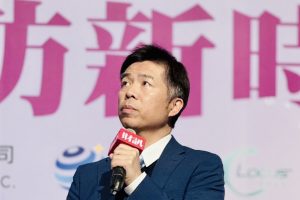
Sean Chang, CEO of Locus Cell, explains how his clinical CAR-T background led him to build a Taiwan-based CDMO for advanced cell therapies. The company is scaling Southeast Asia’s largest GMP facility, leveraging Taiwan’s manufacturing discipline, regulatory reforms and global partnerships to deliver high-quality, cost-competitive production bridging academic innovation and commercialisation across the Asia markets region.
You joined Locus Cell in 2022. What was your mandate when you came on board?
I am a haematologist with more than twenty years of experience. When my boss, Alex, first invited me to join Locus Cell, I was hesitant. It represented a significant professional shift – a move into a very different type of role from clinical practice. I therefore sought guidance from my mentor, who was also my doctoral supervisor, and asked whether making such a transition made sense. His advice was unequivocal. He told me I should go, because while Taiwan has many excellent paediatric haematologists, I might be one of the very few positioned to meaningfully advance Taiwan’s cell therapy industry.
Between 2009 and 2012, following completion of my PhD, I worked in the US in the laboratory of Dario Campana, where I conducted CAR-T research. Dr Campana invented the world’s first CAR-T construct. Novartis subsequently signed a material transfer agreement with his laboratory, and in 2011 the first successful CAR-T clinical trial globally was conducted. During those three years of research, I also developed and secured a patent for CAR-T technology – specifically an NK cell–based CAR therapy. That patent was later licensed to a company in California and continues to be licensed internationally. Since then, the patent has transitioned from St Jude in the US to the National University of Singapore, and licensing revenues now flow through NUS.
After returning to Taiwan, I resumed work as a hospital-based physician before moving to National Taiwan University, where I began manufacturing CAR-T cells, while still remaining embedded within the hospital system. Three years ago, when Alex again asked me to join Locus, I returned to my mentor for counsel. Once more, his response was consistent. He told me I should go – that while many haematologists can care for children with leukaemia, perhaps only I could undertake this particular work.
Can you describe the company’s current operations and growth trajectory?
When I joined the company in 2022, we had approximately 20 employees. Today, that number has grown to more than 50, and we expect to expand further once we relocate to our new facilities in Zhubei We have recently become a publicly listed company, although not yet on the Taiwan Stock Exchange. We plan to submit our application next year. At present, we are in the pre-listing phase, as completion of our own manufacturing facilities is a prerequisite.
Our new facility in Zhubei is scheduled for completion next March. We are planning an opening ceremony, which we expect to be attended by senior government representatives. In parallel, we have signed memoranda of understanding with Miltenyi Biotec and with Charles River. With these strategic partnerships in place and the completion of our new facility, we will be fully prepared to proceed with listing on Taiwan’s exchange market next year.
You are investing heavily in what will be Southeast Asia’s largest GMP-compliant cell factory. For a young company in a rapidly evolving field, why build at this scale?
Regenerative medicine remains a very young field when compared with established modalities such as chemotherapy, targeted therapies, and antibody-based treatments. Looking ahead, I believe its development will be highly diversified. Technologies such as induced pluripotent stem cells enable the transformation of cells into a wide range of organ-specific cell types, but doing so requires multiple layers of highly complex and specialised techniques.
Earlier this year, a paper published in the New England Journal of Medicine reported the use of iPSC-derived pancreatic beta cells to treat patients with type one diabetes. This represents a genuinely novel therapeutic approach, but it is also exceptionally complex. With advanced cell therapies of this nature, a clear bottleneck emerges between innovation at the hospital and academic level and the translation of those discoveries into commercial products. To bridge this gap, the market requires a CDMO with large-scale, expandable manufacturing capacity and leading-edge technological capabilities.
What advantages does Taiwan offer for this endeavour?
Taiwan’s hospitals operate to exceptionally high standards when compared with those in many other countries. We deliver high-quality care at relatively low cost, underpinned by a universal healthcare system. In addition, a new regenerative medicine law will come into effect in January. Under this framework, the government will allow Phase II clinical trials to enter Taiwan and may grant conditional approval for clinical trial products. This represents an entirely new regulatory approach, designed to facilitate the entry of innovative therapies while maintaining rigorous safety standards.
Taiwan also has a long and advanced history in semiconductor manufacturing. I believe the country has manufacturing in its DNA. Our success in semiconductors and electronics demonstrates an ability to operate at scale with precision and consistency. In the field of regenerative medicine, I am confident that Taiwan can achieve an equally high level of manufacturing excellence when compared with other countries.
How are you leveraging Taiwan’s manufacturing heritage in cell therapy?
We have strong technology, strong people, and strong partnerships. Our capabilities span multiple cell modalities, including CAR-T cells, mesenchymal stem cells, cytokine-induced killer cells, and a range of other cell types. Our parent company, Metatech, was awarded the first PIC/S GMP certification by Taiwan’s FDA, underscoring the robustness of our manufacturing standards.
We have built a genuinely multidisciplinary team, covering manufacturing, quality assurance, quality control, engineering, and digital systems. This breadth of expertise allows us to operate across the full value chain, from process development through to compliant large-scale production.
In the era of artificial intelligence, our parent company has also published ten patents related to AI applications derived from its manufacturing experience. Alongside this technological depth, we are actively building strong partnerships with international players such as Miltenyi, Charles River, CellforCure, and Cambium Bio from Australia. These partners are able to establish their own dedicated manufacturing lines within our facilities–configured to closely mirror their existing clinical trial setups–ensuring continuity, efficiency, and a smooth transition from development to scaled production.
The CDMO landscape includes powerful global players – Lonza, Thermo Fisher, Catalent, WuXi. Samsung Biologics just announced 1.5 billion USD investment in a new facility. How do you differentiate yourselves?
We are based in Southeast Asia, which gives us a deep familiarity with the countries and healthcare systems across the region. Many other major players concentrate primarily on the US and Europe, whereas our geographic position provides practical advantages, particularly in logistics and cold chain management. Combined with Taiwan’s manufacturing DNA and the integration of artificial intelligence into our processes, this allows us to deliver high quality production at comparatively lower cost.
Through partnerships with established global companies such as Miltenyi and Charles River, we are also able to access local markets more effectively. By collaborating with these partners over several years, we can raise our technology standards while building a credible regulatory track record with agencies such as the EMA and the FDA. This, in turn, creates a strong foundation for the company, builds trust with customers, and positions us to capture further opportunities as the business continues to scale.
What is your partnership strategy?
At our Zhubei facility, we are constructing only the first four floors, intentionally leaving floors five to ten as open, undeveloped space. While this may appear to be a limitation, it is in fact a significant advantage for partners such as Miltenyi, who require flexible, empty environments in which they can install and configure their own facilities to precise specifications.
I understand that they previously collaborated with a CDMO company in Japan. After several months of discussion, however, they concluded that the facility could not meet their requirements, largely because it is extremely difficult to modify infrastructure once a plant has already been completed. In contrast, we are building our cell factory with flexibility in mind. By keeping substantial space empty, we allow partners to configure their production environment precisely as they need it. The same logic applies to Cambium Bio, which currently has Phase II clinical trials under way in the US. They want their own dedicated production line, configured exactly to their standards and processes.
When compared with costs in the US or Europe, our cost base is lower. In terms of workforce quality, I would not claim it is exceptional, but it is solid and reliable. The talent is well trained, operationally disciplined, and more cost-effective than in the US and Europe. As I mentioned earlier, Taiwan has a strong manufacturing DNA. We follow standard operating procedures rigorously and consistently. Taiwanese industry may not always be known for breakthrough innovation, but it has proven, over the past 30 years, that it is exceptionally strong in manufacturing execution. Based on that track record, we strongly believe that we can perform extremely well in the field of regenerative medicine.
You have partnered with CellforCure to integrate automation and high-efficiency cell production technology. How central is automation and digital technology to your competitiveness?
Cell Cure is an innovative company that developed a fibre-based system to expand cells, including mesenchymal stem cells, which are then harvested by dissolving the fibres. In collaboration with Hitachi, an automated machine was created to execute this technology. We now house this machine at our facility, and Cell Cure has asked us to manufacture for them, with agreements expected to be finalised next month.
Taiwan excels in automation and digital technology. We have established automated manufacturing in semiconductors and electronics, and we aim to transfer these capabilities to regenerative medicine CDMO, positioning ourselves as a “TSMC for cell therapy.”
Our company is still in an early stage, much like TSMC three decades ago when it was relatively unknown. This makes partnerships with international biotech leaders such as Miltenyi and Charles River vital, allowing us to acquire advanced techniques while leveraging our own digital manufacturing expertise.
One key distinction, however, is that we already possess digital automation systems, albeit in different industries. Our current mission is twofold: transfer manufacturing technology from TSMC to Locus and acquire specialised biotech techniques through our partnerships.
You witnessed CAR-T development before most of the world. Where do you see the most potential in the future of cell and gene therapy?
Regenerative medicine remains in its infancy – essentially new-born – and is set to become far more diversified and technically complex. A critical gap exists between innovators and the market, which must be addressed through CDMO services.
Within regenerative medicine, the CAR-T field is relatively mature. Several companies, including Novartis, BMS, Gilead, and Miltenyi, already have CAR-T products in production and approaching the market.
By contrast, iPSC therapies are still at an early stage. Only a handful of clinical trials exist, and no products have yet reached the market. Nevertheless, I am highly optimistic. In the coming years, iPSCs are likely to enter a rapid growth phase, at which point CDMOs will play an increasingly pivotal role, as the complexity of manufacturing will surpass what individual innovators or researchers can manage independently.
The challenge extends beyond production. Scalability, quality, and consistency are critical hurdles that require specialised expertise. I firmly believe that high-quality manufacturing will be central to unlocking the future potential of iPSCs.
There remains significant market opportunity in CAR-T and other cell types. Tumour-infiltrating lymphocytes, for example, are emerging commercially, with Iovance recently launching the first TIL product globally. This field is highly competitive but still in an early growth phase, and digital technology will be crucial in shaping its development over the next 10 to 20 years.
As a CEO from an academic background, how do you bridge the scientific and business aspects?
That is precisely why my boss, Alex, encouraged me to enrol in the EMBA programme at National Taiwan University. This is particularly important for me, as my background is in medical practice – a relatively isolated hospital environment rather than the broader business world. I require the EMBA training to bridge that gap and develop the necessary managerial skills.
Looking ahead three to five years, what are your main priorities and key milestones?
Locus needs to increase its visibility through international partnerships. That is the purpose of these conversations. Once relationships are established, we can progress to discussions, meetings, and greater familiarity. Perhaps we start with small collaborations to build trust, ultimately leading to formal agreements.
In Taiwan, we must cultivate a full ecosystem – encompassing raw material suppliers, CROs, upstream and downstream partners, and even collaborators for cold chain logistics. Only after constructing this ecosystem can we achieve cost competitiveness, following the example of TSMC.
At present, many large pharmaceutical companies rely on their own media, beads, and cytokines – all of which are extremely costly. Even simple items such as tubing from Europe or the US carry a high price. As a CDMO, we must develop a localised ecosystem to compete effectively with companies like Lonza, Catalent, and WuXi Pharma. Establishing our own domestic supply chain is essential for achieving that competitive edge.
What would you say to international readers who may be sceptical about Taiwan’s potential in cell and gene therapy?
Our vision is to serve as a foundational engine for cell and gene therapy manufacturing across Asia, with a particular focus on Southeast Asia. We do not develop our own products – our focus is entirely on CDMO, much like TSMC operates for semiconductor manufacturing.
Our role is straightforward yet essential: to enable innovators and researchers to make their therapies manufacturable, scalable, and commercially viable. Taiwan offers a uniquely favourable environment – advanced medical infrastructure with numerous leading hospitals, a robust regulatory framework, and strong government support. From next year, pioneering regulations will come into effect. The government has been highly supportive of regenerative medicine, and some regard our health minister as the father of regenerative medicine in Taiwan, given his introduction of special regulations starting in 2018.
Within this ecosystem, we provide GMP capabilities. Our parent company was the first in Taiwan to obtain GMP certification. Coupled with an experienced and high-quality workforce, we are leveraging this foundation to construct the largest cell therapy facility in Asia.
Our objective is to bridge the gap between researchers and global companies. For instance, we are facilitating the entry of Charles River into Taiwan, connecting local innovators with internationally renowned partners. Similarly, we assist global collaborators in entering Taiwan and broader Southeast Asian markets, navigating local regulations and market conditions.
We act as a catalyst – linking global entities with local markets across Taiwan and Southeast Asia.