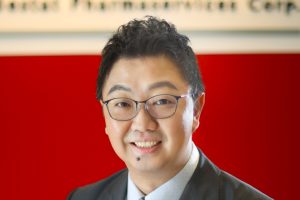
Taiwan’s clinical research ecosystem has evolved rapidly in recent years, reflecting Asia’s growing role in global drug development. Samuel Su, Founder and CEO of Bestat Pharmaservices, discusses how the organisation has expanded from a data-driven CRO into an integrated development partner supporting preclinical research, multi-regional clinical trials, and international regulatory strategies. As global biotech companies increasingly look to Asia for innovation and trial execution, Bestat aims to help bridge regional science with global markets.
What opportunity did you see in Taiwan’s clinical research ecosystem when you founded Bestat, and how has the organisation evolved since then?
Bestat Pharmaservices was founded in 2013 at a time when Taiwan already possessed strong capabilities in biotechnology and pharmaceutical research and development. However, there remained a clear gap in areas such as clinical trial data management, statistical analysis, and the integration of international regulatory requirements. Few CROs in the region were operating fully at global standards, particularly when it came to supporting innovative drug developers seeking to expand beyond domestic markets. We established Bestat to help address that gap and to support biotech companies in Taiwan and across Asia as they move their products into global clinical development.
In its early stages, Bestat focused primarily on clinical data management and regulatory services. As the organisation developed, we gradually expanded our capabilities into a broader clinical development platform. Today, our work spans clinical trial design and management, regulatory affairs and strategy, clinical data management and biostatistics, safety monitoring, and the execution of multi-regional clinical trials. While we began as a Taiwanese CRO, our client base has steadily become more international, including companies from the United States, Europe, Japan, and China. Throughout that evolution, our objective has remained consistent: to help innovative medicines developed in Asia reach global markets.
My own background is in statistics, which has shaped the company from the beginning. I studied statistics at university and have spent more than 25 years working in clinical research and the CRO industry. In fact, the name “Bestat” reflects that foundation, combining the words “best,” “at,” and “stat.” It originally came from a personal ambition to become truly excellent in statistics. Over the course of my career, I worked extensively in clinical data management, biostatistics, regulatory strategy, and international clinical trials, experiences that ultimately led me to establish Bestat and build the company around data-driven clinical development.
How does the acquisition of Trifecta MedTek strengthen Bestat’s capabilities, and how does it fit into your broader long-term strategy?
The acquisition of Trifecta MedTek represents an important milestone for Bestat and reflects our broader effort to build a more integrated development platform. Since founding Bestat in Taipei in 2013, our focus has been primarily on clinical development services, including clinical trial management, data management, biostatistics, and regulatory strategy. Trifecta MedTek, previously known as Trineo Biotechnology, brings strong capabilities in preclinical research, particularly pharmacology and toxicology studies that are essential during the early stages of drug development before first-in-human trials.
By integrating these capabilities with our existing clinical expertise, we are creating what we believe is Taiwan’s first fully integrated CRO platform spanning the entire development pathway, from preclinical research through clinical development and regulatory support. For sponsors, this structure allows for closer coordination across development stages, more efficient use of resources, and ultimately a reduction in development risk. It also enables us to support innovative programmes with a more complete and streamlined development framework.
Looking ahead, we will continue to evaluate strategic expansion opportunities, although our priority is not simply increasing scale but strengthening the overall drug development value chain. One important area is the further development of nonclinical capabilities, particularly services aligned with GLP. We are also exploring the role of AI in improving areas such as data management, clinical trial efficiency, and development decision-making. At the same time, we plan to continue expanding our regional CRO collaboration networks, allowing us to support sponsors more effectively across different markets. Over time, our objective is to develop Bestat into a multinational CRO platform capable of supporting innovative therapies from preclinical research through global clinical development.
As biomedical science advances into areas such as cell and gene therapies, how has Bestat adapted its capabilities to support these increasingly complex modalities?
Advanced therapeutic modalities such as cell and gene therapies are reshaping how drugs are developed, and we recognised early that supporting these programmes would require specialised expertise. Bestat began investing in this area relatively early. In 2015, we supported what was considered Taiwan’s first Phase I clinical trial in the field of cell therapy, at a time when regenerative medicine was still emerging locally and the regulatory framework was only beginning to take shape. Participating in those early studies allowed us to build practical experience in managing the complexity of advanced therapy clinical development.
Since then, we have continued to strengthen our capabilities in three areas. The first is technical expertise, by building teams with experience in advanced therapeutic modalities. The second is regulatory understanding. In 2018, Taiwan introduced new provisions governing the clinical use and development of certain cell-based therapies, commonly referred to as the Special Regulation for Cell Therapy. This policy created a more flexible framework for hospitals to apply approved techniques under regulatory oversight and helped accelerate the development of regenerative medicine in Taiwan. The third area is clinical trial design, as studies involving cell therapies require closer coordination between clinicians, regulatory experts, and development teams than traditional pharmaceutical trials.
At the same time, talent development has been an important focus. Over the past several years we have invested in internal training programmes and built close collaborations with universities, offering internships to students studying statistics, life sciences, and clinical research. These programmes allow young professionals to gain practical experience in areas such as clinical trial operations, data management, and regulatory affairs. Taiwan also has several government-supported initiatives that encourage young researchers to work in industry, and through these collaborations we are able to strengthen our workforce while contributing to the development of the next generation of biotech professionals.
How has Bestat expanded from a Taiwan-based CRO into managing multi-regional clinical trials, and how do you differentiate yourselves from much larger global CROs?
Multi-regional clinical trials, particularly Phase III studies, are highly complex undertakings. A single programme may involve multiple countries, numerous hospitals, thousands of patients, and significant volumes of clinical data. To manage this complexity, Bestat relies on a combination of strong data infrastructure, international collaboration, and disciplined project management. We work with a Korean electronic data capture provider to build centralised clinical trial databases that enable investigators to enter data electronically and allow real-time monitoring across sites. Our data management teams operate according to CDISC standards, which are widely used internationally and required for many regulatory submissions, ensuring that the data generated through our trials is accurate, standardised, and suitable for global development.
Equally important is the international collaboration network we have developed over the years. Bestat maintains working partnerships with organisations in China, the United States, and several European countries, allowing us to coordinate studies across multiple regulatory environments. At the same time, the execution of large trials depends heavily on strong project management. Even though we operate as a relatively lean organisation, we typically assign several project managers to major programmes to ensure close communication with sponsors and maintain effective oversight throughout the study.
When competing internationally, we recognise that the landscape includes very large global CROs with extensive resources. Our positioning is therefore different. We see Bestat as a boutique global CRO, offering sponsors a combination of flexibility, closer project attention, and collaborative engagement, while maintaining international quality standards and a strong understanding of the Asian clinical research environment. For many small and mid-sized biotech companies, that balance can be particularly valuable when running multi-regional trials.
How has Taiwan evolved as a clinical trial hub over the past decade, and to what extent can data generated in Taiwan support international regulatory submissions?
Taiwan has made notable progress as a clinical research environment over the past decade. Several developments have strengthened its position in the global clinical trial landscape, including accelerated regulatory review mechanisms introduced by TFDA, the establishment of the Taiwan Clinical Trial Alliance to better coordinate research activities, and sustained policy support from the government for the biotechnology and pharmaceutical sectors. Together, these initiatives have improved the efficiency of the clinical trial ecosystem and enhanced Taiwan’s attractiveness as a location for international drug development programmes.
From a regulatory perspective, clinical data generated in Taiwan can increasingly contribute to international development strategies when studies are conducted according to global standards. Taiwan’s clinical trial system is closely aligned with international GCP requirements, which supports the credibility of the data in discussions with regulators abroad. Authorities such as China’s NMPA have become more open in recent years to accepting overseas clinical trial data when it is authentic, traceable, and relevant to the patient population. At the same time, there is still room for improvement within Taiwan’s ecosystem, particularly in better integrating clinical trial resources across hospitals, developing more professionals with global clinical development experience, and strengthening collaboration among the many smaller organisations that make up the country’s biotech sector.
How would you characterise the evolution of Bestat’s client base, particularly with regard to engagement from Western biotech and pharmaceutical companies?
As Bestat has developed over the years, our network of collaborators has expanded significantly, while our clients have consistently remained the study sponsors themselves, whether they are based in Taiwan or internationally. We draw a clear distinction between clients and partners. Our clients are the sponsors responsible for developing the drug candidates, while our partners are organisations that work alongside us to support different aspects of the development process. At the same time, biotech companies often operate with varying financial resources, particularly smaller innovators. When we believe a programme has strong scientific merit and genuine potential to benefit patients, we try to support that developer and help advance the project wherever possible.
We are also seeing a clear shift toward greater international engagement. More biotech companies from the United States and Europe are conducting multi-regional clinical trials that include Asia and are actively seeking CRO partners within the region. As a result, Bestat’s client base has become increasingly global. Today we work with biotechnology companies from the United States, pharmaceutical companies from Japan, and innovative drug developers from Europe, and we expect this internationalisation to remain an important element of our growth in the years ahead.
What role do you see Bestat playing in the continued growth of clinical research across Asia over the next decade?
Asia has gradually moved beyond its earlier perception as a lower-cost clinical trial destination and is increasingly recognised as an important driver of global drug development. Within this evolving landscape, we see Bestat contributing in several complementary ways. We aim to provide a strong clinical trial execution platform within Asia, while also serving as a regulatory bridge that helps connect Asian innovation with global development pathways. At the same time, we want to position ourselves as a strategic regional partner for international biotech and pharmaceutical companies that are expanding their clinical research activities in the region.
Looking ahead, I believe the coming decade will be an important period for the continued growth of Asia’s biopharmaceutical sector. Biotech companies today are increasingly seeking CRO partners rather than simply service providers, organisations that can collaborate closely with them throughout the development process. Our mission at Bestat is therefore straightforward: to help connect Asian innovation with global drug development. By continuing to build what we believe is Taiwan’s first integrated preclinical-to-clinical CRO platform, while maintaining the flexibility of a boutique global CRO, we hope to support the development of innovative therapies and help bring them to patients around the world more efficiently.