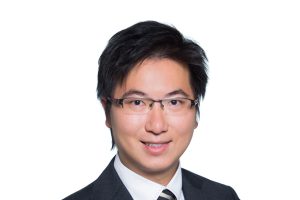
From factory automation in Silicon Valley to scalable service robotics embedded in daily care, Roy Long Hei’s journey with Robocore reflects a disciplined belief that technology must prove itself in real operating environments. What begins as a distribution-first strategy in Hong Kong evolved into full ownership of the TEMI® platform and a Robot-as-a-Service model, with telemedicine in nursing homes emerging as a structurally significant growth engine. Long Hei also discusses manufacturing resilience, open software ecosystems, insurance-aligned revenue models, and the long-term pressures reshaping primary and elder care systems.
What personal and professional experiences led you to found Robocore, and how did Hong Kong emerge as the right base for the company’s early development?
Before returning to Hong Kong, I built an automation and systems-integration business in the San Francisco Bay Area called L2F, short for Lab2Fab. Based in Fremont, California, we worked with industrial robot arms to help teams move automation ideas from concept to a working prototype and then into scalable manufacturing. As the business matured, we took on more complex projects for advanced manufacturing, including work linked to electric vehicles, aerospace, and emerging display technologies. In 2017, after several years of steady growth, L2F was acquired by The Middleby Corporation, and the business continues to operate within the group today.
After that exit, I felt there was still more to do in automation, but with a clearer focus on everyday applications rather than factory-only environments. I returned home and founded Robocore in 2019. Hong Kong was a logical base. It sits at the centre of the Greater Bay Area, with deep hardware supply chains, strong engineering talent across Hong Kong and Shenzhen, and close proximity to the regional headquarters of many multinational companies. Early support from Hong Kong Science Park also played an important role, through incubation programmes, hiring subsidies, and international exposure that helped us build the business from scratch. Hong Kong’s position as a financial and commercial bridge between global markets and mainland China further reinforced that decision.
From the outset, we deliberately adopted a distribution-first approach. I did not want to spend many years in pure research before engaging the market. By working with existing robotics platforms, we could start selling early, engage customers directly, and learn where automation delivered real operational value. Hong Kong made this particularly effective, as we could demonstrate solutions locally to senior decision-makers and, if they worked, see them standardised and rolled out across other regions. In the very early days, that meant carrying a single prototype across the city to demonstrate it to prospective clients.
This strategy was also shaped by my background. My family has been involved in industrial automation in Hong Kong for decades, building automated manufacturing lines, which reinforced my belief that automation should extend beyond factories. As we evaluated platforms, we focused on robots built on an open software development kit, which allowed us to customise applications, integrate additional hardware, and adapt workflows rather than selling fixed-function machines. That search led us to TEMI® , an Israel-origin platform designed around an open development framework. Its flexibility aligned closely with our vision of building an ecosystem where developers and customers could shape new use cases over time, which is why we began working with temi as a distributor and later deepened that relationship through investment and closer collaboration.
How did your initial distribution-led market exposure influence the direction of TEMI® and shape the decision to move towards full platform ownership and a Robot-as-a-Service model?
In the first few years, our objective was not rapid expansion but disciplined learning. We deployed the robots in real operating environments and engaged directly with frontline staff to understand where automation could remove friction and create measurable value. I personally spoke with several hundred customers, and their feedback informed how we prioritised features and structured applications. Rather than building isolated solutions for individual requests, we consolidated recurring needs into scalable software modules that could be standardised across sites.
As adoption accelerated, our relationship with TEMI® naturally deepened. By 2022, the combination of deployment volume and application development made a more integrated structure strategically sensible. At the same time, geopolitical uncertainty in Israel introduced questions around long-term stability, which prompted discussions with shareholders about leadership and operating alignment. In 2023, we completed the transaction that brought temi under the Robocore group through RoboTemi Global. While R&D and manufacturing remain distributed across established locations, platform governance and commercial direction are coordinated from Hong Kong, giving us greater coherence in execution.
That transition also clarified our business model. We do not regard hardware as the primary source of value; the differentiation lies in software, workflow integration, and sustained utilisation. We therefore extended the Software-as-a-Service (SaaS) model into robotics, which we describe as Robot-as-a-Service (RaaS), focusing on ongoing deployment and application development rather than one-off sales. This strategy is reinforced by our commitment to an open software development kit, which has enabled more than two thousand developers and enterprise partners, including organisations such as Walmart and CVS Health, to build on the platform. Where appropriate, we structure shared intellectual property arrangements, as in the case of our telemedicine module developed with a physician partner in the United States, always with the objective of delivering solutions that function reliably in daily practice rather than remaining conceptual.
How did Robocore identify its first industry vertical, and how did telemedicine in nursing homes emerge as a core application?
At the outset, the robot was designed with a consumer use case in mind. We made it compact and unobtrusive, with the idea of positioning it as a home assistant and companion. In reality, we quickly recognised that without brand recognition and scale, a direct-to-consumer approach would take time to mature. We therefore shifted towards a business-to-business model, focusing on environments where a single robot could be integrated into daily routines and deliver a clear return. That move allowed us to refine the product in structured settings and build commercial traction while continuing to learn from real-world deployment.
Healthcare was not a vertical we selected in advance. It emerged out of circumstance during the COVID-19 pandemic. In 2020, many nursing homes in the United States suddenly lost regular access to physicians, as visits became restricted and residents could not be moved easily. A physician partner realised that the robot could serve as a mobile extension of the doctor inside the facility, enabling remote consultations while maintaining a physical presence at the bedside. We integrated medical sensors for assisted vital-sign collection and combined them with live video consultation, allowing routine assessments to be carried out without disrupting care workflows. This model proved scalable, enabling a single physician to support a large number of facilities while maintaining continuity of care.
The focus was always on routine, non-acute cases rather than emergencies, which still require hospital transfer. During the pandemic, insurers introduced reimbursement mechanisms for telemedicine in long-term care, which made this approach economically viable at scale. Instead of selling robots as equipment, we deployed them as part of a service model aligned with those reimbursement pathways. Our first pilots were launched in New York, one of the most demanding healthcare markets globally, which provided a rigorous test of both clinical relevance and operational sustainability. That experience confirmed healthcare as a priority vertical and reinforced our belief that robotics delivers its greatest impact when embedded into everyday care rather than positioned as standalone technology.
How do you see healthcare shaping Robocore’s long-term direction, and how does your model respond to the growing pressure on primary care systems?
Healthcare has become our most important vertical because it addresses a structural constraint that is now evident across markets: a chronic shortage of frontline capacity in primary and long-term care. Our objective is not to replace clinicians, but to extend their reach in settings where demand consistently exceeds supply. The strategic investment from Foxconn in our company was therefore about scale, enabling us to manufacture and deploy robots in volumes that match the size of the opportunity. In the United States alone, there are roughly fifteen thousand nursing homes, and the model only becomes meaningful when deployment moves from isolated installations to tens of thousands of units embedded in daily care workflows.
That level of presence changes the role of the robot. It becomes part of the care infrastructure rather than a standalone device. It also allows us to think in ecosystem terms. When we are already operating inside facilities, other healthcare innovators can integrate their solutions through our platform instead of negotiating access one site at a time. Our commercial model reflects this logic. It is insurance-based and tied to telemedicine utilisation rather than equipment sales. Nursing homes do not pay upfront for the robot; we deploy, maintain, and service it, and we share part of the reimbursement stream with the facility. This alignment lowers adoption barriers for providers while supporting sustainable scale for us.
How do you position Robocore and Dr TEMI® across care settings, and what opportunities do you see for extending the platform beyond nursing homes?
At group level, we continue to position Robocore as a robotics platform company with strong software and systems capability. Healthcare, however, requires a distinct clinical narrative, which is why we created Dr Temi. It is the same underlying platform, configured specifically for telemedicine, with dedicated workflows, messaging, and a physician-led presence in the United States. This allows us to engage healthcare stakeholders in the right language without fragmenting the technology stack. Nursing homes remain a core focus, but they are not the boundary of the model.
We are already active in hospitals, particularly in Hong Kong, where our robots are deployed across a large share of public hospitals. In that environment, use cases extend well beyond telemedicine to include patient orientation, logistics, and fall prevention. Robots can work alongside bed sensors to detect early movement, alert nursing staff, and engage patients until help arrives, reducing fall risk in understaffed wards. More recently, advances in generative artificial intelligence have expanded what the platform can do, enabling contextual conversation, memory, and continuity of interaction. These capabilities support medication adherence and patient engagement while remaining clinically bounded, with escalation triggers defined by physicians. The aim is not autonomy for its own sake, but a controlled extension of care that integrates safely into everyday clinical practice.
What is your approach to manufacturing and supply-chain resilience amid geopolitical uncertainty, and how does this connect to your broader commercial philosophy?
Manufacturing resilience is central to our long-term viability. For many years, our production and supply chain were anchored in Dongguan, where we benefited from China’s highly integrated hardware ecosystem, cost efficiency, and immediate access to specialised components. That infrastructure has been built over decades and remains exceptionally difficult to replicate. At the same time, we have been mindful of tariff volatility and broader trade risk, particularly with respect to the United States market. In 2024, we partnered with Foxconn to establish additional manufacturing capacity in Taiwan and progressively shifted part of our output there. Today, robots destined for the US are assembled in Taiwan, while other regions continue to be supplied from China. Although production costs are higher in Taiwan, this dual footprint materially reduces geopolitical exposure and provides strategic flexibility without sacrificing operational continuity.
It is important to acknowledge that supply chains are ecosystems rather than single sites. Even where final assembly takes place outside mainland China, many upstream components continue to originate from the broader regional network. Our objective is therefore not to disengage from a highly developed manufacturing base, but to manage risk intelligently while preserving competitiveness.
Commercially, we have also chosen not to follow the conventional medical technology model. Established players typically operate behind tightly structured sales systems, selling equipment at a premium and layering maintenance and service contracts on top. We approach the market differently. Instead of entering a hardware price competition, we design models that shift value towards utilisation and recurring services. In healthcare, this means deployment under reimbursement-linked service structures rather than capital equipment sales. In other sectors, such as advertising or education, we may provide the robot at no upfront cost and share in the revenue it generates. The common thread is to avoid competing solely on hardware and instead align incentives around sustained use and measurable outcomes.
How has investor sentiment towards robotics evolved in recent years, and what does that mean for Robocore’s thinking around funding and independence?
Investor sentiment towards robotics has moved in cycles. Two to three years ago, many investors became cautious after uneven returns from earlier, hardware-heavy robotics investments, and attention briefly shifted towards humanoid robotics. That enthusiasm cooled once concerns emerged around safety, maturity, and real-world usability. What we see today is a return to pragmatism. Investors are again focusing on wheeled robots that are already deployed, demonstrably safe, and delivering tangible value across multiple industries. The number of wheel-based robotics companies now moving towards IPOs in Hong Kong reflects that renewed confidence.
Our own approach has always been grounded in practicality. Technology only matters if it solves real problems at scale. As our healthcare model matures, particularly in nursing homes, it has the potential to become strongly cash-generative, which reduces any structural dependence on external funding. That said, we remain flexible. If expansion accelerates beyond what internal cash flow can support, an IPO becomes a strategic tool rather than a necessity. Our current roadmap still points towards a public listing within roughly three years, with NASDAQ as the primary target, to support faster hiring, deeper R&D, and the development of new machines and use cases.
Looking ahead, how do you expect Robocore’s organisation, partnerships, and geographic footprint to evolve over the next five years?
We have deliberately built a lean and distributed organisation. Today, just under one hundred people support development, AI and navigation, deployment, and field service across 33 countries in the world. Our monitoring software allows us to manage more than fifteen thousand robots in the field while remaining operationally efficient. It is not about scale for its own sake, but about coordination and execution.
Healthcare will remain our core vertical. Demand is structural, driven by persistent shortages in primary and elder care, and the value proposition is clear. In the United States, we are developing Dr temi as a distinct healthcare-facing brand, supported by dedicated marketing and clinician-led partnerships. In regions with insurance-based reimbursement models, such as parts of Europe and Japan, we plan to replicate the same approach. Other markets require different structures. In China, we work with China Mobile, leveraging its scale and platform rather than relying on nursing-home reimbursement. In the Middle East, deployment is largely government-led. Partnerships will continue to play a central role. In Europe, for example, partners such as Medisana adapt the platform, manage software and deployment, and allow us to focus on hardware quality. That model enables faster expansion while staying aligned with local healthcare systems and realities.
What should audiences encountering Robocore for the first time understand about the brand, particularly in healthcare, and about how patient data is protected?
In the market, what people recognise and interact with is temi. Robocore operates as the group and platform behind it, while temi is the product customers deploy. In healthcare, we present this as Dr temi, which is the same platform configured specifically for clinical use, with its own messaging, workflows, and use cases. The underlying technology does not change, but the positioning does, so that it speaks clearly to the needs of each audience.
Data protection is an area where we have been very deliberate. The robot does not store patient data and does not transmit information into our own systems. Vital signs collected through connected sensors are displayed locally on the robot, so patients can see them, while doctors connect through a secure video conference to review the information in real time. The physician decides whether to enter that data into their own electronic medical record system, using their existing infrastructure. From our side, the robot functions purely as a secure interaction and teleconferencing layer, similar to enterprise-grade communication platforms that clinicians already use. This keeps the relationship strictly between doctor and patient and allows healthcare providers to remain fully compliant with data protection requirements, without adding new regulatory or operational complexity.