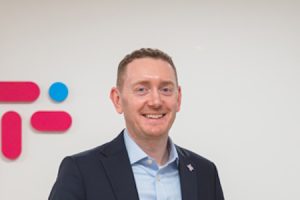
Since arriving at Organon Taiwan two years ago, Robert Mitchell has focused on growing patient access, revenue, and investments while strengthening the team. Robert explains how he is prioritising government partnerships, sustainable supply chains, and women’s health innovation, while fostering an inclusive culture, digitalisation, and talent development.
You arrived in Taiwan as General Manager two years ago. What were your first priorities?
It has been a fabulous journey. I came into a very well-run organisation with an incredible team already in place. The focus was on growth, building momentum and staying true to our purpose. Our mission at Organon is a healthier every day for every woman, delivering impactful medicines and solutions. Something we genuinely live daily. To deliver on that mission, we have focused on growing the organisation in a balanced way – expanding the number of patients we reach and continuing to invest in Taiwan.
Externally, our priorities have centred on partnership. We work closely with the National Healthcare Insurance Association (NHIA) to support a sustainable and resilient supply chain, while also ensuring the pharmaceutical industry is clearly recognised for the value it brings. Within Taiwan’s policy framework, we actively demonstrate the contribution of our products across key therapy areas, including cardiovascular disease, fertility, women’s health, migraine, bone health, and menopause.
What are the initiatives that you lead and demonstrate the global commitment to Women’s Health and Well-being?
Since its launch, Organon Taiwan has evolved beyond the traditional definition of a women’s health company. While we are leaders in Reproductive Medicine, Contraception, & Menopause management, our portfolio addresses a full spectrum of conditions that disproportionately affect women, including Cardiovascular Disease, Osteoporosis and Migraine.
We have spent several years deliberately shaping our own identity and culture. In Taiwan, that work has really paid off. We are seen very positively, and one of the clearest indicators of that is recruitment. When we speak with candidates, the response is consistently excellent, which tells us we have done a good job establishing Organon as a compelling employer in the market.
What truly sets us apart is how we support our employees, for example, we offer 12 weeks of paid maternity leave for female colleagues and paternal leave for all new parents. Alongside 30 days paid time off regardless year of services or job level dedicated to vacation, education or personal development, reflecting our belief in long-term growth and balance.
Each year we celebrate International Women’s Day by granting employees worldwide time off, encouraging them to prioritise their well-being and that of the women in their lives. During this time, employees use it to spend quality time with loved ones and focus on their personal well-being.
We also work very closely with our Asia-Pacific region, with employees in Taiwan contributing at global, regional, and local levels. It is a culture where the company actively supports its people, and, just as importantly, where employees genuinely want to be part of Organon.
How is Organon structured in Asia?
We sit within the Asia-Pacific cluster, which brings together many of the markets in Asia
One of the real strengths of this model is our ability to harness the best talent from across the region. Our Salesforce Excellence Hub, for example, supports all markets in the cluster. Through that hub, we benefit from high-quality data and analytics and very efficient monitoring, helping us drive consistency, visibility, and performance across markets.
As part of a global organisation, how do you advocate for Taiwan internally?
As part of a global organisation, one of our most important roles is ensuring that Taiwan’s needs and strengths are clearly understood internally. This means advocating for the right level of resources, as well as an operating environment and policy framework that enable us to deliver effectively. A key part of that advocacy is demonstrating how rapidly Taiwan can bring new products and innovations to patients—showcasing Taiwan as a market where speed, quality, and adoption go hand in hand for patient access.
Taiwan’s highly robust National Health Insurance (NHI) system, which provides access to 99 percent of the population, is a powerful proof point in these discussions. This unique healthcare landscape allows patients to benefit quickly from high-quality therapies, giving us a compelling story to share with global teams about how efficiently Taiwan can close the gap between regulatory approval and real-world access. At the same time, advocating for Taiwan also means highlighting what is needed to secure the future of a ‘Healthy Taiwan.’ This includes partnering with the government to balance the roles of multinational companies and local partners to ensure a resilient supply chain. It also requires a sustainable pricing policy—one that recognises the investment behind breakthrough therapies while safeguarding the viability of long-established treatments that patients still rely on
Taiwan is widely seen as an attractive market, with a strong level of trust in us as an organisation. It works in genuine partnership with industry and is clearly a place where doing business is both possible and sustainable.
How well represented is your pipeline in Taiwan, and what drives portfolio growth?
There were clear gaps in the availability of Organon’s brands at the time of launch. A notable example was the absence of a long-acting, three‑year contraceptive implant. We introduced this option last year, and the response has been overwhelmingly positive. When we took a closer look at what women in Taiwan value, discreet contraceptive solutions that offer consistent, personal control stood out clearly. More broadly, within contraception, we now provide a comprehensive range of choices – from daily and monthly methods to longer‑acting options – ensuring women have genuine flexibility, autonomy, and empowerment in managing their reproductive health.
In terms of growth, we are also always looking for business development opportunities. In Taiwan specifically, we commercialised a migraine therapy through a partnership with a multinational pharmaceutical company. Migraine disproportionately affects women, which aligns naturally with our mission, and we have built a highly capable team that has executed extremely well.
Alongside this, we place strong emphasis on lifecycle management of our portfolio, and invigorating portfolios to support national health policies including fertility subsidies and lipid-lowering optimisation programs in Taiwan. We are glad to see the Organon portfolio is part of the national Healthy Taiwan policy context.
Overall, we see the organisation as a strong commercial driver that can be leveraged to launch products, drive growth, and support business development partnerships effectively.
Some companies find it difficult to launch new innovations in Taiwan because physicians prefer legacy products. How do you educate physicians on new contraceptive options?
Physicians in Taiwan are definitely open to new options. The long-acting contraceptive implant is a good example. It requires training for healthcare professionals, which is delivered through our medical team as part of the certification process. Beyond that, the Commercial Team has done an excellent job of ensuring access, awareness and adoption, along with our Regulatory and Supply Chain team ensuring availability.
How do you manage market access, given that time to reimbursement can be close to two years?
We continue to advocate for shorter timelines in regulatory approval and reimbursement, alongside our industry partners. At the same time, having a broad and diversified business provides us with the flexibility to invest in and expand into new areas. We manage women’s health, fertility, migraine, cardiovascular, bone health, dermatology, and many other conditions very effectively, which in turn fuels the investment we can bring into newer initiatives. Over time, we have built a sustainable model for Organon in Taiwan – one that allows us to seize opportunities as they arise while growing thoughtfully and deliberately.
Redefining women’s health is a broad, holistic domain — spanning fertility, contraception empowerment, cardiovascular health, migraine care, and more. How do you conceptualise this?
It is not just about women’s health in the narrow sense – it is about the health of women more broadly. That covers a range of areas. For example, cardiovascular disease remains one of the leading causes of death among women in Taiwan, so we take a broad perspective in how we approach healthcare. Fertility is another key area where we have a strong presence. Last year was particularly challenging, with birth rates hitting historically low levels. However, with continued government support and subsidies, combined with a focused effort from industry, we believe it is possible to make a meaningful and lasting impact.
What is the role of pharmaceutical companies in facilitating the conversation about fertility?
We are fortunate that fertility has become a clear national priority in Taiwan, driven by the challenges of a low birth rate and a rapidly ageing population. Fertility‑related subsidies have been in place since 2021, now providing four years of meaningful support for couples seeking treatment. More recently, government initiatives have expanded to include reimbursement for oncology‑related fertility preservation, egg freezing, and child‑raising subsidies. These measures reflect a strong commitment to helping women plan for the future, preserve fertility, and build their families with greater confidence. Taiwan has made remarkable progress in this area.
That said, there are still lessons we could learn from other markets to better support couples after they have had a child. Increasingly, young people are delaying parenthood due to career pressures, the desire to remain in the workforce, and broader societal factors. Providing education and raising awareness about the options available when couples are ready to start a family remains crucial – and it is an area where we can continue to contribute meaningfully.
What do you see unmet medical needs in Taiwan?
We are constantly exploring opportunities within women’s health and other areas that disproportionately affect women. There is significant potential for business development to bring new innovations to Taiwan, as we demonstrated with our migraine therapy launch.
At the same time, it is essential that our focus on fertility does not overshadow the equally important need to empower women with reliable contraception options. Supporting women and couples means helping them plan when the right time is to pursue pregnancy—whether that is now or years later. Maintaining this balance ensures we are not only addressing infertility but also reinforcing informed, healthy family‑planning decisions.
Beyond that, there are opportunities to deepen partnerships in cardiovascular disease. The government has demonstrated great leadership with initiatives like Healthy Taiwan and Pay-for-Performance strategies. We see strong synergies with Organon Taiwan’s current portfolio – spanning fertility, contraception, women’s health, cardiovascular care, and migraine management – and we are committed to ensuring that our solutions evolve with the health needs of Taiwan’s ageing and increasingly health‑conscious population. By integrating contraception and broader women’s health offerings with these emerging treatment areas, we aim to provide more comprehensive, accessible, and continuous care for women across every stage of life
In terms of Taiwan as a talent hub, what culture are you building, and where does Taiwan add value?
We dedicate significant time to shaping and nurturing our culture. At Organon, employees don’t need to be physically located in a market to contribute meaningfully. Here in Taiwan, team members work across global and Asia-Pacific functions, particularly in marketing and medical roles.
Our focus is on supporting talent, fostering development, and providing opportunities. In my 20 years with previous companies, I have always benefited from strong support for personal growth, and that is a key priority here in Taiwan
Innovation remains central to how we operate. Our approach to systems and AI has evolved dramatically even in the past few years. Culture is always a focus – it encompasses how we work together, build capabilities, and maintain health and wellbeing. Last year, for example, we supported a sponsored run, family events and a team hike. There are many ways to foster culture, but at its core, it is about developing both mind and capabilities while keeping wellbeing front and centre.
Looking ahead, what is your vision for Organon Taiwan?
We are now four and a half years into our journey, fully aligned with Organon’s mission to ensure that every woman can lead a healthier life. Organon remains the only company of our size dedicated exclusively to Women’s Health. Looking ahead, our focus is twofold: continuing to maximise the impact of our current portfolio while also exploring new opportunities — whether through our existing pipeline, business development, or other strategic pathways.
During this period, we have delivered consistent growth, and investment in Taiwan, nearly doubling the size of our team. As we look to the future, I expect an even deeper collaboration with government and health authorities. This year brings several significant policy opportunities across cardiovascular and lipid management, migraine care, fertility subsidies, and contraceptive guidelines. Each of these areas presents meaningful potential to expand awareness and enhance patient access.
Ultimately, Organon Taiwan will continue to be defined by growth — not only in terms of top‑line performance, but also through the ongoing development of our internal capabilities, ensuring we are well‑positioned to make an even greater impact in the years ahead.
In terms of your own motivation, you have spent 20 years in this industry. What drives you?
I have been fortunate throughout my career to progress from local sales, marketing, and leadership roles into global positions — from leading global brands to serving as Chief of Staff — before returning to a market‑level role here in Taiwan. Each step has offered unique experiences and invaluable development opportunities that have shaped my leadership approach.
One of the key reasons I aspired to become a General Manager was the opportunity to focus on people and to bring strategy to life. I find tremendous motivation in watching the team grow, build new capabilities, and achieve success together; it is genuinely one of the most rewarding aspects of the role.
Outside of work, I stay grounded through health and fitness, and my wife and two daughters are a constant source of inspiration — closely connected to Organon’s mission. Seeing growth, whether within the organisation or in the broader impact we make, remains deeply meaningful to me.