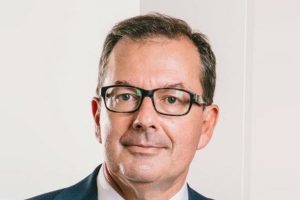
Raymond Le Moign leads one of Europe’s largest university hospital centres at a moment when healthcare systems are being forced to rethink how they organise care, innovation, and accountability. Drawing on experience that spans national health policy, oncology, regulation, and frontline hospital leadership, he lays out a long-term vision that shifts the focus from institutions to systems, from specialties to shared challenges, and from short-term plans to durable transformation. What emerges is a view of the university hospital as a strategic platform, embedded in its ecosystem and measured by its ability to deliver real impact over time.
What professional experience led you to the role of Director General of the Hospices Civils de Lyon, and what motivated you to take on this responsibility?
I am currently Director General of the Hospices Civils de Lyon, the university hospital centre of Lyon. I am a hospital administrator by training and my career has been shaped by a deliberate alternation between senior leadership roles in large university hospitals and national responsibilities within the French health system, allowing me to work both on the design of public health policy and on its practical implementation on the ground.
Before joining Lyon, I served as Director General of the CHU de Toulouse, another major university hospital centre. Alongside these local roles, I held several positions at national level, notably within ministerial cabinets. I first served as Deputy Chief of Staff to Marisol Touraine, and later as Chief of Staff to Agnès Buzyn, Olivier Véran, and most recently Aurélien Rousseau, all of whom served as France’s Minister of Health. These experiences placed me at the centre of health policy making, while also exposing me directly to the consequences of those decisions for hospitals and healthcare professionals.
In parallel, I have held executive roles in oncology, including at the René Gauducheau Cancer Centre in Nantes, and served as Vice President of the national federation of comprehensive cancer centres, which gave me a close understanding of the specific operational and clinical constraints of hospital oncology. I also worked at the Haute Autorité de Santé (HAS), France’s independent health authority, where I was involved in hospital accreditation, quality and patient safety, and the evaluation of medical benefit, including for medical devices. This role placed me at the intersection of hospitals, regulators, and industry, and shaped my view of how value in healthcare is assessed and governed.
Taking on the leadership of the HCL was therefore a natural continuation of this trajectory. With around 24,000 professionals and an annual budget exceeding EUR 2.3 billion, it is the second largest university hospital centre in France, after the Assistance Publique – Hôpitaux de Paris (AP-HP), which runs the Paris public hospital system. Leading an institution of this scale is fundamentally different from managing a central administration, as it means steering a frontline organisation that is continuously exposed to human, financial, and healthcare pressures, with an immediate and tangible impact on its territory.
I have always assumed these movements between national and local responsibilities. I first served as Director General of the Hospices Civils de Lyon from June 2020 to July 2023, before returning briefly to a ministerial role, and was reappointed on 1 January 2024. This continuity reflects a shared confidence in the strategic direction and the long term project we are building for Lyon.
How would you describe the scope and distinctive character of the Hospices Civils de Lyon to an international audience?
The Hospices Civils de Lyon occupy a distinctive place within the French healthcare system, combining scale, academic breadth, and a strong territorial role. With around 24,000 professionals, we are the largest employer in the Auvergne-Rhône-Alpes region, across all sectors. Beyond our healthcare mission, we are also a major economic actor, with close to EUR 1 billion in annual procurement, which gives us a direct and structuring influence on the regional industrial, healthcare, and innovation ecosystem.
From an institutional perspective, the HCL belong to a very small group of first-rank university hospital centres in France, immediately after the Paris public hospital system operated by AP-HP. What distinguishes Lyon is not position, but the breadth and coherence of its academic and clinical remit. Alongside Paris, it is one of the few centres to cover the full spectrum of medicine, pharmacy, and dental surgery without major disciplinary gaps, a completeness that underpins its role as a national reference in care, research, and education.
Our clinical organisation reflects this positioning. Rather than a single central site, we operate a network of highly specialised hospitals, each built around areas of recognised excellence. This includes Hôpital Louis Pradel, one of the largest cardiology hospitals in Europe, and Hôpital neurologique et neurochirurgical Pierre Wertheimer, a leading centre for neurology and neurosurgery. This model gives the CHU of Lyon strong visibility in cardiology and neurology, while ensuring comprehensive coverage across all major medical and surgical disciplines.
Lyon also benefits from a long-standing strength in infectiology, spanning vaccination, virology, and bacteriology. The Hospices Civils de Lyon play a central role in this ecosystem, through reference clinical services and close integration with academic and industrial partners. Long-standing collaborations with actors such as bioMérieux in diagnostics and Sanofi in vaccinology and infectious diseases illustrate how care, research, and industry interact on a daily basis. More recently, another distinctive axis has emerged in hepatology, following the creation of a dedicated institute that led, in 2023, to the designation of France’s first university hospital institute fully focused on liver diseases.
Finally, one of our most singular features lies in digital health. Unlike most hospitals, which rely on private vendors, we developed our own electronic patient record system, Easily, in-house from the early 2010s and are formally recognised as its regulatory publisher. Through the public interest group HOPSIS, this system is now deployed across more than one hundred and fifty public hospitals. While not entirely unique, this model remains exceptionally rare for a public institution and reflects a deliberate choice to retain strategic control over core digital tools while contributing to the wider public hospital system. Taken together, these elements define the Hospices Civils de Lyon as a fully integrated university hospital centre, combining scale, disciplinary completeness, specialised clinical excellence, deep ecosystem integration, and a level of digital maturity that remains uncommon in the public sector.
How did the HCL 2035 strategy take shape, and what fundamental challenges is it designed to address?
HCL 2035 is the ten-year strategic framework of the Hospices Civils de Lyon, launched in 2024 and formally adopted in 2025 to provide long-term direction beyond annual operational planning. It emerged from a clear conviction that, at our scale, strategy can no longer be built around individual medical specialties. Instead, it must respond to the major, transversal challenges that will shape healthcare systems over the coming decade, and distinguish clearly between long-term strategic intent and short-term execution.
For many years, hospital strategies were framed through the lens of disciplines, asking what technological advances were coming in cardiology, oncology, or other fields. That approach is now too limited. Like large organisations across the health sector, a university hospital must first reflect on broader questions: social and environmental risks, the sustainability of the workforce, future models of care, and the levers that can genuinely transform how medicine is practised. HCL 2035 therefore represents a shift towards a shared strategic horizon, structured around challenges rather than specialties or geography.
One of the most pressing challenges concerns the evolving relationship between health professionals and their work. Expectations around careers, professional identity, digital tools, teamwork, and environmental responsibility have changed profoundly. A university hospital is a highly labour-intensive organisation, bringing together internationally recognised clinicians and researchers alongside many other professional profiles. Managing this diversity today requires rethinking how people are supported, developed, and engaged, and accepting that career paths and forms of commitment will be far more varied than in the past.
A second major challenge is demographic. Ageing is not simply about older populations, but about the growing number of chronic patients who live longer with stabilised conditions and increasingly complex needs. These patients require long-term monitoring, coordination, and adaptation of care across multiple disciplines. Alongside this sit digital transformation, with data and artificial intelligence reshaping decision making and care pathways, environmental risk, and the growing importance of prevention and earlier, more personalised intervention.
From these shared challenges, we identified a limited number of major transformation levers and structured them into ten programmes that form the backbone of HCL 2035. These programmes are deliberately transversal, designed to benefit all disciplines rather than isolated specialties, and to concentrate resources where they can deliver systemic impact. Their governance includes patients, community-based professionals, and external partners, including economic and industrial actors. In that sense, this is not only the hospital’s strategy, but the strategy of the university hospital within its wider ecosystem, with a clear commitment to accountability and follow-up over the next decade.
How do you position clinical research at the Hospices Civils de Lyon within the broader Lyon life sciences ecosystem?
At the Hospices Civils de Lyon, our starting point is that research only creates value when its different dimensions are connected. The conventional separation between fundamental research at universities, clinical research within hospitals, and industrial research led by companies no longer reflects how innovation actually progresses. Our objective in Lyon is therefore to ensure continuity across these three domains, with clinical research acting as a central interface between scientific discovery, technological development, and patient care.
This approach is anchored in a strong academic environment. Lyon has built integrated research structures such as the Centre International de Recherche en Infectiologie, which deliberately brings clinicians and researchers together across virology, immunology, and translational science. These efforts are closely linked with Université Claude Bernard Lyon 1, and with national research organisations including Inserm, CNRS, and the École normale supérieure de Lyon. This proximity allows fundamental research questions to be shaped by clinical realities and translated more directly into applied research that informs medical decision-making.
Industrial research forms the third pillar of this model. The Lyon-Gerland biodistrict concentrates major healthcare players such as Sanofi, bioMérieux, and Boehringer Ingelheim, alongside biotechnology companies and public research institutions. Our role as a university hospital is not to operate in isolation, but to engage with this environment through structured partnerships. Initiatives developed with Lyonbiopôle illustrate this approach, supporting the evaluation and deployment of health innovations that combine patient benefit with regional economic impact.
Ultimately, a university hospital fulfils its mission when it acts as a place of convergence. Researchers need access to clinicians to ground their work in real medical needs. Companies need the hospital to test ideas and the university to explore them upstream. Many of our clinicians also hold academic roles, which naturally bridges these worlds. Clinical research at the Hospices Civils de Lyon is therefore not conceived as a standalone activity, but as an integral part of a collective ecosystem, designed to turn scientific knowledge into tangible benefits for patients.
Why did you choose to establish a dedicated Innovation Directorate, and how does this structure help translate ideas into concrete benefits for patients?
When we established a dedicated innovation directorate in 2021 at the HCL, the intention was to move beyond the idea that innovation in healthcare is primarily technological. In practice, innovation within a university hospital is rarely compartmentalised. Advances in technology are often inseparable from organisational change, digital transformation, or new clinical and care pathways. The directorate was therefore conceived to address innovation in all its dimensions, biomedical, digital, pharmaceutical, organisational, and social, recognising that these elements usually evolve together rather than in isolation.
Its core function is to provide a single, coherent entry point for innovation projects, precisely to avoid the silos that traditionally separate research, biomedical engineering, information systems, organisational development, and human resources. Not every challenge encountered in daily clinical practice requires a formal research programme, and innovation does not always originate in academic knowledge production. It can also emerge from unmet needs identified on the ground. By bringing together medical, technical, and managerial perspectives within one structure, the directorate enables these needs to be translated into structured, actionable solutions without recreating internal fragmentation.
The directorate also plays a central role in how the hospital engages with its wider ecosystem. It acts as the main interface with Lyonbiopôle, which supports collaboration between healthcare providers, researchers, and industry in the evaluation and development of innovative projects. It works closely with university innovation teams and with PULSALYS, the local technology transfer accelerator, to ensure continuity between academic research, valorisation, and clinical application. It is also the primary point of contact for companies seeking to test solutions or work with hospital data, within a clear regulatory and ethical framework. In this way, the innovation directorate provides a stable and coherent set of transformation levers, allowing innovation to be embedded in everyday practice rather than treated as a parallel activity.
How are data and artificial intelligence integrated into the Hospices Civils de Lyon’s digital strategy, and how do they support decision-making in practice?
At HCL, we chose to create a dedicated function for data and artificial intelligence because these topics sit at the crossroads of several professional worlds that rarely converge naturally. Digital services teams concentrate on infrastructure, interoperability, computing capacity, and data security. Research teams approach data and AI through scientific questions and methodological frameworks. At the same time, the daily reality of the hospital generates very practical needs, from clinicians seeking to analyse patient outcomes over several years to managers wanting to build cohorts or improve decision support. The purpose of this function is to align these perspectives and ensure that data and AI are mobilised in response to concrete use cases, rather than driven by technological possibilities alone.
The approach is intentionally pragmatic and grounded in practice. Ideas originate from the field, and the role of the team is to determine the most appropriate response in each situation. In some cases, existing market solutions can be adopted directly. In others, tools need to be co-developed with industrial partners or with other university hospitals. And when necessary, solutions are developed internally. This structured decision-making process ensures that engineers, researchers, and operational teams are all involved, so that choices are technically robust, scientifically sound, and operationally relevant. In this way, data and artificial intelligence become shared transformation levers across the institution, embedded within the hospital’s overall strategy rather than treated as a separate or specialist agenda.
How do you see the future role of the Hospices Civils de Lyon, both nationally and internationally, and which milestones will matter most in the years ahead?
For the Hospices Civils de Lyon, the challenge is to show that influence in healthcare is not defined by size alone. Our ambition is to contribute to shaping the medicine of tomorrow, not as a model centred on buildings or isolated specialties, but as a form of care that is robust, personalised, and able to build alliances to address long-term health challenges. This implies moving beyond a hospital bounded by its physical footprint and towards an institution that is fully integrated into its territory and ecosystem, while remaining firmly anchored in patient outcomes and real-world impact.
The way we pursue this ambition matters as much as the ambition itself. The HCL 2035 strategy was developed through an open process of collective intelligence that brought together patients and patient associations, students, healthcare professionals, policymakers, and industrial partners. We deliberately adopted a ten-year horizon, reflecting how major public institutions and industrial groups now think about transformation. On that basis, we have committed to a clear and demanding form of accountability. Each year until 2035, we will publicly report on progress across the ten transformation programmes, engaging stakeholders in an open discussion of what has been achieved, what remains unresolved, and why. This discipline of transparency and dialogue is central to how we intend to build credibility, manage complexity, and create lasting value for the healthcare system and its wider ecosystem.