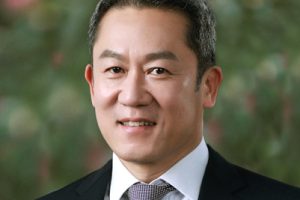
Building a biotech from the ground up is rarely the next step for someone who has led multinational pharmaceutical giants. Yet that was the challenge Pony Lu accepted when he took the helm at VISEN Pharmaceuticals. Tasked with shaping the company from its inception, he brought not only decades of commercial leadership but also a willingness to re-examine what it means to deliver impact. In this interview, Lu reflects on VISEN’s focused strategy in endocrinology, the complexities of operating in China, and the discipline behind turning vision into reality.
What inspired your transition from leading global pharmaceutical corporations to taking on the challenge of building VISEN Pharmaceuticals from the ground up?
After more than three decades in the pharmaceutical industry, I reached a point where I felt the need to reflect on what success truly meant, and what lasting contribution looked like on a more personal level. My career began in Taiwan as a medical representative for AstraZeneca. That early experience shaped my understanding of how meaningful impact often starts with clear destination, hands-on execution and full operational mindset.
I went on to spend 16 years with Les Laboratoires Servier, including four years in Paris as a global product manager. During that time, I had the privilege of working with Dr Jean-Philippe Seta and witnessing the humility and discipline of Dr Jacques Servier firsthand, traits that deeply influenced my own leadership philosophy. In 2006, I relocated to China as Servier’s General Manager, and later joined Takeda in 2010, eventually becoming President of Takeda China and Head of Greater China. At the time, Takeda’s operations in China had seen no growth for a decade. Within five years, we increased revenues tenfold, and after the merger with Nycomed, that growth doubled again.
By 2017, I was contemplating retirement, a long-held aspiration I had associated with turning 50. That pause offered the opportunity for a deep introspection. I began to question how much of my professional success was truly my own, and how much had been enabled by the expansive systems, mature infrastructure, and talented teams that surrounded me in those large organisa-tions. It became clear that many of the accolades I had received were the result of collective effort, not individual brilliance.
That realisation made VISEN a compelling next chapter. In November 2018, I travelled to Palo Alto for the company’s founding ceremony alongside Jan Mikkelsen, founder of Ascendis Pharma, and our investors at Vivo Capital. The following day, I returned to China with only a press release and the capital to begin. Everything – from cross-border corporate structuring and office setup to operational logistics and financial systems – had to be built from scratch, often in areas where I had no prior hands-on experience.
Despite a career rooted in commercial leadership, I had never overseen clinical development directly. Yet, with a small, committed team, including my assistant, who joined in the first week, we launched two Phase III trials and one Phase II trial, even as the COVID-19 pandemic disrupted clinical sites across China. We applied a commercial lens to clinical operations: breaking down targets site by site, visiting investigators myself, and addressing problems in real time with medical teams. Our first trial concluded with the final patient enrolled on the very last permissible day, a moment of profound emotion for the team. None of our trials were delayed, and all met their primary and key secondary endpoints.
Today, we are working with WuXi Biologics to build local manufacturing capacity, with our first domestically produced product expected to reach the market by 2028 or early 2029. Ironically, the commercial expertise I was once known for remains only partially tapped. Yet what we’ve achieved so far – starting from zero and navigating one of the world’s most complex healthcare markets – has been a deeply rewarding chapter. This journey has reminded me that leadership is not defined by institutional scale, but by resilience, clarity of purpose, and the ability to deliver.
What is the founding vision behind VISEN Pharmaceuticals, and why the endocrinology focus can have traction?
VISEN Pharmaceuticals was created with a clear goal: to bring innovative therapies to greater China region through a model that combines scientific rigour with operational efficiency. In recent years, the concept of a “NewCo” – a company formed by acquiring validated assets, assembling a capable team, and injecting capital – has gained momentum. Interestingly, we were among the early adopters of this approach, though in a somewhat unconventional manner. Rather than building a company around an unproven concept, we started with assets that had already completed proof of concept. This allowed us to move directly into Phase II and III development, bypassing many of the uncertainties tied to early-stage R&D, regulatory unknowns, and market validation. It’s a highly effective way to accelerate access to novel therapies while managing risk, particularly in a market as complex as China.
Our decision to focus specifically on endocrinology was the result of careful reflection and deliberate strategy. My experience at Takeda taught me that even the most seasoned global players typically limit their focus to a few therapeutic areas. That degree of focus enables depth, consistency, and sustainable excellence. For a young biotech like VISEN, the idea of spreading ourselves across multiple domains would have been both impractical and unwise. We needed to focus where we could generate long-term advantage and truly distinguish ourselves.
Endocrinology emerged as the obvious choice. From a policy perspective, the Chinese government’s “Healthy China 2030” initiative – reinforced by strategic plans from the State Council – explicitly designates endocrinology as a national healthcare priority. This alignment brings with it regulatory support and tangible incentives. The medical need is equally clear: out of roughly 170 known endocrine conditions, nearly half lack any effective treatment, and those that are treated often rely on outdated options with limited efficacy and safety.
There was also a strategic consideration. Today, a vast majority of biotech companies in China today are focused on oncology or autoimmune diseases. While both fields are important, they are also intensely competitive. Rather than positioning ourselves as yet another player in an overcrowded space, we chose to lead in an area where the combination of patient need, policy support, and scientific opportunity pointed toward real, long-term impact. In building VISEN Pharmaceuticals, we did not set out to be everywhere. We set out to be exceptional, by choosing a domain where we could lead, where we could differentiate, and where we could serve patients who have long been underserved.
How does VISEN approach the Chinese market for growth hormones beyond just policy alignment, looking at patients needs and preferences?
While policy frameworks like “Healthy China 2030” offer high-level guidance, their real value lies in how they align with tangible unmet needs and workable strategies. Endocrinology is one such area, offering a combination of favourable policy support, limited competition, and strong demand. Through our agreement with Ascendis Pharma, we secured three endocrine assets well suited to this context, including our lead therapy, lonapegsomatropin, a long-acting growth hormone.
Unlike most categories where the US market is five to ten times the size of China’s, growth hormone is an exception. Since 2023, China has become the world’s largest market for these therapies, growing at over 20 percent annually, far outpacing the US. This demand is driven by both medical need and cultural expectations. Around three percent of children fall under the clinical definition of short stature, encompassing both paediatric growth hormone deficiency (PGHD) and idiopathic short stature (ISS). In a population of 1.4 billion, this represents a significant treatment base. Cultural attitudes also play a role, with height widely perceived as a factor that can shape life opportunities.
What makes this opportunity distinct is the market structure: most revenue comes from the private sector, with limited exposure to public reimbursement or government-driven price cuts. That allows us to retain pricing flexibility and position the product based on clinical performance and quality. We have opted not to pursue reimbursement for now, as the product’s value is recognised by physicians and parents alike.
While lonapegsomatropin is approved as a rare disease treatment in the US, PGHD is not considered as rare in China. It is a mainstream, clearly defined condition. That distinction reinforces our strategy of staying out of overcrowded areas, where dozens of similar drugs compete, and instead focusing on high-growth, under-addressed segments where we can lead.
What makes your lead asset, lonapegsomatropin, medically and scientifically differentiated from other long-acting growth hormone therapies?
In a space as competitive as growth hormone therapy, differentiation must be rooted in both scientific design and clinical evidence. Our lead product, lonapegsomatropin, stands apart as the only long-acting growth hormone to demonstrate superior efficacy, rather than just non-inferiority, against short-acting growth hormone in Phase III head-to-head trials conducted both globally and in China. That level of performance remains unmatched by other long-acting options, which typically struggle to exceed equivalence.
This distinction stems from a fundamentally different molecular architecture. Conventional long-acting formulations often rely on permanent PEGylation, which increases the molecule’s size to slow metabolism. While this prolongs duration, it comes at a cost: the larger molecule binds less effectively to growth hormone receptors and cannot efficiently reach bone tissue, diminishing therapeutic effect. Lonapegsomatropin uses a transient conjugation approach. A cleavable linker connects the native growth hormone to a PEG carrier, and once administered, this linker gradually breaks down in response to physiological conditions, releasing unmodified, biologically active growth hormone. The released molecule mirrors endogenous hormone behaviour, ensuring both effective receptor binding and tissue penetration, while maintaining a strong safety profile.
These attributes are clearly recognised by both the FDA and EMA. In China, our pivotal Phase III trial confirmed the same results and now forms the basis of our Biologics License Application (BLA). The product’s differentiated mechanism and robust data give us a high degree of confidence in both its medical value and market positioning.
VISEN Pharmaceuticals went public this last March 2025 in the midst of a harsh market for biotech funding. What were the results of the IPO and what does this mean for the company?
Pursuing an IPO was always part of our long-term strategy. As a pre-revenue biotech, accessing the public markets was a natural step, necessary to support our growth and bring our programmes to market. We began preparations four years ago, anticipating the regulatory demands of Chapter 18A of the Hong Kong Stock Exchange, which primarily lists early-stage biotech companies, often still in Phase I or II. At the time, we were relatively unknown to the investor community, so it took time to build confidence in our profile as an innovative company with a strong clinical pipeline and consistent execution.
The broader funding environment made the journey even more challenging. From mid-2021 onwards, capital availability declined sharply, particularly for biotechs. Despite this, we remained committed to our plan, underpinned by solid study results and a clearly defined value proposition. In March 2025, we completed our listing, raising USD 100 million, well above the market average for 18A IPO. This outcome reflected the strength of our science, our delivery track record, and the trust we had earned from cornerstone investors.
Roughly 84 percent of the proceeds are allocated to our lead programme, lonapegsomatropin, with the remainder supporting two additional assets, including palopegteriparatide for adult hypoparathyroidism. What differentiated VISEN in the eyes of investors was not only our product potential, but our reliability. Every milestone we’ve committed to – be it recruitment, results, or submission – we’ve met. Our ability to deliver consistently has become a defining part of our identity.
What I’ve learned from the IPO process is the importance of follow-through. In a market as dynamic and unpredictable as China, you can’t control every variable, but you can uphold your promises. For us, the IPO was not the destination but a stepping stone. We remain a small, hands-on team. I don’t have a driver or even a private office; I work at the same table as my colleagues, and we travel together by DiDi. That mindset – grounded, focused, and execution-driven – continues to shape who we are.
What are VISEN’s operational priorities through 2028, and how are you positioning the company for long-term self-sufficiency?
We’ve aligned VISEN’s growth trajectory with a five-year planning framework, inspired by the structured approach I admire in China’s national strategy. Our first cycle, from 2019 to 2023, focused on advancing our three lead assets through clinical development, all of which completed trials with positive results. From 2024 to 2028, the priority is to bring these programmes to market and fully establish our operational infrastructure. The first of these products is expected to receive regulatory approval this year, with commercial launch in early 2026. The remaining two will follow on schedule, with all three planned for full approval and launch by the end of 2028. Alongside this, we are completing our local manufacturing capabilities, enabling full integration from development through to commercial production.
During this phase, we are also looking to in-license at least two new assets for development. We’re actively engaging with both multinational and biotech partners. These programmes will form part of our next cycle of growth, with the aim of reaching the market beyond 2028.
By that point, VISEN will have transformed into a fully integrated endocrine platform company, with capabilities spanning clinical R&D, regulatory affairs, local manufacturing, commercial execution, and market access. Our goal is to become the preferred partner for introducing innovative endocrine therapies into China, whether by sourcing assets directly or providing the infrastructure for others to do so. Ultimately, we are building a platform designed not just to support a portfolio, but to sustain long-term value for decades to come.
How do you approach market access and pricing in China, given the expanding private sector and government reimbursement dynamics?
This is a key question, particularly in the context of China’s evolving healthcare landscape. For decades, the market has been dominated by public hospitals, but we are now seeing a gradual shift. Private healthcare institutions are expanding, and general practitioners are emerging as part of the ecosystem, similar to models in Hong Kong, Taiwan, and the West. This transition is especially relevant when considering how best to position each of our products.
Our strategy is differentiated across the portfolio. For our long-acting growth hormone (LAGH), we are focusing exclusively on the private sector, where we see strong growth and more pricing flexibility. The product’s clinical superiority and manufacturing quality allow us to sustain a premium position. It’s a conscious decision to grow with this segment, avoiding the limitations often imposed by price-cut campaigns.
Conversely, our second and third products will enter the reimbursement system upon approval, as they address rare or severely underserved conditions. Navepegritide (TransCon CNP) targets achondroplasia, affecting over 10,000 children in China who currently have no approved treatment options. Palopegteriparatide, indicated for hypoparathyroidism, serves around 400,000 patients requiring lifelong care. For these therapies, inclusion in reimbursement is critical to ensure broad patient access and financial viability for long-term treatment. Naturally, government reimbursement entails price negotiations. However, as both of these assets are first-in-class and currently without competitors, we expect the outcomes to be reasonable and reflective of the value they bring.
Ultimately, there is no single model for access in China. Each product requires a tailored approach that considers medical need, regulatory environment, and competitive context. We’ve learned from examples in oncology – such as PD-1 inhibitors like pembrolizumab and nivolumab – which were eventually removed from the reimbursement list but continue to perform well in the private market. The emerging reality is a dual system: broad but limited reimbursement coverage, paired with a dynamic private sector that supports innovation and differentiated pricing. At VISEN, our approach is to match each asset with the most appropriate pathway, balancing patient access, long-term value, and market sustainability.
What institutional strengths underpin VISEN’s long-term vision, and how do they support your ambition to serve as the partner of choice for global endocrine innovators entering China?
My view, shaped over years of leadership, is that a truly enduring company should not rely on individual personalities but on systems, discipline, and institutional knowledge. From the outset, we’ve built VISEN Pharmaceuticals with this principle in mind. While we remain a relatively young company, we already operate with over 100 Standard Operating Procedures (SOPs) that govern how we work; developing, evaluating, and improving our processes after each milestone. These SOPs are not just procedural, they reflect our commitment to learning, consistency, and long-term performance. Equally important is our intellectual property portfolio, which now includes more than 100 filings. These combine assets licensed through our agreement with Ascendis and those developed internally. Together, our SOPs and IPs form a solid foundation for continuity, ensuring that the company can evolve and thrive well beyond any one leader’s tenure.
Looking ahead to 2028, our ambition is to become a fully integrated platform company in the endocrine space, with capabilities across clinical development, regulatory affairs, local manufacturing, commercial execution, and market access. For international partners seeking to navigate China’s complex but high-potential environment, we offer not just operational readiness, but deep therapeutic and market insight. VISEN is designed to be more than a company with good products, we’re building a platform that enables others to succeed here. For any company with high-quality endocrine assets looking to enter China, we believe VISEN Pharmaceuticals is the natural partner of choice.