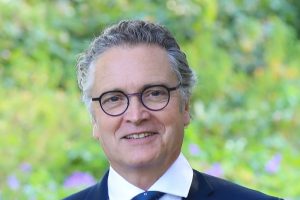
France’s territorial landscape is undergoing a profound shift, and departments are emerging as decisive actors in the response to medical deserts, demographic ageing and the widening gaps in prevention and mental health. In this interview, Philippe Gouet provides a rare, ground-level view of how local authorities are reshaping access to care and challenging long-standing assumptions about centralised governance. His insights reveal both the urgency of reform and the pragmatic tools already taking shape across the country.
How would you describe your current responsibilities and the perspective you bring to healthcare policy across the French departments?
I serve as President of the Departmental Council of Loir-et-Cher and chair the Health Working Group within Départements de France (French Departments Association), which brings together all 101 departments. Established in 2021, this group was designed to bring territorial insight into national health policy. My entire career has unfolded in healthcare. I trained as a physiotherapist and osteopath, later served as vice president of the national physiotherapy union, and went on to chair the Regional Union of Health Professionals in Centre-Val de Loire. This blend of clinical practice and representative roles is what led the Départements de France to entrust me with shaping and guiding its health agenda.
When we began this work, only three departments had a structured strategy for access to care and prevention. Today, nearly sixty have one in place, a shift that reflects the speed at which territorial engagement has grown. I also serve as First Vice President of the Gérontopôle Centre-Val de Loire, a body created in 2025 to help the region address rapid demographic ageing. Almost one in four residents is already over sixty-five, and this proportion is expected to rise sharply by 2040. The Gérontopôle provides the expertise needed to support coherent regional policies on ageing, prevention and autonomy.
These responsibilities offer a direct vantage point on the pressures facing our health system. Demographic change and the rise of chronic disease have outpaced our ability to adapt. Mental health illustrates this gap starkly. Despite being designated a Great National Cause 2025, no meaningful measures have followed. Hospitals face around one thousand unfilled positions in mental health, and close to four thousand psychiatric beds have closed over the past decade. Child and adolescent psychiatry is under critical strain, with fewer than seven hundred specialists nationwide. Twenty departments have none, and around thirty have only one. Departments see the consequences daily in child protection services, where almost one-third of the children entrusted to us present severe psychological or psychiatric disorders. Limited access to specialised care often forces services into situations requiring continuous supervision.
We also face the near collapse of school medicine. France has fewer than one thousand school doctors, and some departments have none at all, leaving entire school populations without adequate medical oversight. At the same time, France suffers from a structural shortage of physicians. According to Eurostat, the country ranks second to last in the European Union for medical density, with around 319 physicians per 100,000 inhabitants, compared with 656 in Greece and 573 in Portugal. This gap is felt most acutely at the territorial level, where departments must manage the practical consequences of reduced access to care. All these pressures converge locally, which is why departments are taking a more assertive role and why I believe that a stronger territorial contribution to health planning and prevention has become essential for the country.
How have you defined the priorities of the Health Working Group since 2021, and what concrete actions have departments taken to improve access to care?
Since 2021, our work has focused on giving departments practical tools to strengthen access to care and make their territories more attractive to health professionals. Many departments now offer scholarship schemes for medical and paramedical students in their final years of training, tied to a commitment to practise locally for at least three years. Alongside this, departments provide structured assistance for students completing rotations, including monthly allowances, housing or transport support, access to departmental vehicles and childcare options for those balancing training with family responsibilities. These measures aim to remove the everyday obstacles that often discourage placements in smaller or rural areas.
Departments also co-finance the development and expansion of Maisons de santé pluriprofessionnelles (MSP), which have become central to local care pathways and often the first point of contact for professionals considering long-term installation. Prevention has been another priority, rooted in departments’ responsibility for middle schools. This includes improving school catering with more local sourcing, nutrition workshops led by dieticians, and initiatives on screen use, posture and spinal health. Physiotherapists run “Protège ton dos” (“Protect Your Back”) sessions that teach pupils basic ergonomics, from backpack weight to early signs of scoliosis or kyphosis. Many departments also work to re-engage adolescents in organised sport after the post-pandemic decline, sometimes through a dedicated sport-and-culture voucher for first-time club enrolment. These actions respond to a clear concern: according to a WHO report from July 2022, 40% of French youths aged twelve to sixteen are overweight, and 10 percent live with obesity.
A further milestone has been the national roadmap developed with Professor Samir Henni, “Santé et territoires, la place et le rôle des Départements de France”, which sets out six strategic priorities for strengthening territorial governance. It proposes a departmental health organisation plan co-developed with Regional Health Agencies (ARS), Primary Health Insurance Funds (CPAM), the Unions of Health Professionals (URPS), professional licensing bodies and patient representatives. Under this approach, the State retains national strategy and financing, while departments and local actors co-pilot implementation. Professor Henni’s clinical and managerial experience, and his leadership of the University Hospitals of Strasbourg brought essential operational insight to this work.
One of the roadmap’s central proposals is the creation of a unique guichet, a single-entry support hub available online and in person. It would guide students and practitioners through every step of settling in a territory, from administrative procedures and financial incentives to housing, mobility options and available positions within MSPs or other facilities. It would also address practical factors that influence real career choices, such as job prospects for a spouse, and offer a clear overview of local needs and suitable practice zones. With the addition of a fourth year to general practice expected to bring around three thousand extra interns into the system, the ability of departments to offer structured and supportive conditions has become essential for long-term retention.
How do you view the role of ARS in territorial healthcare, and what changes are you advocating to ensure decisions reflect local realities?
A growing number of local elected officials feel that Regional Health Agencies (ARS) remain too far removed from the realities on the ground, and several national assessments have echoed this view. Each region has its own ARS and a territorial director in every department, yet these local units have very limited autonomy. Their role is essentially to apply decisions taken at the regional level, which itself executes national directives. As a result, departments have little influence over issues that directly affect access to care, such as the opening or closure of services or the allocation of resources. We believe departmental ARS should have greater responsibility for managing their own budget envelopes and far more room to act operationally. Their proximity gives them a clearer sense of local priorities, especially in regions that span many departments with very different needs. Moving more decision-making closer to the ground would make the system more responsive and better aligned with territorial realities.
This concern is now widely recognised at the national level. Hearings in the National Assembly and the Senate, along with evaluations by the General Inspectorate of Social Affairs (IGAS) and the French Supreme Court of Audit (Cour des comptes), have pointed to governance that lacks clarity, weak collaboration with local authorities and tools that do not fit the diversity of territories. These bodies have called for adjustments to the ARS’ organisation, powers and financing, and several proposals now reflect those recommendations. Representing the Départements de France, I have participated in many of these hearings. What emerges is a clear, cross-party consensus: departments must have a stronger place in health governance, cooperation between ARS and local authorities must improve, and decision-making structures must better reflect the lived realities of territories. This shift is now shaping the reforms under discussion and signals a move toward a more balanced and locally informed organisation of our health system.
The Gérontopôle Centre-Val de Loire was created to address rapid demographic ageing. How is it helping the region organise prevention and care more coherently?
The ageing of the population is a European challenge, but regions like Centre-Val de Loire are moving faster than most and require tailored responses. The Gérontopôle’s priority has been to standardise training for professionals working with older people, whether in home care or the broader health and social care system, where practices can vary widely. Establishing consistent, high-quality skills across these roles is essential because they underpin autonomy and quality of life.
Prevention is the second major focus. For 2025, we chose to concentrate on nutrition, given its direct impact on healthy ageing. We are preparing a guidance document for EHPAD (residential care home for dependent elderly people) directors, hospital teams, general practitioners and residents over seventy. It will clarify frequent misconceptions, offer practical dietary advice and provide simple recipes adapted to older adults’ needs. The aim is to encourage daily habits that support functional capacity. Our work also extends to the Silver Economy, which brings together companies active in areas such as health, autonomy, adapted housing, mobility, nutrition and technologies that promote ageing well. High-quality food products, for example, can be costly, and many older people face financial constraints. By collaborating with these companies, we look for solutions that are both nutritious and affordable. Similar partnerships help local authorities create senior-friendly environments, from adapted housing and accessible public spaces to equipment that supports day-to-day independence.
The Gérontopôle positions itself as the region’s hub for expertise on ageing well. It brings research, innovation and service providers together, and supports municipalities and intercommunal structures that want to build coherent strategies for accessibility, prevention and long-term autonomy. Its mission is to provide structure and visibility to these efforts so the region can respond more effectively to the demographic transition already underway.
How do you expect direct access to specialists and other health professionals to evolve, and how does this link to the broader challenge of medical deserts?
Direct access to specialists already exists in France, but patients who bypass their general practitioner face lower reimbursement from the National Health Insurance (Assurance maladie), which naturally discourages it. This is why we support expanding direct access in well-defined situations where it simplifies care without compromising safety. Advanced Practice Nurses (IPA) could manage specific conditions directly once the National Academy of Medicine, the licensing bodies and the HAS set the framework. Physiotherapists are another example. Their training now allows them to identify red flags and refer patients when needed. For common musculoskeletal problems such as minor sports injuries, sprains or uncomplicated lower back pain, direct access would make care both faster and more efficient, particularly within multidisciplinary practices where doctors and therapists already work side by side. Progress is slow, mainly because some medical unions want to preserve traditional prerogatives, but the direction is set and will advance through targeted pathways.
These questions are inseparable from the reality of medical deserts. Loir-et-Cher is officially classified as one, which is why we launched “41 en bonne santé” (“Healthy 41”), our 2022-2028 territorial health plan. With an investment of about twenty-five million euros, it outlines nine strategic actions to improve access to care, reinforce prevention and make the department more attractive to health professionals. The programme blends installation support, incentives for students, school-based prevention, telemedicine expansion and the development of a local health campus to train and retain practitioners.
To give the plan real operational weight, we created a dedicated health promotion mission within the Departmental Council and expanded the Agence d’attractivité du Loir-et-Cher to include a health division. The agency originally focused on attracting families and helped stabilise our population after years of decline, with around five hundred families moving into the department. We now rely on it to present “41 en bonne santé” at medical and paramedical congresses, across university networks and within professional schools. Its purpose is to showcase both the plan and the broader appeal of living and working in Loir-et-Cher. Over the past two years, this combined effort has helped attract more than eighty health professionals to a department of around 332,000 inhabitants, which is a meaningful result given the national context.
The debate around physicians’ freedom of installation has intensified. How do you view the current proposals, and what solutions do you believe could effectively address territorial inequalities in access to care?
The debate on physicians’ freedom of installation has sharpened because access to care is now a structural challenge across the country. In the National Assembly, a cross-party group has rallied broad support around a proposal introduced in early 2025. Its aim is not to prevent doctors from settling in well-served areas, but to introduce a fairer balance. A physician choosing such an area would commit to practising a few days each month in a zone identified by the Regional Health Agency as underserved. The principle of freedom remains intact, while a degree of territorial equity is restored.
The Senate has developed a complementary approach under Senator Philippe Mouiller, vice-president of the Social Affairs Committee. His proposal strengthens local coordination through the Departmental Offices for Assessing the Demography of Health Professions. These observatories would map shortages more accurately and guide incentives in a way that reflects local realities rather than imposing uniform rules from Paris. The model preserves freedom of installation, but anchors it in a clearer territorial logic.
Both debates stem from the same diagnosis. A large share of France is now classified by ARS as a zone d’intervention prioritaire (priority intervention zone) or a zone d’action complémentaire (complementary action zone). Medical scarcity has become the baseline. Regulating scarcity does not resolve it. The only lasting solution is to train more doctors. This is where the long shadow of past decisions becomes clear. In the late 1970s, policymakers sharply restricted access to medical studies through the numerus clausus. The intent was to contain expenditure, but the policy rested on assumptions that did not foresee demographic ageing, rising chronic disease or shifts in working patterns. The strong feminisation of the profession, which is a welcome development, also changes working hours and on-call availability. Today, replacing a retiring doctor may require the arrival of two or even three younger practitioners.
The 2019 reform that abolished the numerus clausus and introduced the numerus apertus set a new course, but its impact will unfold over nearly a decade because training a doctor is a long process. This historical backdrop, combined with current demographic pressures, explains why territorial inequalities persist despite incentives and why installation rules alone cannot solve the problem. This is also why we are working with the Ministry of Health and the Ministry of Higher Education to ensure that medical students begin their training within the regions through new territorial training initiatives. The goal is to root students locally from the start and expand rotations beyond university hospitals to community hospitals, local facilities and smaller care structures. If the timeline holds, these changes should come into effect from the 2027 academic year. The objective is straightforward. France must expand its training capacity and create the right conditions for future doctors to return to the departments that need them most.
France’s investment in prevention remains significantly lower than in several European countries. How do you see this situation, and what role can departments play in strengthening preventive health?
Prevention remains one of the most fragile elements of our health system. It accounts for only around three percent of National Health Insurance expenditure, a level that lags what comparable European countries dedicate to this area. The tension is well known. Prevention delivers benefits over the long term, yet its initial costs appear immediately in budgets that have been under strain for many years. This has slowed the emergence of a genuine prevention culture despite the scale of public health needs.
Departments already carry significant preventive responsibilities through the Maternal and Child Health Protection Service (PMI), which is embedded in the Public Health Code. The PMI provides follow-up for pregnant women and for children up to six years old, and many departments now incorporate the national framework of the first 1000 days, even though this is not formally mandated. It complements existing PMI work and reinforces early support for families. Beyond these statutory missions, departments have broadened prevention programmes in middle schools. Workshops on nutrition, ergonomics, screen use and basic posture aim to help pupils develop habits that will shape their health over time. The principle is straightforward. To influence long-term behaviours, intervention must start early, when daily routines are still forming.
Departments also act as operational relays for national vaccination campaigns, such as the free and non-mandatory HPV vaccination programme. Their role is to inform families, support school leaders and ensure that the campaign is effectively deployed. These efforts extend into school governance, where elected representatives help relay information to parents. The same logic applies to national prevention initiatives such as “Pink October” or “Tobacco-Free November,” which departments amplify across local networks. With stronger financial capacity, departments could go further. Screening rates make this clear. Participation in breast cancer screening has fallen compared with four or five years ago, and colorectal cancer screening remains low nationwide. These gaps often reflect barriers that are visible only at local level, from lack of information to logistical hurdles. With greater decentralisation of prevention and its funding, departments could shape programmes more precisely to their populations, strengthen early detection and address persistent inequalities more effectively.
Looking three or four years ahead, what progress do you most hope to see?
France needs to move beyond the short annual rhythm set by the Social Security Financing Bill (PFLSS) and adopt a genuine multi-year health programming law. This approach already exists in defence, and there is no reason it should not apply to health. The current framework, built around the National Health Insurance Expenditure Target (ONDAM), foresees increases of only 0.9% for ambulatory care and 1.6% for hospitals in 2026. These levels do not allow institutions to function sustainably. The strain is already clear. In 2024, the thirty-two university hospitals recorded a combined deficit close to two billion euros, the wider public hospital sector reached nearly three billion euros, and around 60% of private clinics reported losses. In this context, hospitals can neither invest nor plan.
Short-term budgeting also weakens national initiatives. The Assises de la pédiatrie et de la santé de l’enfant (National Conference on Paediatrics and Child Health, a major government-led consultation) produced a thorough report, Investir dans la santé de l’enfant: une urgence nationale (Investing in Children’s Health: A National Emergency), which sets out twenty measures across six strategic areas, from mental health to prevention and support for vulnerable children. Yet none of these proposals has been implemented, which illustrates how difficult it is to advance structural reforms without long-term visibility. These priorities link directly to the broader national focus on the First 1,000 Days, but they require stable multi-year resources to become operational. A health programming law would offer that foundation. It would align priorities with available resources, restore coherence in decision-making and give the system the sustained direction it has lacked for many years.
What would you say to an international audience observing France’s current health landscape?
The reality is that our health system is under severe pressure. Other European countries face similar difficulties, but we are reaching a point where the model itself must evolve. Two conditions are essential. The first is this long-term programming law, which would finally bring stability and predictability. The second is a meaningful decentralisation of health governance, with departments taking a stronger role. They operate at the right scale, with enough proximity to understand local needs and enough capacity to coordinate actors. Communes are too small, intercommunal structures remain limited, and regions often cover territories that are too vast and heterogeneous. Departments represent the pragmatic middle ground. With national funding and a clear mandate, they could help restore access to care and rebuild the foundation of the system.